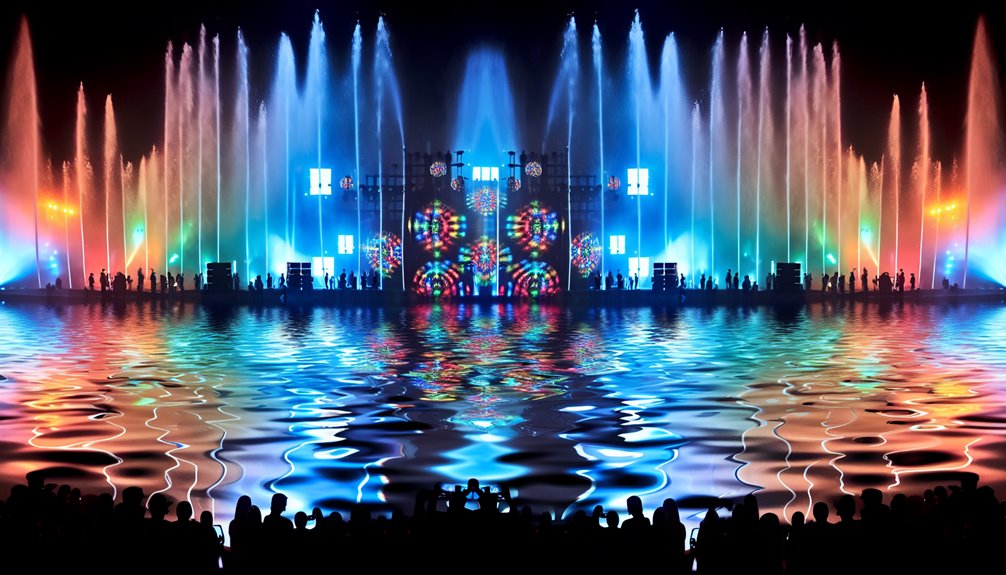
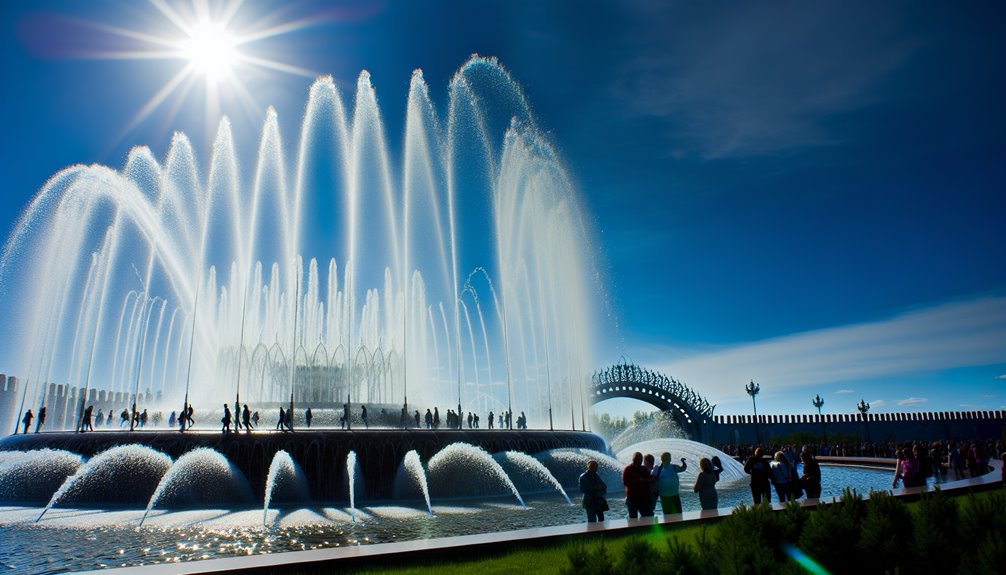
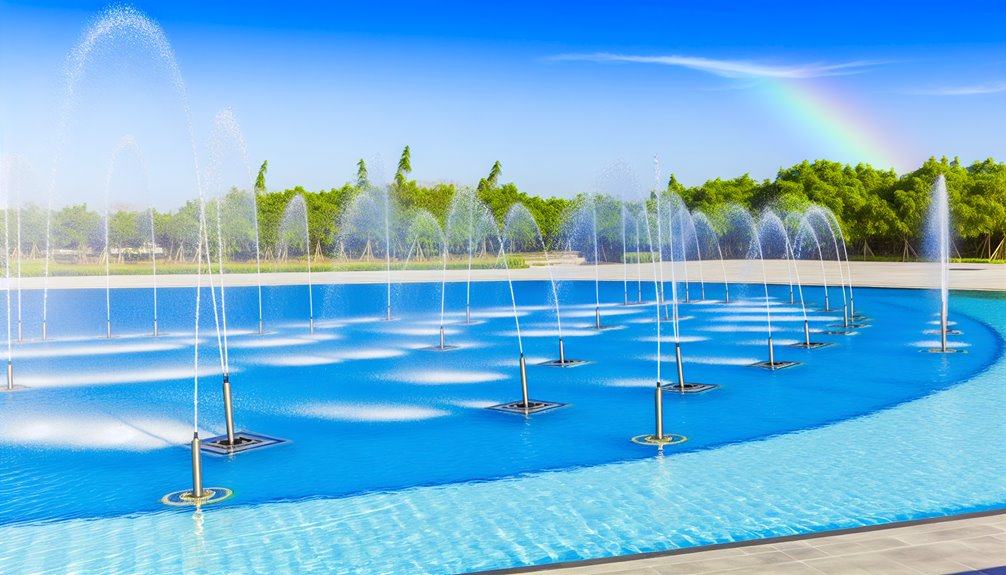
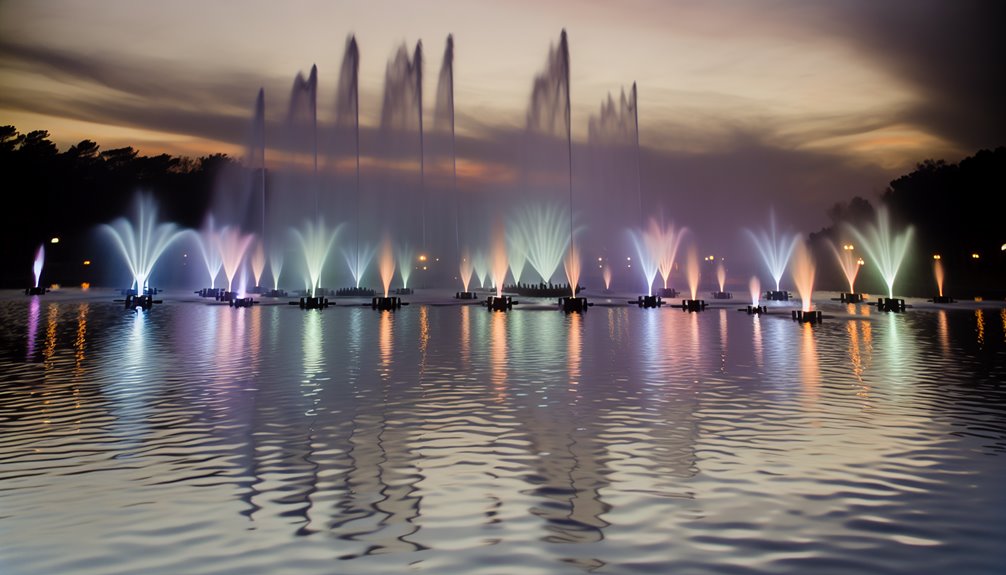
A dancing fountain is not just a decorative feature; it is a coordinated system of pumps, nozzles, valves, lighting, and control software designed to synchronize water, light, and music with high reliability and controlled costs. From hydraulic layouts to energy consumption and maintenance demands, each decision affects long-term performance and budget. Understanding how these systems are specified, integrated, and built reveals where projects succeed—or become unnecessarily expensive.
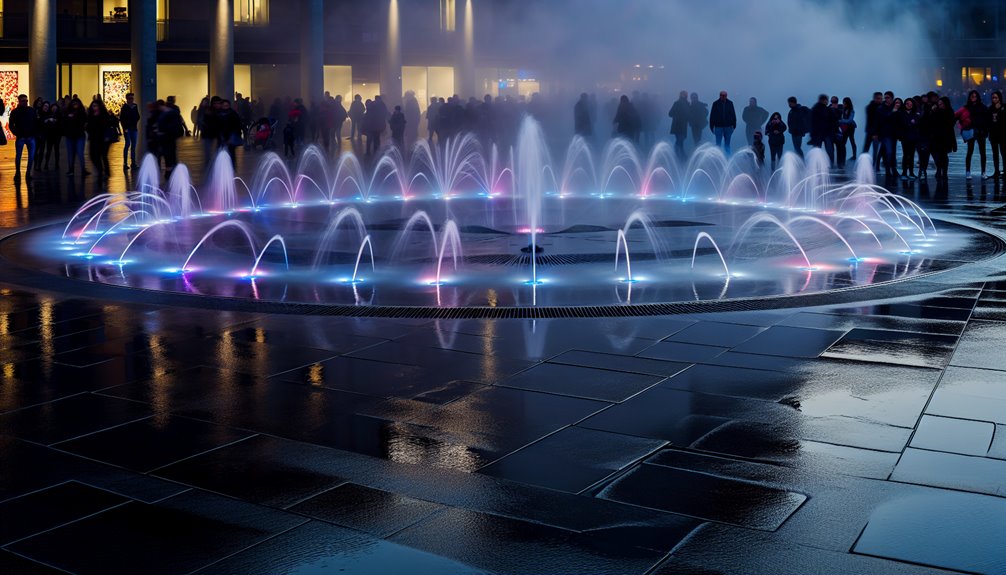
A dancing fountain is a water-feature system that uses programmed water jets, underwater lights, and optional music to create choreographed visual performances. Sophisticated controls regulate water height, angle, speed, and timing, allowing the fountain to “dance” through patterns that match lighting sequences or musical accents.
Dancing fountains may range from compact plaza features to large-scale floating installations on lakes or waterfronts. Regardless of size, all dancing fountains rely on coordinated hydraulics, lighting, and control technologies to create smooth and expressive water movements.
Although these terms are often used interchangeably, they refer to different types of systems:
• Dancing Fountain
Focuses on water movement patterns. It may operate with or without music, using pre-programmed choreography to create rhythmic effects.
• Musical Fountain
A dancing fountain specifically synchronised to music. The control system interprets beats, tempo, and melody to trigger water and lighting sequences that match sound dynamics.
• Dry Deck Fountain
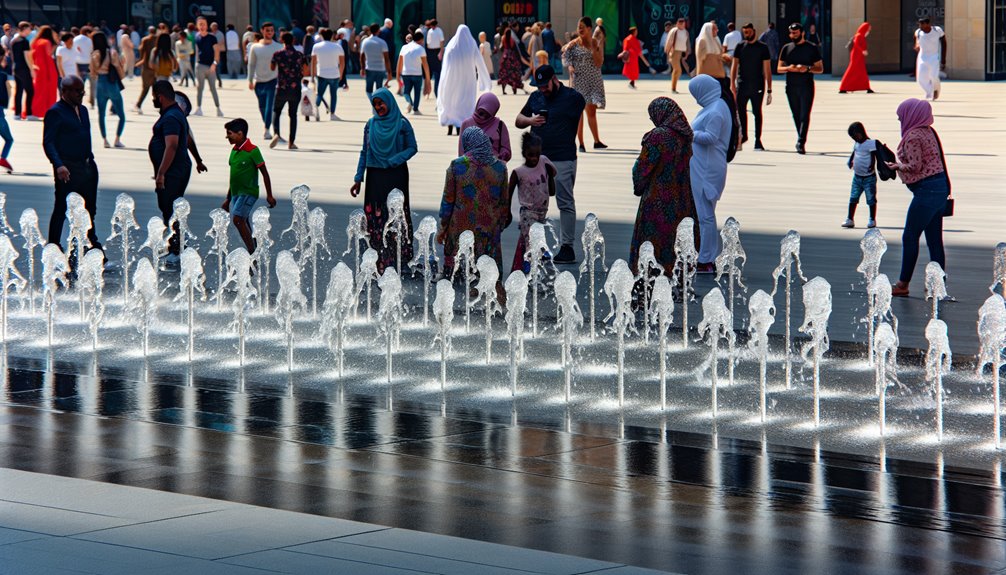
Also known as a ground fountain or interactive fountain, this system uses flush-mounted jets built into the pavement. When inactive, the space can be used as a walkway or event area—ideal for plazas and urban squares.
This distinction helps project planners and designers choose the right fountain style based on the installation environment and intended audience experience.
Dancing fountains offer immediate value to public and commercial spaces by enhancing visual appeal, visitor engagement, and brand identity.
Key benefits include:
Dancing fountains are therefore not only decorative—they are strategic assets that improve liveability, commercial appeal, and urban identity.
In a modern dancing fountain, the nozzle systems, pump system, lighting system, and music and sound system function as tightly integrated subsystems rather than standalone features.
Each component is sized and specified to balance performance with installation, operating, and maintenance costs, from pump power and nozzle types to LED wattage and speaker coverage.
A central control system using PLC, DMX, or dedicated software coordinates these elements in real time to achieve synchronized shows while optimizing energy use and system reliability.
Nozzle systems form the core mechanical interface between pumping power and visible water effects, determining both performance capability and project cost.
In any water show fountain or programmable fountain, nozzle type and layout define the character of the dancing water jets far more than any other hardware choice.
Straight jet nozzles deliver clean, high columns for long‑range visibility and simple cues.
Fan jet nozzles spread water into thin, sheet-like forms, useful for backlit surfaces and lower trajectories.
Laminar nozzles create crystal-clear, glassy arcs that read precisely under RGB lighting but require careful filtration and alignment.
Digital swing nozzles add motorized articulation, enabling sweeping, tilting beams of water; they increase cabling, control-channel counts, and maintenance load, but dramatically widen choreographic possibilities.
Most dancing fountain performances depend on a carefully engineered pump system that converts electrical power into controlled flow and pressure for every water effect.
Designers typically use centrifugal pumps sized for required jet heights, flow rates, and system head losses. Higher jets demand higher discharge pressure, which increases motor size and operating costs, so accurate hydraulic calculations are critical.
The pump system is subdivided into zones or manifolds, each feeding groups of nozzles.
Flow is modulated either by dedicated pumps or by variable frequency drives (VFDs) adjusting pump speed in real time. Integrated with fountain control software, VFDs allow smooth ramp-up, pulsing, and energy-efficient partial-load operation, while minimizing mechanical stress, oversizing margins, and lifecycle costs for large musical and dancing installations.
Lighting systems transform a dancing fountain from a purely hydraulic installation into a visually readable, high-impact water show. Through the controlled use of RGB LED fixtures, beam lights, and selective laser elements, lighting defines form, depth, rhythm, and spatial movement.
In a professionally engineered dancing fountain, lighting is not decorative—it is fully integrated into the control logic. Each lighting fixture is treated as an addressable node, typically via DMX, allowing precise coordination of colour, intensity, beam angle, and timing in direct relation to jet height, nozzle movement, and choreography sequences.
This level of control ensures that lighting enhances water motion rather than overpowering it.
| Component | Primary Role | Cost Consideration |
|---|---|---|
| RGB underwater fountain lights | Define water volume, jet edges, and depth | Higher unit cost; low operating power (LED) |
| Beam lights | Accentuate vertical jets and skyline presence | Medium; cost depends on throw distance |
| Lasers | Create aerial graphics and spatial contours | High; typically used only for landmark projects |
In plaza fountain design, lighting designers carefully balance colour temperature, saturation, and contrast to support the intended atmosphere—whether calm, energetic, or ceremonial. The goal is to achieve strong visual clarity with minimal fixture count, reducing both maintenance exposure and long-term operating complexity.
A well-designed fountain lighting system delivers maximum visual impact while maintaining durability, efficiency, and control precision.
While the lighting system defines what the audience sees, the music and sound system dictates when each visual event occurs and how it feels. In a musical or floating lake fountain, the audio chain typically includes a media player, digital signal processor (DSP), amplifiers, and weatherproof loudspeakers positioned for even coverage with minimal acoustic spill.
High‑fidelity playback is not purely aesthetic; clear transient response improves timing accuracy for water and light cues, reducing perceived lag.
Designers balance speaker quantity and power against capital and operating costs, considering cable runs and maintenance access. Robust enclosures, corrosion‑resistant hardware, and correctly sized amplifiers extend lifespan, while careful frequency equalization helps water and wind‑rich environments maintain intelligible, impactful music at controlled sound pressure levels.
At the core of a musical dancing fountain is the central control system, where every valve, pump, light, and audio cue is sequenced into a repeatable “show. Typically built around a PLC or industrial controller interfaced with DMX networks and dedicated choreography software, this layer translates timelines and cue lists into real‑time commands for electrovalves, variable‑frequency drives, LED fixtures, and audio systems.
Programmers define scenes and shifts with millisecond precision, then download them to the controller for reliable, unattended playback. PLCs provide robust I/O handling, safety interlocks, and prioritization of critical functions such as pump protection.
DMX universes handle high‑channel‑count lighting and jet control at low cabling cost. Thoughtful architecture minimizes panel sizes, cable runs, and maintenance, directly impacting lifecycle cost.
Sensors and automation systems ensure a dancing fountain operates safely and efficiently with minimal manual control. Wind sensors feed real-time data to the PLC or DMX system, automatically reducing jet height or disabling high arcs when wind thresholds are exceeded, preventing overspray and water loss.
Water-level sensors protect pumps from dry running and maintain stable suction depth, improving equipment lifespan and jet consistency. Safety automation integrates emergency stops, ground-fault monitoring, and overcurrent protection to isolate pumps and lighting circuits within milliseconds, reducing electrical and mechanical risk.
Well-configured automation routines also lower staffing and tuning requirements by managing startup, shutdown, and fault responses automatically.
| Component | Primary Cost / Benefit Role |
|---|---|
| Wind sensors | Reduce overspray and save water |
| Water-level sensors | Protect pumps, reduce downtime |
| Safety shutoff logic | Limit system risk |
| Automation routines | Lower operating costs |
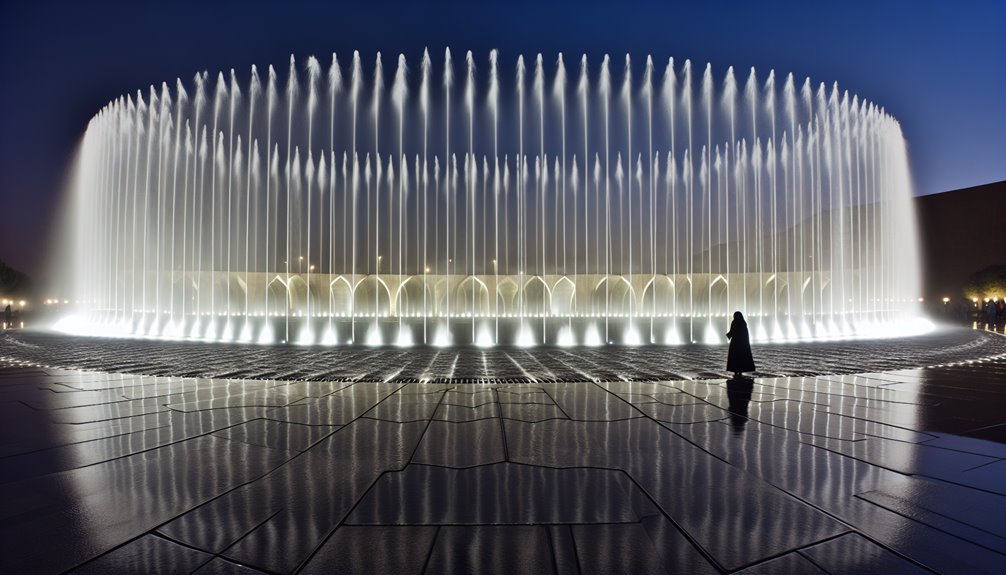
Effective dancing fountain design begins with rigorous site and environmental assessment to define hydraulic loads, viewing angles, and local constraints that impact lifecycle cost.
Engineers then specify hydraulics, jet performance, and lighting systems as a coordinated control matrix, ensuring that water choreography, RGB fixtures, and power distribution are optimized for both impact and efficiency.
Music integration, show rhythm, and safety-compliance requirements are treated as hard design parameters, shaping layout, equipment selection, and control logic from concept stage onward.
Site and environmental assessment establishes whether a proposed location can support a reliable, cost-efficient dancing fountain system. Designers first verify that basin size matches planned jet layout, water effects, and audience capacity; undersized basins increase splash loss and maintenance costs.
Viewing angles are mapped to ascertain clear sightlines from primary pedestrian flows and key vantage points. Wind conditions are evaluated using local data and on-site observation; prevailing directions and gust speeds determine safe jet heights and buffer zones to prevent drift onto walkways or buildings.
Water supply availability and quality affect filtration, treatment, and operating costs. Finally, cable routing for pumps, DMX controls, and lighting is planned early, using accessible, dry conduits and service corridors to minimize civil works and future disruptions.
Although dancing fountains are visually driven, their performance is governed by hydraulic engineering. Jet spacing, manifold sizing, and pump selection must be precisely designed so each nozzle delivers consistent height and trajectory without unnecessary energy loss.
Uniform jet performance depends on controlling pressure losses across pipes, fittings, and valves. Designers use Bernoulli-based calculations and hydraulic models to evaluate friction loss, minor losses, and dynamic effects caused by fast-acting solenoid valves. Proper hydraulic balancing ensures stable choreography, predictable jet behaviour, and efficient power use.
| Design Aspect | Engineering Focus | Cost Impact |
|---|---|---|
| Jet spacing | Visibility, overlap, wind tolerance | Affects nozzle count and pipe runs |
| Pipe diameters | Flow velocity, friction loss | Influences pump size and energy use |
| Valve selection | Response time, Cv value | Balances precision vs unit cost |
| Pump head | Required nozzle pressure | Drives capital and operating cost |
In dancing fountains, lighting design functions as a visual control system, translating hydraulic movement into readable choreography through controlled colour, layering, and timing.
DMX-addressable RGB LED projectors form the base lighting palette. White channels are often added to maintain brightness and clarity at long viewing distances while managing overall power consumption. Rather than treating colours individually, designers program colour states—such as warm–cool contrasts, axial gradients across the basin, and accent tones for high jets or special effects.
Visual depth is created through layered lighting, using foreground, midground, and background beams so each jet type has a distinct role within the scene.
Timing is programmed at the millisecond level, controlling fades, chases, and strobes to follow water trajectories precisely without overloading drivers or exceeding energy limits.
Once the light palette and timing logic are defined, the fountain control system is aligned with the musical score regarding BPM, bar structure, and dynamic contour.
Programmers first map the track’s tempo and key accents—downbeats, fills, climaxes—into a time-coded grid. Each second is then allocated to specific jet groups and light channels via DMX or similar protocols.
Water effects are tiered: base jets follow the constant pulse, while specialty effects trigger on musical accents and shifts.
Emotional moments—such as crescendos or breaks—receive higher arcs, denser patterns, or brief blackouts to conserve power and increase contrast.
This structured approach minimizes trial-and-error programming hours, controls pump and lighting loads, and yields repeatable, musically coherent shows at predictable operating cost.
Safety and regulatory compliance in dancing fountain design focus on protecting users, equipment, and surrounding structures through properly engineered electrical, mechanical, and public-access systems. Designs must meet applicable electrical and safety standards while limiting long-term maintenance risk and downtime.
Key safety areas include ingress protection, electrical grounding, and public-use safeguards. All submerged and splash-zone components require appropriate IP ratings—typically IP68 for underwater fixtures and IP65 or higher for junction boxes and control enclosures—to prevent water ingress, corrosion, and short circuits.
Electrical protection relies on residual-current devices (RCDs), equipotential bonding, and robust grounding of pumps, lighting fixtures, and control panels to reduce shock risk and comply with electrical codes.
Public-area safety measures include anti-slip surfaces, controlled edge heights, and clearly defined equipment zones. Continuous water filtration and disinfection maintain hygienic conditions while protecting mechanical components from fouling and premature wear.
Market-specific aesthetic strategy for dancing fountains typically begins with aligning visual language to regional expectations while controlling capital and operating costs.
In the Middle East, demand favors large-scale, spectacular compositions: long-throw jets, tall central shafts, dense nozzle grids, and high-output RGB systems configured for maximum vertical impact and visibility over large plazas or lakes.
In Southeast Asia, design shifts toward colorful, rhythmic expression. Medium-height, fast-acting nozzles, rich DMX-based color cycling, and tight synchronization with popular music reduce structural scale while preserving perceived show value.
European projects generally prioritize artistic minimalism. Fewer, precisely arranged jets, restrained color palettes, and subtle programming emphasize form and timing over volume, lowering equipment counts, energy load, and lifecycle maintenance without compromising design sophistication.
Different types of dancing fountain installations—ranging from outdoor urban plaza systems to floating lake units and resort-oriented commercial layouts—each impose distinct structural, hydraulic, and control requirements.
Dry deck and interactive jet fountains must balance user safety, robust hardware, and high-duty-cycle components, while event-focused water show systems prioritize modular equipment, rapid setup, and reprogrammable controls.
For all categories, planners must evaluate lifecycle costs, including pumping power, lighting loads, water treatment, and maintenance access, to align spectacle level with budget constraints.
In urban plazas, dancing fountains act as high-impact public attractions designed to maximise visual performance within limited open space. These installations operate under continuous public exposure, variable crowd density, and strict safety requirements.
Systems typically feature compact yet powerful hydraulic and electrical subsystems, DMX-controlled programmable jets, and RGB LED lighting capable of running multiple daily and event-based show presets. Flush-mounted nozzles and walkable grates allow dual use—spectacle mode and open pedestrian circulation.
Centralised pump rooms, efficient filtration, VFD-driven pumps, and LED lighting help control lifecycle costs while maintaining strong visual presence for visitors and tourists.
Floating and lake-based dancing fountains utilise existing water bodies, avoiding the need for permanent basins and extensive civil works. Equipment is mounted on modular floating platforms supporting pumps, manifolds, nozzles, and submersible RGB LED luminaires.
Anchoring systems replace rigid foundations, reducing construction cost and allowing flexible positioning. Hydraulic design must account for water-level variation, wind exposure, and wave motion, often requiring stabilised nozzles and higher pump capacity.
Power and DMX control lines are routed through waterproof flexible conduits to shore-based control racks. Maintenance access is planned via service pontoons, enabling module-level servicing with minimal downtime.
In malls, hotels, and destination resorts, dancing fountains function as amenity-driven assets engineered to increase dwell time and perceived property value. These systems prioritise reliability, programmability, and operating efficiency over sheer scale.
Design objectives typically include:
Energy-efficient pumps, RGB LED lighting, and modular DMX-based control architectures help manage power, water, and maintenance costs while delivering consistent performance.
Dry deck and interactive jet fountains are designed as public-engagement systems, especially in family-oriented urban spaces. Nozzles, drains, and lights are recessed into flush paving, allowing the area to function as a pedestrian plaza when inactive.
Engineering priorities include non-slip surfaces, robust in-ground vaults, reliable drainage, and high-duty-cycle components. Independently controlled jets and RGB LEDs, typically managed via DMX, allow dynamic programming within defined power limits.
Filtration and disinfection systems are designed to pool-code standards, as direct user contact—particularly by children—is common.
Event-focused water show systems are engineered for rapid deployment and removal, supporting concerts, ceremonies, and temporary spectacles. These installations prioritise modularity, reprogrammable controls, and tight setup schedules.
Typical configurations include:
Quick-connect power and water manifolds, portable pump racks, and pre-programmed DMX control systems enable fast commissioning without permanent infrastructure.
In cultural tourism parks, dancing fountains act as nighttime economy drivers, extending visitor stay and increasing secondary spending. Systems are typically located in central lakes or plazas, visible from main circulation routes and viewing terraces.
Designs often incorporate dynamic jets, DMX-controlled RGB lighting, and music-synchronised choreography that can reference local cultural themes. Networked PLC/DMX control platforms allow multiple daily shows and seasonal programming without hardware changes.
From an investment perspective, operators assess capital cost against projected gains in ticketing, food and beverage, and retail revenue. Energy-efficient pumps, LED lighting, automated filtration, and water reuse strategies help keep operating costs sustainable over the long term.
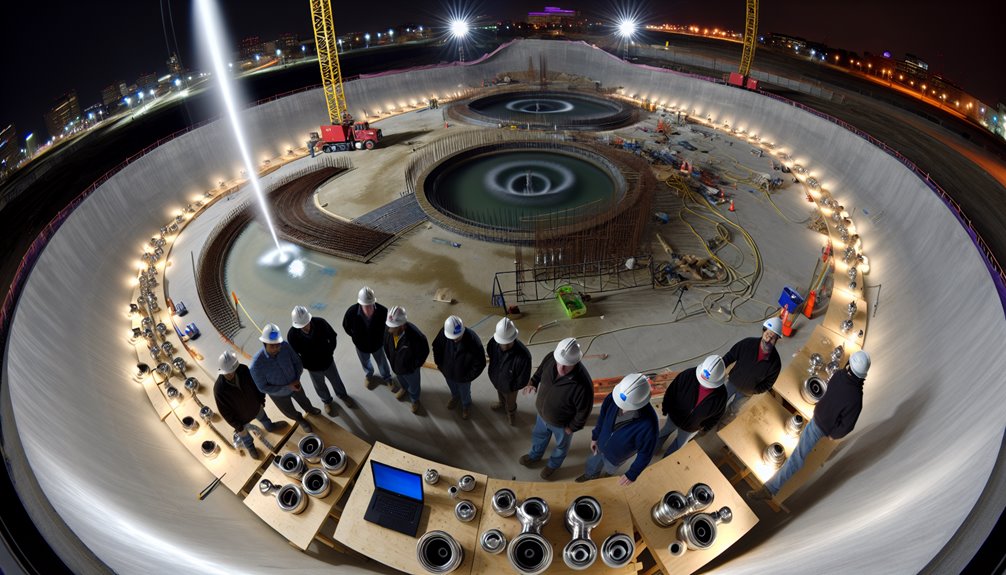
A professional dancing fountain project follows a structured workflow that ensures performance accuracy, safety compliance, and long-term reliability. Understanding this process helps developers, consultants, and contractors evaluate suppliers and plan project timelines more effectively.
Before any hardware is specified or installed, a dancing fountain project begins with a tightly defined concept that balances visual ambition, technical feasibility, and budget. Designers translate the client’s brief, site constraints, and cost limits into a performance logic: how many jets, which effects, and what level of musical synchronization are realistic.
3D visualization then converts this logic into a testable virtual show. Using site photos or neutral backgrounds, engineers build a short (typically minute) animated sequence that previews choreography, jet heights, and lighting behavior.
A typical concept package may show:
Step 2 translates the approved 3D concept into buildable engineering documentation, defining all hydraulic, electrical, and control elements in measurable terms. Engineers finalise nozzle types, spacing, jet heights, and discharge angles, then size dry or submersible pumps to deliver the required flow and pressure with minimal energy loss.
Pump control strategies—direct-on-line or VFD-driven—are selected based on performance requirements, operating efficiency, and budget constraints. Solenoid valves are specified only where dynamic or interactive effects justify their added cost and maintenance load.
Filtration systems, debris screens, and service access points are integrated to reduce clogging risk and lifecycle expense. In parallel, control drawings define DMX or PLC architecture, channel addressing, I/O allocation, and cable routing to ensure reliable system integration and future programmability.
| Layer | Key Decisions | Cost Impact |
|---|---|---|
| Hydraulic | Nozzles, pumps, filtration | Energy use, maintenance |
| Electrical | Cabling, protection, enclosures | Installation, safety |
| Control | DMX / PLC structure, addressing | Flexibility, programming |
Manufacturing and equipment preparation translate the engineered design into physical components ready for on‑site assembly, with strict attention to performance and lifecycle cost. At this stage, every nozzle, pump, solenoid valve, and control panel is specified, fabricated, and factory‑tested against the detailed engineering data.
Nozzles are machined or sourced to match defined heights and departure angles. Pumps are sized from nozzle pressure/flow curves, choosing dry or submersible units and either frequency‑converter or direct‑start control according to efficiency and budget.
DMX or PLC panels are assembled, wired, and labeled. Software scenes, musical and non‑musical, are pre‑programmed and bench‑tested.
Filters, access points, and serviceable manifolds are incorporated, reflecting debris risks and maintenance lessons from prior installations.
After factory testing of components and control panels, the project moves into civil works and on-site installation, where design intent is translated into permanent infrastructure. Excavation, concrete basins, plinths, and cable trenches are constructed to match approved nozzle grids, pump layouts, and access requirements. Conduit routing is planned to minimise voltage drop, protect cabling, and simplify future maintenance.
Stainless-steel manifolds, nozzles, pumps, and solenoid valves are installed and precisely aligned to specified heights and discharge angles. Filtration units and debris screens are integrated where environmental conditions require, reducing clogging risk and long-term service costs.
Control panels—DMX or PLC-based—are mounted in dry, accessible technical rooms and connected to field devices using clearly identified cable routes and junction points to support reliable operation and future upgrades.
| Installation Focus | Cost / Risk Consideration |
|---|---|
| Basin and piping layout | Prevents rework and leakage |
| Pump and filter placement | Simplifies maintenance, avoids blockage |
| Cable and control routing | Reduces faults, supports upgrades |
With civil works complete and hardware in place, the project shifts to a controlled phase of testing, calibration, and programming that determines whether the fountain will meet performance and operating‑cost targets.
Engineers first verify pumps, filters, nozzles, and solenoid valves under real pressures and flows, checking for debris blockage and validating jet heights, angles, and response times.
They then tune the control logic, typically via DMX or PLC, to guarantee precise, repeatable behavior:
The final phase, commissioning, training, and handover, shifts a dancing fountain from a tested installation to an operational asset with defined performance, risks, and lifecycle costs.
Commissioning verifies that pumps, nozzles, solenoid valves, filters, and DMX/PLC control panels operate within design parameters and electrical limits, and that programmed scenes match agreed choreographies.
Attention then turns to maintainability and operating cost. Filtration efficiency, access to pumps and valves, and susceptibility to debris blocking are checked against the site environment.
Operators are trained to run musical and non-musical shows, adjust sequences, recognize alarms, and perform routine cleaning and inspections.
Finally, as-built documentation, software backups, and maintenance schedules are delivered, clarifying responsibilities, warranty conditions, and expected long-term operating costs.
A dancing fountain’s performance quality and lifecycle cost are largely determined by its core hardware: precision fountain nozzles, correctly sized pumps with variable frequency drives (VFDs), and efficient underwater LED lighting.
These are supported by fast-acting solenoid valves, robust pipework, and properly engineered electrical control cabinets. Together with DMX-based control systems, this equipment enables fine-grained choreography while optimizing energy use, maintenance effort, and overall operating expense.
Fountain nozzles function as the primary interface between the hydraulic system and the visible water display, converting pumped flow and pressure into defined shapes and trajectories.
In dancing fountains, they translate centralized pumping power into discrete, programmable water effects, from quiet mist to high-energy jets, while minimizing energy loss and maintenance costs.
Typical nozzle functions can be visualized as:
Within a dancing fountain system, pumps and variable frequency drives (VFDs) form the core power and control layer that converts electrical energy into programmable hydraulic performance.
High‑efficiency centrifugal pumps generate the flow and pressure required to feed multiple nozzles, from low mists to tall jets. Their performance must match design flow rates, total dynamic head, and anticipated show modes, while minimizing lifecycle energy use.
VFDs modulate pump speed in real time, responding to commands from the smart control system. By varying frequency, they adjust pressure and flow for each scene, enabling precise jet heights and fast shifts without mechanical throttling losses.
This reduces electrical consumption, limits water hammer, extends equipment life, and allows downsizing of both pumps and electrical infrastructure where feasible.
Although often perceived as purely decorative, underwater LED lights function as critical control elements in a dancing fountain system, shaping how water choreography is perceived and measured.
They convert DMX or similar control signals into precisely timed color, intensity, and beam geometry, allowing the designer to “read jet height, angle, and timing with visual accuracy. RGB LEDs dominate, minimizing power consumption while maximizing programmable effects and operational life.
Underwater fixtures must be sealed, corrosion‑resistant, and thermally managed to survive continuous immersion and high-output operation.
Correct optical selection and spacing reduce fixture count and lifecycle cost.
While lighting defines how a dancing fountain is perceived, solenoid valves and pipework control how water behaves in real time. Fast-acting solenoid (electro)valves open and close individual jets within fractions of a second, converting control signals into precise water on/off actions essential for accurate choreography.
Because these valves operate under continuous pressure and frequent cycling, material selection—commonly brass, stainless steel, or engineered polymers—directly affects service life, reliability, and maintenance cost. Valves are specified based on response time, pressure rating, and sealing performance rather than unit price alone.
Pipework forms the hydraulic backbone of the system, distributing flow from pumps to each nozzle with minimal pressure loss and turbulence. Proper pipe diameters, balanced loop layouts, and strategically placed isolation valves reduce energy consumption, stabilise jet performance, and simplify servicing or future expansion.
| Element | Design Focus |
|---|---|
| Solenoid valves | Response time, pressure rating, IP sealing |
| Main manifolds | Diameter, hydraulic balance, accessibility |
| Branch pipework | Material choice, joint quality, expandability |
Electrical control cabinets and DMX systems serve as the central coordination layer of a dancing fountain, converting show programming into precise, repeatable actions across pumps, valves, and lighting fixtures. Housed in weather-rated enclosures, these cabinets integrate power distribution, PLC or PC-based controllers, DMX interfaces, and protection devices into a unified control network.
Control systems translate musical cues and timeline data into channel-level commands, ensuring synchronised choreography while minimising energy consumption and mechanical wear. Proper cabinet design also supports safe operation, reliable signal transmission, and long-term system stability.
Typical cabinet integration includes load-rated breakers and contactors, surge protection matched to pump and LED circuits, DMX universes with isolation modules, and operator interfaces for scheduling, diagnostics, and remote monitoring. Together, these elements allow efficient show control with reduced operating and maintenance costs.
The cost of a dancing fountain system varies widely, governed primarily by hydraulic complexity, control architecture, materials, and site conditions.
From compact plug-and-play musical units in the low thousands of dollars to landmark-scale installations requiring multi‑million‑dollar capital expenditure, each configuration aligns with a distinct budget tier.
Beyond initial build cost, owners must account for energy consumption, water treatment, component wear, and periodic reprogramming as ongoing operational and maintenance expenses.
Although often perceived as singular artistic features, dancing fountains are best understood as engineered systems with clearly defined cost drivers. Budget outcomes depend on how water, lighting, sound, and structural elements are specified and integrated.
Key cost factors fall into three main categories:
While dancing fountains share common design principles, their investment profiles diverge sharply by scale and specification.
Entry-level, small or portable musical units typically range from $1,000 to $10,000, using compact pumps, basic controllers, and limited RGB fixtures suitable for private or small commercial settings.
Medium-sized commercial dancing fountains span roughly $100,000 to $2 million. This band covers fixed basins or lake-edge systems with multi-zone pumping, DMX-based lighting, and music-synchronized control hardware and software.
Large, landmark installations move into multi-million-dollar investments. Examples include the Dubai Fountain (~$218 million) and the Bellagio fountains (~$400 million).
At this level, custom hydraulics, dense jet grids, high-output audio, architectural integration, and complex site conditions dominate the cost structure.
Beyond upfront construction budgets, a dancing fountain’s true cost profile is defined by ongoing operational and maintenance expenditures.
Power demand for pumps, LED lighting, and control hardware often becomes the largest recurring expense, especially in medium and large-scale installations reaching into the millions of dollars. Water treatment, filtration, and periodic refilling add further load to utility bills.
Owners typically evaluate annual costs across three main categories:
Engaging professional manufacturers helps forecast these lifecycle costs for long‑term financial sustainability.
Globally recognised dancing fountain installations demonstrate how large-scale, precisely controlled water, lighting, and audio systems can be engineered into reliable, repeatable public spectacles. Landmark projects across desert megacities, resort corridors, and dense waterfronts are studied not for imitation, but for the engineering principles they reveal—jet scale, control density, hydraulic loading, and lifecycle cost management.
Often referenced for its extreme scale, this installation illustrates the challenges of long-throw jet stability, wind exposure, and high-capacity pumping in open environments. Key lessons include nozzle zoning, redundancy planning, and the need for layered control logic to maintain performance consistency.
This project demonstrates how expressive choreography can be achieved through hydraulic precision and valve timing, rather than reliance on dense lighting effects. It highlights the importance of fast-response solenoid valves and accurate pump control in producing rhythmic, spatial water movement.
These installations show how dancing fountains integrate into high-density urban and waterfront contexts, prioritising corrosion resistance, reliable filtration, and lighting clarity against illuminated city backdrops.
While site conditions and budgets vary, most benchmark projects fall into recognisable system categories. Each carries distinct engineering priorities and cost implications:
| Location Type | Key System Features | Design Lessons |
|---|---|---|
| Desert lakefront | High-lift jets (100 m+), dense RGB grids | High pump power, long-throw optics |
| Resort boulevard | Medium-height jets, frequent daily shows | Reliability, fast servicing |
| Urban bayfront | Floating platforms, wave-resistant hardware | Structural stability, access planning |
| River promenade | Modular linear jet arrays | Phased expansion, scalable controls |
| Theme park lagoon | Multi-layer water, lighting, and audio systems | Complex programming, higher OPEX |
Across all benchmark sites, successful dancing fountains share common principles:
For planners, designers, and developers, these examples reinforce a key point: successful dancing fountains are defined less by scale and more by engineering discipline, control precision, and long-term operability.
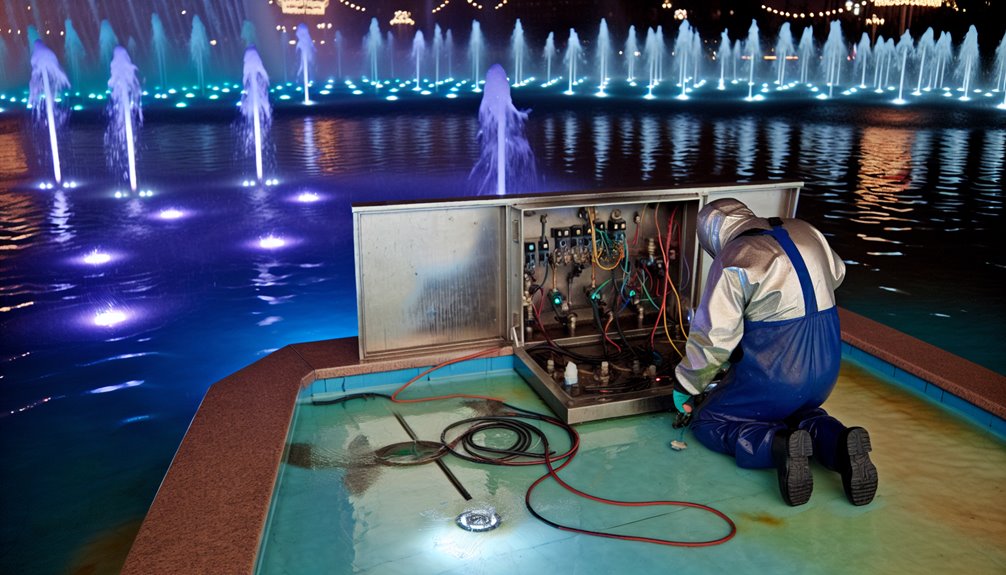
In long-term operation, the main risk areas in dancing fountains are pump overheating or failure, nozzle clogging and jet instability, LED light failures or water ingress, and control system issues.
Each of these faults can cause show interruptions, increase maintenance labor, and shorten component life, raising total lifecycle costs.
Pump overheating or failure is one of the most disruptive and expensive issues in dancing fountain systems. As pump temperature rises, flow rate declines, jet height becomes unstable, and in severe cases water output stops entirely. Repeated thermal stress accelerates wear on bearings, seals, and motor windings, often leading to unplanned replacement and downtime.
Risk mitigation focuses on correct specification and maintenance:
Well-sized pumps operating within design limits deliver more stable choreography and longer service life.
Nozzle clogging and jet instability directly degrade visual performance while increasing operating and maintenance effort. Blocked or partially obstructed nozzles—typically caused by debris, algae, or pipe contamination—distort water columns, reduce jet height, and disrupt programmed choreography. Jet instability may also result from fluctuating pump pressure or uneven hydraulic distribution.
Effective prevention relies on filtration, hydraulic balance, and regular servicing:
| Issue | Targeted Measure |
|---|---|
| Debris-induced clogging | Inline filtration, scheduled nozzle cleaning |
| Algae and biofilm buildup | Water treatment, periodic basin and pipe cleaning |
| Pressure fluctuations | Pump tuning, pressure regulators, balanced manifolds |
| Uneven jet patterns | Hydraulic balancing, orifice inspection and recalibration |
By combining proper water treatment with stable hydraulics and routine inspection, operators can maintain consistent jet performance while reducing long-term maintenance costs.
Reliable LED lighting is critical to dancing fountain performance, yet fixture failure and water ingress are often among the largest contributors to long-term operating cost. Submerged RGB luminaires operate under constant humidity, pressure variation, and chemical exposure, meaning even small sealing or cable defects can escalate into repeated outages.
Common failure modes include LED or driver failure, cable insulation degradation, and gasket or seal fatigue, allowing moisture to enter housings and electronics.
Cost control focuses on prevention rather than reactive replacement:
Well-specified fixtures and proactive maintenance significantly reduce downtime and replacement frequency.
Some of the most disruptive dancing fountain failures originate in the control system rather than mechanical hardware. In DMX-driven installations, faults in timing, communication, or logic can immediately disrupt choreography, reducing show quality and tourism value.
Typical symptoms include music-water desynchronisation, erratic jet behaviour, and lighting cues triggering out of sequence. Root causes commonly include controller faults, corrupted show files, unstable communication networks, or inadequate electrical protection.
Preventive design prioritises robust system architecture and diagnostics:
| Risk Area | Cost-Conscious Mitigation |
|---|---|
| Controller hardware | Industrial-grade PLC/DMX nodes, hot spares |
| Show software | Version control, validated backups |
| Time synchronisation | Central master clock, periodic verification |
| Signal interference | Shielded cables, proper grounding, filters |
| Maintainability | Labelled wiring, remote monitoring, error logs |
A stable, well-protected control system ensures repeatable performance while minimising troubleshooting time and operational risk.
When designed as multimedia attractions rather than decorative features, dancing fountains operate as high-impact urban infrastructure that strengthens tourism appeal and increases overall project value.
By combining synchronised water, lighting, and sound, these systems transform plazas, lakes, and waterfronts into programmable event platforms. Show content can be refreshed or reprogrammed without major civil works, protecting long-term return on investment and keeping destinations visually relevant over time.
At both city and project scale, dancing fountains influence key performance metrics:
As a result, well-engineered dancing fountains deliver value beyond aesthetics, functioning as flexible, revenue-supporting assets within broader urban and commercial developments.
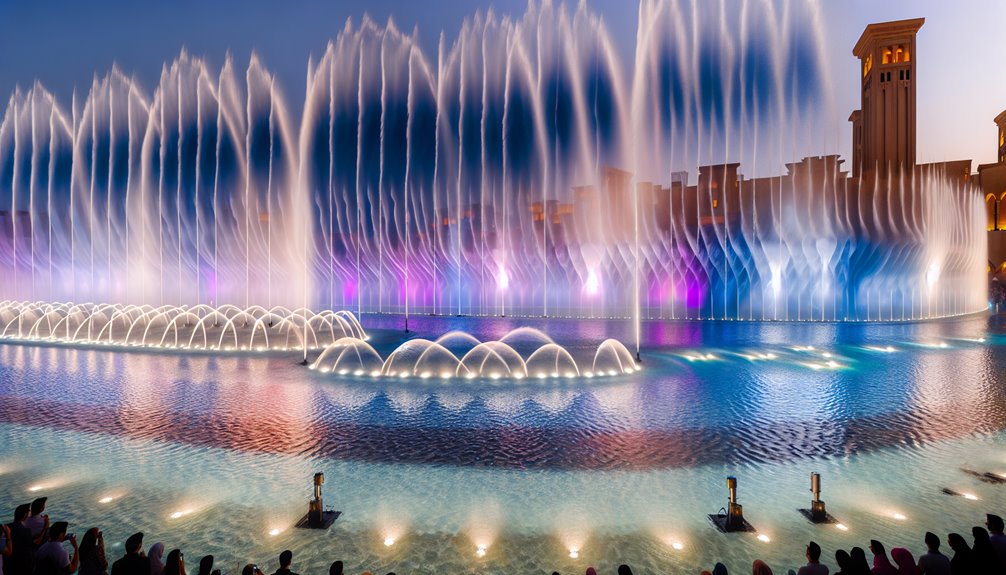
At Optimum Show, we design and deliver dancing fountain systems as engineered water show solutions, not decorative add-ons. Every project is approached from a system perspective—hydraulics, controls, lighting, safety, and long-term operation are planned together from the start.
We work with developers, municipalities, consultants, and event producers to translate design intent into stable, programmable fountain systems that perform reliably under real operating conditions. Our focus is on control accuracy, lifecycle cost control, and predictable performance, whether the project is a public plaza fountain, floating lake installation, commercial development, or event water show.
If you are planning a dancing fountain and need technical consultation, system design, or a complete water show solution, our team is ready to support your project.
Contact Optimum Show to discuss your site conditions, performance goals, and budget framework.
Most dancing fountains require weekly visual inspections, quarterly technical servicing, and annual preventive maintenance. Staffing needs are typically 0.5 to 1 full-time equivalent, depending on show complexity, operating hours, and required uptime. Annual costs vary based on water treatment, electrical load, component lifespan, and control system sophistication.
Like constructing a power plant of water and light, installation is constrained by zoning, building and electrical codes, structural and fire-safety reviews, water-use and discharge permits, noise and environmental regulations, accessibility standards, and often cultural or heritage approvals.
They employ winterization protocols, insulated or buried piping, dry-sump pump rooms, glycol or trace heating, ice- and wind‑sensing controls, robust corrosion‑resistant materials, modular components, and quick-disconnect submersible gear to minimize freeze damage, sand intrusion, and off‑season maintenance costs.
Yes. Static fountains can be retrofitted with DMX-controlled pumps, valves, and RGB LEDs, plus audio and control racks. Feasibility depends on basin size, power supply, waterproofing, and access; civil, electrical, and hydraulic upgrades greatly affect total project cost.
Dancing fountains conserve water through closed-loop recirculation, precise nozzle control, and minimized evaporation; they achieve sustainability certifications via efficient pumps, LED lighting, robust filtration, automated leak detection, and documented water–energy performance that supports SOA-compliant, low-operating-cost, long-life system design.
Dancing fountains are not decorative installations but engineered performance systems that integrate hydraulics, control logic, and lighting into a coordinated, repeatable operation. Successful projects achieve impact not through scale alone, but by balancing choreography with lifecycle cost, energy efficiency, safety, and maintainability.
When sound design principles, robust safety standards, and disciplined construction workflows are applied, common operational failures can be avoided while long-term tourism and asset value are maximized. With system-level optimization, dancing fountains function as sustainable, high-performing infrastructure—not short-term visual features or ongoing cost burdens.