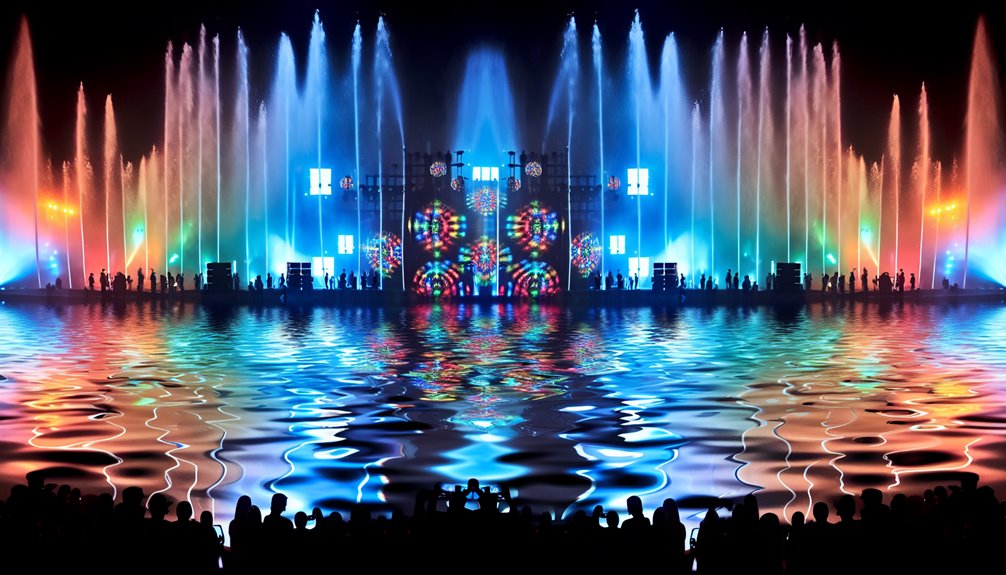
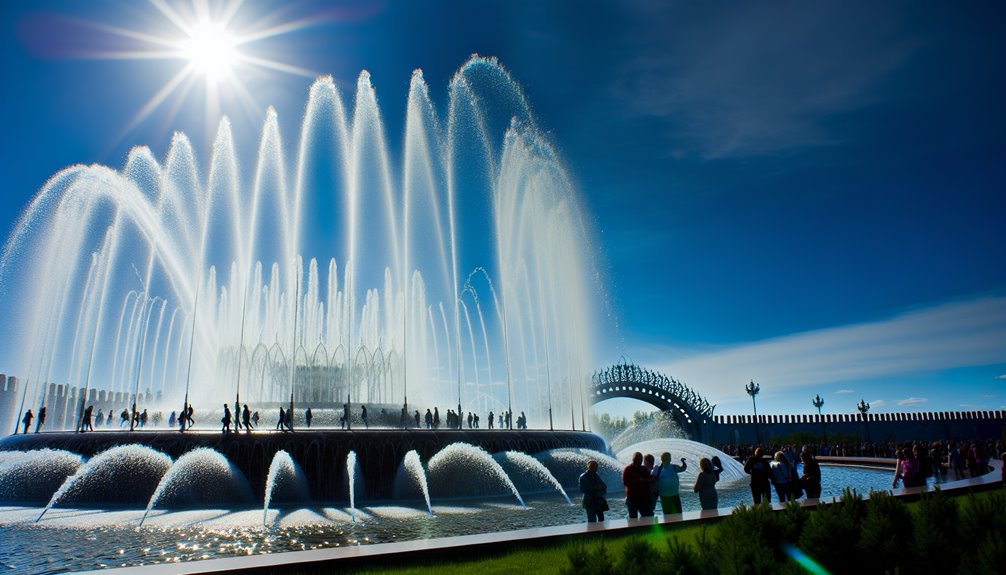
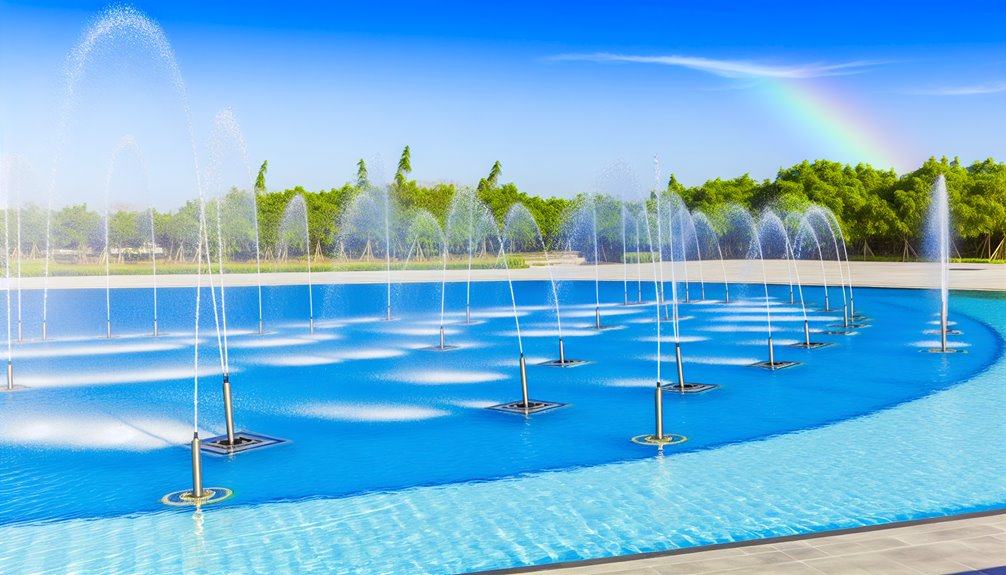
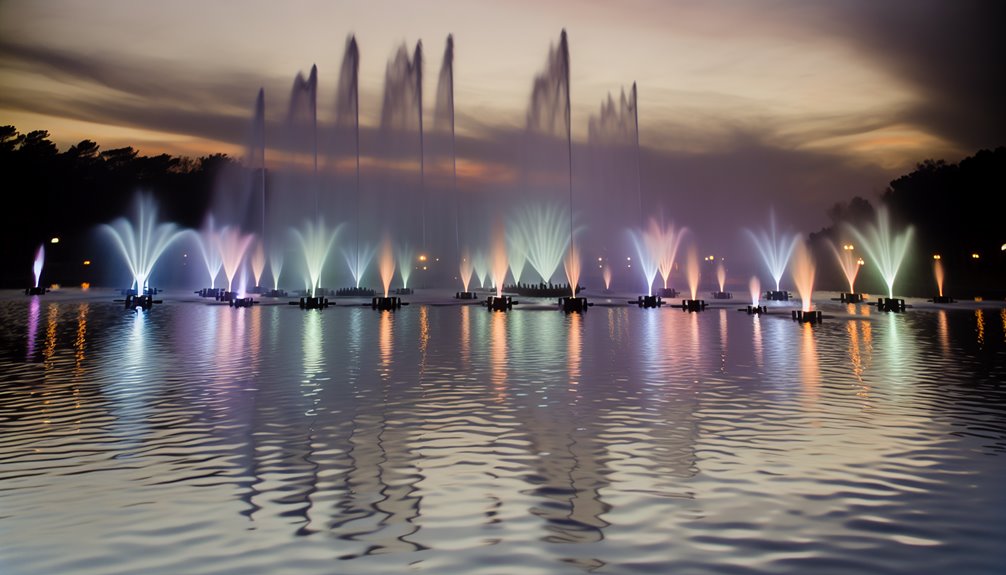
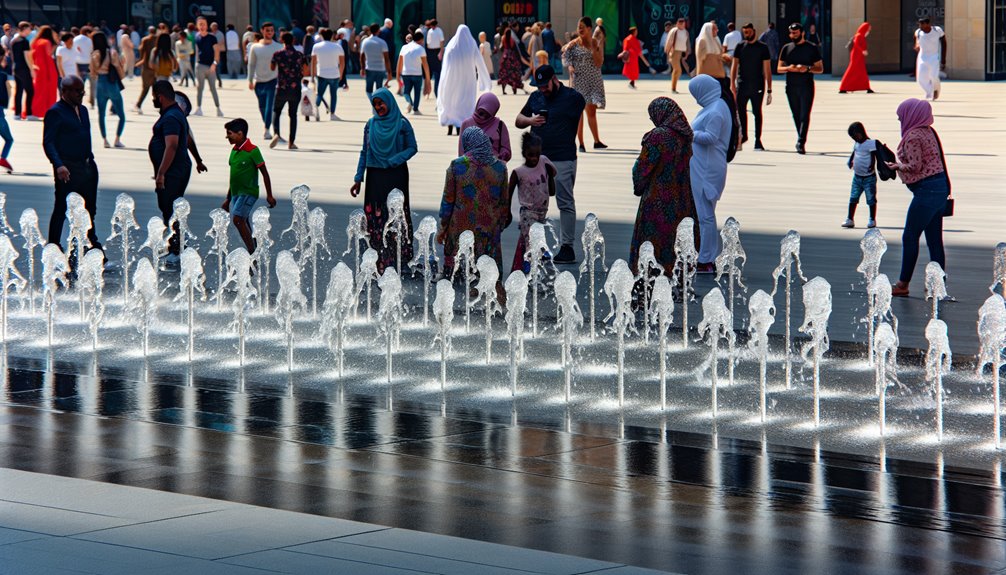
A dancing fountain can cost from a few thousand dollars for a small commercial feature to well over $200 million for a landmark, urban-scale water show. Budgets are driven by hydraulic systems, lighting quality, control, and music synchronization, civil works, and long-term energy and maintenance needs. Small plazas typically fall under $100,000, while major public squares and waterfronts commonly run into the millions. The next sections explain how these factors shape a realistic project budget.
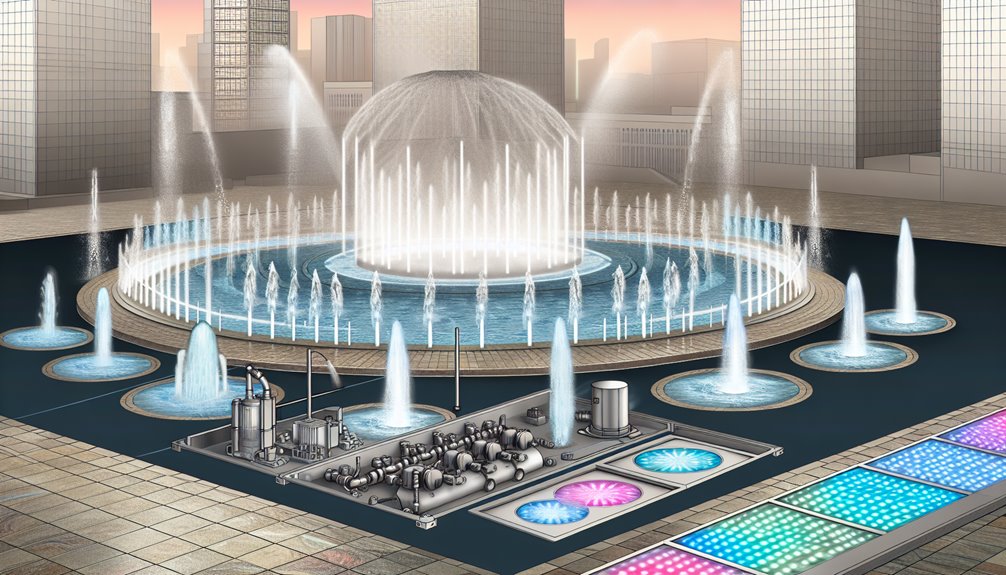
The cost of a dancing fountain system is shaped by the entire project lifecycle, not just the price of pumps, nozzles, or lighting fixtures. While equipment selection matters, overall budget is primarily driven by how the system is designed, built, operated, and maintained over time.
Initial costs include system supply plus installation and civil works, which may involve fountain basins, pipe networks, cabling, electrical rooms, and structural coordination with surrounding architecture and landscape. These elements often account for a significant portion of total project expenditure.
Long-term costs are influenced by operation and maintenance requirements, including power consumption, water treatment, spare parts, accessibility for servicing, and staffing. Poor access or inefficient system design can substantially increase annual operating costs.
Design and control complexity further affects budget. Features such as multi-axis jets, dense nozzles and lighting layouts, and real-time music synchronisation increase engineering effort, control hardware requirements, programming time, and commissioning scope.
The size of the pool will also affect the budget. If the site area is large, more nozzles will need to be designed to make the entire fountain more aesthetically pleasing.
Fountains in large lakes typically cost more because they require floating rafts made of stainless steel or carbon steel; the larger the raft, the higher the cost.
Finally, project scale and performance objectives—such as viewing distance, show frequency, visual impact, and uptime expectations—define system specifications. These factors distinguish modest commercial fountains from large-scale landmark installations and directly determine overall investment level.
The total investment in a dancing fountain is largely shaped by four core cost components: the hydraulic system, lighting, audio system, electrical network, control and programming platform, and the civil works and installation package.
Each of these elements must be engineered for precise performance and visual effect, while also being specified to match budget constraints and long-term operating targets.
Understanding how much each system typically absorbs in the budget helps owners prioritize where to allocate funds for maximum artistic impact and technical reliability.
At the heart of a dancing fountain’s budget, the hydraulic system often represents one of the largest single cost blocks, covering pumps, pipes, valves, nozzles, filtration, and water treatment. Its specification largely determines the overall dancing fountain installation cost, influencing both peak visual performance and lifetime fountain maintenance cost. Higher pressures, variable‑speed pumps, and stainless-steel manifolds increase reliability but raise capital outlay.
| Component | Cost Driver | Impact on Water Show Cost |
|---|---|---|
| Pumps & Motors | Flow, head, energy efficiency | Operating and peak effects |
| Piping & Valves | Material, diameter, routing | Reliability, leak risk |
| Filters & Treatment | Automation, dosage precision | Water clarity, health |
For complex choreography, hydraulic zoning closely interacts with DMX fountain system cost and overall programmable fountain cost, especially in large, multi-scene water show cost scenarios.
Having defined the hydraulic system as the mechanical engine of a dancing fountain, attention next turns to the lighting and electrical systems that convert moving water into a choreographed visual show.
These components strongly influence the overall dancing fountain price because they determine brightness, color dynamics, and operating efficiency.
Submersible RGB LED fixtures, underwater cabling, junction boxes, and power distribution panels often represent a significant portion of total musical fountain costs, with a higher cost ratio in compact installations due to dense lighting layouts and strict waterproofing requirements.
For lakes or reservoirs, corrosion-resistant fixtures and long cable runs increase floating fountain. However, if the water supply system is seawater, rather than freshwater, this will increase the overall cost of the fountain. This is because in seawater, water pumps, pipes, and valve systems made of corrosion-resistant SS 316L material must be used to extend the fountain's lifespan.
Exterior-rated luminaires, grounding, and surge protection add to outdoor dancing fountain, especially in harsh climates.
A realistic dancing fountain system budget must include not only fixture purchase, but also cabling, transformers, installation labor, and future lamp replacement.
Control and programming form the “brainof a dancing fountain and represent a distinct cost center that scales sharply with show complexity. Costs cover PLC or industrial PC controllers, DMX or networked lighting interfaces, sensor integration, and the specialized software that synchronizes pumps, valves, lights, and music. For small systems, off‑the‑shelf controllers and template sequences may suffice; landmark shows demand custom architectures, redundant control, and advanced time‑code or MIDI synchronization.
| Aspect | Typical Cost Impact / Notes |
|---|---|
| Control hardware | Higher for redundancy, remote monitoring, expandability |
| Show programming | Charged per song, sequence, or programming hour |
| Software licenses | One‑time plus upgrade fees for proprietary suites |
| Remote support & tuning | Ongoing fees for updates, seasonal show changes |
Careful specification prevents overspending on unnecessary sophistication.
Although often overshadowed by visible water and light effects, civil works and installation typically absorb a large share of a dancing fountain’s budget, especially on medium and large projects.
Costs cover excavation, pools or basins, structural concrete, waterproofing, drainage, cable trenches, equipment rooms, and service access. Site conditions—existing utilities, soil quality, groundwater level, and urban constraints—can shift costs dramatically.
Installation integrates pumps, nozzles, pipework, cables, and control cabinets into this civil backbone. Precision tolerances are essential to align water patterns with lighting and music, often requiring survey work and specialist crews.
On commercial projects, civil and installation can easily equal or exceed the value of mechanical and electrical equipment, particularly where premium paving, landscape integration, and public safety requirements apply.
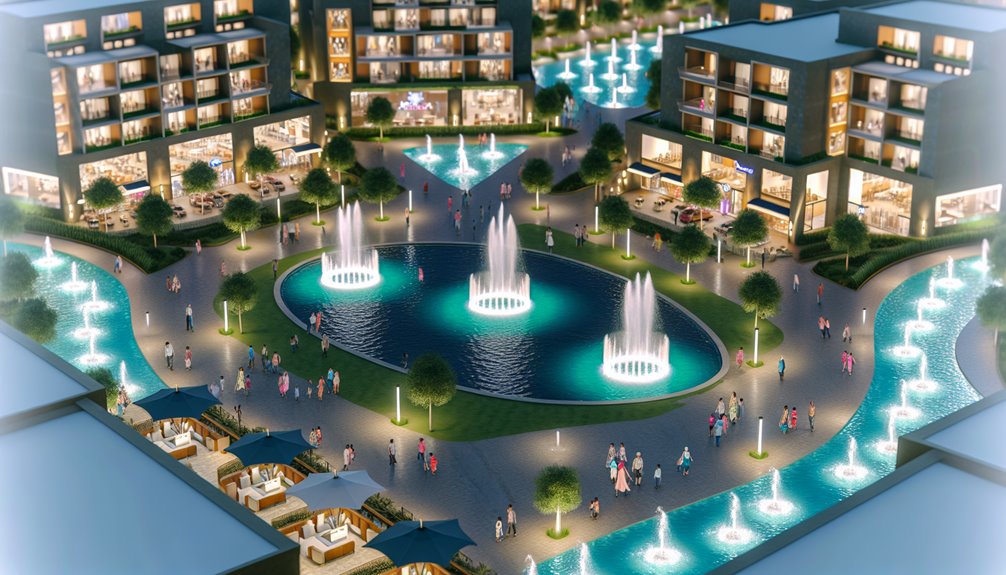
When estimating budgets, it is useful to group dancing fountain projects into four typical types: small commercial or plaza fountains, medium public square installations, large waterfront or floating lake systems, and landmark-scale water shows.
Each category carries its own cost range driven by nozzle counts, pumping capacity, control architecture, and lighting and audio specifications, as well as the intended visual impact.
Amid urban plazas and commercial courtyards, small dancing fountains typically fall in the range of about $1,000 to $100,000, bridging the gap between simple decorative features and fully programmable show systems.
At the lower end, modular or portable musical fountains use compact pumps, basic controllers, and pre-set lighting; they offer rhythmic water movement with limited customization.
Higher in the range, buyers see permanently installed, plaza-scale systems with stainless steel nozzles, LED RGB lighting, and synchronized music controllers.
These may integrate linear or circular nozzle arrays, dry-deck grating, and wind or level sensors for reliable public operation.
Costs scale with nozzle count, control channels, and finish quality, making early coordination with professional fountain designers essential for balancing spectacle and budget.
As project scale moves into medium public squares and urban landmark spaces, dancing fountain budgets typically range from about $100,000 to $2 million, reflecting higher demands for visual impact, durability, and control precision.
At this level, designers usually work with larger basins, denser nozzle arrays, and multi‑zone pump systems to create layered choreographies visible from multiple approaches. Costs concentrate in stainless‑steel hardware, high‑output variable‑speed pumps, and show‑grade DMX or PLC control cabinets integrated with audio and architectural lighting.
Urban settings also require robust civil works, drainage, and anti‑slip surfacing, plus vandal‑resistant fixtures and easy maintenance access.
Programming often includes multiple scenes for weekdays, weekends, and festivals, so owners should budget for both initial show creation and periodic content updates.
Beyond medium urban plazas, the next cost tier is large waterfront or floating lake dancing fountains, where investment commonly runs from several million dollars into the tens or even hundreds of millions for landmark projects.
Costs scale with water area, required visual reach, and the need for robust floating or submerged structural systems. Designers must account for wind, waves, fluctuating water levels, and shoreline viewing angles.
This drives higher budgets for anchored barges, access walkways, and maintenance platforms, as well as long cable runs for power and control.
Multiple high‑capacity pumps, long-throw nozzles, and wide-angle lighting arrays are typical. Control systems must synchronize large numbers of fixtures while remaining serviceable, so modular equipment zones are favored to contain both capital and lifecycle costs.
Landmark and event-scale water show systems represent the highest investment tier in dancing fountains, where budgets routinely start in the low tens of millions of dollars and can exceed $20000 million for globally iconic installations.
At this level, cost is driven by urban-scale integration, extreme reliability demands, and sophisticated multimedia control.
Projects comparable to the Dubai Fountain or the Bellagio installations typically allocate major portions of the budget to high-capacity pumping stations, custom stainless-steel hardware, underwater infrastructure, and centralized control rooms with redundancy.
Layered effects—projection, lasers, pyrotechnics, water screens, and surround audio—add significant capital and programming expense.
Owners weigh life‑cycle costs carefully, as annual operation, staffing, and maintenance can reach several percent of the initial investment.
Over its lifecycle, a dancing fountain generates high recurring operational and maintenance costs that must be budgeted alongside the initial build.
The largest line items typically include energy consumption for pumps, filtration, and high‑intensity lighting, which scale directly with fountain size, operating hours, and show frequency. Proper water treatment—dosing, filtration media, and periodic water replacement—is essential to protect equipment, preserve visual clarity, and meet health standards.
Major operating costs center on power and water treatment, both scaling directly with fountain size and show usage
Spare parts and component replacement form a predictable expense: nozzles, valves, LEDs, pumps, and control hardware have finite service lives.
Staffing and monitoring costs arise from technicians supervising daily operation, inspections, and safety.
Finally, periodic reprogramming of music, lighting, and choreography preserves artistic freshness and keeps the installation commercially attractive.
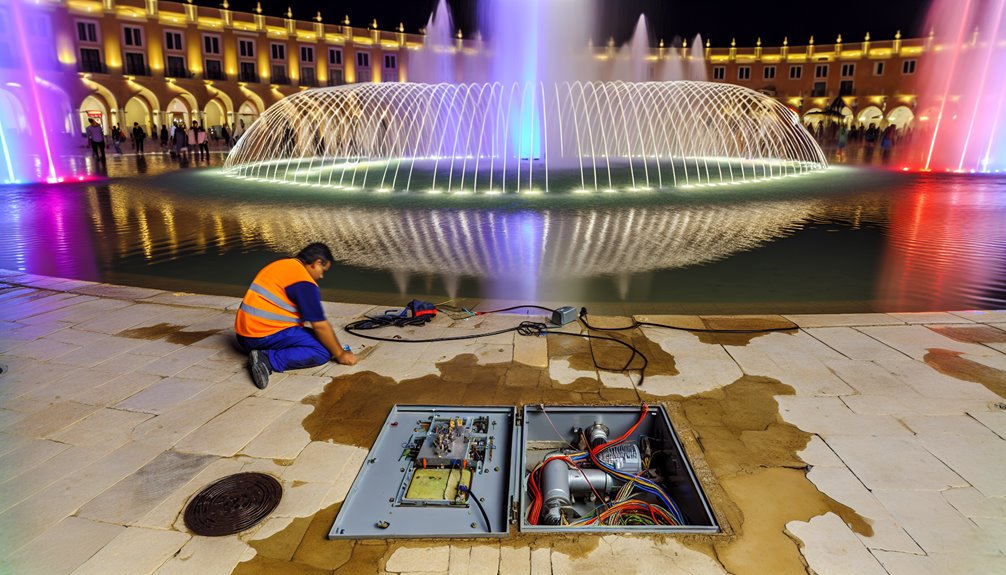
Several less visible cost factors can significantly affect the total budget of a dancing fountain project if they are not identified early. Beyond the headline price of equipment and construction, investors must account for soft costs, compliance requirements, and site-specific adaptations, which can be substantial—particularly for medium and large installations.
Commonly overlooked cost areas include:
Identifying these hidden costs early allows project teams to set realistic budgets, avoid late-stage surprises, and maintain control over overall investment.
When a dancing fountain is planned as a long-life infrastructure asset rather than a one-time spectacle, design decisions become the primary drivers of total cost of ownership. Early engineering choices influence not only initial investment, but also energy consumption, maintenance effort, and system longevity over many years of operation.
Pump selection and sizing play a critical role. Correctly sized pumps balance capital cost, efficiency, and reliability. Oversized pumps waste energy and increase operating expense, while undersized pumps are forced to run at their limits, accelerating wear and shortening service life.
The use of variable-frequency drives (VFDs) allows pumps to operate at variable speeds, enabling dynamic water effects without continuous full-load operation. This reduces electricity consumption, limits thermal and mechanical stress, and extends equipment lifespan.
Control architecture and physical layout further affect long-term costs. Modular control systems simplify upgrades and troubleshooting, while service-friendly layouts reduce downtime and labour during maintenance. In submerged environments, durable lighting fixtures, robust sealing, and well-routed, accessible cabling significantly reduce failure rates and replacement frequency.
| Design Choice | Cost Impact Over Time | Key Technical Benefit |
| Efficient pump sizing | Lower energy use, fewer replacements | Optimised hydraulic performance |
| VFD integration | Reduced peak power demand | Flexible, efficient show control |
| Durable, accessible systems | Lower maintenance frequency | Faster servicing, longer lifespan |
By prioritising efficiency, accessibility, and durability at the design stage, dancing fountain projects achieve lower lifecycle costs, higher reliability, and more predictable long-term performance.
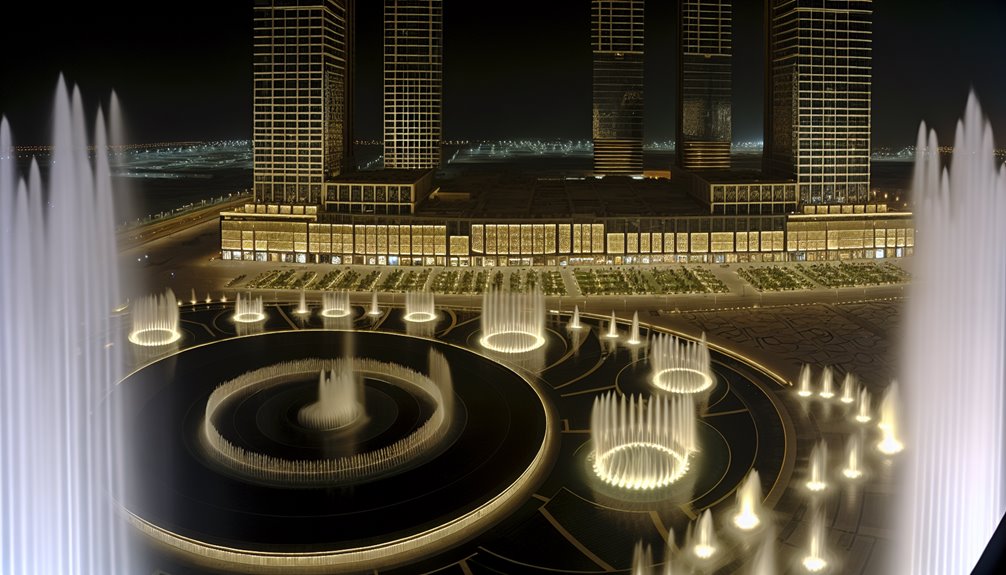
Design decisions that optimise lifetime cost must also reflect regional market realities, particularly in the Middle East and Asia, where project expectations, operating conditions, and budget frameworks differ significantly.
In many Gulf cities, large-scale landmark dancing fountains are integral to destination branding. These projects typically drive higher capital expenditure through the use of high-output pumps, extensive nozzle arrays, redundant systems, and complex lighting and music choreography designed for long viewing distances and nightly operation.
By contrast, many Asian projects prioritise strong visual impact within tighter budget ceilings, placing greater emphasis on cost efficiency, modular design, and phased implementation while still meeting public-use and reliability requirements.
Key regional cost drivers include:
Understanding these regional factors early allows project teams to align design ambition with realistic budget and operating conditions, reducing cost risk while maintaining performance expectations.
Although dancing fountains can absorb almost any level of investment, a sound budget starts with a disciplined definition of intent and limits. A clear statement of performance goals—spectacle level, viewing distance, and synchronization with music—prevents aesthetic ambition from silently escalating costs.
Next, defining operating hours anchors projections for electricity, water usage, and staffing, separating one‑time capital expense from recurring obligations.
Defining operating hours anchors realistic forecasts for utilities and staffing, clearly separating capital costs from recurring obligations
Lifecycle expectations must then be quantified: target service life, acceptable downtime, and refurbishment cycles for pumps, nozzles, and lighting. This determines appropriate material grades and control technologies.
Finally, aligning budget with design reality means adjusting feature density, show complexity, and equipment redundancy until capital, operating, and lifecycle costs form a coherent, sustainable envelope for the project.
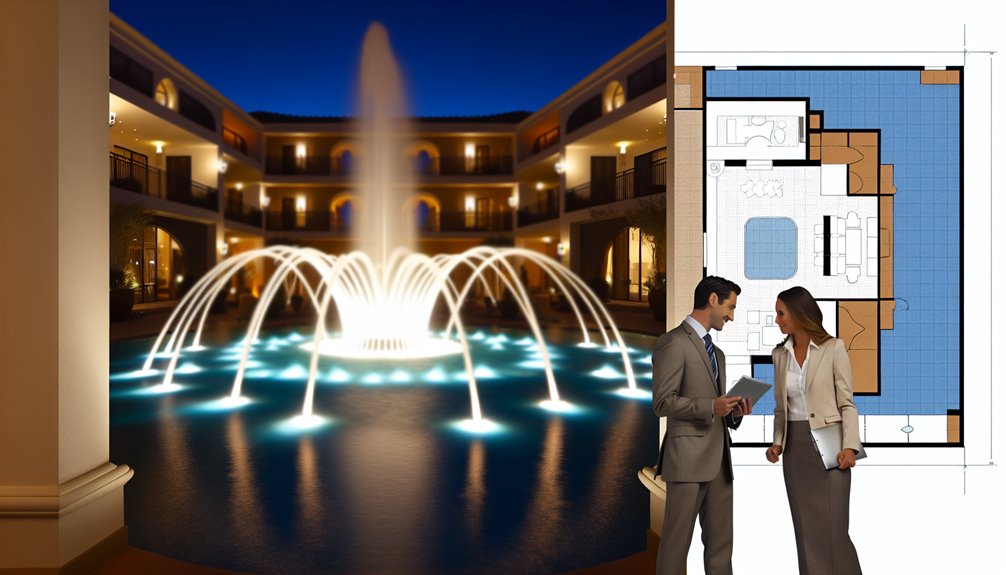
A dancing fountain system specialist should be engaged at the concept stage, before architectural and landscape designs are finalised. Early system-level coordination ensures that aesthetic intent, technical feasibility, and budget limits are aligned from the outset.
At this stage, specialist input informs basin geometry, equipment room planning, electrical capacity, control architecture, and sightlines, allowing the fountain to be integrated into the overall project rather than retrofitted into a fixed design.
Early engagement helps avoid several common risks:
Engaging a specialist early transforms the dancing fountain from a late-stage feature into a coordinated, high-performing infrastructure element within the overall project.
Early specialist involvement only delivers value when paired with a team that can translate concept, performance goals, and budget into a buildable dancing fountain system. That is the role we take at Optimum Show.
We align creative ambition with financial boundaries through disciplined technical planning. Our process combines artistic design, 3D animation, and detailed hydraulic and control-system engineering to test how different effects, scales, and materials influence cost before construction begins.
By evaluating alternatives—such as nozzle configurations, DMX lighting schemes, pump sizing, and custom water features—we clearly demonstrate how each design decision affects both capital investment and long-term operating costs.
Through landmark projects such as the Sheikh Zayed Festival and Riyadh Boulevard City fountains, we have developed proven benchmarks for budget ranges, phasing strategies, and lifecycle maintenance planning. This experience allows us to help projects maximise visual impact while keeping expenditure, reliability, and operational efficiency under control.
If you are planning a dancing fountain project, engage us early.
We can help you define a budget that supports performance, durability, and long-term value—before costly decisions are locked into the design.
Yes, modular dancing fountain systems can be upgraded with additional jets, lights, and special effects. Designers, however, must pre-plan capacity in pumps, power, control cabinets, and piping routes to keep later expansion technically feasible, visually coherent, and cost-efficient.
Design and installation of a dancing fountain typically take 2–6 months, including 4–10 weeks for design and engineering, 3–6 weeks for fabrication, and 3–6 weeks for on-site installation, commissioning, and show programming. Actual timelines vary based on fountain size, customization level, site conditions, permitting requirements, and budget constraints.
They typically require building and structural permits, water‑use and drainage approvals, electrical and control‑system certification, environmental and noise reviews, public safety and accessibility compliance, plus fire, zoning, and aesthetic approvals from planning or cultural authorities, depending on jurisdiction.
Dancing fountains influence nearby assets through moisture, vibration, light spill, and crowd flow. Proper hydraulic design, wind control, drainage, and anti-slip paving protect facades, roads, and plazas while lighting design, noise limits, and circulation planning preserve comfort and property value.
Visitor protection requires controlled access zones, non‑slip pavements, electrical and GFCI safeguards, water‑quality management, wind and overspray sensors, clear signage, emergency shut‑offs, night‑visibility lighting, surveillance, and routine inspections—balancing safety, visual elegance, and lifecycle cost efficiency.
Dancing fountain investments range from compact commercial features below USD 50,000 to landmark water shows exceeding USD 200 million, with ongoing operation and maintenance often representing a substantial portion of total lifecycle cost. The most successful projects achieve balance by combining advanced control systems, efficient hydraulics, and durable materials with disciplined lifecycle planning.
When technical, financial, and environmental factors are aligned early, visual ambition can be delivered without cost overruns or operational inefficiencies. Thoughtful system design, realistic budgeting, and early specialist coordination help manage regional construction variables and long-term operating demands—ensuring the fountain remains both financially sustainable and visually compelling throughout its service life.