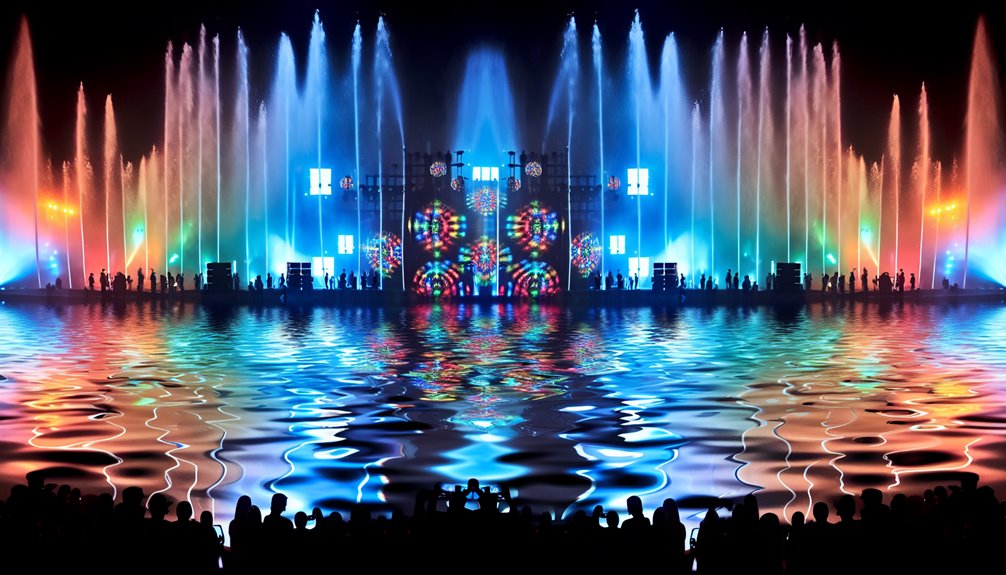
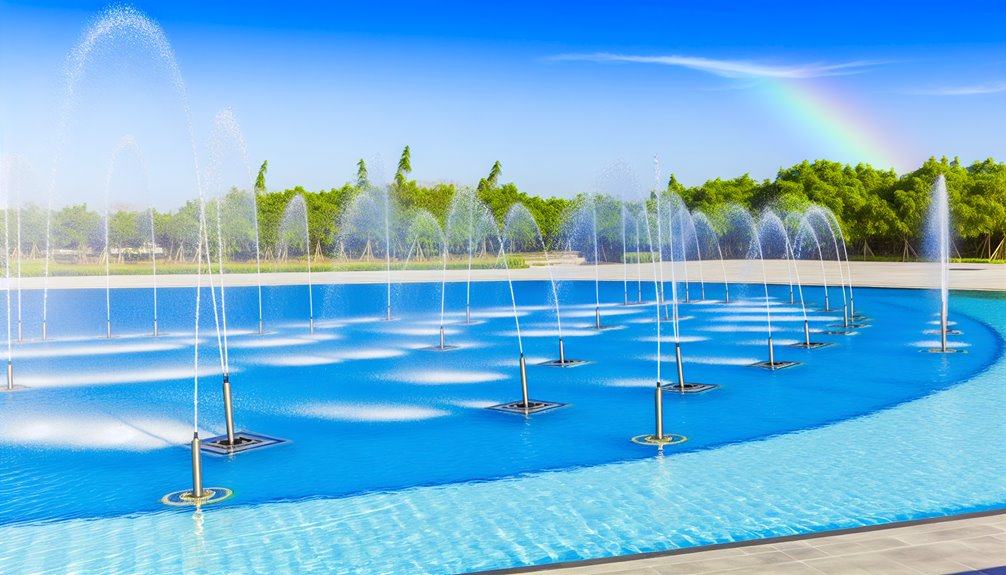
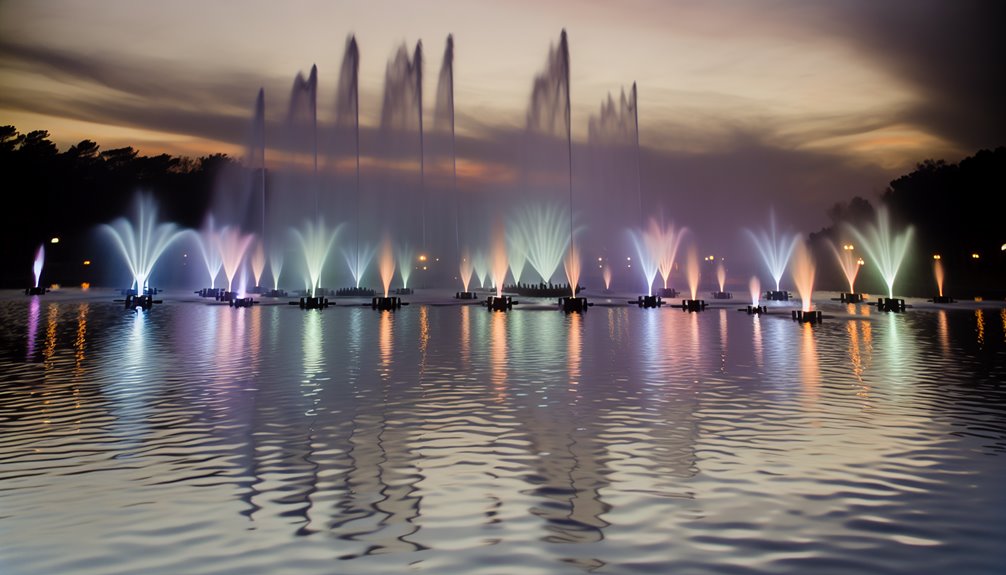
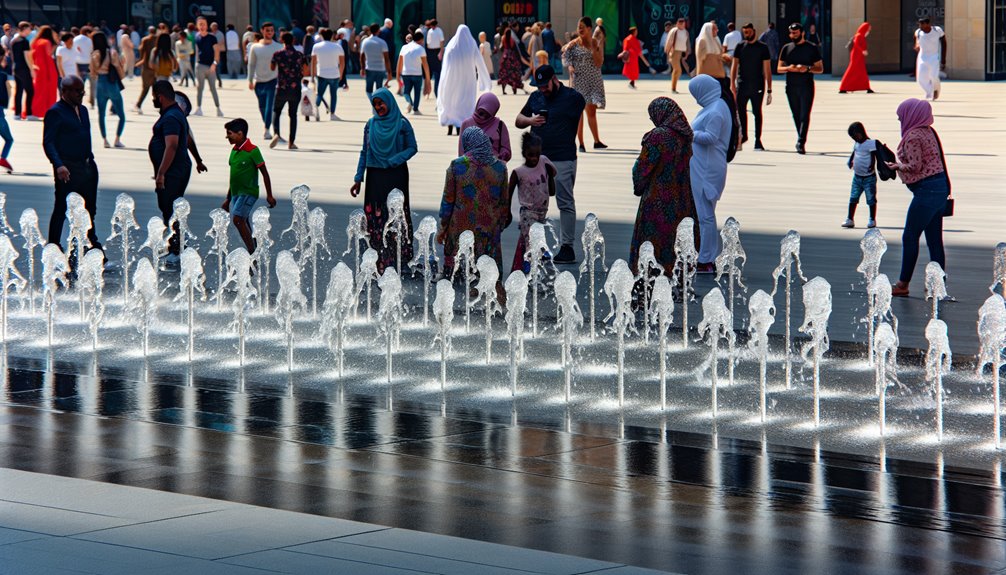
Large-scale landmark fountain systems stand as majestic symbols within public and urban environments, blending artistic vision with technical precision. These monumental structures not only captivate with their aesthetic appeal but also embody principles of sustainable design. Incorporating advanced water management techniques, they enrich cityscapes and foster community pride. Yet, the intricacies of their design and operation unfold a story of engineering marvels and ecological responsibility, inviting further exploration into their multifaceted impact.
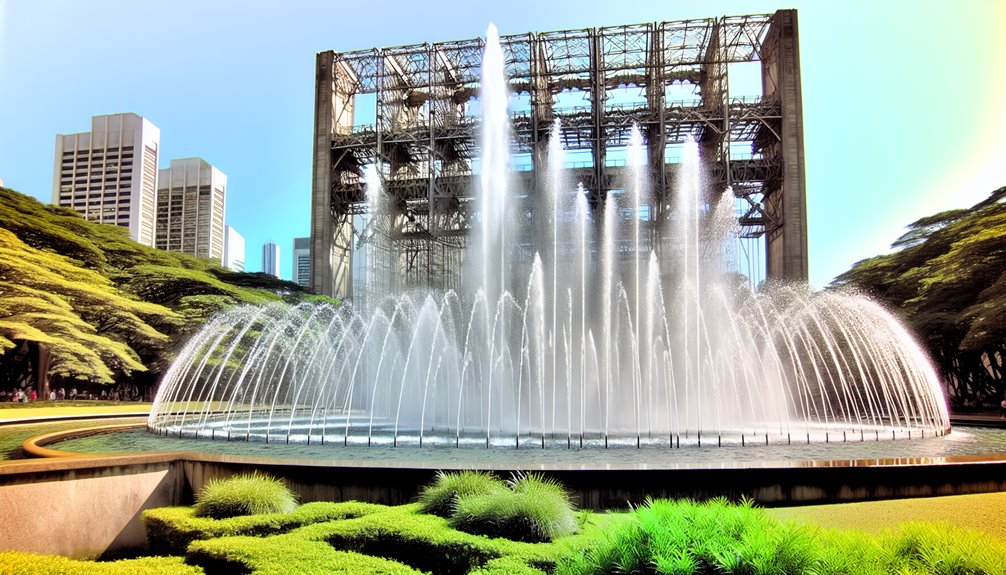
Fountains, often described as urban jewels, transcend their functional origins to become iconic landmarks that define cityscapes around the globe. A large-scale landmark fountain serves not only as a monumental water feature but also as a canvas for artistic expression and technical mastery.
These urban landmark fountains captivate audiences with their grandeur, while simultaneously boosting local economies by attracting tourists. Historically, they have symbolized civic pride and innovation, as seen in masterpieces like the Trevi Fountain or the Dubai Fountain.
Each design reflects unique cultural narratives, with water acting as a medium for storytelling. These monumental water features integrate sustainable design principles, ensuring their longevity and continued influence on city identity and urban aesthetics.
Urban landscapes gain their iconic character from monumental water features that blend artistic vision with technical precision, as seen in the previous examples of renowned fountains.
The design of large fountain installations in cities and public parks is intrinsically shaped by site and urban conditions. Key considerations include:
These factors often dictate the form of a fountain more than the initial design intent, balancing aesthetics and practicality.
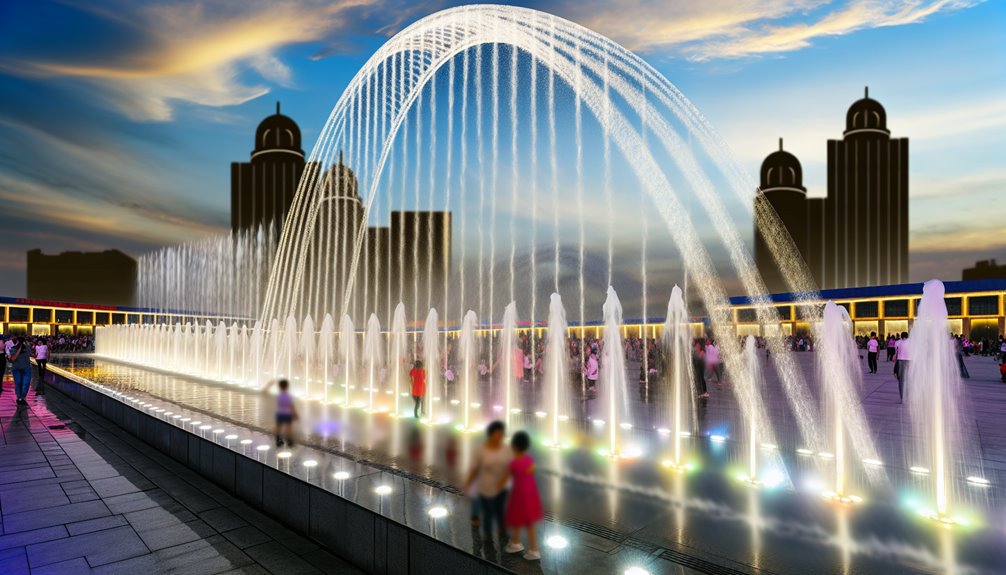
When delving into the complexities of engineering landmark fountains, one must appreciate that these grand water features exhibit unique behaviors distinct from their smaller counterparts.
Large water fountain systems demand intricate hydraulic management, as the flow rate balancing and pressure management across long distances guarantee a harmonious display.
Within fountain water show systems, jet height, spacing, and rhythm must be meticulously calibrated to maintain visual coherence at extended viewing ranges.
These custom fountain systems require an understanding that their design cannot be scaled linearly from smaller fountains.
Each element, from the basin size to the jet choreography, must be thoughtfully engineered to accommodate the expansive scale, ensuring both artistic vision and technical precision are met sustainably.
Therefore, landmark fountains stand as singular feats of engineering.
Successful landmark fountains are not defined by visual scale alone. Across regions and project types, long-lasting public fountains tend to share a small number of consistent design and engineering principles that directly influence performance and longevity.
In successful projects, jet height, basin dimensions, and choreography are designed around how people actually experience the fountain. Viewing distance, surrounding architecture, and pedestrian movement patterns determine scale far more effectively than headline height figures.
The Dubai Fountain achieves its impact by aligning performance proportions with an exceptionally wide public plaza, ensuring clarity and coherence rather than visual overload.
Landmark fountains are expected to operate reliably in highly visible environments, often with daily or scheduled performances. For this reason, successful systems are engineered with redundancy across pumps, valves, and control channels.
The Bellagio Fountains illustrate how layered backup design allows consistent operation even when individual components require maintenance, protecting both performance schedules and public perception.
Fountains that remain relevant over decades are rarely those with fixed effects. Instead, they rely on programmable control systems that allow choreography, timing, and presentation to evolve without structural modification.
The continued relevance of the Magic Fountain of Montjuïc demonstrates how adaptability through software protects long-term value and enables cultural, seasonal, and event-driven updates.
As fountain layouts expand, centralised control architectures become increasingly fragile and inefficient. Successful large-scale projects adopt distributed, multi-zone control strategies that improve response accuracy and simplify maintenance.
The Palm Fountain shows how modular zoning allows different sections of a fountain to operate independently, maintaining performance consistency across extended and irregular sites.
Some of the most recognisable landmark fountains succeed through technical restraint rather than complexity. In demanding environmental conditions, simplicity executed reliably often outperforms elaborate choreography.
The enduring visibility of the Jet d’Eau highlights how hydraulic robustness, wind tolerance, and operational consistency can define landmark status more effectively than layered effects.
Landmark fountains succeed when scale, reliability, adaptability, and operational reality are engineered together from the beginning. Visual impact is the result of technical clarity — not a substitute for it.
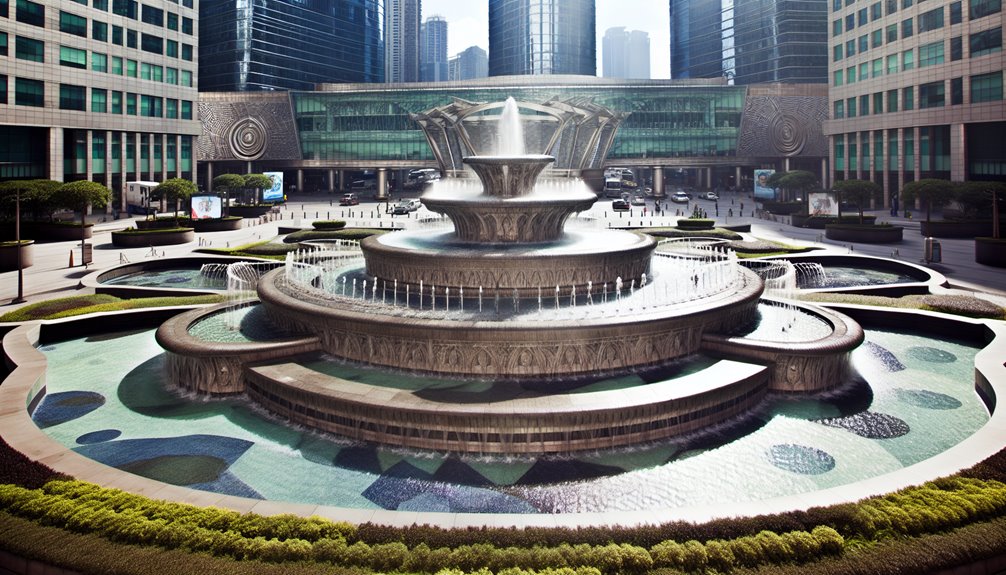
The orchestration of musical water shows within landmark fountain systems extends beyond mere aesthetics to embody an intricate blend of artistic vision and technical precision.
Transforming a public space fountain into an experiential spectacle involves more than aesthetics; it requires precision in choreography and synchronization across expansive basins. Iconic fountains for resorts and floating fountains for landmarks illustrate this complexity, where musical programming reinforces the site’s identity, enchanting audiences with seamless harmony between water, music, and light.
Mastery over DMX/PLC architecture is essential, as it orchestrates myriad elements into a cohesive performance, ensuring every jet and light aligns with the musical score. This fusion of technology and artistry not only enhances visual appeal but also fosters sustainable design practices, creating enduring urban landmarks.
Although often overlooked, the architectural choices behind landmark fountain systems are essential in defining their performance and sustainability.
These decisions blend artistic vision, technical precision, and sustainable design, guaranteeing these spectacles remain both inspiring and functional.
Key choices include:
These elements collectively shape the landmark fountain's legacy in urban landscapes.
Craftsmanship at the intersection of art and engineering underpins the cost structure of large-scale landmark fountains. Such monumental endeavors demand significant investment, driven by the intricate balance of aesthetic ambition and engineering prowess.
Civil works, infrastructure, and access costs form the backbone of these projects, ensuring both aesthetic brilliance and structural integrity. The depth of programming—encompassing choreography of water, light, and sound—determines the visual return, enchanting audiences worldwide.
Conversely, under-designed systems often incur higher long-term expenses, as they fail to withstand the test of time and evolve with technological advancements. The true artistry lies in harmonizing initial investment with sustainable design, ensuring these fountains remain iconic symbols of human ingenuity and cultural heritage for generations to come.
While the grandeur of landmark fountains fascinates the imagination, their operational reality demands a delicate balance of technical precision and sustainable design. Guaranteeing their seamless function requires meticulous planning and robust systems. This involves:
Such considerations guarantee these majestic water features remain both a visual delight and a sustainable urban asset.
In landmark fountain projects, specification mistakes often arise from a lack of complete understanding, where visual grandeur frequently overshadows technical precision.
Designers may over-prioritize visual height, sacrificing control stability, thereby jeopardizing the fountain's functionality. Ignoring wind and environmental exposure can lead to water dispersion issues, diminishing both aesthetic appeal and efficiency.
Often, these structures are treated merely as decorative features, neglecting critical engineering elements necessary for long-term success. Additionally, underestimating lifecycle and maintenance planning results in unforeseen challenges and costs.
A balance of artistic vision and technical precision is essential, ensuring sustainable design that withstands environmental variances and operational demands.
Through thorough planning, these iconic water features can achieve their intended splendor and durability.
Why should a landmark fountain not always grace the skyline? While visually enchanting, large-scale fountains may not always be appropriate. Considerations of practicality and sustainability must guide such monumental decisions.
Experienced engineers often advise against monumentality under certain conditions:
An artistic vision must harmonize with technical precision and sustainable design, ensuring fountains enrich rather than detract from their surroundings.
Landmark fountains enhance local tourism by attracting visitors with their artistic grandeur and technical marvels, boosting the economy through increased foot traffic. Their sustainable designs often become iconic symbols, reflecting cultural identity and urban innovation.
Environmental considerations for large-scale fountain systems include water conservation, energy efficiency, and sustainable materials. The harmony of art and environment is achieved through recirculating systems, efficient pumps, and eco-friendly construction, ensuring a balance between beauty and responsibility.
Cultural aspects shape fountain design by reflecting local traditions, history, and symbolism, integrating artistic vision with technical precision. Themes often embody regional narratives, influencing aesthetic choices and sustainable design, ensuring resonance with both the environment and the community's identity.
Landmark fountains serve as symbols of urban identity, reflecting community pride through artistic vision. They embody technical precision and sustainable design, providing a focal point that enhances cultural expression and unites people in shared experiences and civic pride.
Technology in modern landmark fountains is evolving through artistic vision, technical precision, and sustainable design. Innovations include advanced choreography software, eco-friendly water recycling systems, and dynamic LED lighting, creating immersive experiences while minimizing environmental impact.
Landmark fountains today are complex public assets, not decorative features. Their success depends on disciplined engineering, environmental responsibility, and the ability to perform reliably over time. When these elements are aligned, a fountain becomes part of a city’s identity—enhancing public space, supporting economic activity, and delivering long-term value.
Optimum Show specialises in delivering landmark fountains and musical water shows as fully integrated systems—from early concept and engineering coordination through installation, programming, and long-term performance support.
If you are planning a public, commercial, or landmark fountain project and need a partner who understands both spectacle and system reliability, our team can help turn vision into a water feature built to endure.
Learn more about our approach or discuss your project with Optimum Show.