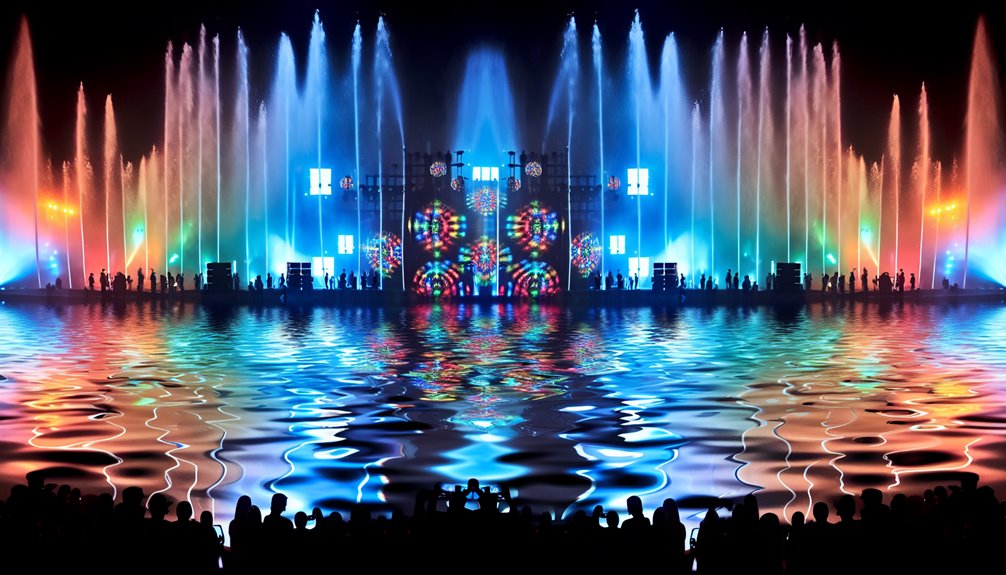
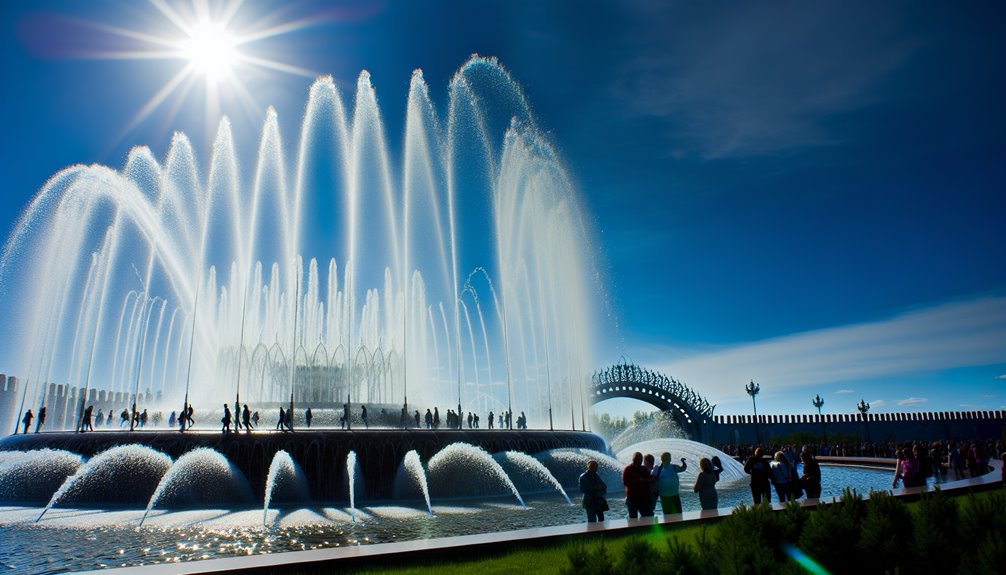
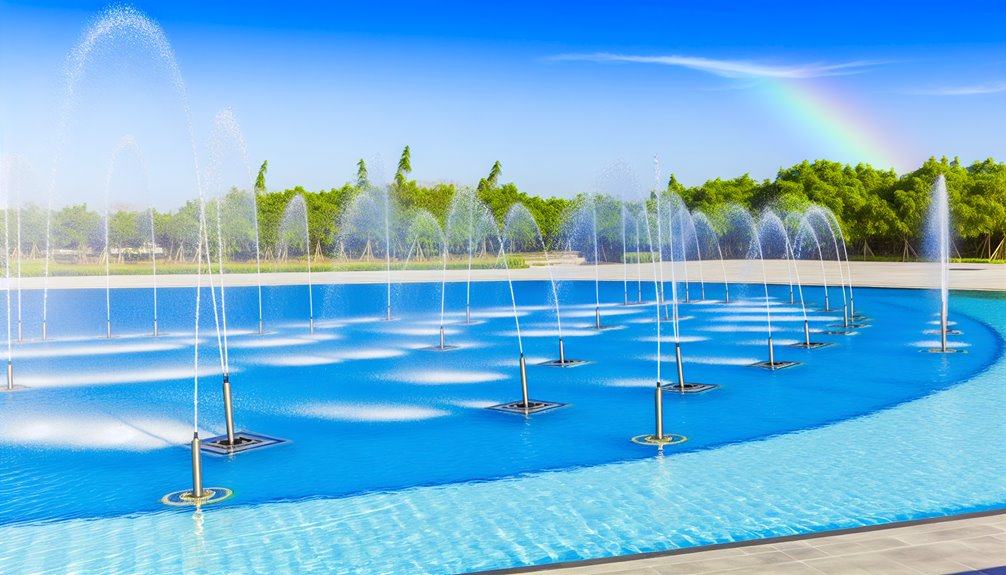
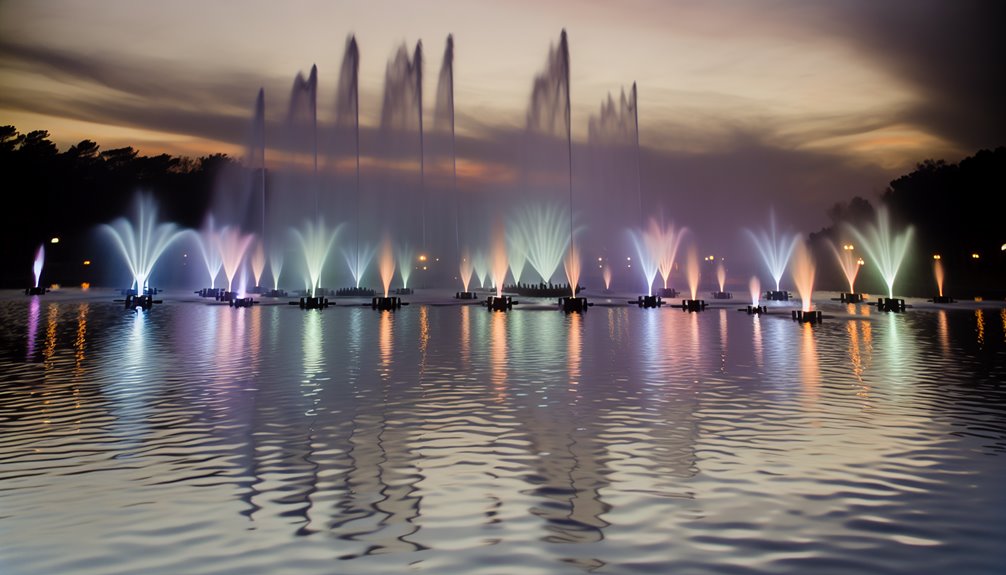
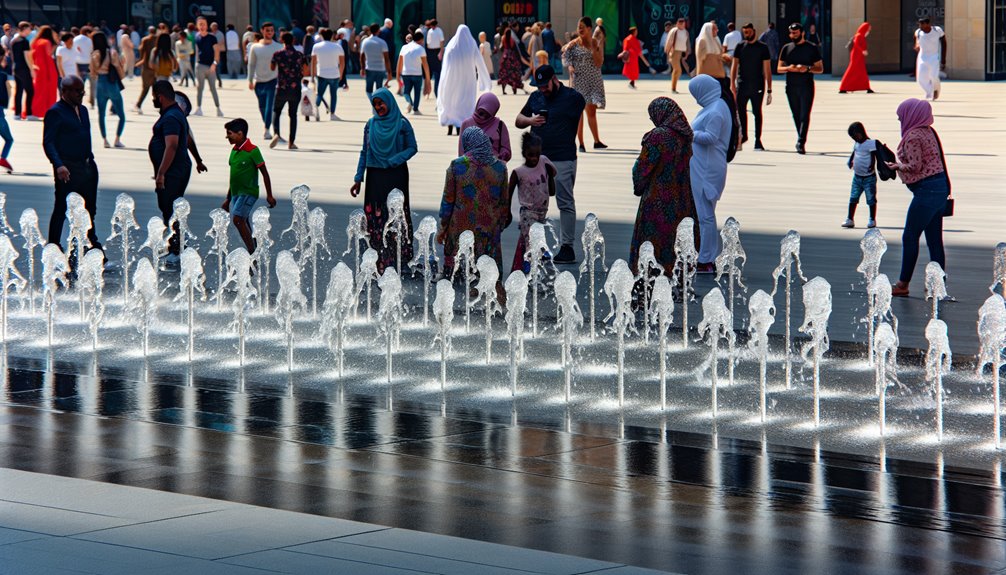
A musical water show is an extraordinary fusion of engineering, artistry, and technology that transforms a mundane fountain into an enchanting spectacle. It combines dancing water jets with vibrant lights and synchronizes them to enthralling music, creating a mesmerizing visual experience. This guide explores the intricacies involved in large-scale projects, from the core systems and programming to the cost and operational challenges. Discover how these shows redefine public spaces, inviting audiences to immerse themselves in a symphony of water and light.
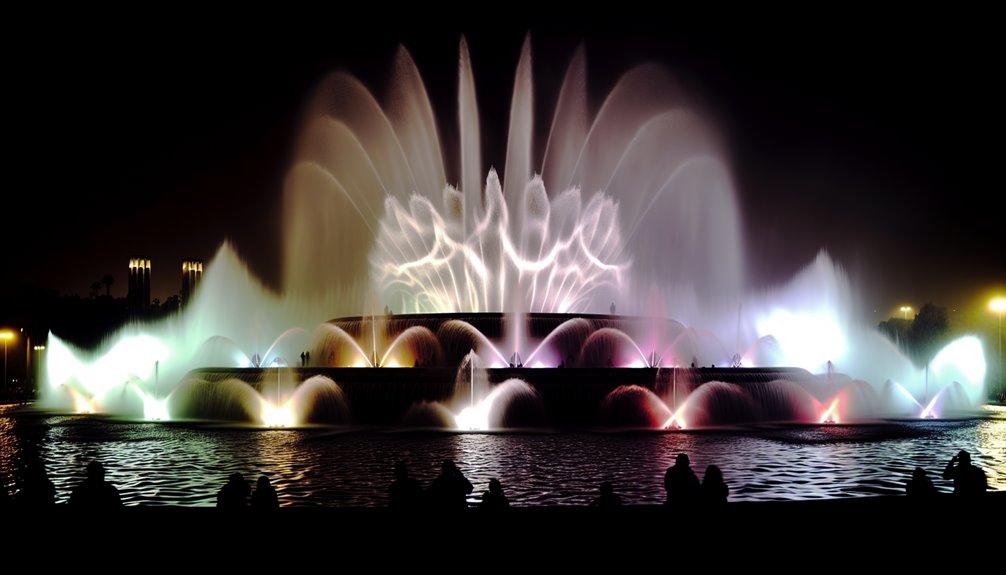
How does an ordinary fountain evolve into a mesmerizing water show? This metamorphosis hinges on the intricate art of water show programming.
Unlike static fountains, performance-based systems weave together fountain choreography with precise timing and control, transcending mere physical stature like jet height. The magic unfolds as streams of water dance in unison with a synchronized water and light show, enchanting audiences with their rhythmic elegance.
The shift from a simple fountain to an elaborate show project occurs when the emphasis shifts from static beauty to dynamic performance. Through meticulous orchestration, these displays become spectacles of movement, where every droplet and beam of light is a calculated participant in a grand, aquatic ballet, captivating viewers through its harmonious symphony.
At the heart of a musical water show lies a symbiotic integration of systems, each layer essential to its mesmerizing performance.
The hydraulic layer transforms water into a dynamic medium, choreographed through precision pumps and nozzles, while the lighting layer imbues the scene with depth and vibrancy using RGB LEDs synced to the water’s rhythm.
Meanwhile, the audio layer provides a temporal backbone, guiding the spectacle with music-driven cues, all orchestrated by a sophisticated control layer that harmonizes these elements into a seamless aquatic ballet.
Behind every seamless musical water display is a highly engineered hydraulic layer, where water functions not merely as a material, but as a responsive performance medium. At the core of this system is the water show control platform, which governs real-time flow modulation and pressure response with millisecond accuracy.
In dynamic water features such as dancing fountains, performance is driven less by pump size and more by responsiveness. Fast-acting valves enable rapid transitions between jet heights, spray forms, and motion sequences, allowing the water to react instantly to musical cues. Meanwhile, intelligent nozzle grouping translates hydraulic output into structured visual choreography, ensuring consistency, balance, and rhythm across the entire fountain array.
Through precise coordination of flow, pressure, and timing, the hydraulic layer becomes an invisible stage—one where water moves with intention, precision, and expressive clarity.
| Element | Function | Importance |
| Flow Control | Regulates water movement | Guarantees precision |
| Pressure Response | Adjusts to dynamic requirements | Enhances performance |
| Nozzle Grouping | Coordinates water jets | Creates visual harmony |
| Fast-Response Valves | Prioritizes agility over size | Enables rapid pattern changes |
| Water Show Control | Central system for operations | Integrates all hydraulic actions |
While the choreography of water jets captivates with its kinetic elegance, it is the lighting layer that imbues a musical water show with visibility, rhythm, and depth, transforming it into a multi-sensory spectacle.
In a large-scale water show, the interplay between light and water becomes vital, utilizing sophisticated lighting systems to highlight each droplet and wave. These systems are meticulously synchronized with the water fountain show system to guarantee seamless changes and dynamic effects.
Through strategic placement and timing, lighting creates an illusion of movement and dimension, guiding the audience’s eye and enhancing the narrative of the performance.
The audio layer acts as the heartbeat of a musical water show, serving as a critical timing reference rather than mere decoration. In a water show installation, sound systems dictate the choreography's precision, ensuring seamless synchronization between music and the aquatic dance of fountains.
The music's rhythm guides the timing of water jets, lights, and other elements, creating a unified spectacle. However, large-scale outdoor sites present latency and alignment challenges. Sound can travel unevenly across vast spaces, causing delays that disrupt the intended harmony.
Engineers must meticulously calibrate audio equipment to overcome these obstacles, ensuring that every beat, pause, and crescendo aligns perfectly with the visual display. Consequently, the audio layer is not just an accompaniment but the orchestrator of the entire musical fountain show.
At the heart of every musical water show lies the control layer, where technology and artistry converge to orchestrate a mesmerizing spectacle. This pivotal component of the musical fountain system relies on sophisticated show-control architecture to synchronize water, light, and music seamlessly.
The intricacies of this orchestration are often governed by cutting-edge software design, which determines the quality of the show more profoundly than hardware alone.
Key elements include:
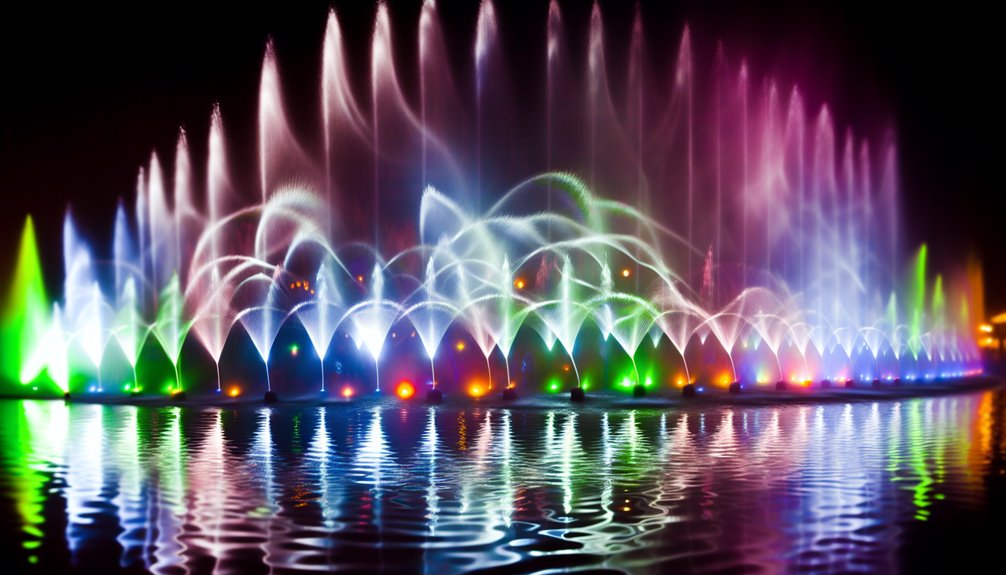
When orchestrating the symphony of water, light, and sound that defines a musical water show, programming is the keystone that unites these elements into a harmonious spectacle.
Specialized software is employed to pre-program water shows, meticulously crafting sequences that dictate the interplay of water, light, and music. In an outdoor water show, robust computerized control systems guarantee precise synchronization, managing water pumps, LED lights, and audio components.
Meticulously crafted sequences ensure the flawless interplay of water, light, and music in outdoor water shows.
The nozzles and solenoid valves manipulate water shapes and flow, while LED lights adjust color and intensity in real-time, synced to the music's rhythm and mood.
Effective water show maintenance is essential, preserving the spectacle's integrity and guaranteeing that the visual beauty and public attraction of these shows remain enchanting and vibrant.
Scale introduces a unique set of challenges to musical water shows, transforming the intricacies of small displays into the complexities of landmark spectacles.
As projects grow, the following considerations come into play:
Navigating these elements is vital for the successful execution of grand musical water shows.
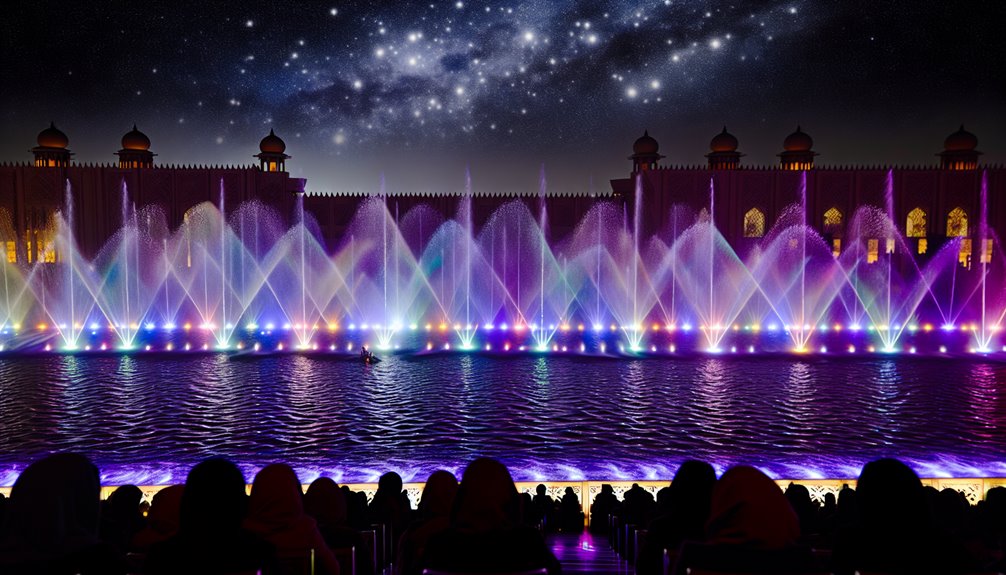
Musical water shows are not universal crowd-pleasers in every context. Their value is realised only in environments where scale, visibility, and audience flow justify the complexity and cost.
They perform best in high-profile public settings where the surrounding architecture, open sightlines, and pedestrian volume allow the choreography to be experienced as a landmark feature rather than background decoration.
In resorts, casinos, and large mixed-use developments, musical fountains function as destination anchors—drawing foot traffic, extending dwell time, and reinforcing a sense of spectacle aligned with leisure and entertainment branding.
For cultural and civic projects, these systems can play a symbolic role. When thoughtfully integrated, they support public events, celebrations, and civic identity, turning plazas and waterfronts into animated social spaces rather than static infrastructure.
| Setting | Strategic Purpose |
| Urban landmarks & waterfronts | Establishes a recognisable city icon and enhances public realm identity |
| Resorts & casinos | Drives visitor attraction, dwell time, and entertainment value |
| Cultural & civic projects | Supports public events, heritage expression, and community engagement |
The allure of a musical water show lies not only in its visual splendor but also in the intricate ballet of cost-driving factors that shape its creation.
Key influences include:
Costs span from modest installations priced at $1,000 to grandiose projects like the Dubai Fountain, which demand considerable financial investment, underscoring the diverse scale and ambition within this artistic domain.
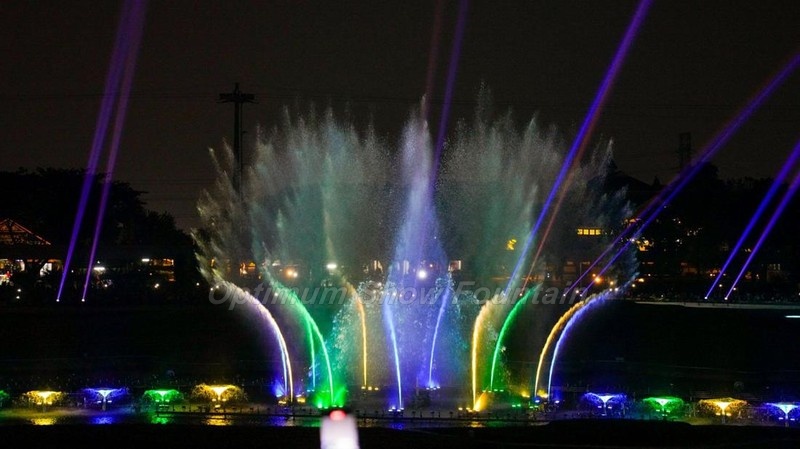
Once opening night passes, a musical water show transitions from a one-time spectacle into a living system that must perform reliably every day. The real challenge is no longer visual impact, but operational discipline.
Day-to-day operation requires a careful balance between routine maintenance and scheduled performances. Pumps, valves, lighting, and control systems need regular inspection and calibration to ensure show-ready performance without disrupting public access or programmed cycles. This makes structured maintenance planning—not reactive repair—the foundation of long-term stability.
Staffing also shifts in importance after handover. Teams must be capable of moving seamlessly between technical maintenance and live show execution, often within tight time windows. In practice, many system failures do not occur during installation or commissioning, but in the months following handover, when operational ownership transfers and procedures are inconsistently applied.
These post-handover issues are rarely design flaws. They are almost always the result of insufficient operational training, unclear responsibilities, or a lack of preventive maintenance routines. Sustaining performance quality, therefore, depends less on the initial build and more on the systems, skills, and planning in place after the show goes live.
| Aspect | Operational Focus |
| Daily Operations | Routine inspections, calibration, and minor adjustments |
| Scheduled Performances | Precise synchronisation of water, lighting, and music |
| Maintenance Planning | Preventive maintenance to avoid unplanned downtime |
| Staff Requirements | Technically trained personnel with show-time readiness |
| Post-Handover Risk | Failures caused by operational mismanagement, not installation |
Amidst the allure of musical water shows, a myriad of common mistakes often lurk beneath the surface, threatening to disrupt the harmony of water, light, and sound.
These oversights can compromise the spectacle's intended impact. Key errors include:
1. Jet Malfunctions: Blocked nozzles or insufficient water pressure can halt the fluid choreography of water jets, leading to irregular patterns and diminished visual appeal.
Regular maintenance, such as cleaning with vinegar, is essential.
2. Synchronization Problems: Faulty control systems or incorrect programming can throw off the seamless integration of water, music, and light, resulting in disjointed sequences.
Ensuring the accuracy of control systems and re-syncing DMX controllers are crucial steps.
3. Water Quality Issues: Dirty or contaminated water can degrade aesthetics and performance.
Regular filtration system maintenance and chemical treatments prevent clogs and maintain clarity.
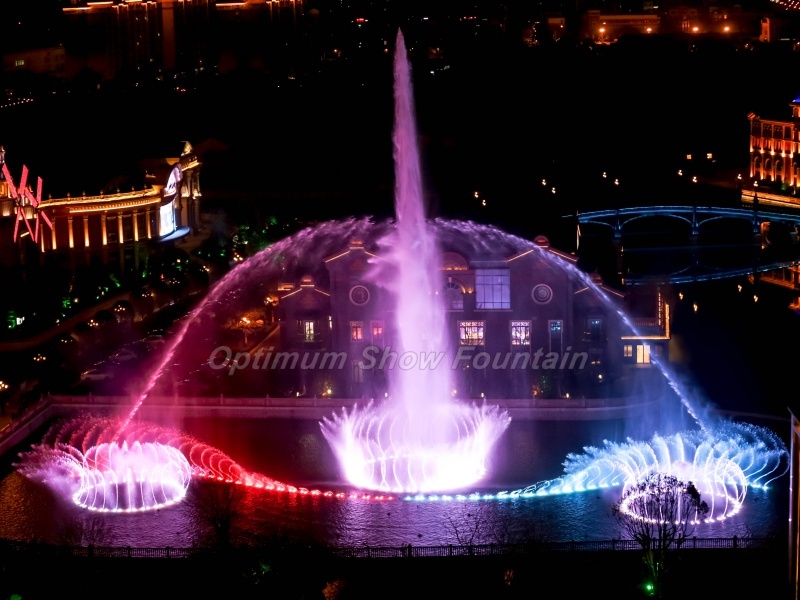
Optimum Show works at the intersection of engineering, choreography, and long-term operation. We design and deliver musical water shows as integrated systems—where performance quality, reliability, and maintainability are considered together from the outset.
Our work focuses on large-scale public, commercial, and landmark projects, supporting clients through concept development, system engineering, show programming, installation coordination, and post-handover operation. Rather than pursuing spectacle for its own sake, we prioritise solutions that perform consistently in real environments and remain adaptable over time.
Whether a project calls for a restrained architectural water show or a complex musical performance, our role is to translate intent into a system that can be built, operated, and sustained with confidence.
Learn more about our team and approach at Optimum Show.
The environmental impacts of musical water shows include water resource depletion, energy consumption, potential chemical runoff from treated water, and disruption of local ecosystems. Mitigation strategies can involve sustainable water management practices and energy-efficient technologies to minimize adverse effects.
Musical water shows can disrupt local wildlife by altering natural habitats, causing stress through noise pollution, and affecting feeding patterns and migration routes. Mitigation strategies include scheduling during non-sensitive periods and incorporating wildlife-friendly design elements.
Yes, musical water shows can be designed to be portable by utilizing modular components, lightweight materials, and advanced technology. This allows for easy assembly, disassembly, and transportation, making them suitable for various event locations and occasions.
Yes, sustainable alternatives for powering musical water shows include solar panels, wind turbines, and hydroelectric generators. These eco-friendly options reduce reliance on fossil fuels, minimize carbon footprints, and can be integrated seamlessly into existing water show infrastructure.
In Dubai, the Burj Khalifa's water show seamlessly integrates with its architecture, using synchronized fountains and lights to complement the building's design. Technically, precise hydraulics and LED systems are embedded, enhancing aesthetic value and visitor experience.
Musical water shows succeed when engineering and artistry work in precise alignment. As installations scale in size and ambition, complexity increases across design, programming, cost, and long-term operation—making integration essential rather than optional.
When executed well, these systems move beyond spectacle to become lasting public landmarks. Their impact is not driven by visual drama alone, but by the disciplined harmony between technology, creativity, and operational reliability.