Water screen projection transforms open water into a large-scale display surface for images, video, and synchronized multimedia shows. Unlike fixed LED walls or building projection mapping, a water screen disappears entirely when not in use — making it one of the few display technologies that integrates seamlessly into natural and architectural environments without permanent visual impact.
This guide covers how water screen projection works, the system types available, how to evaluate a site, and where it performs best — written for developers, event planners, and public space designers considering a permanent or temporary installation.
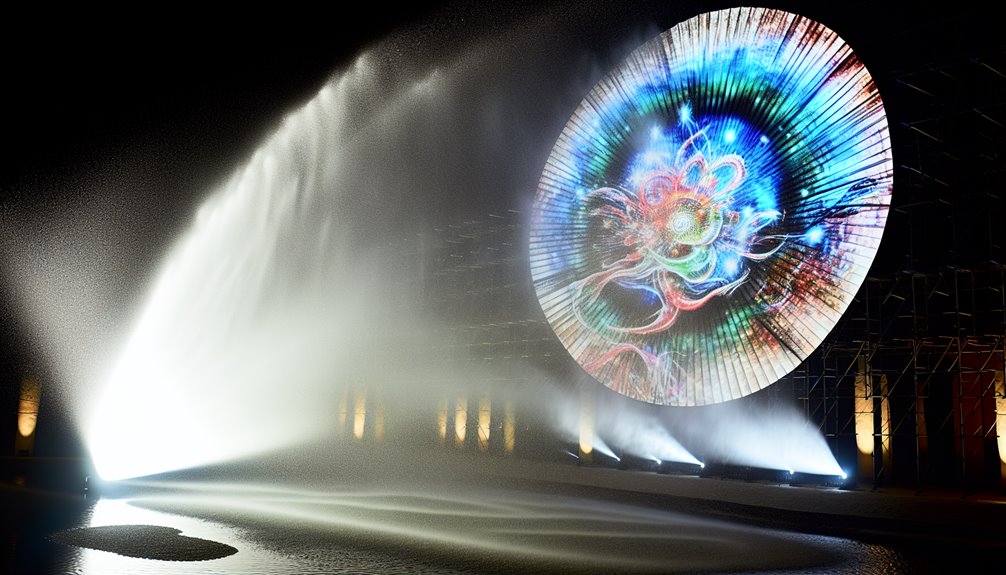
Water screen projection is a display method that uses a pressurized curtain or fan-shaped mist of water as a projection surface. High-lumen projectors cast imagery onto the water film, creating visuals that appear to float in mid-air — especially effective at night or in low-ambient-light environments.
The technology is used in permanent waterfront attractions, theme park nighttime shows, cultural heritage events, and large-scale commercial activations. Its defining characteristic is that the display medium is fluid and ephemeral: the screen forms on demand and vanishes when the show ends.
This is fundamentally different from both LED displays and architectural projection mapping, where the screen structure remains visible at all times.
A water screen projection system has three integrated layers: hydraulic screen formation, optical projection, and synchronized show control. All three must function together for stable, high-quality output.
The water surface is generated by high-pressure pumps pushing water through precision nozzle arrays. The nozzles atomize water into micro-droplets, forming a fan-shaped mist screen or vertical curtain depending on the system type.
Droplet size is a critical variable. Droplets that are too large fragment the image. Droplets that are too fine disperse easily in wind and reduce projection contrast. Nozzle geometry, pump pressure, and water quality must be carefully balanced to maintain screen density and shape throughout operation.
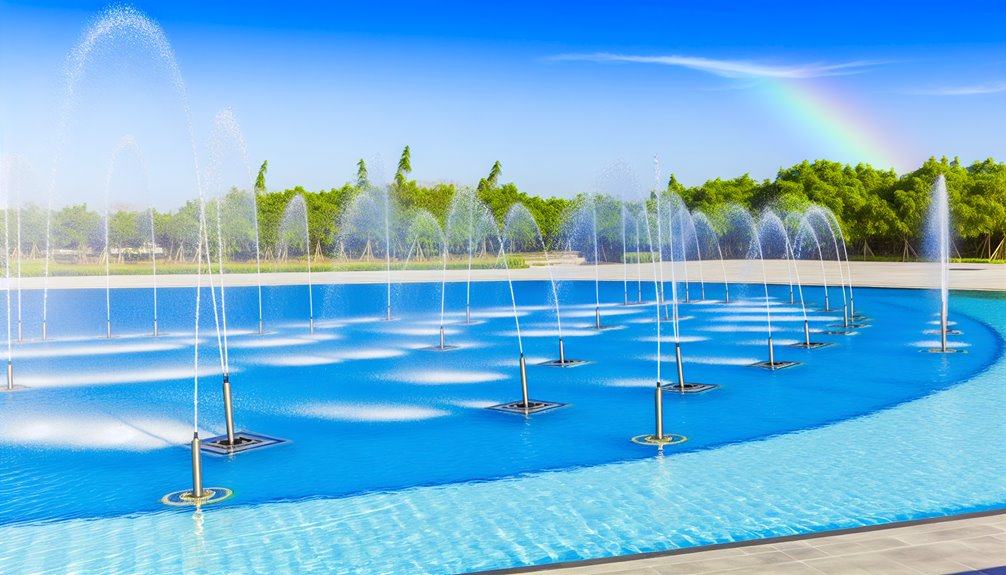
Core hydraulic components include high-pressure centrifugal or submersible pumps, corrosion-resistant piping, precision nozzle arrays, multi-stage filtration units, and flow regulation controls.
In lake or open-water installations, floating platforms are anchored to minimize oscillation and maintain projection alignment. Wind monitoring sensors can be integrated to automatically adjust pump pressure or pause operation when distortion thresholds are exceeded.
Water is not a solid reflective surface, so projection requires significantly higher lumen output than equivalent LED or building mapping installations. Large outdoor water screens typically require projectors rated at 20,000 lumens or above.
Optical alignment factors include throw distance, keystone correction, lens selection, and ambient light conditions. In wide-screen configurations, dual or redundant projectors ensure brightness uniformity and continuous operation if one unit requires servicing.
Content is delivered via a media server connected to the show control platform. Because water surface movement introduces subtle variation, frame timing must be precise — typically managed through DMX, PLC, or timecode-based synchronization.
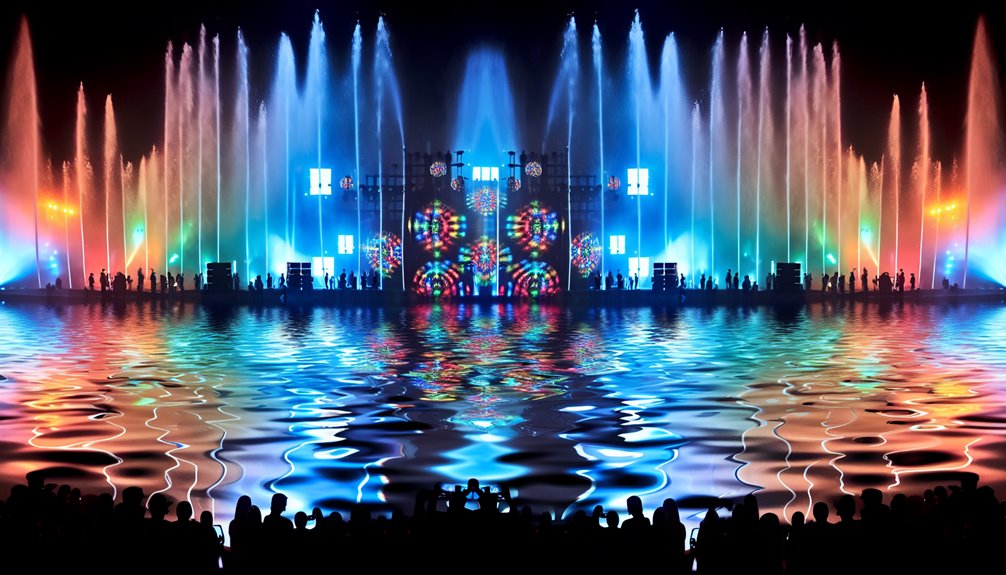
Water screen projection is rarely deployed as a standalone system. It is usually integrated with musical fountain choreography, laser arrays, architectural lighting, pyrotechnics, and audio playback. The show control platform coordinates all elements against a master timeline, ensuring that projection content, water movement, and supplementary effects remain synchronized throughout each performance.
System configuration depends on site geometry, audience positioning, environmental exposure, and whether the installation is permanent or temporary. Each type has distinct performance characteristics and engineering requirements.
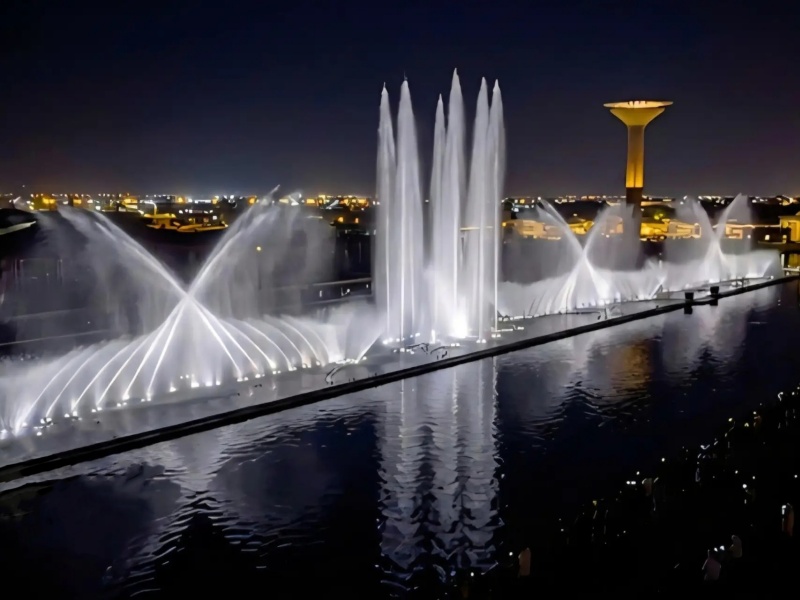
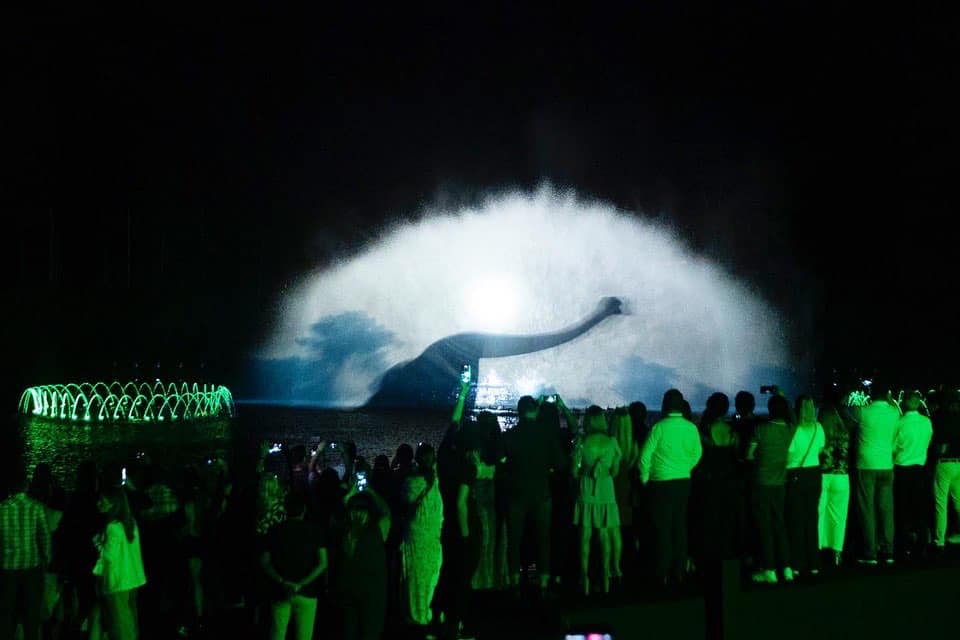
The most common configuration for large outdoor venues. High-pressure nozzles arranged along a floating or fixed platform produce a wide, semi-circular mist surface. Screen widths typically range from 15 to over 50 meters.
Best suited for: large lakes, waterfront plazas, tourism-oriented night shows, and musical fountain integration. Performs best after sunset. Sensitive to crosswind, requiring anchored platforms and wind monitoring for stable operation.
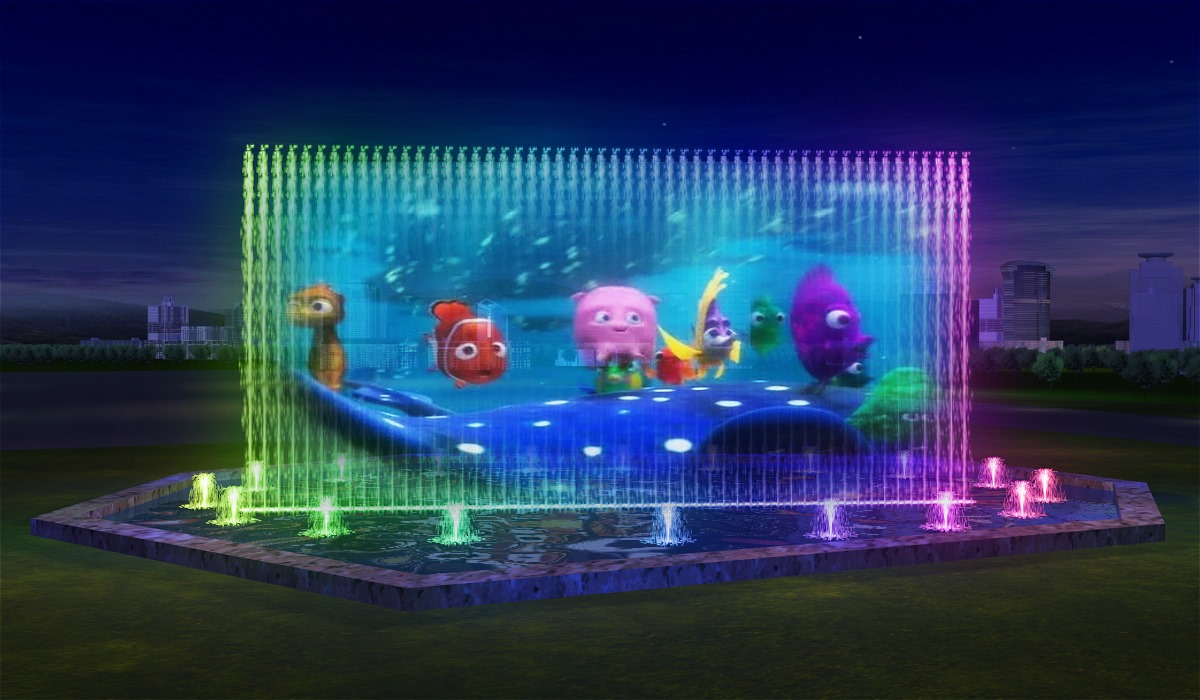
A flat or slightly curved sheet of falling water by one rows of vertical jets , often integrated into architectural frames or permanent structures. More stable than open mist screens under light wind conditions because the water follows a controlled vertical path.
Best suited for: theme parks, controlled basin environments, and installations where precise viewing angles and structural integration are required.
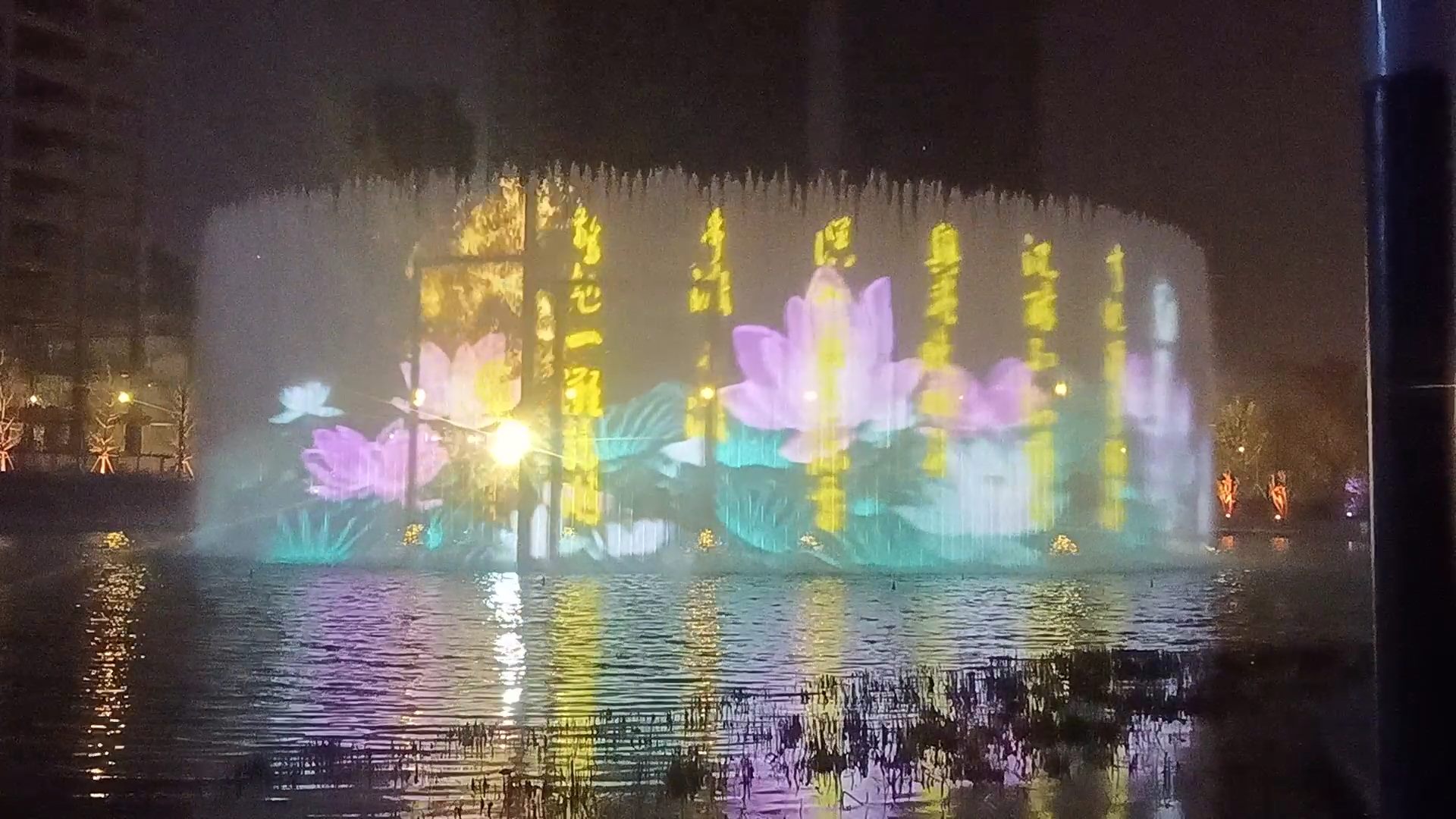
Water distributed in a ring formation, creating a projection surface visible from multiple viewing angles. Requires advanced projection mapping and content adaptation to maintain image legibility across different perspectives.
Best suited for: centralized plaza installations, themed entertainment environments, and experiential zones designed for immersive audience engagement.
Water screen projection performance is directly shaped by site conditions. These factors must be assessed before system design begins — not after procurement.
1. Wind exposure. Crosswinds above 3–4 m/s distort mist screen geometry and reduce image legibility. Open coastal or lakefront sites require wind analysis, directional installation planning, and potentially physical wind barriers. Adjustable pump pressure systems can compensate for moderate variation.
2. Water quality. Nozzles clog when water carries sediment or biological matter. Natural lake installations require higher-capacity multi-stage filtration. Poor water quality increases maintenance frequency and degrades screen uniformity over time.
3. Projection throw distance and alignment. The distance between projectors and water screen, combined with screen dimensions and ambient light levels, determines lumen requirements and lens selection. Misaligned projection geometry produces image distortion that cannot be corrected through software alone.
4. Pump sizing and hydraulic design. An undersized pump produces a thin, unstable screen. An oversized system wastes energy and increases operating costs. Hydraulic calculations should be completed before equipment specification.
5. Electrical safety. Water and electrical infrastructure coexist throughout the system. All components require IP-rated waterproof enclosures, proper grounding, overload protection, and protected cable routing. Floating installations require marine-grade cabling and connectors.
6. Drainage and water recovery. Splash, overflow, and evaporation must be managed through closed-loop circulation, correctly sized collection basins, and drainage routing. Inadequate drainage creates flooding and slip hazards in public environments.
7. Structural and mounting requirements. Fixed installations require reinforced foundations and anti-corrosion materials. Floating platforms must be anchored to prevent drift and vibration. All installations require accessible maintenance access to pumps, filters, and projector housings.
Water screen projection is a spatial storytelling medium. Its strongest applications are environments where large-scale, atmospheric visuals are needed but permanent screen structures would be intrusive or architecturally inappropriate.
1. Permanent waterfront developments. Urban waterfronts, artificial lagoons, and coastal plazas are the most natural fit for fan-shaped water screen systems. The installation becomes a focal nighttime attraction without requiring permanent visible infrastructure. Common in waterfront regeneration projects, mixed-use commercial developments, and tourism-oriented public squares.
2. Theme parks and leisure destinations. Water screens create a more cinematic and immersive environment than LED displays, particularly when combined with pyrotechnics, flame effects, and dynamic fountain movement. Used for nighttime spectacular finales, character-based storytelling sequences, and seasonal event programming. Controlled park environments allow for optimized wind buffering, audience positioning, and acoustic design.
3. Cultural and heritage presentations. Because the screen disappears when inactive, water screen projection preserves historical sightlines and architectural integrity. Appropriate for historical reenactments, cultural storytelling along ancient waterways, monument-centered spectacles, and national commemorative events where permanent screen structures would be restricted.
4. Temporary commercial and event activations. Modular floating systems support rapid deployment for product launches, corporate events, festivals, and large public gatherings. Temporary installations require careful pre-event wind forecasting, water quality assessment, and projection alignment verification.
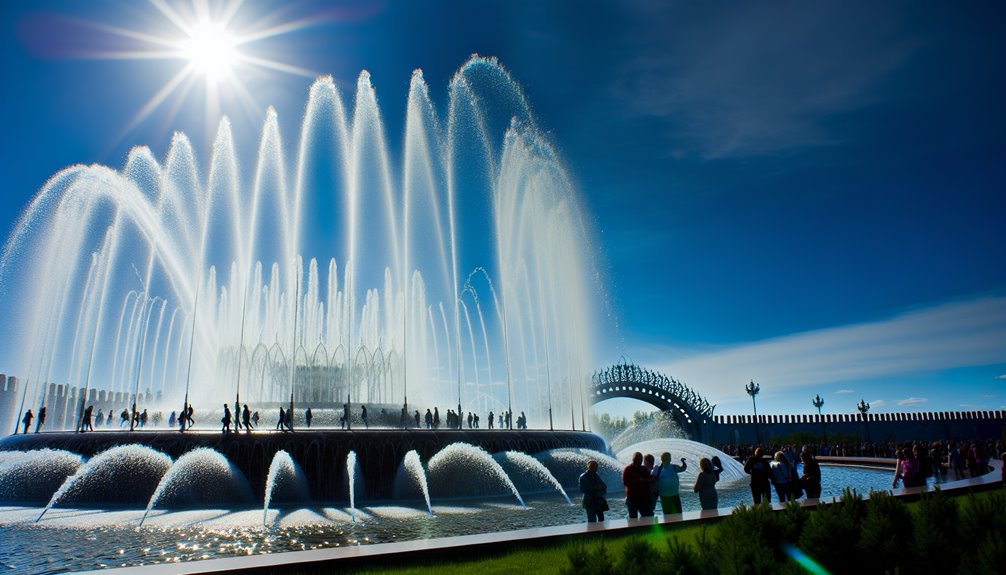
5. Musical fountain show integration. Water screen projection is frequently used as a background narrative layer within fountain systems, providing a content surface for branding or storytelling while fountain choreography drives the primary visual sequences.
Water screen projection is not suitable for every site. It performs poorly in high-wind coastal zones without shielding, small enclosed spaces lacking adequate projection throw distance, daytime-only environments where ambient light eliminates contrast, and sites without reliable water treatment infrastructure. In these cases, LED architecture or façade projection mapping typically delivers more consistent results.
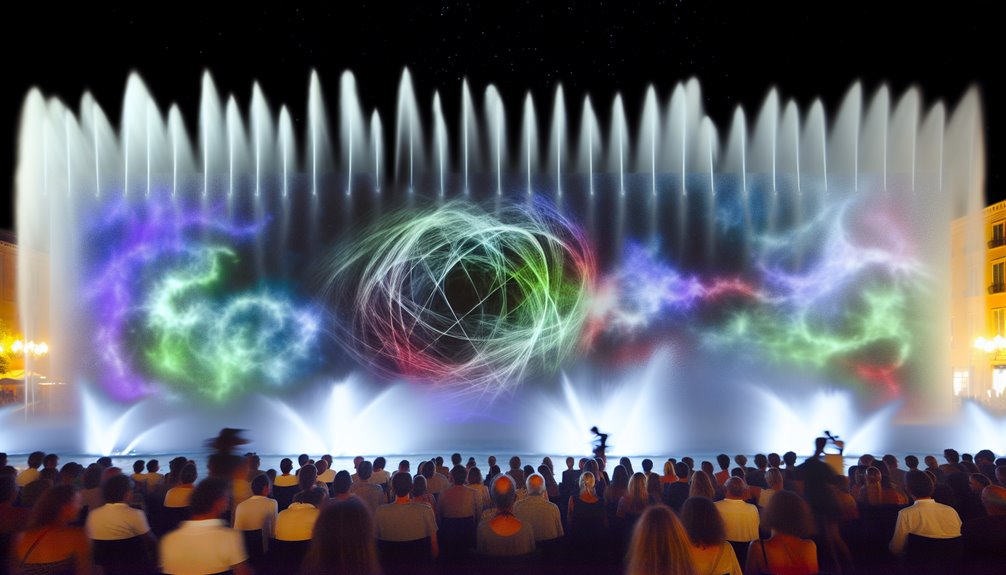
Water screen projection operates on a moving fluid surface. Some performance variability is inherent to the medium and cannot be fully eliminated through engineering.
Wind is the primary constraint in outdoor environments. Even moderate crosswinds affect mist screen geometry, and open waterfront sites will always carry some degree of exposure. Systems can be designed to minimize impact, but not eliminate it entirely.
Ambient light directly limits visibility. Water screen projection performs best after sunset. Daylight operation is generally not viable for image-quality applications. Urban light pollution also reduces projection contrast.
Image sharpness will always be lower than rigid display technologies. Minor fluctuations in pump pressure, humidity, and temperature subtly alter the screen surface. This is a characteristic of water-based projection — not a defect that can be corrected. Understanding this distinction helps set accurate expectations during planning.
Water screen projection involves both capital investment and ongoing operational expenditure. Accurate budget planning requires accounting for all cost layers, not only equipment procurement.
Initial capital costs include high-lumen projectors, pump systems, nozzle assemblies, filtration infrastructure, structural or floating platform components, electrical installation, and show control hardware.
Operational costs include electricity, water treatment and filtration maintenance, pump servicing, projector lamp or laser replacement, and scheduled system calibration.
Content and programming costs cover creative development, media server configuration, and ongoing updates to show content. For permanent installations, content refresh is typically budgeted on an annual or seasonal cycle.
Contingency allocation should account for environmental adaptations, component replacement due to weather exposure, and technology upgrades over the system lifecycle. Permanent public installations are typically designed for 10–15 year operational lifespans, which requires long-term maintenance planning from the outset.
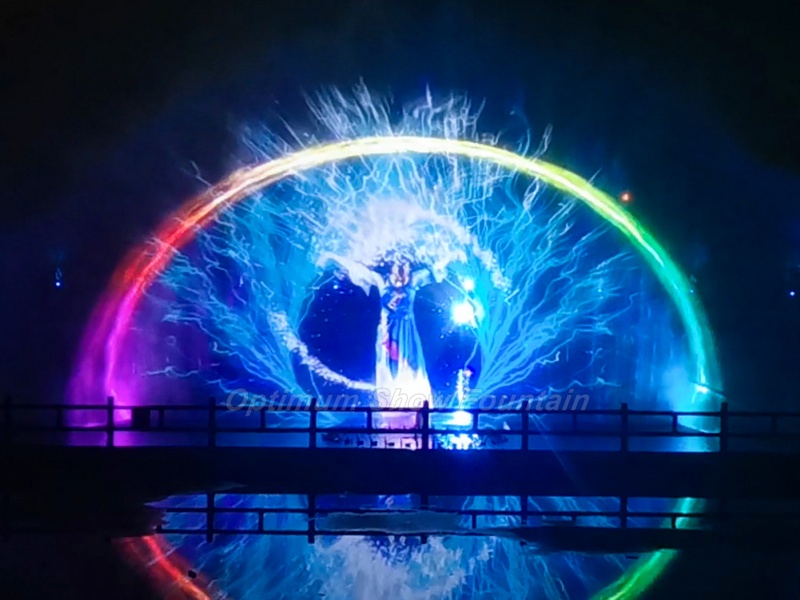
| Factor | Water Screen Projection | LED Wall | Architectural Projection Mapping |
| Visibility when inactive | Invisible | Always visible | Always visible (mapped surface) |
| Daytime performance | Poor | Excellent | Poor to moderate |
| Wind sensitivity | High | None | None |
| Visual impact at night | Very high | High | High |
| Integration with fountains | Native | Limited | Limited |
| Viewing angle | Up to 170° | Narrow to moderate | Depends on surface |
| Infrastructure footprint | Low | High | Moderate |
| Best environment | Open water, outdoor nighttime | Indoor, high-ambient-light | Architectural facades |
Water screen projection does not compete directly with LED walls or projection mapping. It occupies a distinct application category where the ephemeral nature of the display, the integration with water features, and the absence of permanent visible infrastructure are specifically valued.
Most shows run between 10 and 30 minutes per cycle. Duration depends on content complexity, audience dwell time targets, and the operational capacity of the pump and projection systems.
Systems are typically designed to tolerate wind speeds up to 3–4 m/s with minimal distortion. Above this threshold, image quality degrades and most systems are programmed to reduce pump output or suspend operation automatically. Wind barriers and directional installation can extend the operational wind range in exposed sites.
Typical maintenance schedules include nozzle inspection and cleaning every two weeks, pump servicing monthly, and projector calibration quarterly. Filtration systems require ongoing monitoring, particularly in natural water environments. Well-maintained systems in permanent installations can operate reliably for 10 years or more.
Not effectively. Ambient daylight overpowers the projector output, making imagery indistinct. Water screen projection is designed for night or low-light operation.
Permit requirements vary by jurisdiction. Most permanent installations require environmental impact assessments, water usage permits, structural engineering approvals, and electrical safety certification. Coordination with municipal authorities early in the planning process is recommended.
Modular floating systems are designed for transport in standard shipping containers or specialized vehicles. Components are packed in protective cases, with platform assembly and projector alignment completed on-site before each deployment.
Water screen projection is a specialized display technology best suited to permanent waterfront destinations, theme park nighttime shows, and large-scale cultural events where the ephemeral, architectural nature of the medium adds genuine value. Its performance depends on system integration quality — hydraulic stability, optical alignment, environmental controls, and show programming must function as a unified whole.
When engineered correctly and installed in appropriate conditions, water screen projection delivers a scale and atmosphere that no fixed display technology can replicate in open-air public environments.
Optimum Show designs and engineers large-scale water screen projection systems and multimedia fountain installations for permanent public destinations and landmark developments. For technical feasibility consultation, contact our engineering team.