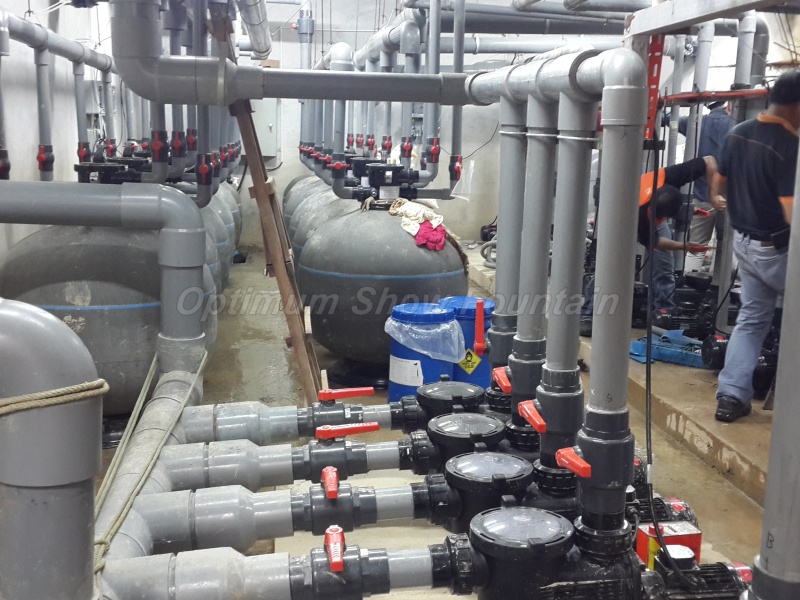
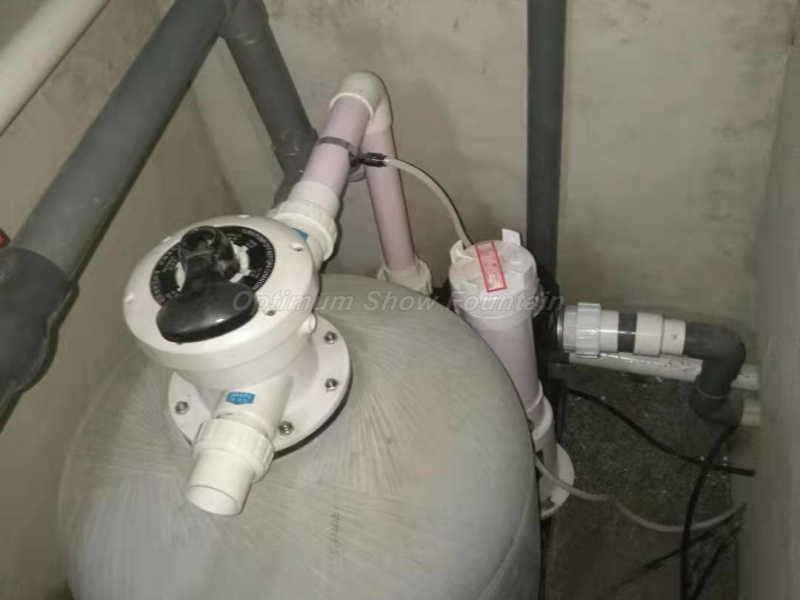
The water treatment system includes three main parts: filtration, disinfection, and circulation.
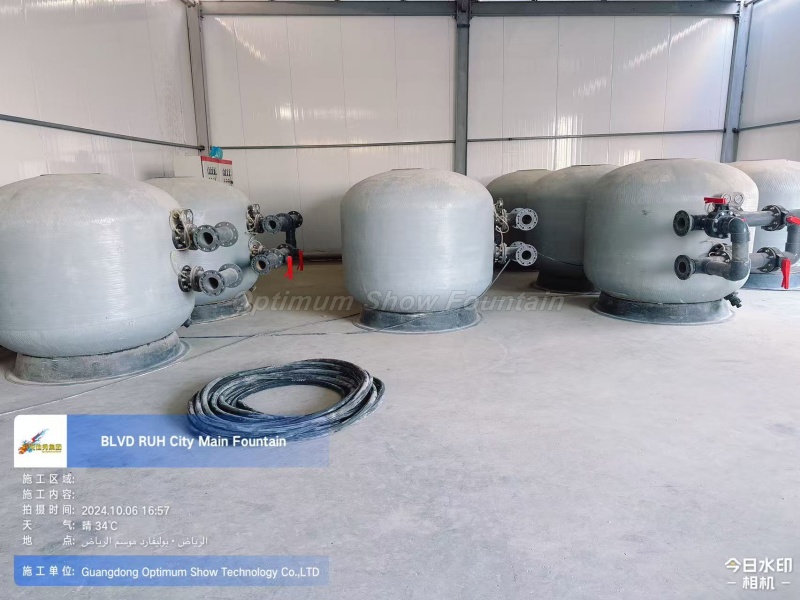
The first part is the filtration section, which requires coarse and fine filtration before the water enters the fountain pool. Coarse filtration can remove larger particles of impurities, such as leaves and soil; Fine filtration can effectively remove suspended solids and bacteria from water, ensuring clear water quality.
The second is the disinfection part, commonly used disinfection methods include chlorine disinfection, ozone disinfection, and ultraviolet disinfection. Chlorine disinfection is the most common method, which has the advantages of low cost and significant effectiveness. However, residual chlorine may have a certain impact on the environment. Ozone disinfection is a more environmentally friendly option that can effectively kill bacteria and viruses, but its equipment investment is relatively high. Ultraviolet disinfection uses the strong radiation of ultraviolet rays to kill microorganisms in water, which has the advantage of no residue, but requires high water flow and transparency.
The third part is the circulation part. Reasonable water circulation can ensure the stability and fluidity of the fountain water quality, and reduce the accumulation of impurities in the water. Generally speaking, the water pump of a fountain should choose an appropriate flow rate and head to meet the operational needs of the fountain. The selection of water pumps should take into account the nozzle design and water flow effect of the fountain to ensure the uniformity and aesthetics of the water flow.