Water fountains play an important role in shaping commercial spaces, from public plazas and waterfront developments to hotels and mixed-use projects. In these environments, a fountain is not simply decorative—it is a permanent system that must integrate with its surroundings and perform reliably over time.
Unlike residential features, commercial water fountains are designed for scale, durability, and continuous operation. The type of fountain selected affects visual impact, system complexity, operating cost, and long-term maintenance. Choosing the right fountain type early helps align design intent with engineering practicality and reduces risk as the project moves forward.
This guide outlines the main types of water fountains used in commercial projects, helping project teams understand their differences and select systems that support both performance and long-term value.
Commercial fountains fall into distinct system categories, defined less by appearance and more by engineering complexity, user interaction, and lifecycle demands. A useful way to compare options is across two axes:
Architectural fountains are typically static and passive. Musical fountains are dynamic but usually passive. Interactive dry deck fountains are both dynamic and interactive.
Placing a fountain type on these axes helps predict technical complexity, operating cost, and maintenance risk before design decisions are locked.
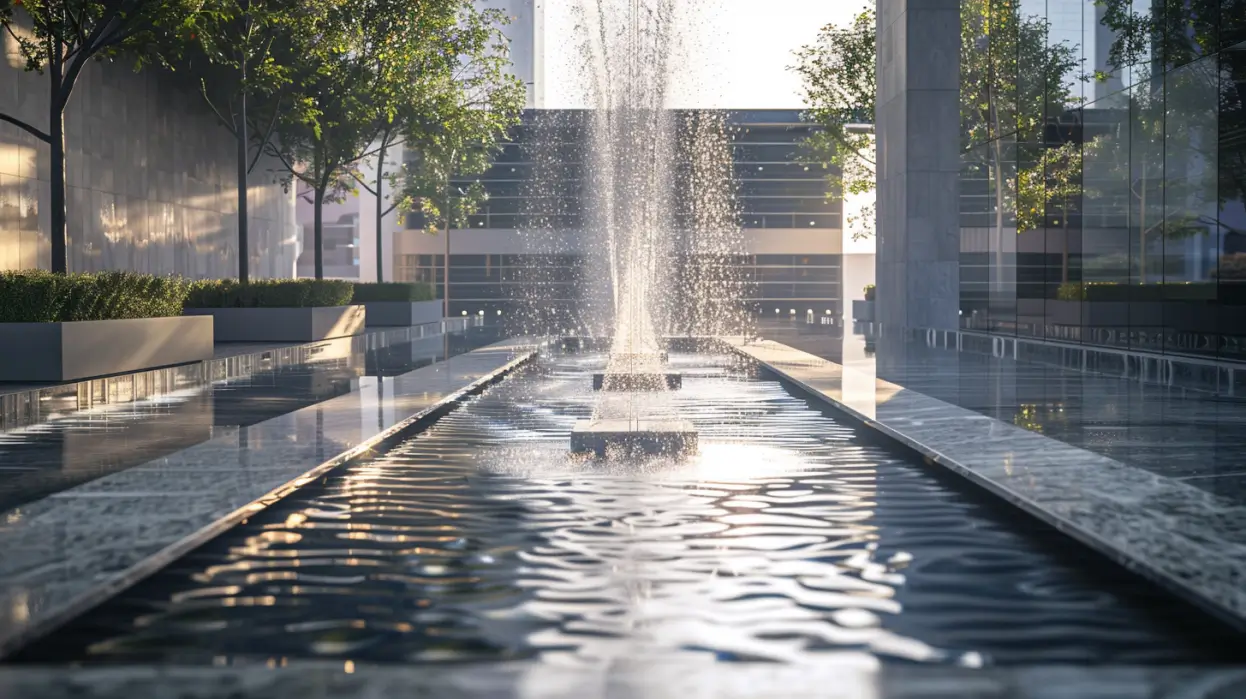
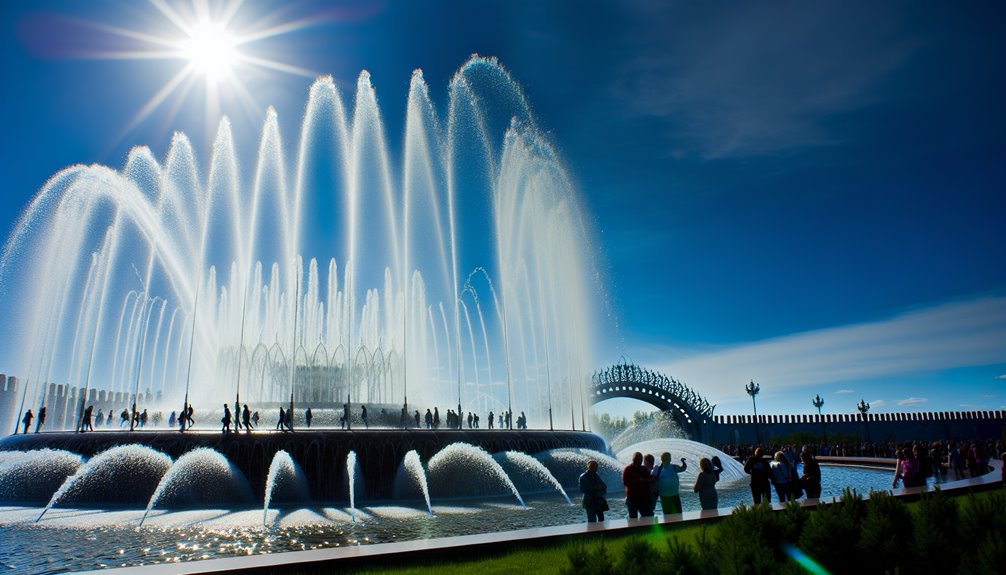
Architectural and sculptural water fountains form the quiet backbone of many commercial developments. Their function is not to draw attention or perform, but to support the surrounding architecture—introducing movement, reflection, and sound in a controlled and understated manner.
Common configurations include reflecting pools in corporate plazas, linear water walls in hotel lobbies, and understated cascades integrated into façades. Water movement is predictable and measured, reinforcing material expression and spatial rhythm—an approach widely reflected in contemporary architectural practice, including examples featured on ArchDaily.
This fountain type is typically specified for its lower operational complexity, predictable maintenance profile, strong architectural integration, and suitability for noise-sensitive environments.
Despite their restrained appearance, architectural fountains are not technically simple. Long-term performance depends on the accuracy of basin construction, the effectiveness of waterproofing strategies, the accessibility of filtration systems, and the durability of materials. In practice, waterproofing and basin failures remain the most frequent causes of costly retrofits, often emerging years after commissioning.
Indicative cost range:
Fountain is a customized product, and the price is determined by the design, the brand used in the product, and the configuration of the product.
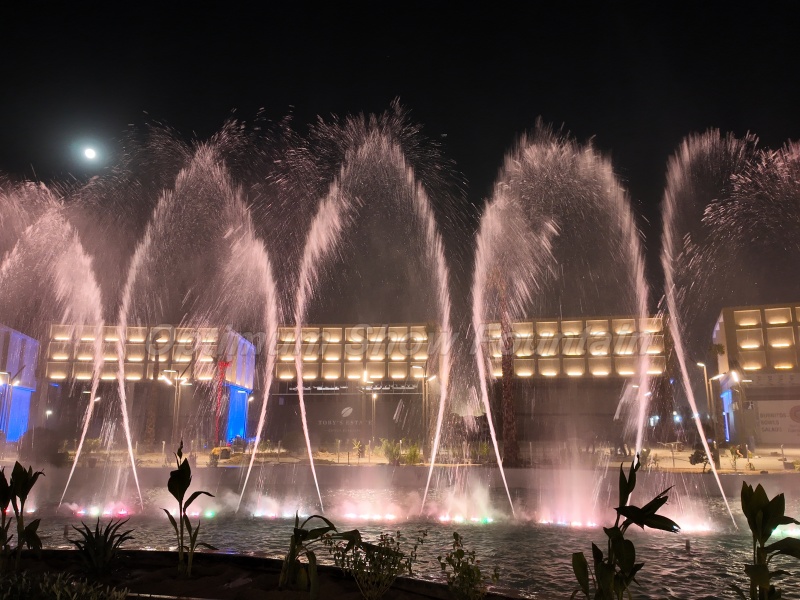
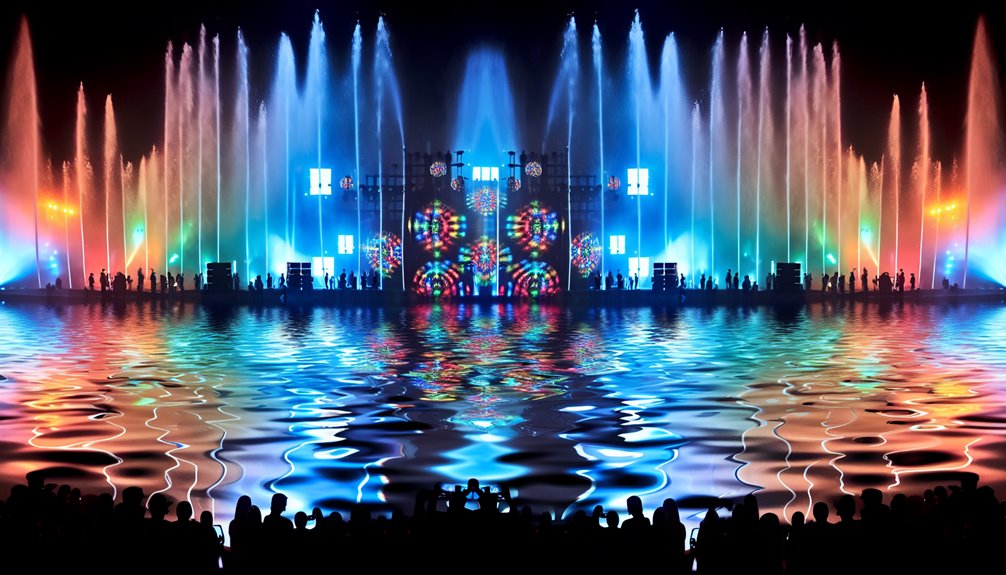
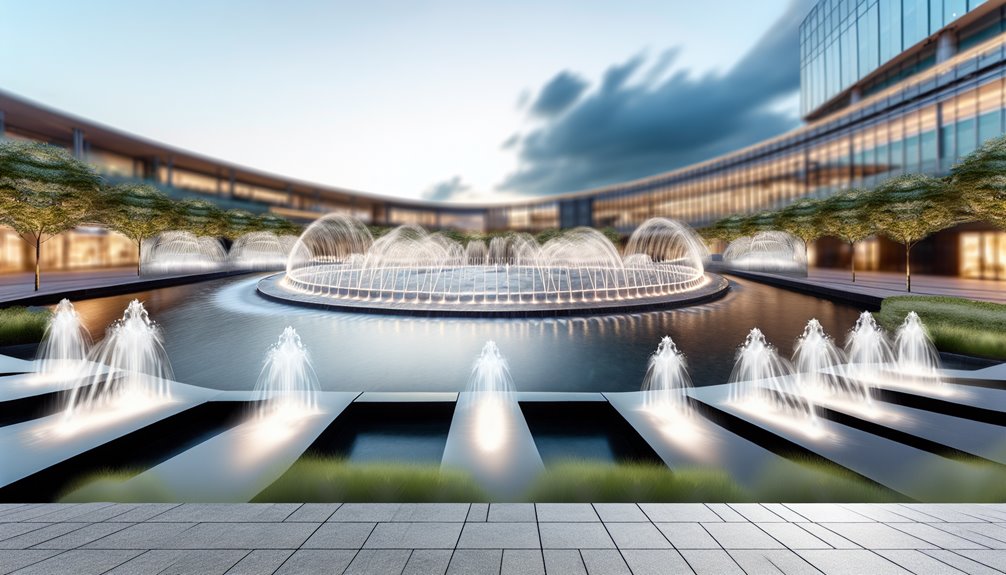
Musical and dancing fountain systems transform water into programmed performance. Coordinated jets, lighting, and audio create event-driven environments, but this impact comes with a significant increase in system complexity.
These installations operate more like live production systems than traditional fountains. Large numbers of independently controlled components must remain precisely synchronised to maintain visual and operational stability.
System cost and risk are largely driven by control infrastructure, redundancy requirements, ongoing programming, and high energy demand. For large installations, peak power consumption can reach 200–400 kW, and annual operating costs commonly exceed those of static fountain systems by a wide margin.
As a result, musical fountain systems are typically specified only where water features serve a clear destination or landmark role within a development.
Indicative cost range:
Fountain is a customized product, and the price is determined by the design, the brand used in the product, and the configuration of the product.
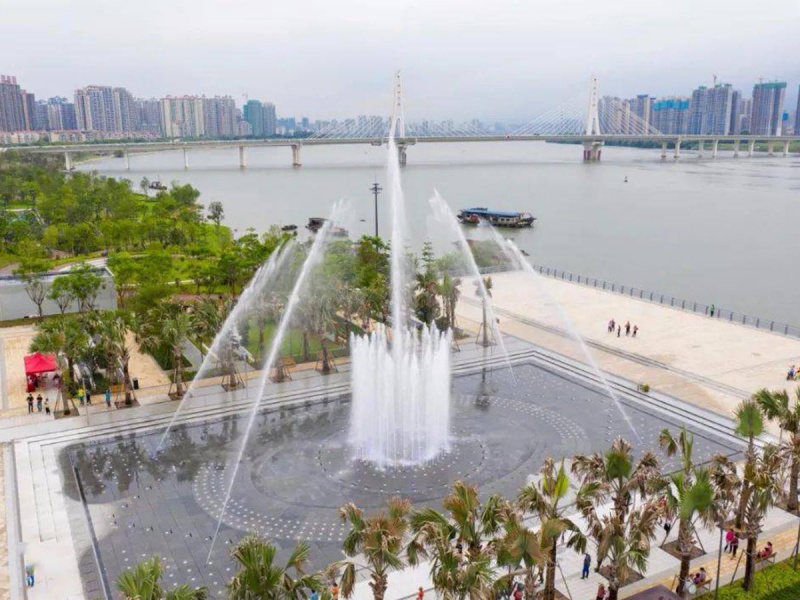
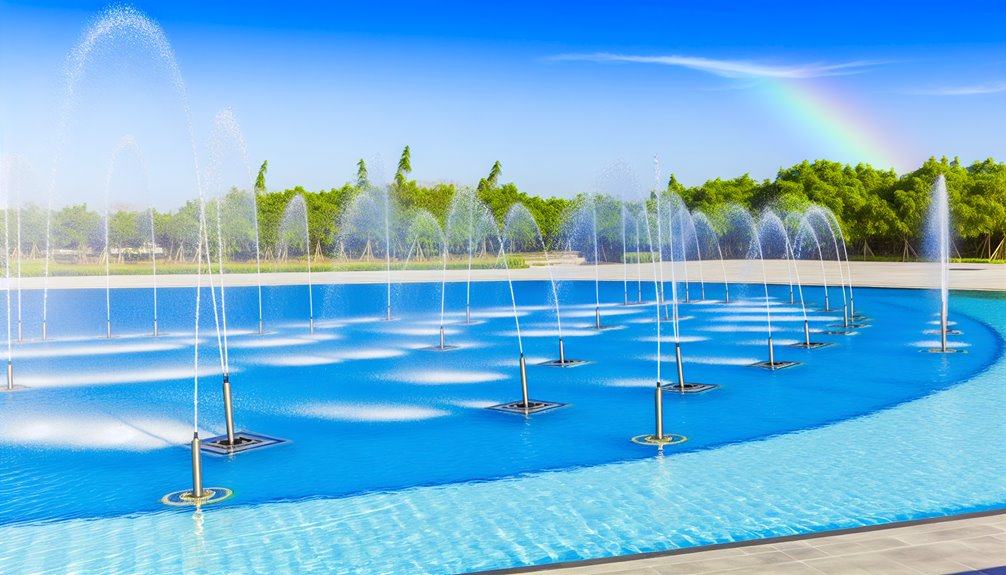
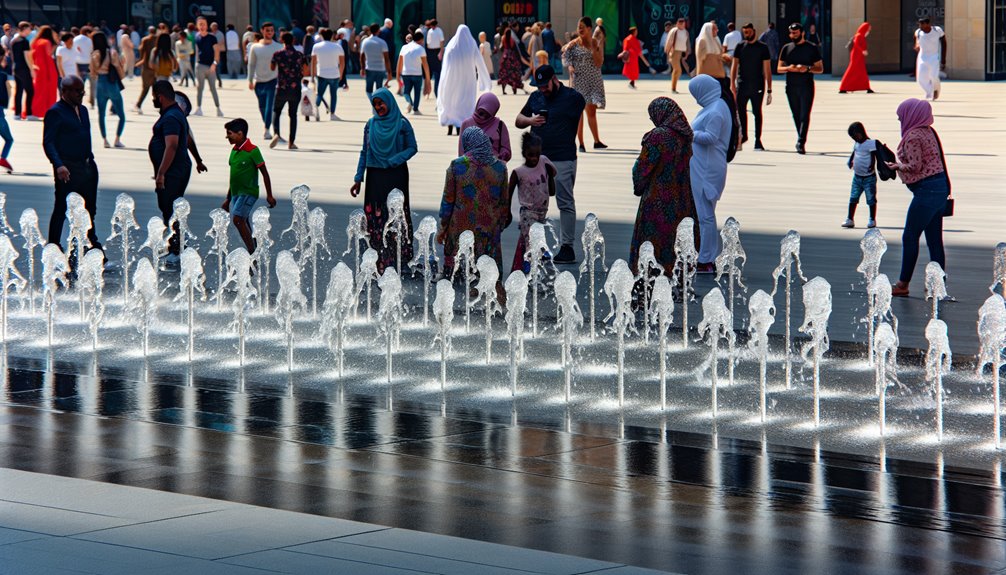
Interactive dry deck and floor fountains allow public spaces to function as water features when active and fully usable plazas when dry. This flexibility is their primary advantage, but it also introduces higher regulatory and operational demands.
Because direct contact with water is inherent, these systems are commonly subject to public health requirements similar to those of swimming pools. Compliance considerations extend beyond visual design and directly affect system layout, equipment selection, and long-term operation.
Much of the system complexity is concealed below grade. Drainage capacity, underground storage, and filtration access are critical to reliable operation, with insufficient drainage remaining the most frequent cause of service interruption.
Indicative cost range:
Fountain is a customized product, and the price is determined by the design, the brand used in the product, and the configuration of the product.
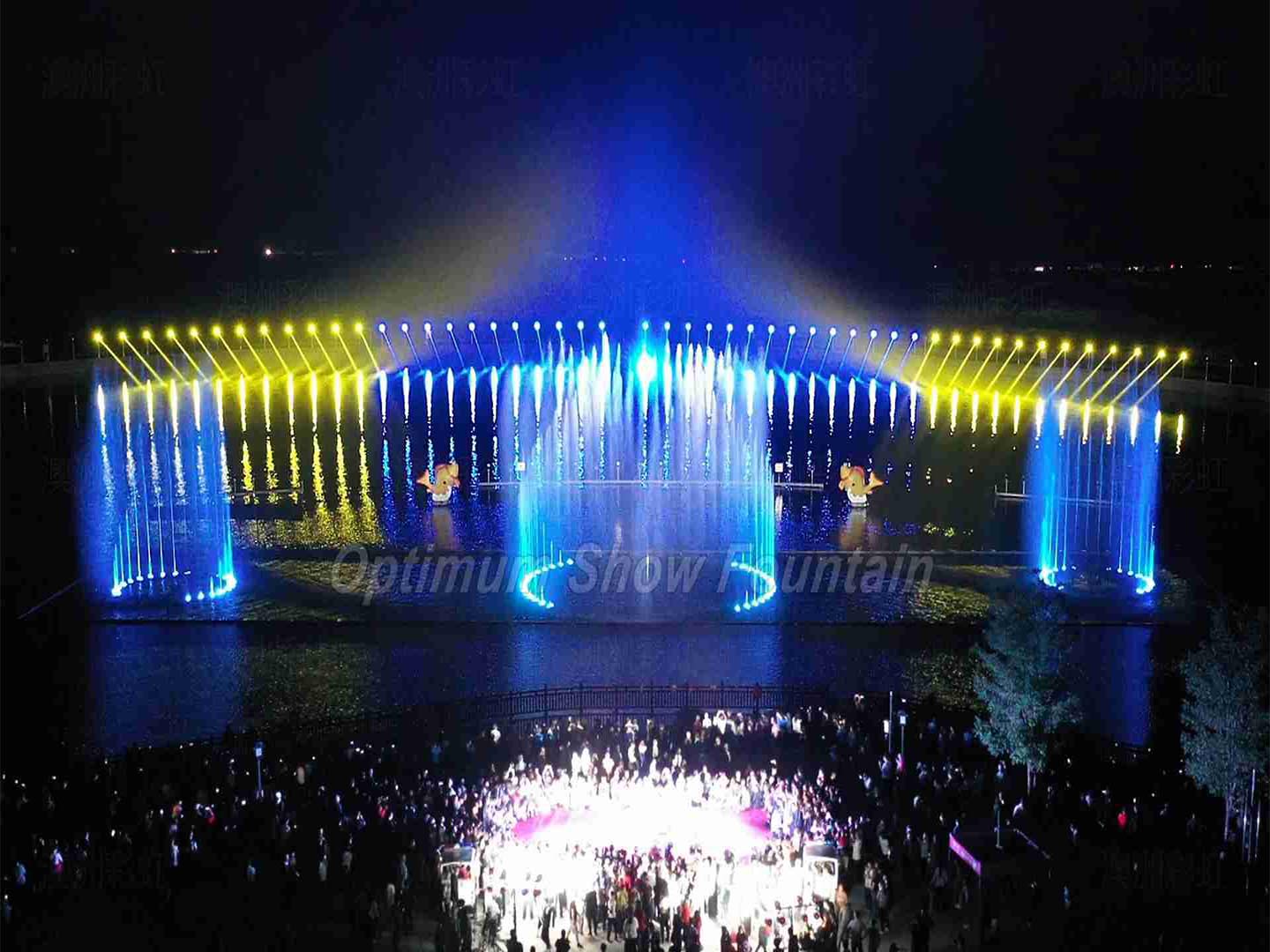
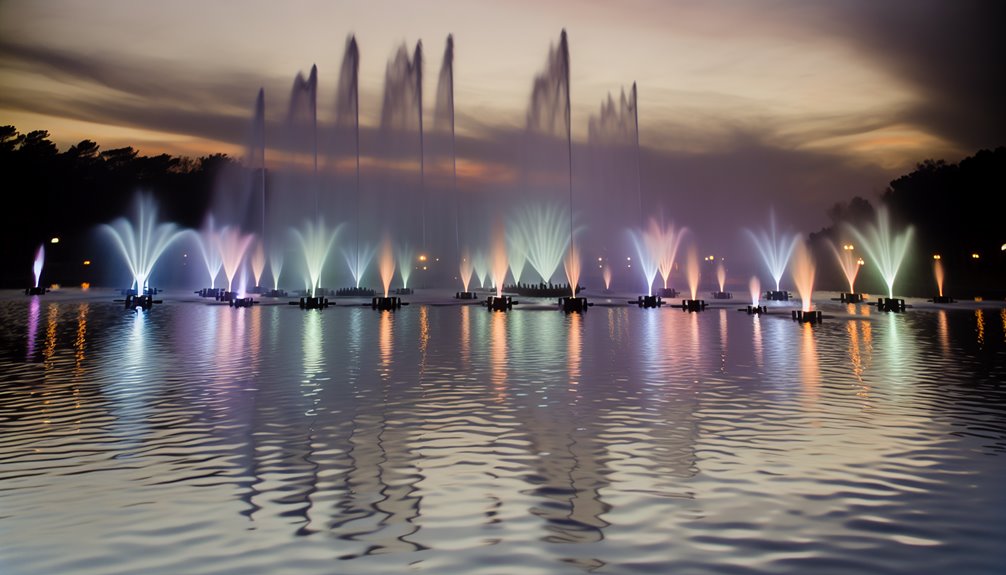
Floating fountain systems are designed for installation on existing lakes and ponds where building a traditional fountain basin is impractical. By operating directly on the water surface, they provide visual activation with minimal civil construction.
These systems are commonly used in retention ponds, resort lakes, golf course water features, urban parks, and landscaped commercial developments. Equipment is mounted on floating platforms that support pumps, nozzles, and lighting, allowing flexible placement and relatively fast installation.
Despite their simplicity in appearance, performance depends heavily on site conditions. Water quality directly affects visual results, anchoring systems must withstand wind and water-level variation, and electrical supply across open water requires specialised planning.
Indicative cost range:
Fountain is a customized product, and the price is determined by the design, the brand used in the product, and the configuration of the product.

Resort and swimming pool fountain features are designed to enhance leisure environments rather than function as standalone attractions. Their role is to reinforce atmosphere, comfort, and visual identity without disrupting swimming, circulation, or guest experience.
These systems are commonly integrated into pools, lagoons, and recreational water areas, using controlled jets, decorative spouts, and low-profile water effects. Compared with public fountains, design constraints are significantly tighter, as water movement, noise levels, and splash behaviour must remain within defined comfort and safety limits.
Material selection and system compatibility are critical. Continuous exposure to chlorinated or salt-treated water places higher demands on fittings, lighting, and sealing details. Components suitable for decorative fountains often underperform in pool environments, leading to premature corrosion or failure if not properly specified.
Indicative cost range:
Fountain is a customized product, and the price is determined by the design, the brand used in the product, and the configuration of the product.
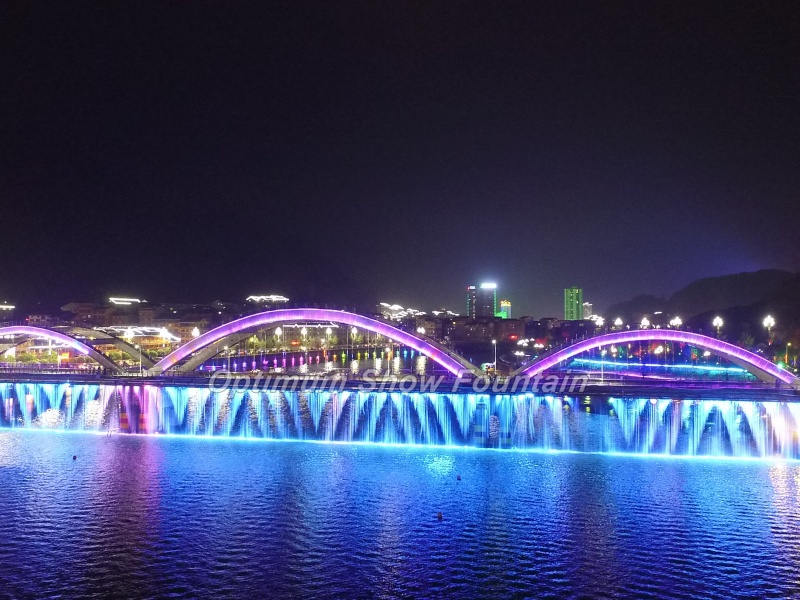
Digital water curtains and media fountains use precisely controlled water streams to form programmable patterns, text, or graphic effects. In these systems, water functions as a visual display surface rather than a decorative element.
Such installations rely on high-speed valves, synchronised lighting, and dedicated control platforms to achieve clear and repeatable visual output. Performance quality is highly sensitive to environmental conditions, making controlled or semi-controlled locations preferable.
Compared with conventional fountains, media systems introduce higher technical and operational demands. Valve precision, lighting calibration, and water quality management directly affect reliability, while ongoing content programming and system tuning are integral to long-term use.
Indicative cost range:
Fountain is a customized product, and the price is determined by the design, the brand used in the product, and the configuration of the product.
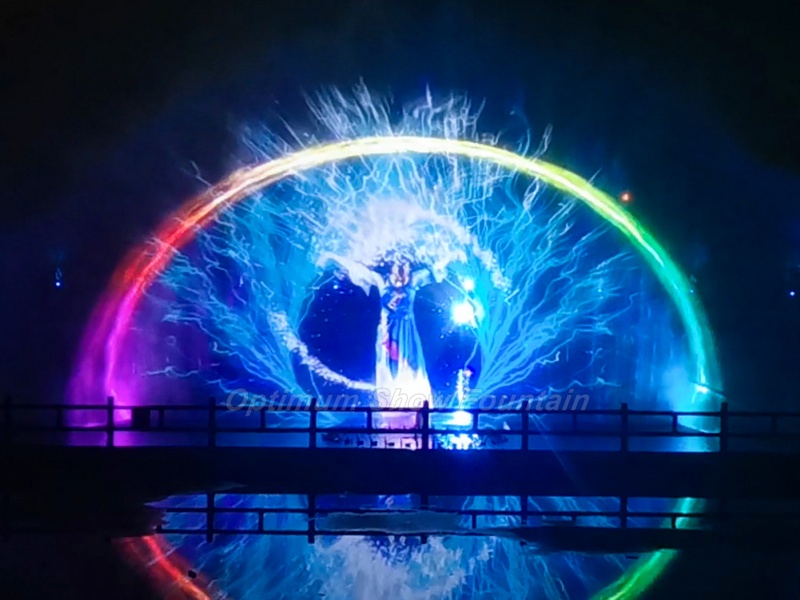
A water screen fountain is a specially designed fountain that releases water in a thin, uniform sheet or mist, forming a temporary “screen” in mid-air. This water screen acts as a projection surface for images, videos, animations, or laser effects. The water falls continuously, creating a smooth and semi-transparent display that appears almost magical when illuminated.
Unlike traditional fountains that focus on decorative water patterns, water screen fountains are designed to support visual storytelling and digital content while maintaining an elegant water feature.
The primary function of a water screen fountain is to serve as a natural projection surface for multi media content. It allows videos, logos, advertisements, artistic visuals, and special effects to be displayed using water as the medium.
Indicative cost range:
The length of the water screen is 15-45 meters, and the height is 8-20 meters. Generally, the price is determined based on the height and width of the water screen.
Selecting the right fountain type is a strategic decision that affects both the visual impact and long-term performance of a commercial project. Rather than focusing on appearance alone, the following factors help guide practical and sustainable fountain selection:
1. Project location and environment
Outdoor plazas, waterfront sites, indoor atriums, and leisure areas each impose different constraints related to wind, humidity, noise, and spatial integration. Fountain types must be matched to these conditions to perform reliably.
2. Audience interaction and visibility
Some developments benefit from subtle architectural water features, while others require dynamic or interactive fountains that actively engage visitors and function as focal points.
3. System complexity and lifecycle cost
Performance and media fountains deliver strong visual impact but involve advanced controls, higher energy consumption, and more specialised maintenance. Simpler systems often offer greater long-term stability.
4. Water and energy efficiency
Fountain type influences water circulation volume, pump sizing, lighting load, and overall energy use, all of which affect operating cost and sustainability goals.
5. Maintenance access and operational planning
Pumps, filters, lighting, and control components require regular inspection. Fountain types should align with available maintenance resources and access conditions.
By considering these factors early, project teams can select a fountain type that balances design ambition with operational practicality, reducing long-term risk while maximising project value.
In commercial developments, water fountains are complex systems rather than standalone features. While visual design defines how a fountain looks, engineering determines whether it can be built, operated, and maintained reliably over time.
Commercial fountain projects involve multiple technical disciplines working together. Hydraulic design controls water movement and pressure, electrical systems power pumps and lighting, and control platforms coordinate timing, effects, and automation. Without proper engineering integration, even well-designed fountains can suffer from unstable performance, excessive energy use, or frequent downtime.
Engineering expertise is especially critical at the early stages of a project. Decisions made during concept design—such as fountain type, jet height, or interaction level—directly affect structural requirements, equipment sizing, and long-term operational cost. Addressing these factors early helps avoid redesigns, budget overruns, and performance limitations later in the project lifecycle.
By treating fountains as engineered systems rather than decorative additions, commercial projects achieve greater reliability, efficiency, and longevity. This approach ensures that the fountain not only delivers the intended visual impact but also performs consistently under real-world operating conditions.
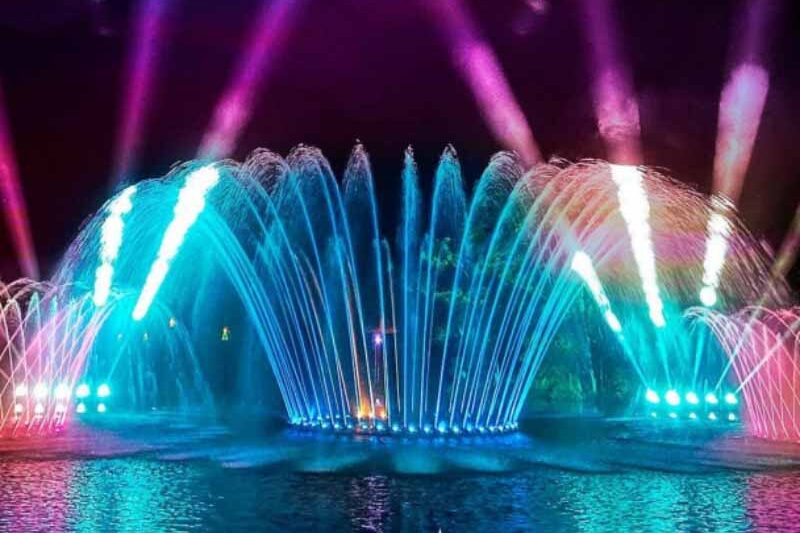
Optimum Show designs commercial fountain systems with an engineering-first mindset, treating each project as a fully integrated technical system rather than a standalone visual feature. The process begins by understanding the project context—site conditions, scale, audience expectations, and long-term operational requirements—so that design ambition is grounded in technical feasibility from the outset.
Rather than applying standard configurations, Optimum Show develops custom fountain systems tailored to the specific demands of each project. Fountain type selection, hydraulic layout, equipment specification, control architecture, and lighting integration are planned together as a unified system. This approach reduces conflicts between design intent and real-world performance, particularly in complex or large-scale installations.
A key focus is early engineering involvement. By addressing hydraulic calculations, electrical coordination, control logic, and maintenance access during the design stage, Optimum Show helps prevent downstream issues such as performance instability, excessive energy consumption, or difficult servicing conditions after installation.
Through this integrated design and engineering approach, Optimum Show delivers commercial fountain systems that are visually impactful, technically reliable, and built for long-term operation. The result is not only a successful opening performance but a fountain system that continues to perform consistently throughout its lifecycle.
Selecting the right fountain type is one of the most consequential decisions in any commercial water feature project. Beyond visual appeal, the chosen system directly influences construction complexity, operational reliability, maintenance demands, and long-term cost performance.
No single fountain type suits every project. Architectural features, performance-based systems, interactive fountains, and landmark installations each serve distinct purposes and require different levels of engineering coordination. Successful outcomes depend on recognising these differences early and aligning fountain selection with site conditions, audience expectations, and operational realities.
The fountains that endure share common traits: clear functional intent, early engineering involvement, realistic maintenance planning, and equipment specified for lifecycle value rather than lowest upfront cost.
Commercial fountains are long-term commitments. Chosen well, they become assets. Chosen poorly, they become permanent problems.
Optimum Show provides professional commercial fountain design and engineering services worldwide.
Whether evaluating options or addressing an underperforming installation, our team helps align design ambition with engineering reality.
Commercial water fountains necessitate regular cleaning, water quality monitoring, and mechanical inspections. Guaranteeing ideal pump functionality, checking filtration systems, and maintaining proper lighting elements are essential. Scheduled maintenance mitigates algae buildup and guarantees aesthetic appeal and operational efficiency.
Digital water curtains enhance commercial spaces by employing software-controlled water jets, creating dynamic visual displays and customizable water screens. This technology integrates seamlessly into modern architectural designs, offering innovative aesthetic possibilities and engaging interactive experiences for visitors.
Floating fountains can be used in indoor commercial settings, provided spatial parameters support their design. They offer dynamic visual appeal and incorporate simple technology, though controlling water dispersion and sound levels remains essential for maintaining an aesthetically pleasing environment.
Safety measures for commercial water features include ensuring secure electrical installations, anti-slip surfaces, proper water treatment, regular maintenance, and structural integrity assessments. Additionally, signage for safety warnings and compliance with local regulations are essential consideration in design planning.
Eco-friendly options include solar-powered fountains, recirculating water systems, and sustainable materials. These designs minimize water and energy use, aligning with environmental standards. Aesthetic integration with green spaces guarantees harmony, enhancing visual appeal while promoting sustainability in commercial projects.