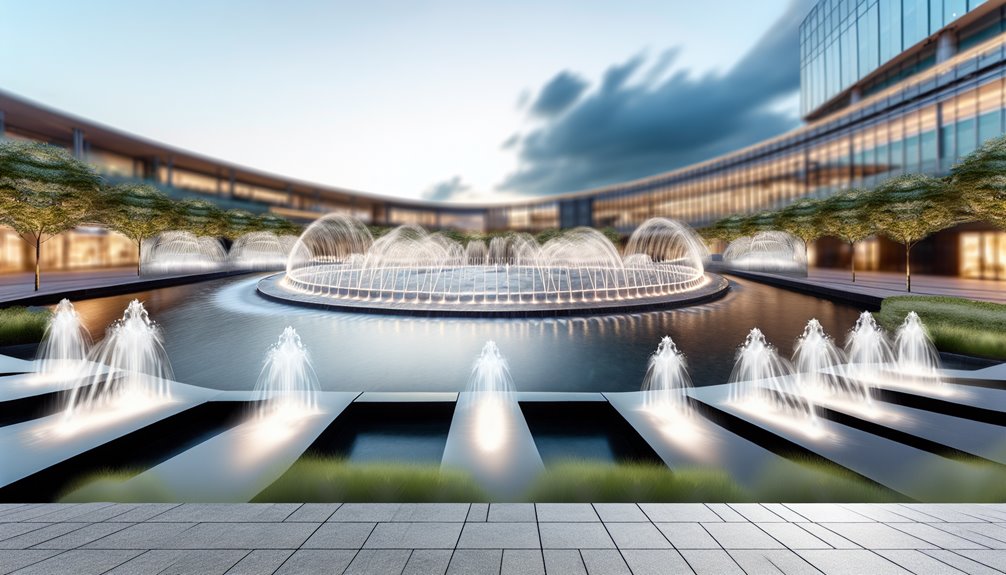
Water fountains can be designed in many different forms, but commercial projects generally use a smaller number of core fountain systems. The most common types of water fountains include architectural fountains, musical and dancing fountains, dry deck fountains, interactive fountains, floating fountains, water walls and waterfalls, digital water curtains, and water screen fountains.
Each type serves a different purpose. An architectural fountain may complement a hotel or commercial plaza, while a musical fountain can become a destination attraction. Dry deck and interactive fountains make water part of the public space, while floating fountains allow large water effects to be installed directly on lakes and ponds.
Choosing between these fountain types affects much more than appearance. It influences civil works, hydraulic design, controls, power requirements, public interaction, maintenance and long-term operating costs.
This guide compares the main commercial fountain types, where they are commonly used, their advantages and engineering considerations, and how to determine which system is appropriate for your project.
The main types of water fountains used in commercial projects include architectural fountains, musical and dancing fountains, dry deck fountains, interactive fountains, floating fountains, water walls and waterfalls, digital water curtains, and water screen fountains. Each serves a different purpose and requires a different level of hydraulic, electrical, control, and maintenance planning.
For project teams, fountain types can also be understood through two practical characteristics:
For example, an architectural fountain is generally passive with relatively consistent water movement, while a musical fountain uses highly dynamic, programmed effects to create a performance. A dry deck fountain may also be interactive, allowing visitors to walk through or play among ground-level jets.
These distinctions are useful because the type of fountain affects much more than appearance. Hydraulic complexity, control requirements, public safety, energy use, maintenance access, and operating costs can vary considerably between systems.
The following sections compare the main commercial fountain types, their typical applications, advantages, and key engineering considerations.
| Fountain Type | Best For | Interaction | Show Capability | Relative Complexity |
|---|---|---|---|---|
| Architectural Fountain | Hotels, offices, plazas | Low | Low | Low–Medium |
| Musical/Dancing Fountain | Landmarks, malls, attractions | Low | Very High | High |
| Dry Deck Fountain | Plazas, parks, retail | High | Medium–High | Medium–High |
| Interactive Fountain | Parks, family destinations | Very High | Medium | Medium–High |
| Floating Fountain | Lakes, ponds, waterfronts | Low | Medium–High | Medium |
| Waterfall/Water Wall | Hotels, lobbies, architecture | Low | Low | Low–Medium |
| Digital Water Curtain | Retail, hotels, entrances | Medium | High | High |
| Water Screen Fountain | Large shows, events, attractions | Low | Very High | High |
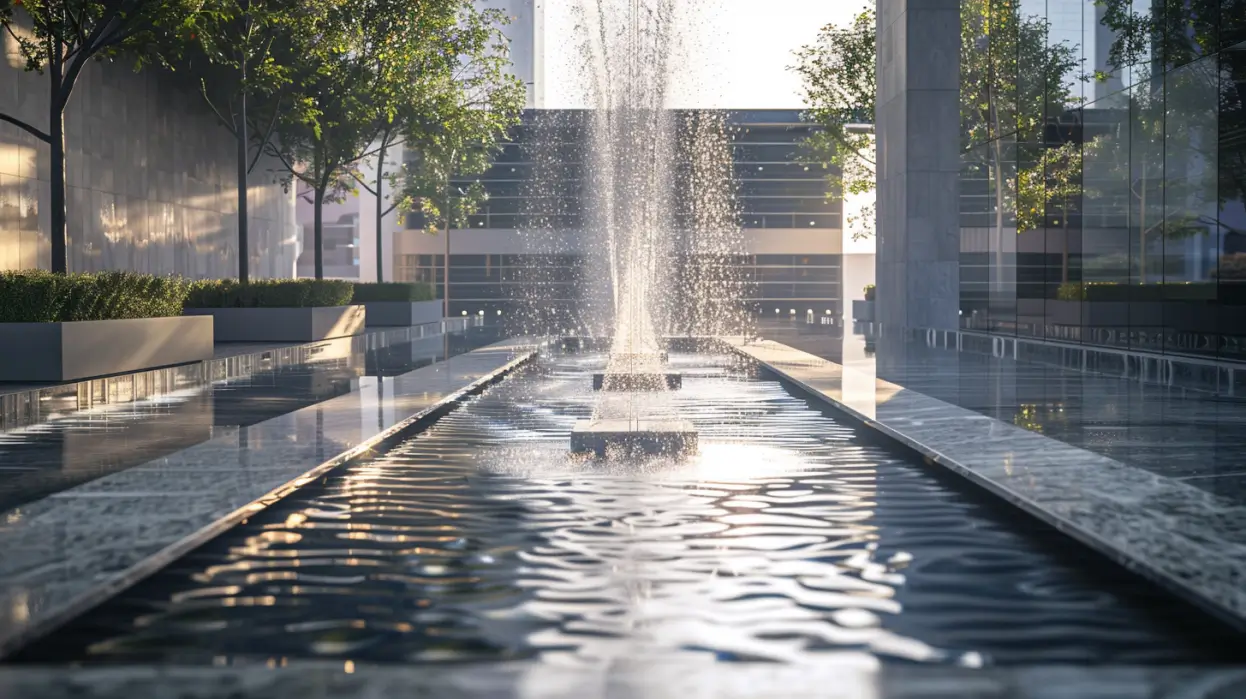
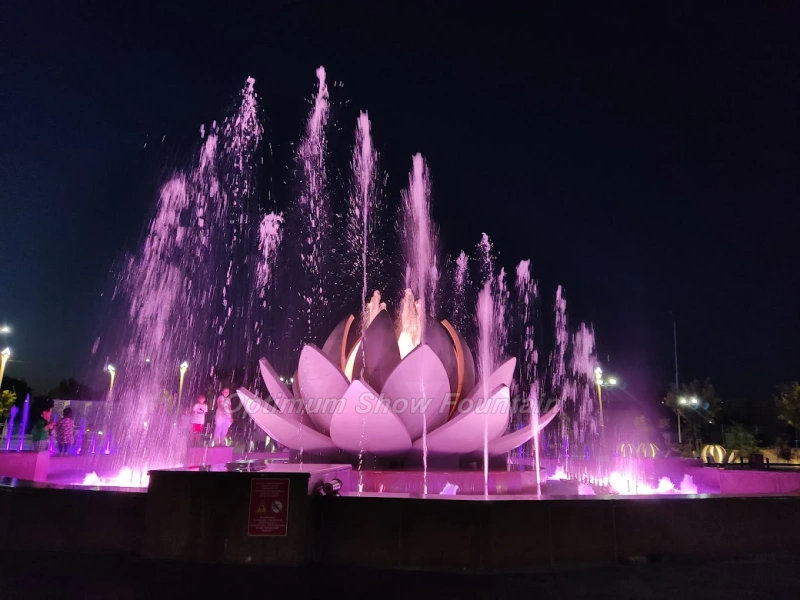
Architectural and decorative fountains are permanent water features designed to complement a building, landscape, or public space through controlled water movement, reflection, texture, and sound.
Common designs include reflecting pools, linear jets, sculptural fountains, cascades, courtyard fountains, and decorative plaza features. They are widely used in hotels, commercial developments, corporate entrances, public plazas, and landscaped spaces where the fountain contributes to the overall architectural identity.
Compared with musical or interactive systems, architectural fountains generally require fewer programmable effects and simpler controls. However, reliable performance still depends on hydraulic balance, basin construction, waterproofing, filtration, drainage, and appropriate material selection. Outdoor projects must also account for wind, evaporation, debris, and surrounding pedestrian areas.
Best suited for: hotels and resorts, commercial entrances, shopping and mixed-use developments, public plazas, courtyards, and landscaped architectural spaces.
Architectural fountains are particularly suitable when the objective is to create a permanent visual feature that integrates naturally with its surroundings without requiring a complex show-control system.
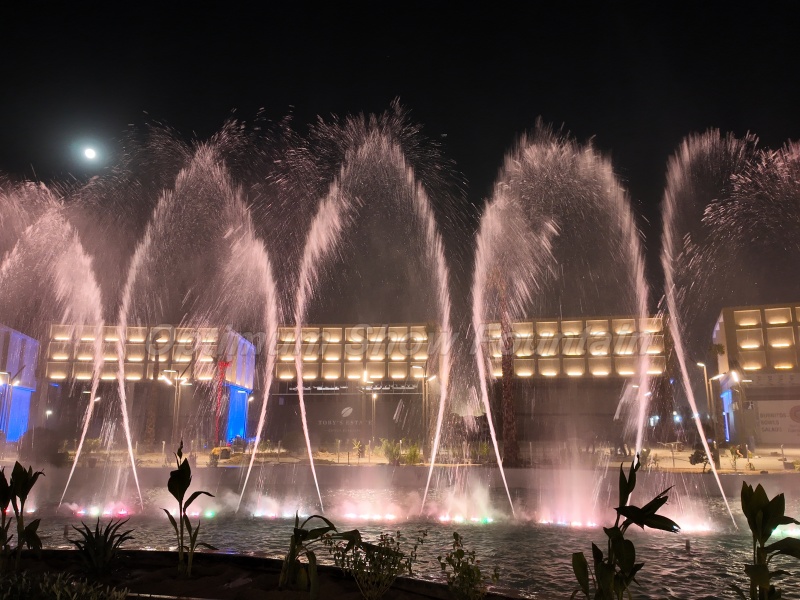
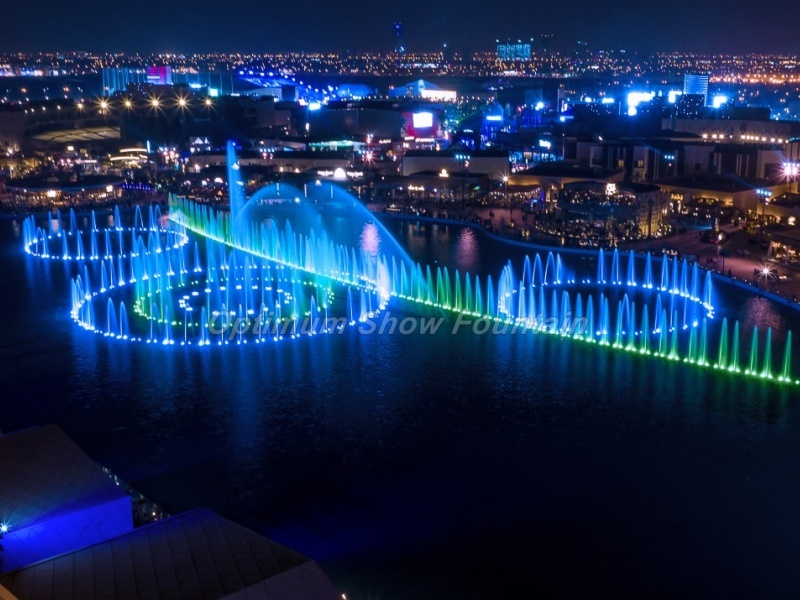
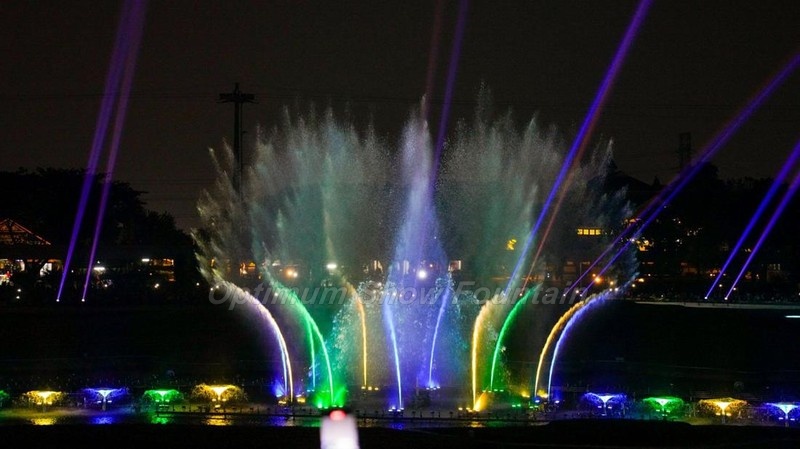
Musical and dancing fountains synchronize programmable water effects, lighting, and music to create choreographed performances. Jet height, movement, direction, colour, and sequencing can change throughout a show, making these systems suitable where the fountain itself is intended to become an attraction.
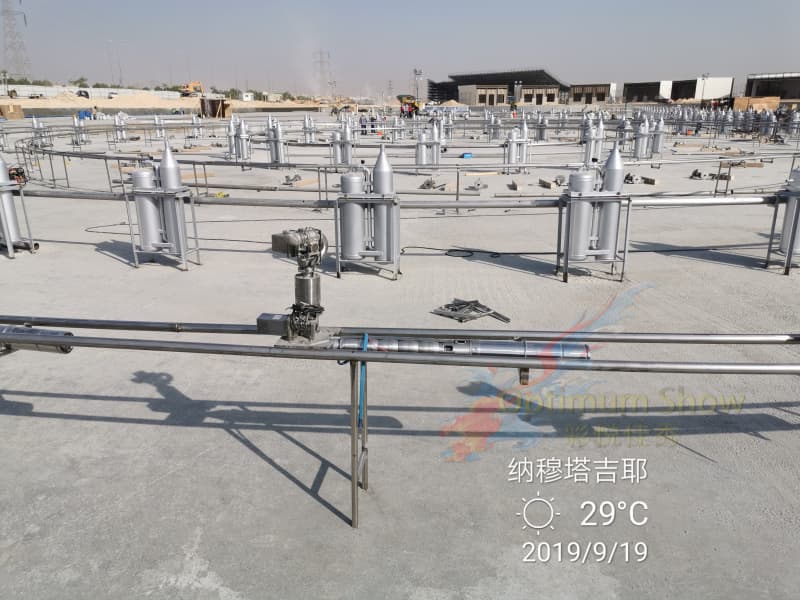
Typical systems combine pumps, VFDs, valves, specialized nozzles, RGB or RGBW lighting, audio equipment, and programmable controls. Depending on project complexity, PLC, DMX, or network-based control may be used to coordinate individual effects.
Musical fountains are commonly installed in shopping centres, public squares, waterfront developments, theme parks, resorts, and major tourist destinations. Shows can also be reprogrammed with new music, lighting scenes, and sequences for festivals, events, or seasonal programming.
Compared with simpler fountain types, they require greater attention to hydraulic capacity, power demand, control architecture, synchronization, environmental conditions, and maintenance access. For project teams planning a complete installation, understanding how to build a fountain show helps clarify how concept design, engineering, equipment selection, installation, programming, and commissioning come together as one system.
Best suited for: shopping and mixed-use developments, city squares, waterfronts, theme parks, resorts, tourist attractions, and landmark projects.
For a detailed explanation of the pumps, valves, lighting, and control systems behind these performances, see our guide to how musical fountains work.
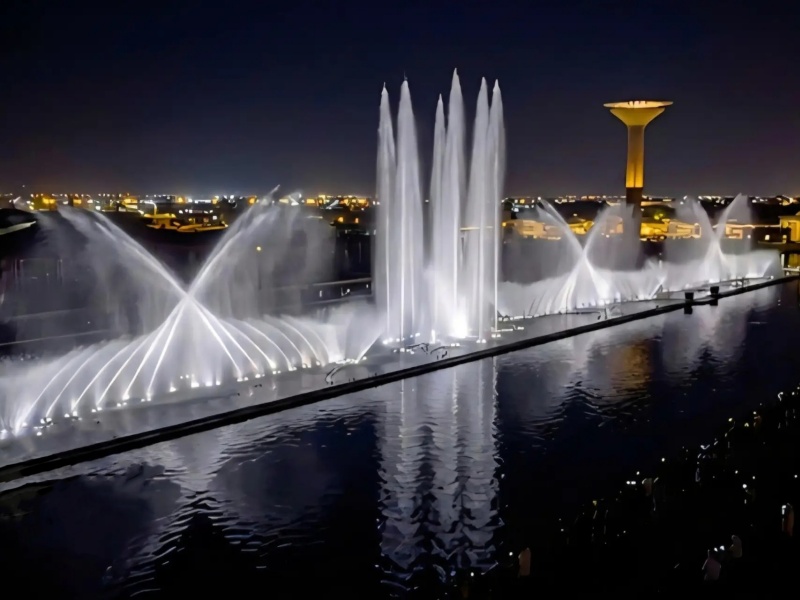
| Optimum Show Project Example — Saudi Boulevard City: Optimum Show delivered a large-scale musical fountain for Riyadh Boulevard City in Saudi Arabia. The 300 × 150 m installation combines digital jets, air shooters and multiple programmable water effects, demonstrating how a musical fountain can function as a major entertainment feature within a large destination development. View the Saudi Boulevard City Fountain project → |
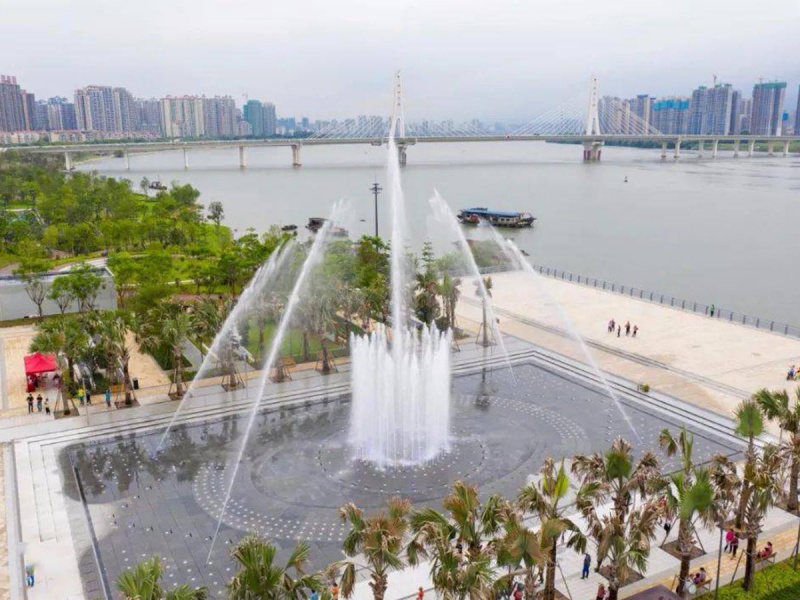
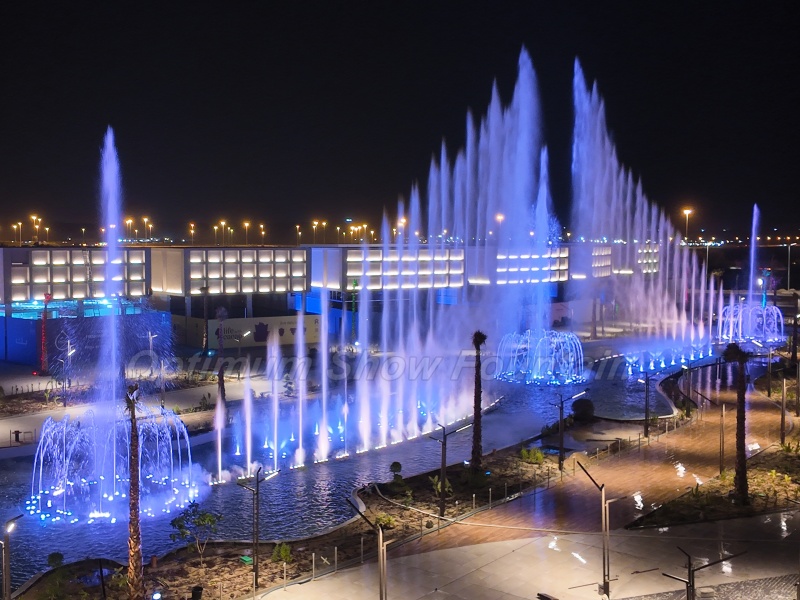
Dry deck fountains, also called floor or ground fountains, have no permanently exposed basin. Nozzles and drainage points are integrated into the finished walking surface, while water collection and much of the fountain infrastructure are concealed below ground.
This allows the same area to function as both a water feature and usable public space, making dry deck fountains popular in plazas, shopping centres, parks, pedestrian areas, hotels, and mixed-use developments.
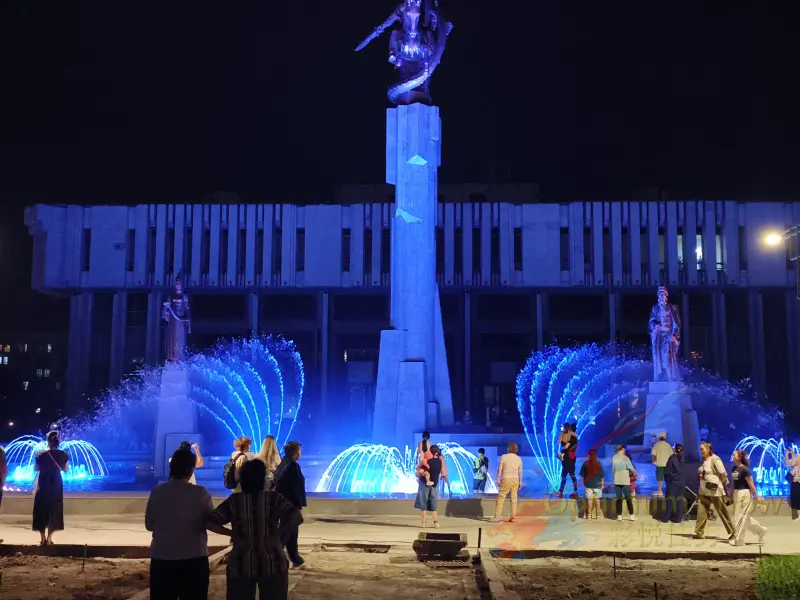
Systems range from simple repeating jets to programmable displays incorporating multiple nozzle zones, variable jet heights, and RGB or RGBW lighting. Some are designed primarily for visual effect, while others allow visitors to move through the water.
Because much of the infrastructure is below grade, drainage, waterproofing, filtration, equipment access, electrical safety, and surface detailing are particularly important. Where direct public interaction is intended, water quality, slip resistance, and applicable health and safety requirements must also be considered.
Best suited for: public plazas, shopping and mixed-use developments, parks, pedestrian areas, commercial entrances, and multi-purpose public spaces.
Dry deck fountains are particularly useful when a project needs dynamic water effects without permanently occupying valuable pedestrian space.
| Optimum Show Project Example — Qingyuan Nanan Park The Qingyuan Nanan Park project demonstrates how a large dry deck fountain can combine a usable public plaza with programmed water effects. Designed and constructed by Optimum Show, the 48 × 29 m installation includes running, jumping, rainbow and mist effects, with a central jet reaching approximately 30 m. View the Qingyuan Nanan Park Dry Deck Fountain → |
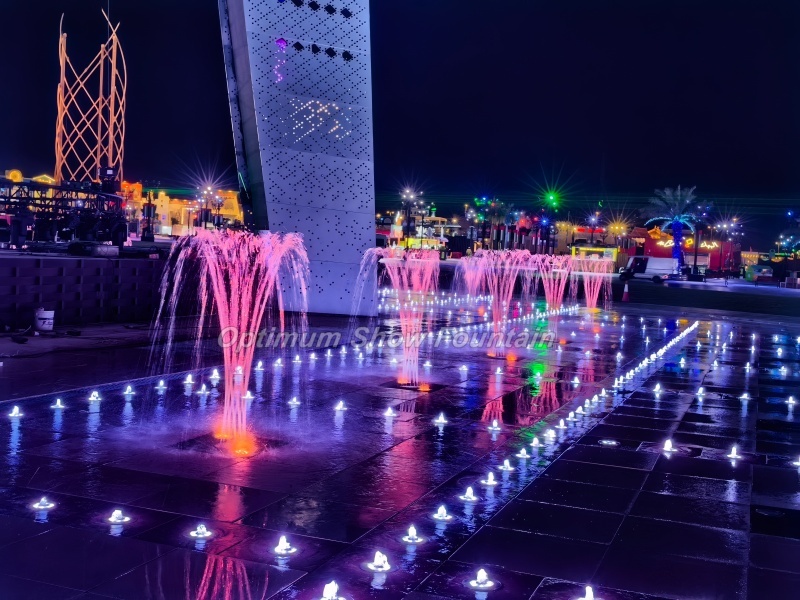
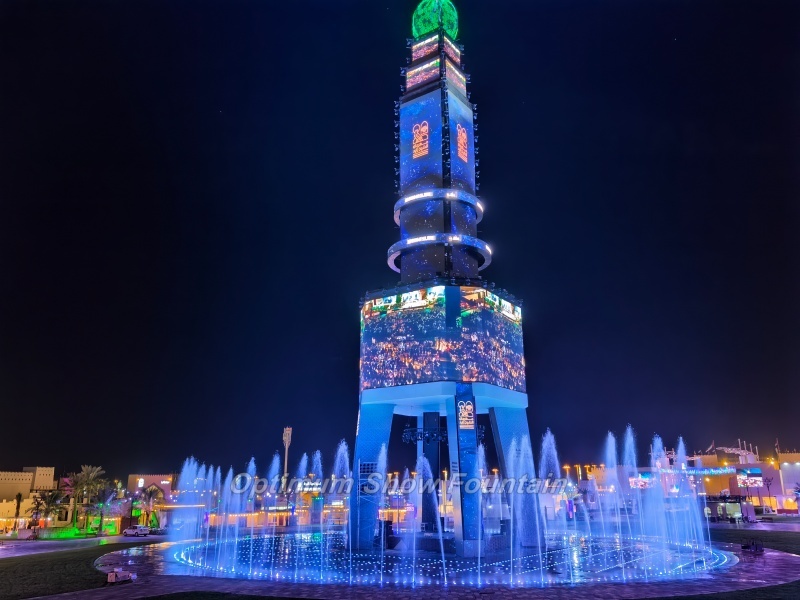
Interactive fountains and splash fountains are designed for direct public engagement, allowing visitors to walk through or play among programmable water jets. They are commonly installed in public parks, pedestrian plazas, shopping centres, resorts, and family entertainment areas.
Many interactive fountains use a dry deck configuration, but the terms are not interchangeable. Dry deck describes the physical construction of the fountain, while interactive describes how visitors use it. Interactive systems may include ground jets, jumping jets, water tunnels, programmable spray zones, and sensor-triggered effects.
Because people can come into direct contact with the water, these fountains require greater attention to water treatment, filtration, drainage, slip resistance, electrical safety, and jet pressure. Applicable public-health and safety requirements should also be confirmed according to the project's location.
Programmable water effects and RGB lighting can allow the fountain to serve as an active play space during the day and a visual attraction in the evening.
Best suited for: public parks, plazas, shopping and mixed-use developments, resorts, recreational spaces, and family-oriented destinations.
| Optimum Show Project Example — Sheikh Zayed Festival At the Sheikh Zayed Festival in Abu Dhabi, Optimum Show delivered a 50 m diameter floor fountain using digital and dancing jets. The installation is designed as an interactive attraction, allowing visitors—particularly children—to experience the fountain at close range while it also operates as part of the festival's wider entertainment programme. View the Sheikh Zayed Festival Floor Fountain→ |
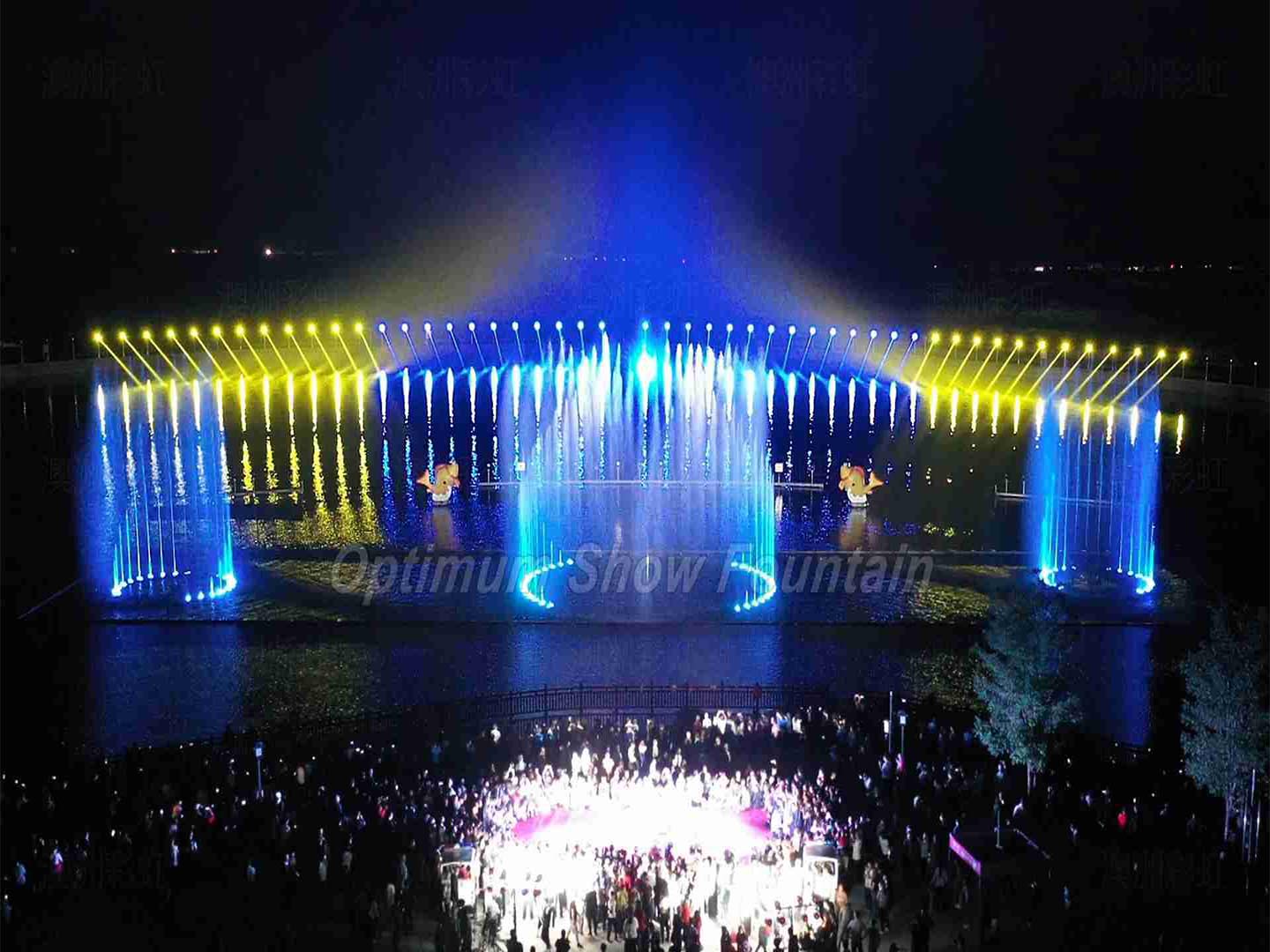
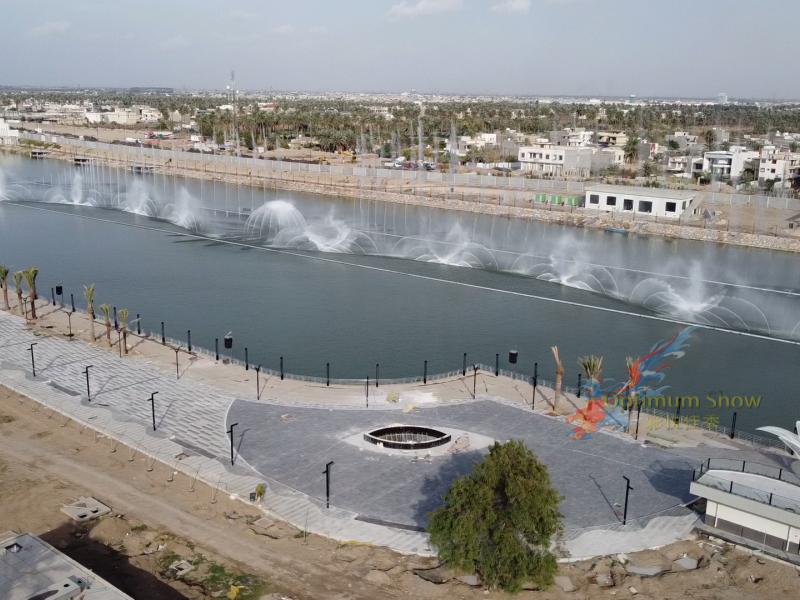
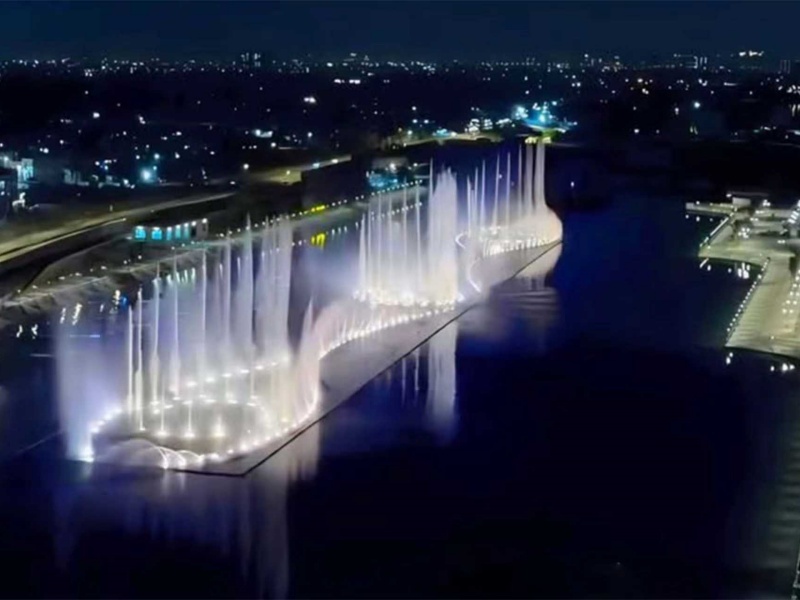
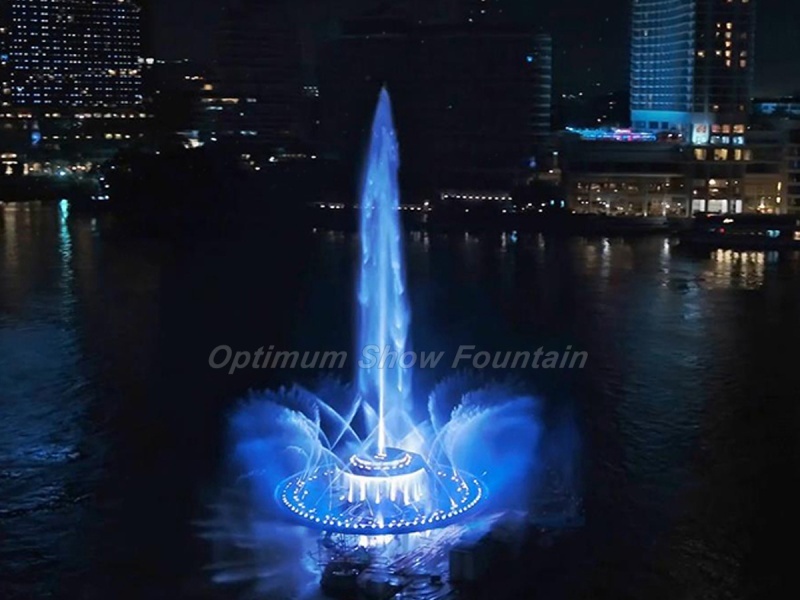
Floating fountains are installed directly on lakes, ponds, reservoirs, and other existing bodies of water using floating platforms that support the pumps, nozzles, lighting, and related equipment. They provide an effective way to create large water displays without constructing a conventional fountain basin.
These systems can range from simple decorative sprays to programmable floating musical fountains with multiple jet patterns, RGB or RGBW lighting, and synchronized water effects. Their modular construction also allows the fountain position and configuration to be adapted to different water environments.
Floating fountains are commonly used in urban lakes, public parks, resorts, golf courses, waterfront developments, and large landscape projects where the existing water body provides both the setting and water source for the feature.
Site conditions play an important role in system design. Water depth and level variation, anchoring, wind exposure, water quality, electrical distribution, wave conditions, and maintenance access all need to be considered. Larger show fountains may also require multiple floating platforms and carefully planned hydraulic and electrical zones.
Best suited for: lakes, ponds, reservoirs, waterfront developments, parks, resorts, golf courses, and large landscape projects.
Floating fountains are particularly suitable when a project needs to activate an existing body of water while minimizing major basin construction and civil works.
| Optimum Show Project Example — Laiyuan Lake Floating Fountain The Laiyuan Lake Water Dance Show uses an integrated lifting floating system measuring approximately 96 × 24 m. Its central high jet reaches 90 m, with a secondary jet reaching 60 m, demonstrating how floating fountain infrastructure can support large-scale water and multimedia effects directly on an existing lake. View the Laiyuan Lake Floating Fountain Show → |
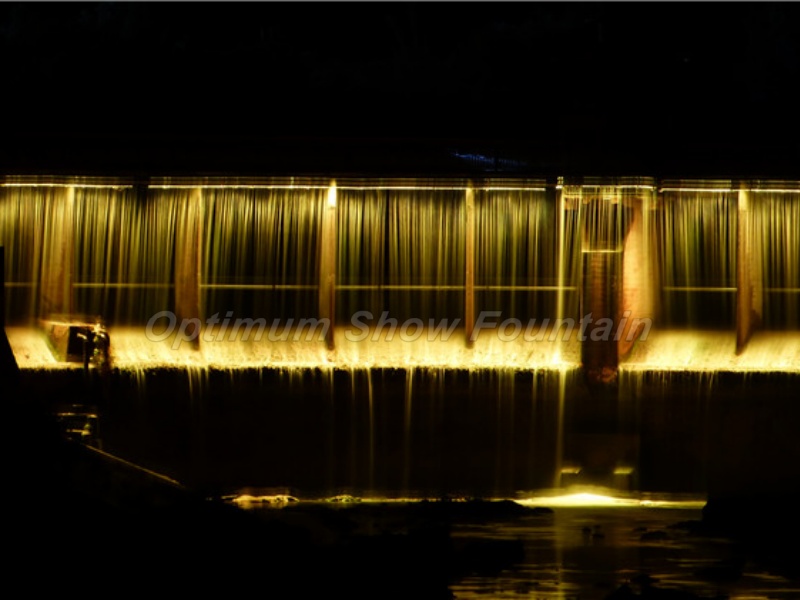
Waterfalls, water walls, and cascade fountains use continuously flowing water to create movement, texture, and sound as part of an architectural or landscape design. Rather than relying on high jets or complex choreography, these features create visual impact through water flowing over, across, or between designed surfaces.
A water wall typically sends a controlled sheet of water down glass, stone, metal, or another vertical surface. Waterfalls create a more pronounced vertical drop, while cascade fountains move water through a series of levels or steps. These systems are commonly integrated into hotel entrances, commercial developments, indoor atriums, courtyards, resorts, public landscapes, and architectural façades.
Although their controls are generally simpler than those of musical fountains, successful operation depends on even water distribution, flow rate, waterproofing, splash control, drainage, filtration, and surface detailing. Indoor installations also require careful consideration of noise, humidity, and surrounding finishes.
Best suited for: hotels and resorts, commercial entrances, indoor atriums, courtyards, landscaped developments, public spaces, and architectural features.
These fountain types are particularly suitable when the objective is to create a continuous architectural water effect with relatively simple operation and strong integration into the surrounding design.
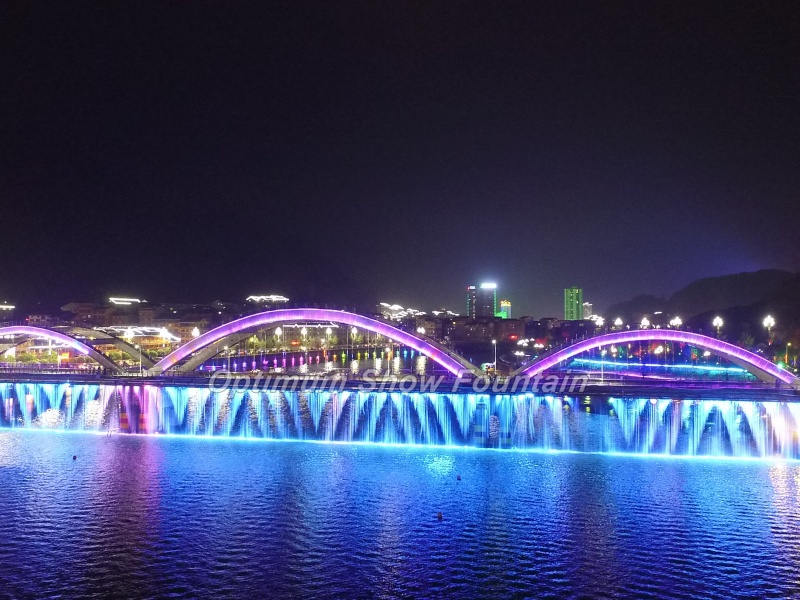
Digital water curtains use rows of individually controlled valves to release falling water in precisely timed sequences, creating text, logos, patterns, and simple graphic effects. Unlike conventional fountains, the falling water itself becomes the visual medium.
The system typically consists of a linear water distribution unit, fast-acting valves, recirculation equipment, lighting, and programmable controls. By opening and closing individual valves at specific times, the system forms recognizable patterns as the water falls.
Digital water curtains are commonly installed in shopping centres, hotels, commercial entrances, exhibition spaces, entertainment venues, and tourism developments, particularly where an unusual architectural or branded feature is required.
Performance depends on valve precision, consistent water pressure, water quality, lighting, installation height, and environmental conditions. Wind can distort falling patterns, so controlled indoor or sheltered environments generally provide the clearest visual results.
Best suited for: shopping centres, hotels, commercial entrances, exhibitions, entertainment venues, and branded architectural installations.
Digital water curtains are particularly suitable when a project requires a programmable water feature capable of displaying changing patterns, messages, or brand-related visual content.
| Optimum Show Project Example — Jianhe Tourism City Optimum Show delivered a 200-meter digital water curtain for Jianhe Tourism City, demonstrating how programmable water technology can be integrated into large-scale tourism and public-space developments. Installed along a bridge environment, the system uses precisely controlled falling water to create dynamic visual effects across an extended architectural span. The project shows how digital water curtains can move beyond small entrance features and become large-format visual installations within destination developments. View the 200m Jianhe Tourism City Digital Water Curtain Project → |
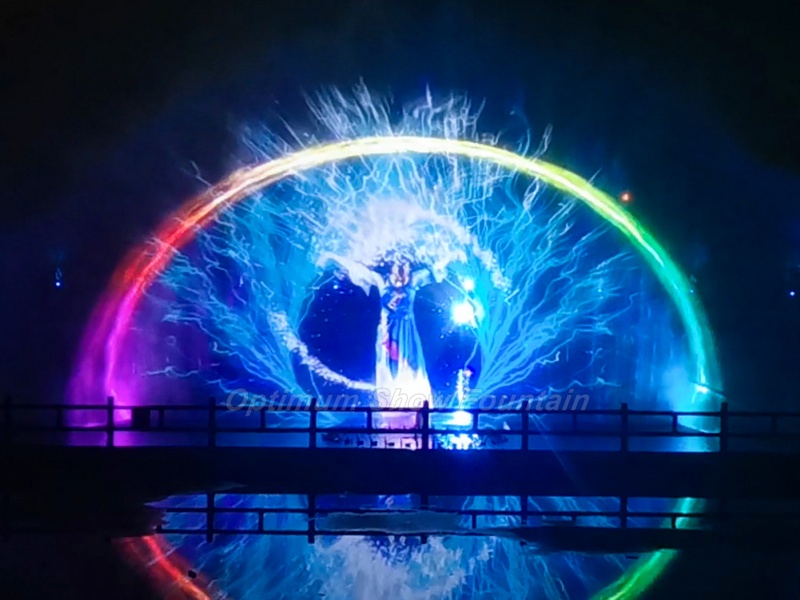
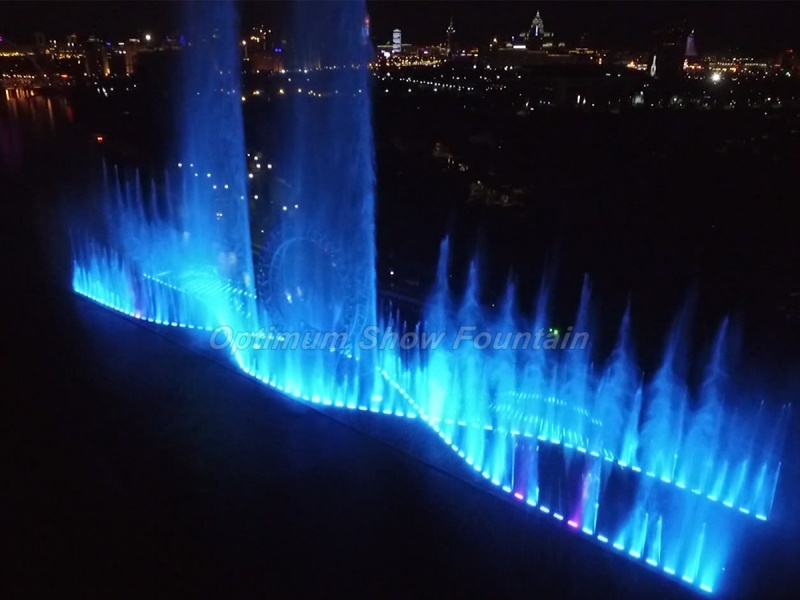
Water screen fountains, also known as projection fountains, create a thin fan-shaped or curtain-like surface of water that can be used to display video, animation, images, laser effects, and other multimedia content. Unlike a digital water curtain, which forms patterns using controlled falling water, a water screen acts primarily as a projection surface.
These systems are commonly incorporated into musical fountain shows, theme parks, tourist attractions, waterfront developments, festivals, and large public events where visual storytelling is an important part of the experience. When illuminated against a dark background, projected content can appear to float above the water.
Performance depends heavily on screen size and uniformity, projection equipment, viewing distance, ambient light, wind conditions, water pressure, and projector positioning. Outdoor installations require particular attention to wind, as excessive movement can distort the water surface and reduce image clarity.
Best suited for: musical fountain shows, theme parks, waterfronts, tourist attractions, festivals, public events, and multimedia entertainment projects.
Water screen fountains are particularly suitable when a project needs to combine water effects with video, animation, laser, or other projected content to create a large-scale multimedia experience.
| Optimum Show Project Example — Dal Lake, India Optimum Show designed, manufactured and installed a 60 × 10 m musical fountain and water screen system at Dal Lake in Srinagar. The installation combines fountain effects, water-screen projection and laser effects, with the fountain pipework mounted on a floating system suited to the lake environment. View the Dal Lake Water Screen Fountain project → |
The right fountain type depends largely on where it will be installed and what the water feature is expected to achieve. A shopping mall may need a fountain that attracts visitors and supports events, while a hotel may prioritize architectural integration and atmosphere. Public parks often place greater emphasis on interaction, while lakes and waterfronts can accommodate much larger water effects.
The table below shows common fountain options for different commercial applications:
| Application | Suitable Fountain Types | Typical Objective |
|---|---|---|
| Shopping malls & mixed-use developments | Musical fountains, dry deck fountains, digital water curtains | Attract visitors, create focal points, support events |
| Hotels & resorts | Architectural fountains, water walls, cascades, musical fountains | Enhance atmosphere and strengthen visual identity |
| Public plazas & city squares | Dry deck, interactive, musical fountains | Activate public space and encourage visitor engagement |
| Parks & recreational spaces | Interactive, dry deck, architectural fountains | Recreation, public interaction and landscape enhancement |
| Lakes & ponds | Floating fountains, floating musical fountains | Activate large existing water bodies with limited basin construction |
| Waterfront developments | Musical, floating and water screen fountains | Create destination-scale attractions and evening experiences |
| Theme parks & tourist attractions | Musical fountains, interactive fountains, water screens | Entertainment, storytelling and scheduled performances |
| Commercial entrances & atriums | Architectural fountains, water walls, digital water curtains | Create a strong first impression and complement architecture |
These are not fixed combinations. Site dimensions, audience behaviour, climate, budget, operating requirements, and maintenance resources should ultimately determine which fountain system is most appropriate for a particular project.
Choosing the right fountain type starts with understanding its purpose, the physical conditions of the site, and how the system will be operated after installation. These factors help narrow the options before detailed fountain design begins.
Different fountain systems serve different objectives. Architectural fountains, water walls, and cascades are typically selected to complement buildings and landscapes, while musical fountains are better suited to developments seeking a landmark attraction or scheduled entertainment. Dry deck and interactive fountains support direct visitor engagement, and floating fountains provide a practical solution for existing lakes and ponds.
| Project Requirement | Fountain Types to Consider |
|---|---|
| Architectural enhancement | Architectural fountain, water wall, cascade |
| Landmark attraction | Musical or dancing fountain |
| Shopping mall entertainment | Musical fountain, dry deck fountain |
| Public interaction | Interactive or dry deck fountain |
| Existing lake or pond | Floating fountain |
| Hotel or resort ambience | Architectural fountain, water wall, cascade |
| Text, logos or patterns | Digital water curtain |
| Multimedia projection | Water screen fountain |
The installation environment can quickly eliminate unsuitable options. Outdoor fountains must account for wind, weather, drainage, splash zones, and pedestrian circulation, while indoor installations require tighter control of humidity, noise, and water dispersion.
Audience interaction matters as well. A fountain viewed across a waterfront can use larger jets and wider effects, whereas fountains positioned close to pedestrians require tighter splash control. Interactive fountains introduce additional requirements for drainage, surface safety, water treatment, and public access.
More complex fountain types generally require more pumps, valves, lighting fixtures, controls, programming, and specialist maintenance. Musical fountains and multimedia water shows can deliver much greater entertainment value, but their operational requirements are different from those of a relatively simple architectural fountain.
Project teams should therefore consider total lifecycle requirements rather than equipment price alone. Fountain dimensions, jet height, hydraulic capacity, lighting, controls, civil works, water treatment, energy consumption, maintenance access, and programming can all influence the final investment.
There is no single best type of water fountain. The right choice is the system that best balances project purpose, site conditions, audience experience, budget, and long-term operational capacity.
The cost of a commercial fountain varies considerably because most systems are custom-designed for the site and project requirements. Fountain type influences the budget, but dimensions, equipment configuration, jet height, controls, lighting, civil works, and installation conditions usually have a greater impact than the category alone.
In general, architectural fountains with relatively simple water effects require less control equipment than large musical or multimedia fountains. Dry deck and interactive fountains may require additional below-ground infrastructure, drainage, filtration, and water-treatment systems, while floating fountains can reduce basin construction but introduce anchoring and offshore electrical requirements.
| Fountain Type | Main Cost Drivers |
|---|---|
| Architectural fountains | Size, finishes, waterproofing, pumps, filtration and lighting |
| Musical fountains | Number of effects, jet height, pumps, VFDs, controls, lighting, audio and programming |
| Dry deck fountains | Nozzle quantity, underground works, drainage, filtration and surface construction |
| Interactive fountains | Water treatment, drainage, safety systems, controls and number of interactive effects |
| Floating fountains | Platform size, anchoring, pumps, lighting, cabling and distance from shore |
| Water walls & cascades | Dimensions, materials, flow requirements, waterproofing and finishes |
| Digital water curtains | Curtain dimensions, valve quantity, controls, structure and lighting |
| Water screen fountains | Screen dimensions, pumps, projection equipment and multimedia systems |
For a project-specific estimate, contact Optimum Show with your site dimensions, fountain type, and design requirements. Our team can recommend a suitable configuration and provide a tailored quotation.
In commercial developments, water fountains are complex systems rather than standalone features. While visual design defines how a fountain looks, engineering determines whether it can be built, operated, and maintained reliably over time.
Commercial fountain projects involve multiple technical disciplines working together. Hydraulic design controls water movement and pressure, electrical systems power pumps and lighting, and control platforms coordinate timing, effects, and automation. Without proper engineering integration, even well-designed fountains can suffer from unstable performance, excessive energy use, or frequent downtime.
Engineering expertise is especially critical at the early stages of a project. Decisions made during concept design—such as fountain type, jet height, or interaction level—directly affect structural requirements, equipment sizing, and long-term operational cost. Addressing these factors early helps avoid redesigns, budget overruns, and performance limitations later in the project lifecycle.
By treating fountains as engineered systems rather than decorative additions, commercial projects achieve greater reliability, efficiency, and longevity. This approach ensures that the fountain not only delivers the intended visual impact but also performs consistently under real-world operating conditions.
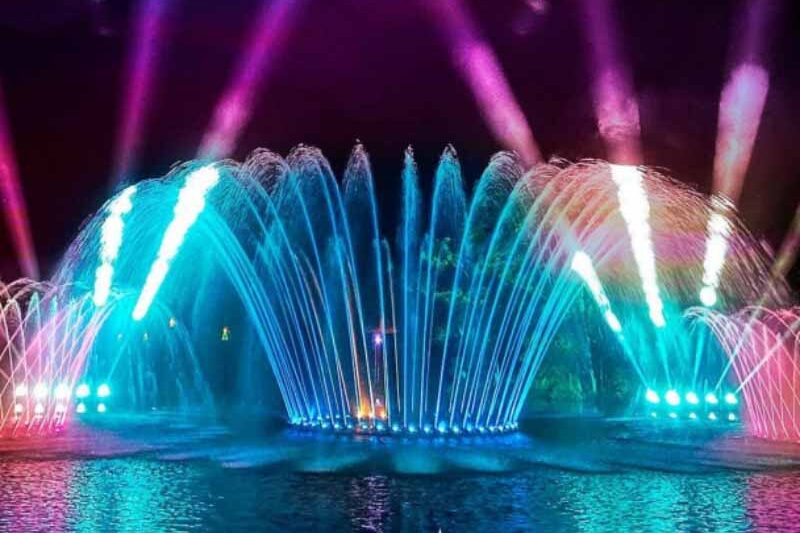
Optimum Show designs commercial fountain systems with an engineering-first mindset, treating each project as a fully integrated technical system rather than a standalone visual feature. The process begins by understanding the project context—site conditions, scale, audience expectations, and long-term operational requirements—so that design ambition is grounded in technical feasibility from the outset.
Rather than applying standard configurations, Optimum Show develops custom fountain systems tailored to the specific demands of each project. Fountain type selection, hydraulic layout, equipment specification, control architecture, and lighting integration are planned together as a unified system. This approach reduces conflicts between design intent and real-world performance, particularly in complex or large-scale installations.
A key focus is early engineering involvement. By addressing hydraulic calculations, electrical coordination, control logic, and maintenance access during the design stage, Optimum Show helps prevent downstream issues such as performance instability, excessive energy consumption, or difficult servicing conditions after installation.
Through this integrated design and engineering approach, Optimum Show delivers commercial fountain systems that are visually impactful, technically reliable, and built for long-term operation. The result is not only a successful opening performance but a fountain system that continues to perform consistently throughout its lifecycle.
Selecting the right fountain type is one of the most consequential decisions in any commercial water feature project. Beyond visual appeal, the chosen system directly influences construction complexity, operational reliability, maintenance demands, and long-term cost performance.
No single fountain type suits every project. Architectural features, performance-based systems, interactive fountains, and landmark installations each serve distinct purposes and require different levels of engineering coordination. Successful outcomes depend on recognising these differences early and aligning fountain selection with site conditions, audience expectations, and operational realities.
The fountains that endure share common traits: clear functional intent, early engineering involvement, realistic maintenance planning, and equipment specified for lifecycle value rather than lowest upfront cost.
Commercial fountains are long-term commitments. Chosen well, they become assets. Chosen poorly, they become permanent problems.
Optimum Show provides professional commercial fountain design and engineering services worldwide.
Whether evaluating options or addressing an underperforming installation, our team helps align design ambition with engineering reality.
Commercial fountain types include architectural fountains, musical fountains, dry deck fountains, interactive fountains, floating fountains, waterfalls and water walls, digital water curtains, and water screen fountains.
It depends on the intended role. Musical fountains can act as attractions, dry deck fountains provide interactive public space, while architectural fountains and digital water curtains are often used at entrances and interior areas.
A dry deck fountain describes the physical construction, with fountain equipment beneath a walkable surface. An interactive fountain describes how visitors engage with the water. A fountain can therefore be both dry deck and interactive.
A digital water curtain uses controlled falling water streams to create patterns, text or graphics. A water screen creates a surface of water or mist onto which images, video or laser effects can be projected.
Floating fountains are generally the most practical option for existing lakes and ponds because the fountain equipment can be mounted on a floating platform without constructing a conventional basin.
Complexity generally increases with the number of pumps, valves, moving effects, lighting fixtures, controls and multimedia systems. Large musical and multimedia fountain systems therefore typically require more specialized maintenance than simple architectural fountains.
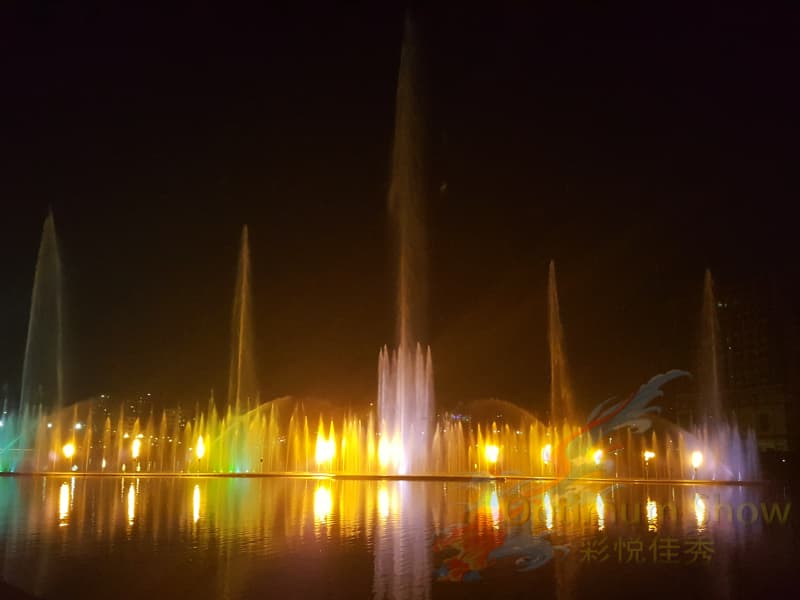
Share your site size, water depth, location or CAD drawing with our engineering team. We can evaluate the project requirements and recommend a suitable fountain system.