Most musical fountain installation timelines range from two months to a year, depending on scale, site readiness, and the extent of custom-built components. That range is wide enough to be useless on its own — what actually matters is which phase is eating up the time on your specific project.
This guide breaks the timeline into seven phases, shows where delays most often happen, and explains what shortens a schedule without cutting corners.
Key Takeaways

Four factors set the pace for almost every project. Understanding which ones apply to your site is the fastest way to get a realistic schedule instead of a generic estimate.
A small dry-deck fountain with 30 nozzles can be designed and installed quickly. A 150-meter lake fountain with 1,500 nozzles is a different undertaking entirely — more hydraulic calculations, more control channels, longer manufacturing runs.
Nozzle count, multimedia integration, and control system complexity all scale together. Static LED zones with simple jet patterns move fast. Servo-controlled nozzles synchronized to video projection do not.
This is usually the largest variable on the entire schedule. A site with an existing watertight basin and adequate electrical supply can move straight into installation. A site that needs a new concrete basin built from scratch adds 4 to 10 weeks before equipment can even go in.
Access restrictions matter too — limited operating hours, underground utility rerouting, or tight delivery access all extend the timeline. A professional site survey early on is what surfaces these issues before they become delays.
Standard nozzles, pumps, and LED fixtures typically ship in 4 to 6 weeks. Custom components — servomotor-controlled nozzles, bespoke stainless platforms — add another 3 to 6 weeks for engineering and tooling on top of that.
The same logic applies to show programming. A custom choreography built around specific music and a client's color palette takes longer than adapting a pre-built template.
Permitting is the factor most projects underestimate. Depending on the jurisdiction, a building permit can take anywhere from two weeks to three months, and may involve water use approvals, electrical certifications, noise compliance, and environmental review.
Sites near heritage zones or protected waterways face extra scrutiny. Interactive fountains designed for public play need additional safety certification. Starting permit preparation alongside design — not after it — is what keeps this from becoming the bottleneck.
Every musical fountain project moves through the same seven phases regardless of scale. What changes is how long each one takes.
Phases 5, 6, and 7 typically overlap on a well-run project — programming starts during installation, and commissioning begins before the final punch-list items are closed out. That overlap is how experienced teams compress the total schedule without rushing any single phase.
| Phase | Typical Duration |
| 1. Concept Planning & Project Brief | 1–3 weeks |
| 2. Design & Engineering | 2–6 weeks |
| 3. Manufacturing & Equipment Production | 4–12 weeks |
| 4. Shipping & Logistics | 1–8 weeks |
| 5. On-Site Installation | 2–10 weeks |
| 6. Programming & Choreography | 1–4 weeks |
| 7. Testing & Commissioning | Several days to 2 weeks |
This phase defines what the fountain needs to achieve — public entertainment, a commercial centerpiece, a landmark draw — and turns that into a working brief. Site review covers basin conditions, water supply, electrical capacity, and audience sightlines, along with less obvious factors like wind direction and acoustic reflection.
A thorough brief at this stage typically cuts down design revision cycles later, since the design team isn't guessing at requirements that should have been settled up front.
This is where the brief becomes a technical specification: hydraulic calculations for jet height and angle, nozzle and lighting layout, and the choice of control architecture — PLC, DMX, or a hybrid of the two. A 3D animation preview is usually produced here for client sign-off before anything moves to manufacturing.
Building in revision rounds at this stage, rather than after manufacturing has started, is one of the more reliable ways to protect the schedule.
Pumps, nozzle assemblies, and control cabinets are typically manufactured on concurrent production lines. Standard components ship in 4 to 6 weeks; custom parts like servomotor nozzles can add another 4 to 6 weeks on top.
Asking for a manufacturing milestone schedule gives a concrete way to track progress without waiting until something is already late.
Domestic projects with short supply chains move fast here. International projects face more variables — sea freight typically runs 3 to 6 weeks, and customs clearance adds another layer depending on port congestion and documentation readiness.
Pre-certifying control system components and preparing country-of-origin paperwork during manufacturing, rather than after the equipment ships, can save real time at customs.
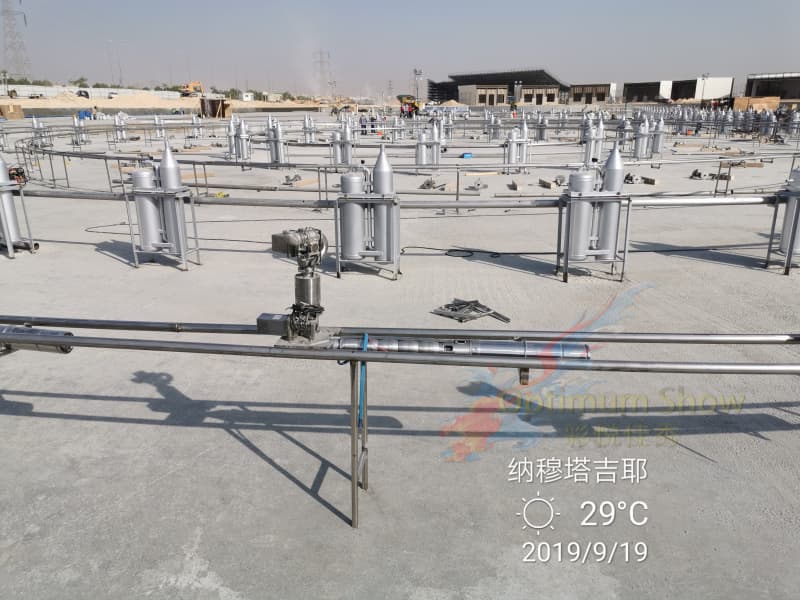
This is where the physical fountain takes shape. The sequence usually starts with basin preparation, followed by piping (main supply lines, branch distribution, drainage), electrical systems (cable trays, junction boxes), and then equipment assembly — pumps, nozzles, and lighting fixtures mounted and connected.
Coordination across trades matters more here than almost anywhere else in the project. Scheduling conflicts between civil and electrical teams are one of the most common sources of slippage in this phase.
This phase translates music into water movement — mapping rhythm, dynamics, and emotional peaks to jet height, timing, and lighting shifts. It's less a technical task than a craft: real water dynamics rarely match simulation exactly, so iterative tuning is part of the process, not a sign that something went wrong.
As a rough benchmark, a single three-minute show typically takes five to ten days of dedicated programming time.
Every nozzle, pump, and lighting channel gets activated and checked against the hydraulic design and 3D preview. Safety protocols — overflow systems, emergency stops, and electrical isolation — are tested thoroughly, with mandatory certification for any interactive fountain accessible to the public.
Full-duration performance trials close out this phase, followed by client handover, training, and documentation.

The phase ranges above span everything from small installations to major public landmarks. Mapped against real project types, here's a more practical reference point.
| Project Type | Typical Total Timeline |
| Small dry-deck or courtyard fountain | 2–3 months |
| Mid-size commercial fountain (mall, resort) | 4–6 months |
| Large public or lake fountain | 6–12 months |
| Major landmark or multimedia installation | 10–14+ months |
These totals run from contract signing to grand opening, and assume a contractor managing phases concurrently — manufacturing during permitting, programming during installation. A sequential approach, where each phase only starts once the last one fully closes, typically runs 20 to 30 percent longer.
Add 2 to 4 weeks of buffer if the project sits in a market with slow permit processing, involves a new civil contractor without a confirmed track record, or requires significant site remediation before work can start.
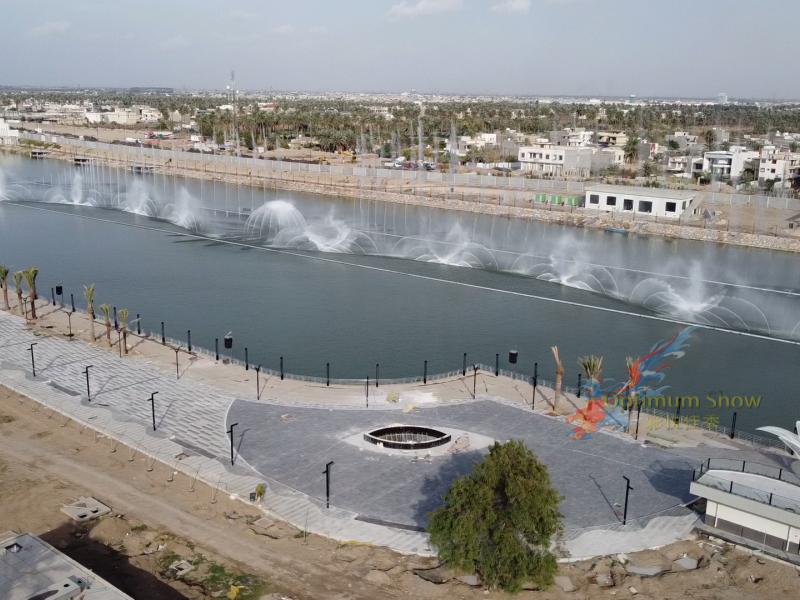
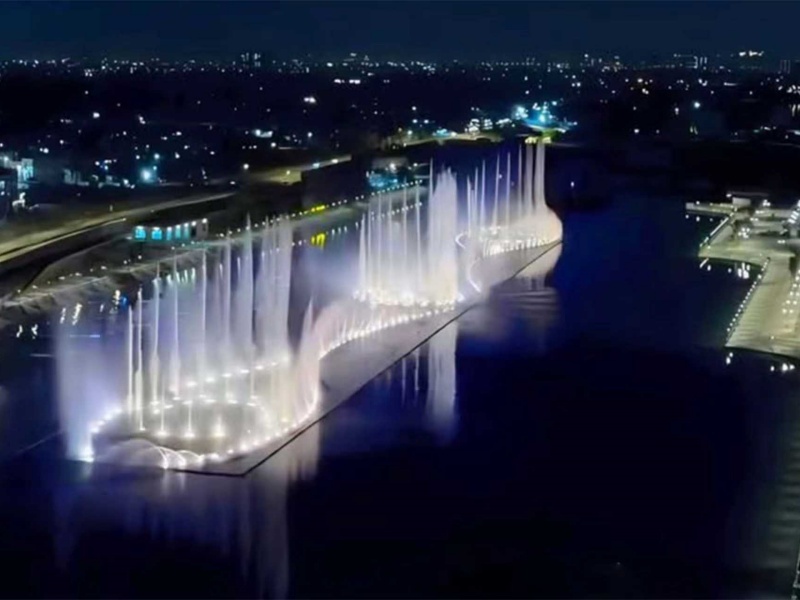
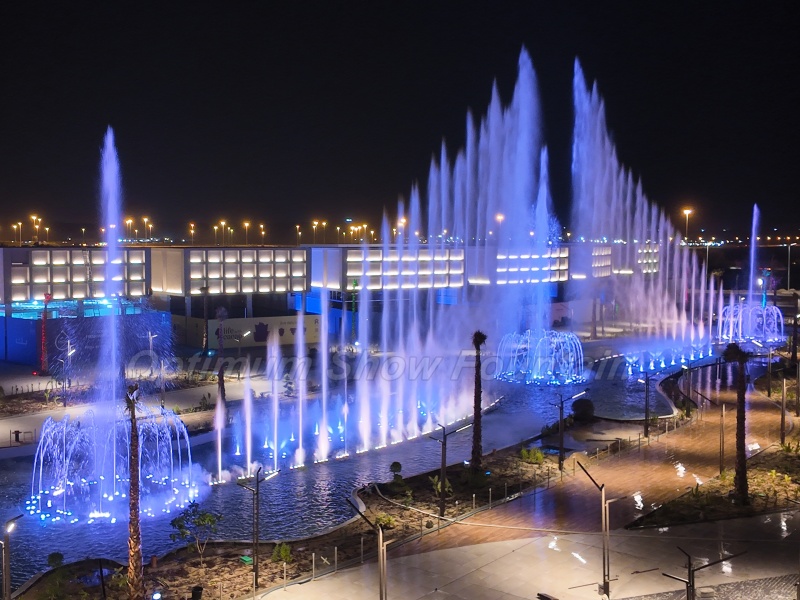
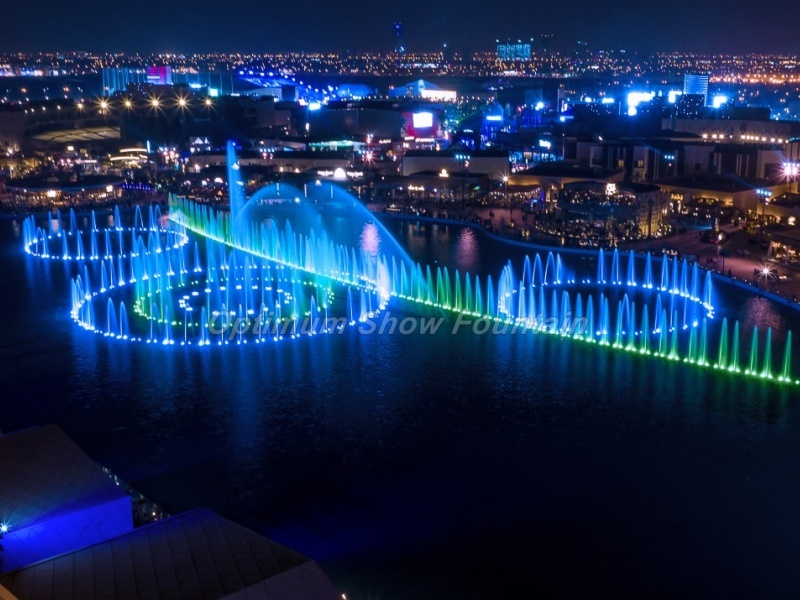
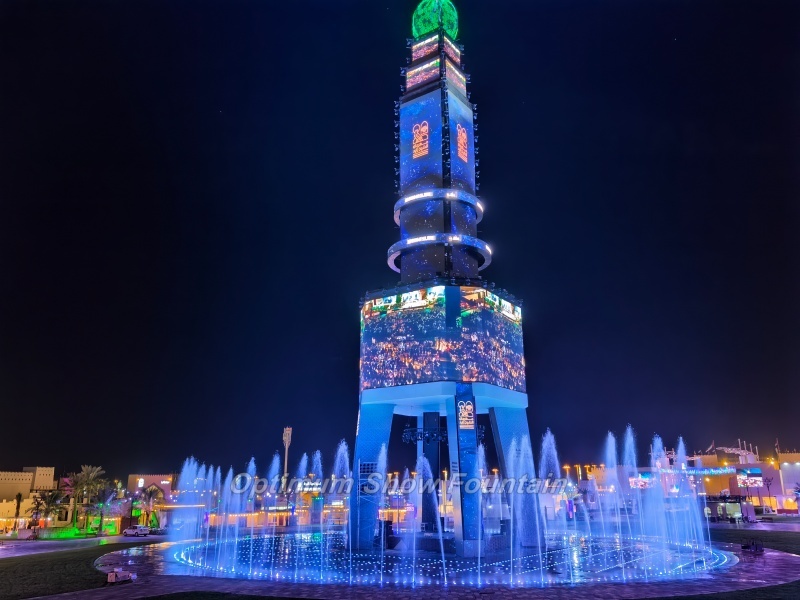
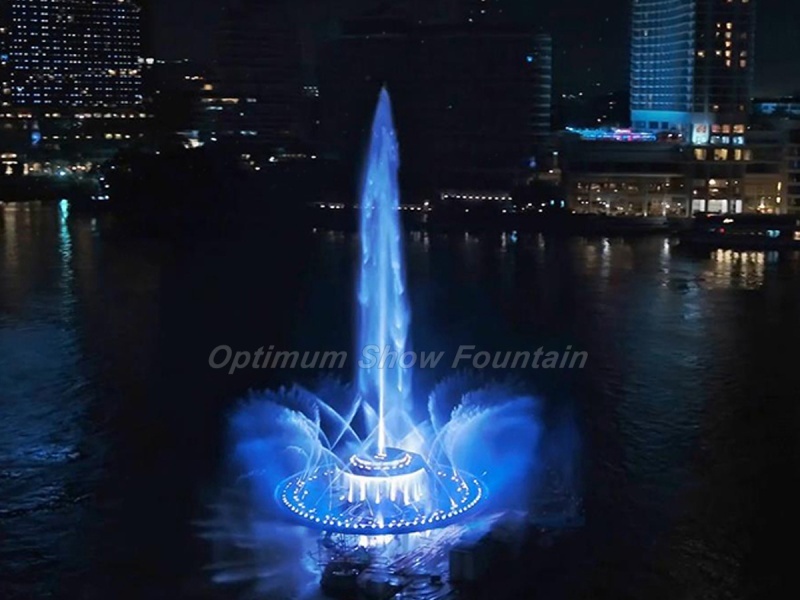
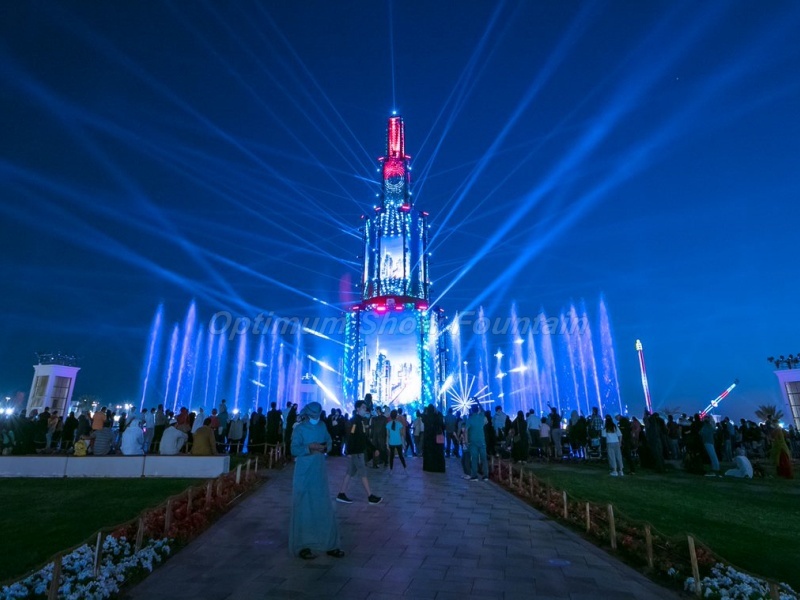
The upper end of that range holds true even on large landmark-scale projects. Optimum Show's own delivery timelines on major installations — including the Riyadh Boulevard City Fountain in Saudi Arabia, the Sheikh Zayed Festival Fountain in the UAE, and the Baghdad Island floating fountain in Iraq — fall within these same phase ranges, despite the added coordination that comes with large public sites and multiple stakeholders.
Delays rarely come from the fountain equipment itself. They come from the conditions around it — and most of them are predictable.
Every idle day on-site has a real cost — labor, equipment rental, overhead. A formal site readiness checklist issued six weeks before mobilization, with a verification check two weeks out, catches most of these issues before they become expensive.
Client-requested changes after manufacturing has started — a different nozzle type, an expanded basin, and an added lighting zone — mean reinitiating production on the affected components. This is one of the costliest delay sources because it touches work that's already underway.
A formal design freeze, agreed before procurement starts, is the standard safeguard. After the freeze, any change goes through a documented change order that spells out cost and schedule impact.
International logistics introduce delays that are mostly outside the contractor's direct control, but they're not unmanageable. Preparing import documentation during manufacturing, rather than after the equipment ships, can shave real time off customs clearance.
Outdoor installation is exposed to rain, high winds, and extreme heat, all of which can affect both safety and progress. Spring and autumn projects carry more variability and usually warrant a one to two week contingency. Monsoon seasons and freezing climates each bring their own scheduling constraints.
When civil and electrical teams operate independently rather than against a shared schedule, small conflicts compound. A cable run finished after the fountain team needs it, concrete poured over pipe penetrations before final checks, equipment deliveries blocked by another trade's materials — none of these are large individually, but they add up.
Appointing a single project coordinator, whether from the fountain contractor or an independent firm, is the most reliable fix for this specific problem.
None of the strategies below involves rushing a phase. They involve removing the gaps between phases.

A thorough site survey, a detailed brief, and a formal 3D visualization review — completed and signed off before any equipment is ordered — prevent the most common (and most expensive) source of rework.
Starting basin construction and electrical infrastructure immediately after design approval lets civil work and manufacturing run in parallel. The alternative — equipment sitting in storage while installation teams wait for a site that isn't ready — is a common and avoidable source of idle time.
Manufacturing during permit review. Programming during installation. Commissioning prep while final punch-list items are still being closed. This kind of overlap is what separates a tightly run schedule from one that runs sequentially and loses weeks to handoffs. It's a fair question to ask any contractor directly: which phases do you run in parallel, and which strictly wait for the one before it?
Starting show programming during manufacturing — using 3D simulation rather than waiting for the physical installation — moves a multi-week task off the critical path entirely. Final tuning becomes the last step instead of the whole process.
A scope freeze before procurement, held through a formal change-order process, is what prevents a single late request from rippling through manufacturing and installation. Changes are cheap during design. They get progressively more expensive — and slower — at every phase after that.
You May Also Like: How Musical Fountains Work in Modern Water Show Systems
It depends mainly on size and site conditions. Small installations are often completed in 2 to 3 months. Large commercial or lake fountains typically take 6 to 12 months, covering design, manufacturing, installation, programming, and commissioning.
Site conditions, almost always. A site needing a new concrete basin or significant electrical upgrades can add 4 to 10 weeks before installation can even begin — more than any other single variable.
Yes, particularly during outdoor installation. Rain and high winds can pause work for safety reasons, and extreme temperatures can affect material handling. Spring and autumn projects typically carry the most weather-related variability.
Site readiness, coordination between civil and electrical teams, and supply chain timing are the recurring issues — far more often than problems with the fountain technology itself.
The fastest projects aren't the ones that rush — they're the ones planned correctly from the start. Concept planning, design, manufacturing, installation, programming, and commissioning each affect the final completion date, and the biggest swings in schedule come from site readiness and design discipline, not from the fountain equipment itself.
Understanding where your project sits across these seven phases makes it possible to build a realistic schedule and coordinate stakeholders without last-minute surprises.
If you're planning a musical fountain project and want a clear musical fountain installation timeline based on your specific site and scale, Optimum Show's team can review your requirements and provide a phase-by-phase schedule tailored to your project.
Share your site size, water depth, location or CAD drawing with our engineering team. We can evaluate the project requirements and recommend a suitable fountain system.