Designing a commercial musical fountain is not about adding a visual feature — it is about creating a destination that increases footfall, extends dwell time, and reshapes how people use a space.
Most fountains in retail developments remain background elements. They are decorative, but commercially passive. The dancing fountain at Cairo Festival City Mall operates differently. It functions as an anchor — a piece of infrastructure that actively drives visitor behaviour and revenue.
This case study examines how the project was engineered, how it was positioned within the development, and what practical lessons developers and planners can apply when evaluating a shopping mall fountain design or large-scale water feature.
Rather than focusing on aesthetics alone, the analysis looks at performance: responsiveness, visibility, programming strategy, and long-term operational value.
A commercial musical fountain succeeds when it does more than look impressive — it must actively shape how people use a space and generate measurable commercial value.
In short, a commercial fountain works when it is treated as infrastructure, not decoration — designed to drive engagement, not just visual appeal.
Cairo Festival City is a large-scale mixed-use urban development in New Cairo, Egypt, spanning over 3 million square meters and integrating residential, commercial, retail, hospitality, and leisure components into a cohesive community. It was developed by Al-Futtaim Real Estate Group — the same group behind Festival City developments in Dubai and Doha.
At its core sits Cairo Festival City Mall, with over 300 stores and 95 restaurants and cafés, anchored by Egypt's only IKEA and a Carrefour hypermarket. The mall attracts an estimated 22 million visitors annually, making it one of the highest-footfall retail destinations on the African continent.
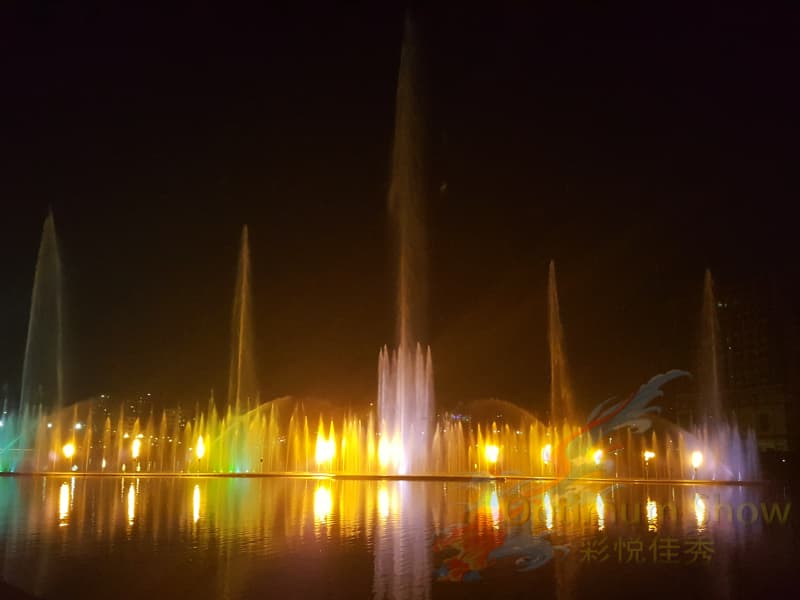
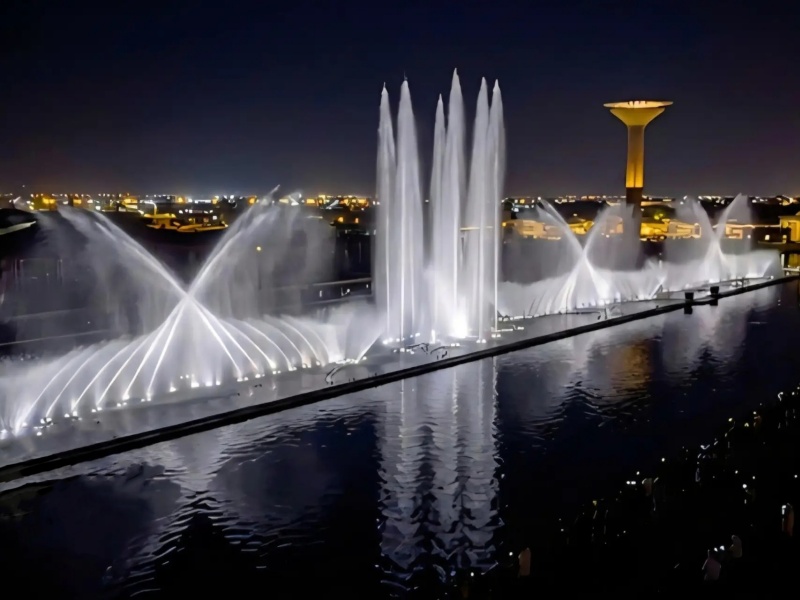
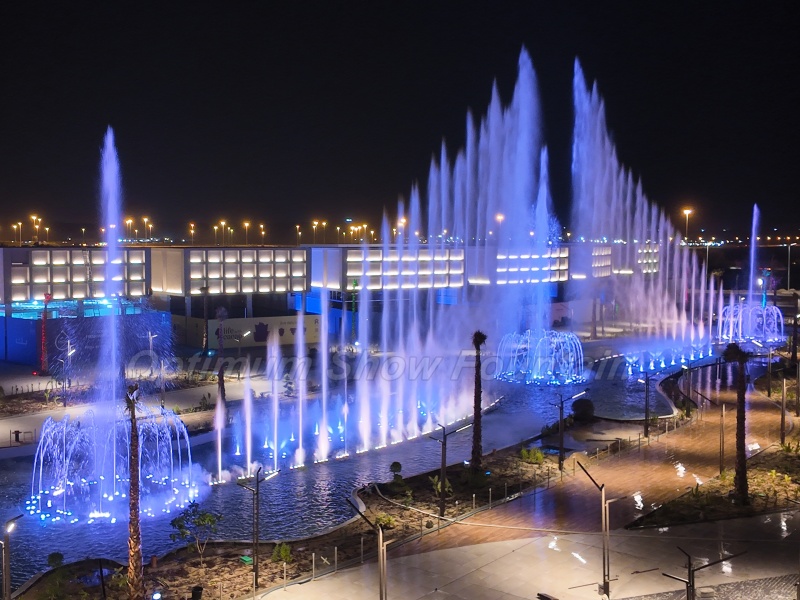
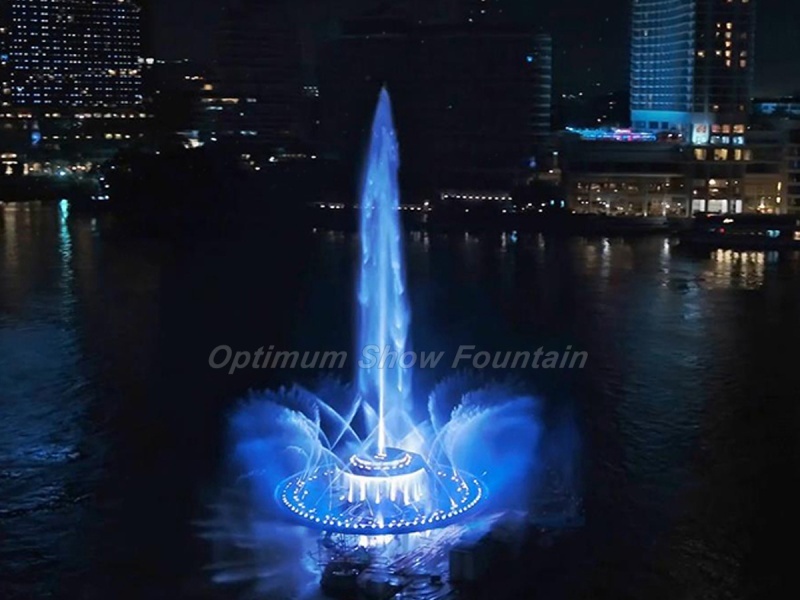
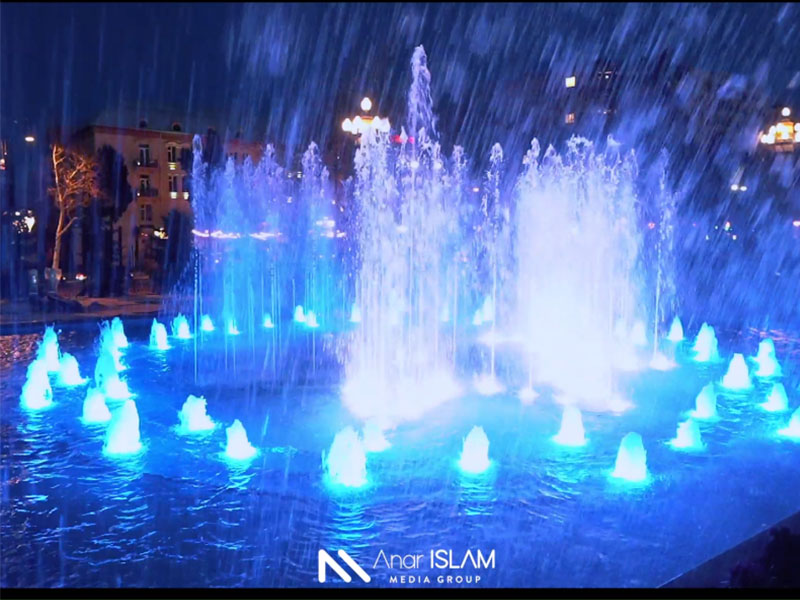
At the heart of the outdoor Festival Village, the dancing fountain serves as the centrepiece — surrounded by over 50 restaurants and cafés set across two outdoor levels, with terraces overlooking the fountain, water jets, music, and a multi-coloured aqua light show, alongside the curved seating of the Amphitheatre.
This layout — amphitheatre facing fountain, dining terraces wrapping around both — is not accidental. It is a deliberate commercial and spatial design strategy, and the fountain is its engine.

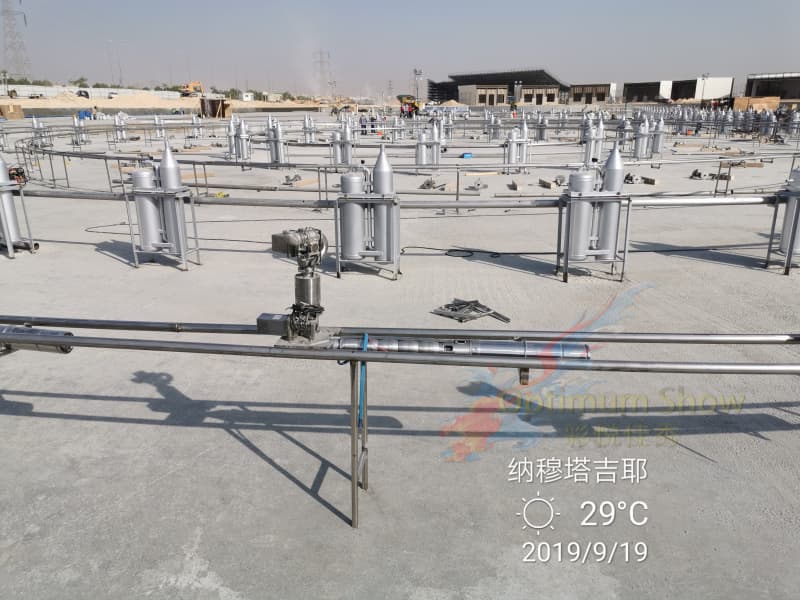
Behind every successful commercial musical fountain is a series of technical decisions that directly affect performance, responsiveness, and long-term reliability. In this project, several engineering choices elevate the fountain from a visual feature to a high-precision show system — the same principles typically applied in large-scale commercial water show design.
One of the defining features of this fountain is the use of air-assisted jet systems capable of projecting water up to 25 metres.
Compared to conventional pump-driven nozzles, air-driven systems respond significantly faster. This allows for:
In practical terms, this is the difference between a fountain that simply reacts to sound and one that moves in sync with the music — a standard increasingly expected in high-end commercial installations.
Many commercial fountains operate on basic beat detection, triggering water effects at fixed intervals. While visually engaging at first, this approach quickly becomes repetitive.
Here, the system is designed to interpret melody, rhythm, and musical variation, requiring:
This level of choreography is what allows a fountain to remain engaging over time, particularly in environments where repeat visitation is critical.
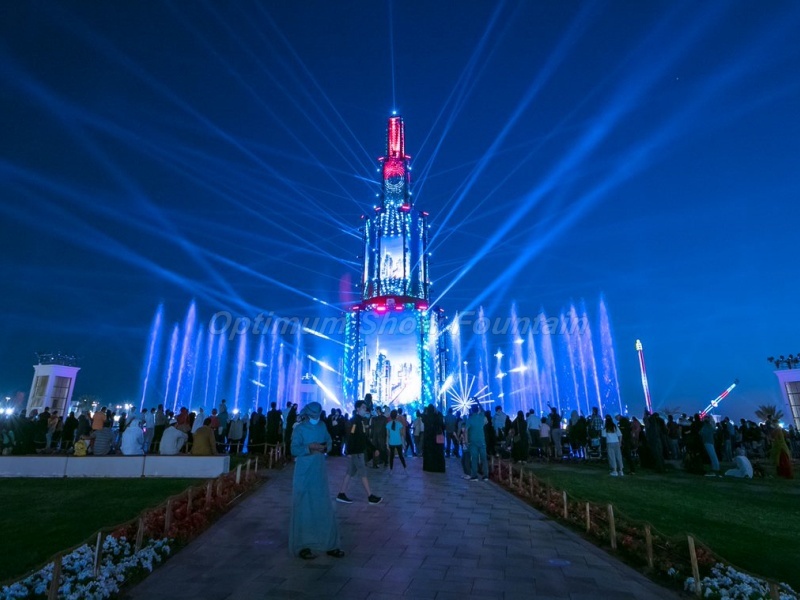
In retail environments, visitors approach from multiple directions, levels, and distances. A single “front-facing” design is not sufficient.
This fountain is engineered for multi-directional viewing, supported by:
This approach reflects a broader shift in commercial fountain design, where installations must perform as open-space experiences rather than fixed-stage shows.
Lighting plays a critical role in extending the operational value of the fountain.
The system incorporates multi-channel LED lighting that:
This flexibility allows the fountain to function not just as a daytime feature, but as a programmable nighttime attraction within the commercial space.

A well-designed commercial musical fountain is not just an attraction — it is a tool for influencing visitor behaviour and improving commercial performance. When integrated correctly, it directly impacts how long people stay, where they gather, and how they spend.
Most retail environments rely on tenants to attract visitors. A musical fountain shifts this dynamic by becoming a destination in its own right. Visitors come specifically to watch scheduled shows, which increases overall footfall, strengthens the identity of the development, and differentiates the property from competing malls.
Foot traffic alone does not generate revenue — time spent does. Musical fountains encourage visitors to stop, sit, and stay longer, especially when combined with seating areas, dining terraces, and clear viewing zones. Even a modest increase in dwell time can significantly improve food and beverage sales, impulse retail purchases, and overall spend per visitor.
Static features lose impact quickly. Programmable fountains, however, offer changing content. By rotating music, choreography, and show themes, operators create reasons for visitors to return — through seasonal shows, event-based programming, and different performances throughout the day. This transforms the fountain into a repeat engagement driver, not a one-time attraction.
Musical fountains are inherently visual and highly shareable. Visitors frequently record videos, post on social media, and associate the experience with the location. This creates organic marketing that extends beyond the physical site, reinforcing brand visibility without additional advertising spend.
The highest-performing fountains are not isolated features — they are integrated with surrounding businesses. Positioned near restaurants and cafés, a fountain can increase table occupancy, extend dining duration, and improve the value of premium-facing locations. In this way, the fountain acts as an economic anchor, enhancing the performance of adjacent commercial areas.

The Cairo Festival City installation highlights several core principles that apply to any successful commercial musical fountain. These are not aesthetic choices, but strategic decisions that determine long-term performance and return on investment.
A commercial fountain performs best when it is designed as part of a complete spatial and operational strategy, not as a standalone feature.
While a commercial musical fountain can be a powerful asset, it is not the right solution for every project. Understanding these limitations early helps avoid underperforming installations.
A commercial fountain should be built when it can function as a long-term, integrated asset — not just a visual addition. If the project lacks the necessary conditions in terms of traffic, environment, budget, or operational support, it is often more effective to invest in other elements that directly enhance user experience and commercial performance.

Commercial mall fountains represent one of the more technically demanding categories in the water show industry — combining the engineering requirements of large-scale performance systems with the operational realities of high-traffic retail environments. Systems must be reliable, safe, visually compelling, and easy to maintain across long operating hours.
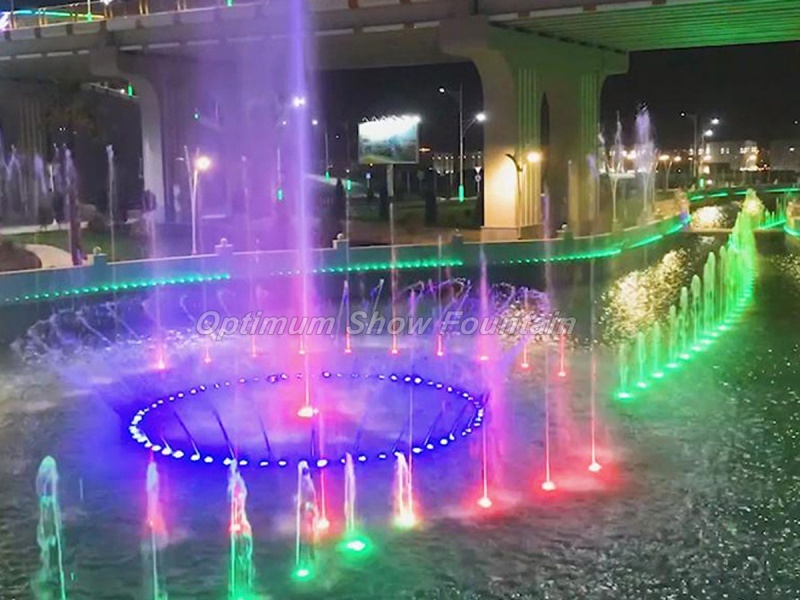
Optimum Show has delivered dancing fountain systems for commercial and public environments across the Middle East and beyond. Our Kuwait Jahra Shopping Mall project is one example of a music fountain delivered specifically for a large retail destination — a system designed to perform nightly across an extended operating schedule, within the spatial and structural constraints of an existing mall development.
If you are evaluating whether a musical fountain makes commercial sense for your development, the key decisions are not visual — they are technical, spatial, and operational. Optimum Show provides early-stage support, including:
This approach allows project teams to evaluate feasibility, performance expectations, and long-term operational requirements before committing to full design and construction.
Planning a Commercial Fountain Project? Contact Optimum Show to discuss your requirements →
Commercial musical fountain costs vary by scale and complexity. The cost of the commercial fountain it depands on the design, pool size of the fountain. It can be from 100, 000-1,000,000 USD. The most accurate estimate comes from a site-specific feasibility review covering structural, hydraulic, and electrical requirements. Optimum Show provides early-stage budget assessment as part of its pre-design support.
Most mid-scale commercial fountain installations take 3–6 months from design sign-off to commissioning. Early engagement during master planning helps avoid costly delays from structural or infrastructure constraints later in the construction programme.
Yes. Retrofitting is feasible but requires a detailed feasibility review covering structural load capacity, water supply and drainage connections, and electrical infrastructure. Optimum Show has delivered fountain projects within existing developments and can assess technical viability before any design commitment.
Commercial fountains require scheduled preventive maintenance, water quality management, and periodic inspection of pumps, nozzles, valves, and lighting. Frequency depends on operating hours and climate conditions. Optimum Show provides maintenance contracts, remote technical support, and operator training as part of the project handover.
Shows typically run every 15–30 minutes during peak evening hours, with each performance lasting 5–10 minutes. A well-programmed system includes multiple sequences that can be rotated seasonally or for special events, managed through a dedicated control interface that does not require specialist engineering support.
The Cairo Festival City Mall dancing fountain has been operating for over a decade and still draws crowds. That longevity is not accidental — it is the result of a design process that treated the fountain as a serious piece of commercial and civic infrastructure, engineered to perform consistently, and positioned strategically within a larger spatial plan.
For developers, architects, and project owners considering a large-scale fountain for a retail or mixed-use development, it remains one of the clearest examples in the region of what a well-executed commercial water show can achieve.
Share your site size, water depth, location or CAD drawing with our engineering team. We can evaluate the project requirements and recommend a suitable fountain system.