You see water rise, lights shimmer, and music take hold as the world’s most famous musical fountains turn public space into a performance. From Dubai to Las Vegas, these landmark shows blend engineering with atmosphere, drawing you into scenes that feel precise yet dreamlike. Their scale is striking, but what matters more is how they shape memory, movement, and value around them. The question is which fountains truly set the standard—and why.
In this article, we explore some of the most famous musical fountains in the world, while also breaking down what makes them successful—from design and technology to their role in modern commercial and public developments.
Not every fountain becomes a landmark. A famous musical fountain stands out not just because of its size or location, but because of how effectively it combines engineering, design, and experience to create a lasting impression. Understanding these defining factors is essential for evaluating successful water show projects.

Famous musical fountains are typically designed at a scale that commands attention. This includes:
Large-scale design ensures the fountain becomes a central feature of the surrounding environment, rather than a background element.
At the core of every successful musical fountain is the ability to achieve smooth and accurate water dance with music. This involves:
High-quality synchronization is what transforms water movement into a true performance.
Famous fountains are not standalone features—they are integrated into:
Their design aligns with architecture, landscape, and visitor flow, making them a natural part of the space.
Modern musical fountains rely on advanced systems such as:
Innovative technology allows for more dynamic, flexible, and immersive performances.
Ultimately, what makes a fountain famous is how people experience it. Successful musical fountains:
They function not only as visual features, but as interactive attractions that enhance the overall value of a location.
The concept of choreographing water to music is older than modern technology by several centuries — but the form has changed dramatically over time.
1660s–1680s
Louis XIV commissions the fountains of Versailles, where water effects are coordinated with live baroque music during royal events. Fountain engineers — called fontainiers — activate individual jets manually as the king walks through the gardens. This is the origin of what we now call a musical fountain show.
1886
Geneva's Jet d'Eau is installed, originally as a safety valve for a hydraulic power network. It becomes a permanent fixture on Lake Geneva and one of Europe's most recognized water landmarks — proof that scale and simplicity can be as powerful as choreographic complexity.
1929
Barcelona's Magic Fountain of Montjuïc is built for the International Exhibition. It introduces the combination of coloured lighting and water effects to large public audiences — a template that still defines the category nearly a century later.
1939
The Pool of Industry at the New York World's Fair becomes one of the first documented examples of a choreographed fountain controlled to a programme — three operators following a paper script, synchronized with a live orchestra, 1,400 water nozzles, and 350 firework launchers.
1998
The Fountains of Bellagio open in Las Vegas, built at a cost of $40 million. The installation sets a new standard for commercial musical fountains — computerized control of over 1,200 jets, free public viewing, and multiple daily performances. It becomes the most imitated fountain concept in the world.
2009
The Dubai Fountain opens beside the Burj Khalifa, surpassing the Bellagio as the world's largest choreographed fountain system. At $218 million and 275 metres in length, it redefines what scale in a musical fountain can mean — and inspires a new generation of landmark water shows across Asia, the Middle East, and beyond.
2010s–present
Musical fountains evolve into fully integrated multimedia shows — incorporating projection mapping onto water screens, laser systems, fire effects, and original film scores. Installations like Wings of Time in Singapore and Songdo Water Show in South Korea represent the current frontier of the art form.

Around the world, a small number of projects stand out as truly famous musical fountains—not just for their scale, but for how they combine engineering, choreography, and location to create memorable experiences. The following examples represent some of the most recognized water shows globally.
The Dubai Fountain sits at the base of the Burj Khalifa on a 12-hectare artificial lake and is the largest choreographed fountain system ever built. Designed by WET Design of California and opened in May 2009 at a cost of USD $218 million, the installation spans 275 metres and uses 6,600 lights, 25 colour projectors, and over 1,500 water jets capable of projecting water 150 metres into the air — the equivalent of a 50-storey building.
Its music programme ranges from classical Arabic compositions to contemporary world music, and performances take place every 30 minutes in the evening. The fountain is central to the Downtown Dubai development strategy and contributes directly to the area's identity as one of the most visited urban destinations in the world.
Why It Stands Out: The Dubai Fountain is not just the largest — it is the most studied and referenced project in the industry. Its combination of engineering ambition, commercial integration, and government-scale investment has become the reference point for every major water show development that has followed.

The Bellagio fountains have operated on the Las Vegas Strip since 1998, positioned in front of one of the world's most recognizable luxury hotel properties. The system uses over 1,200 water jets — including high-shooting shooters and articulated nozzles capable of complex directional movement — synchronized to a programme that moves from operatic arias to popular contemporary tracks.
At peak, more than 17,000 gallons of water are in the air simultaneously. Shows run every 30 minutes during the day and every 15 minutes in the evening, year-round.
Why It Stands Out: The Bellagio fountains are the definitive example of a musical fountain as a commercial anchor. The show is free to watch, generates enormous foot traffic, and has been central to the Bellagio brand for over two decades — a long-term return on a $40 million construction investment.

Built in 1929 for the International Exhibition and restored for the 1992 Barcelona Olympics, the Font Màgica de Montjuïc is one of Europe's most enduring musical fountain installations.
The system integrates water choreography with a wide range of music—from classical compositions to contemporary tracks—supported by color-changing lighting that enhances the visual performance. While not the largest in scale, its design emphasizes balance, rhythm, and audience accessibility, making it a consistent public attraction.
Why It Stands Out: Its combination of heritage, adaptability, and synchronized performance demonstrates how a musical fountain can remain relevant over decades while continuing to attract large audiences.

Aquanura was commissioned by the Efteling theme park in the Netherlands to mark its 60th anniversary in 2012, designed by WET Design — the same firm behind the Bellagio and Dubai fountains. It is Europe's largest theme park water show, featuring more than 750 fountain jets, mist effects, fire, and lighting across a large lake, all synchronized to an original orchestral score.
What distinguishes Aquanura from most famous fountains is its narrative structure. The show is not simply a sequence of impressive water effects — it tells a story, following four frog princes through a fairy-tale journey that references Efteling's broader storytelling identity. This makes it one of the clearest examples of a musical fountain designed as entertainment rather than as a pure spectacle.
Performances run multiple times daily during the park's operating season. The 25-minute show is one of Efteling's most popular attractions and is frequently cited alongside the Bellagio and Dubai Fountain as one of the technically outstanding musical fountain installations in the world.
Why It Stands Out:
Its ability to combine water choreography with storytelling makes it a strong example of how musical fountains can be used as part of a broader entertainment strategy, rather than just a visual feature.

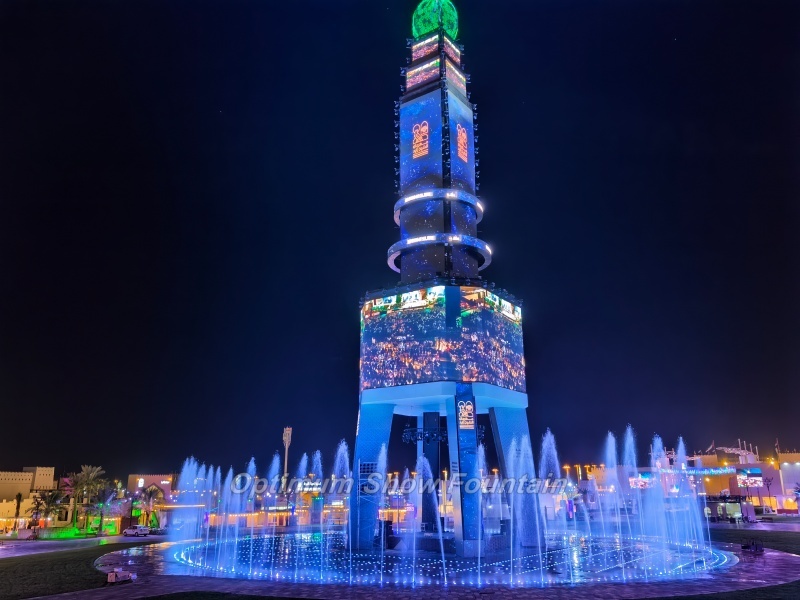
The Dadaepo Sunset Fountain of Dreams is one of the most distinctive musical fountains in the world due to its ground-level dry plaza design. Instead of being built in a basin or lake, the fountain is integrated directly into an open public square, allowing water jets to emerge from the same surface visitors walk on.
Covering around 2,519 square metres, the fountain creates a highly interactive experience where audiences are part of the space, not just observers. The system can reach heights of up to 55 metres and produces a wide range of choreographed effects, supported by a music library of over 60 tracks.
Since opening in 2010, it has become one of Busan’s most popular public attractions, drawing over one million visitors annually. Show times are aligned with sunset, reinforcing its identity as a landmark water show designed around its natural setting.
Why It Stands Out: Its ground-level design brings visitors directly into the show, creating a more immersive experience. Combined with its sunset setting, it delivers a strong visual impact without relying on a traditional basin.
Wings of Time is where the musical fountain concept meets full-scale outdoor cinema. Located at Resorts World Sentosa on Sentosa Island, the nightly show runs 20 minutes and combines water jets, water screens carrying projected video content, laser effects, fire features, and an original orchestral score into a narrative performance visible from the beachfront.
The show follows a story of two characters lost in time, told through layered visual effects where water is as much a screen as a spectacle. This integration of storytelling with water technology represents the direction the broader industry is moving — particularly in high-footfall resort and entertainment destinations across Southeast Asia.
Two performances run nightly at 7:40 pm and 8:40 pm. Tickets are required and can be booked in advance online. The beach seating area accommodates large audiences and is one of Singapore's most popular paid evening attractions.
Why It Stands Out:
Its integration of water, fire, projection, and narrative storytelling demonstrates how musical fountains can evolve into full-scale multimedia shows that attract large audiences consistently.
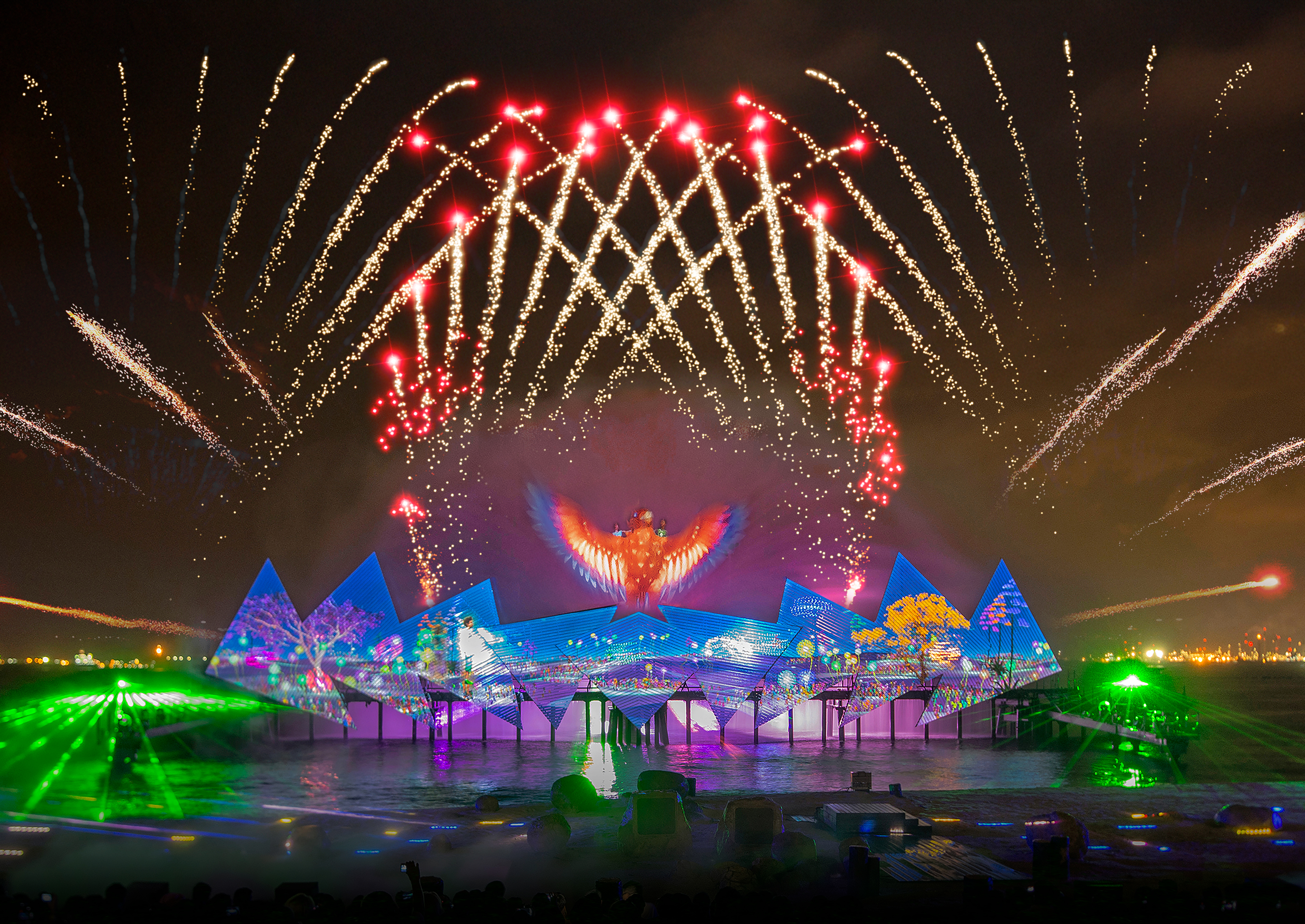
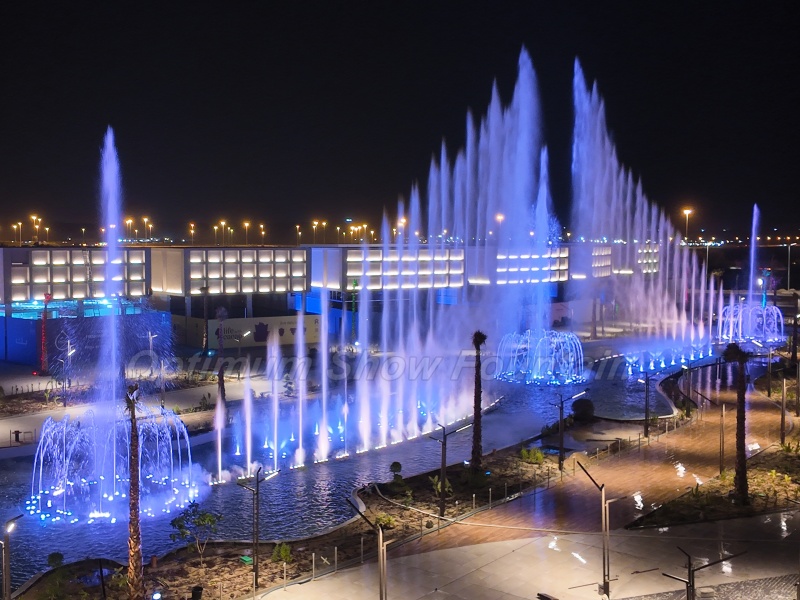
Located at the Sheikh Jaber Al-Ahmad Cultural Centre, the JACC Musical Fountain is part of one of the country’s most prominent cultural and architectural landmarks. Unlike older park-based fountain systems, this installation is fully integrated into a modern cultural complex, designed to complement performances, events, and public gatherings.
The fountain features synchronized water jets, lighting, and music choreography, creating a dynamic visual layer within the surrounding plaza. Its design emphasizes clean geometry and controlled movement, aligning with the contemporary architectural style of the venue while supporting both daily operation and special event programming.
Why It Stands Out:
Its scale and historical importance demonstrate how musical fountains have long been used to enhance public spaces and create cultural landmarks.
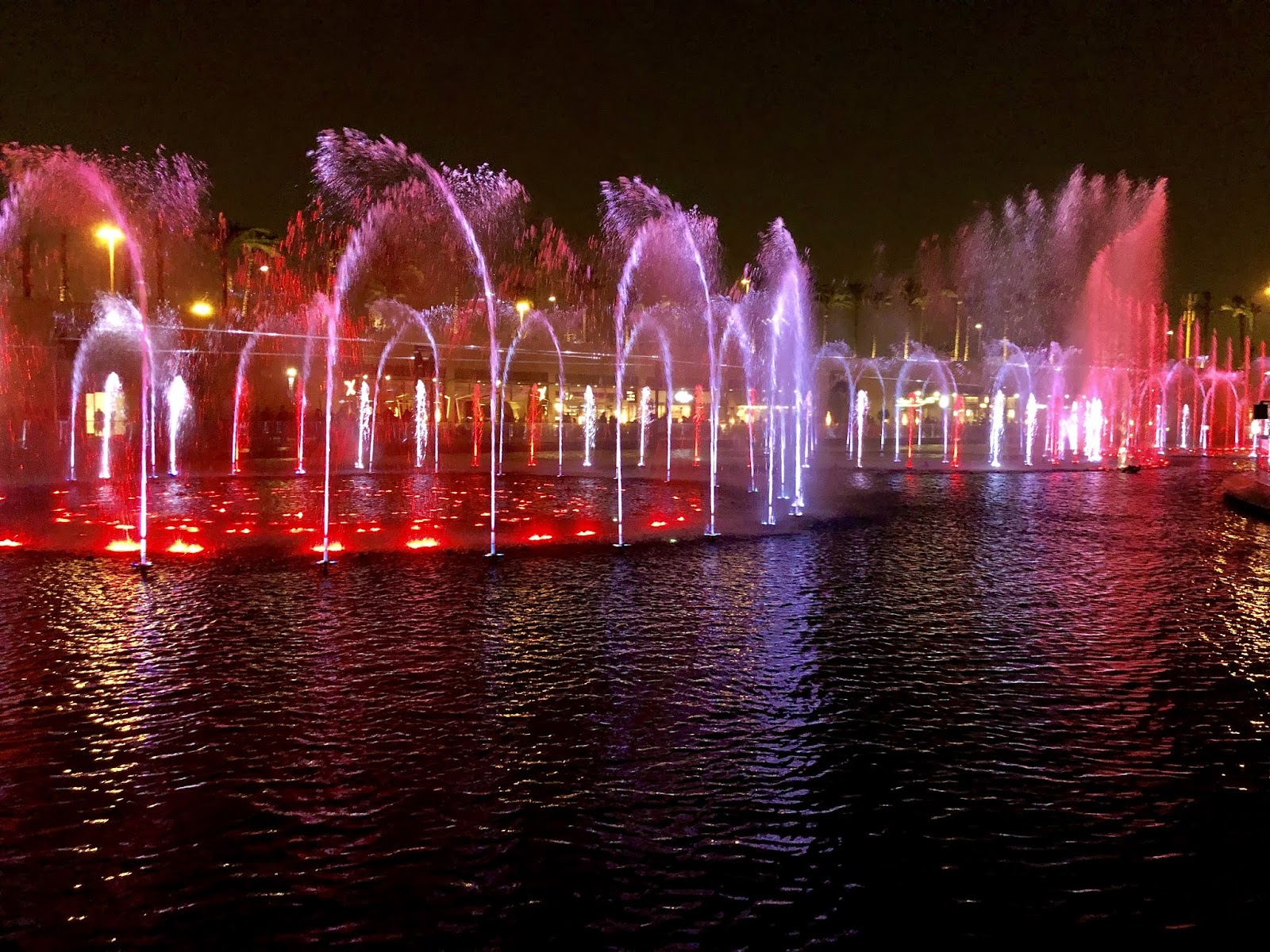
The OCT Bay Water Show, also known as Deep Blue Mystery, is a large-scale multimedia water show located at the Happy Coast Water Show Theater in Shenzhen. Unlike traditional musical fountains, it is designed as a full theatrical production staged on a lake, combining water choreography with digital performance elements.
The show integrates water curtains, fountains, lasers, projection mapping, fire effects, and music, creating a layered audiovisual experience. A key feature is the giant fan-shaped water screen, which acts as a projection surface for storytelling, turning the fountain into a cinematic stage rather than a purely visual installation.
With a performance length of around 40–60 minutes and a narrative theme inspired by nature and local culture, the show blends choreography with live performance elements such as acrobatics and water-based stunts. This positions it closer to a multimedia water theatre than a conventional musical fountain.
Why It Stands Out: It goes beyond traditional musical fountains by combining water choreography with projection, fire, and live performance, creating a fully staged multimedia experience rather than a standalone fountain show.
The Fountain of Wealth at Suntec City holds the Guinness World Record as the world's largest fountain — a title based on its overall surface area rather than water height or choreographic complexity. Built in 1995 at a cost of SGD $6 million and designed in the shape of a ring symbolizing unity and prosperity, the fountain holds deep cultural significance for its Chinese Singaporean designers and the businesses surrounding it.
A popular local tradition holds that walking around the inner ring of the fountain while touching the water brings good fortune — making the Fountain of Wealth one of the few famous fountains in the world where the visitor interacts physically with the water as part of the intended experience.
Evening shows feature synchronized lighting and water effects timed to music, and the surrounding Suntec City development has used the fountain as a commercial anchor for its retail and conference facilities for three decades. Its fame rests on a combination of record-holding scale, cultural meaning, and enduring commercial success.
Why It Stands Out: Its combination of scale, cultural meaning, and integration within a commercial space highlights the broader role fountains can play beyond entertainment.

The Banpo Bridge Rainbow Fountain holds the Guinness World Record as the world's longest bridge-integrated fountain. Running along both edges of the 1,140-metre Banpo Bridge over the Han River in Seoul, the system deploys 380 water jets and 10,000 LED fixtures that create illuminated arcs of water projecting horizontally up to 43 metres out over the river, firing 190 tonnes of water per minute.
Unlike most famous fountains, which project water vertically, the Banpo system shoots water horizontally from bridge level, creating cascading curtains that fall into the Han River below. At night, the LED lighting produces the "rainbow" effect that gives the fountain its name — a shifting spectrum of colour visible from both riverbanks and from boats on the water. The fountain operates from April to October, with multiple shows daily timed to recorded music.
The water itself is drawn directly from the Han River and returned to it after use — a practical closed-loop system that also gives the fountain an environmental elegance. Its integration into working bridge infrastructure is unique among the world's famous fountains and makes it a compelling example of what urban water design can achieve within existing city structures.
Why It Stands Out: Its unconventional layout demonstrates how musical fountains can be integrated into urban infrastructure, expanding beyond traditional fountain formats.

While each of these famous musical fountains differs in scale, location, and design, they share several key characteristics that contribute to their long-term success. These factors go beyond aesthetics and reflect how well the fountain is planned, engineered, and integrated into its environment.
Successful musical fountains are rarely added as an afterthought. Instead, they are planned early as part of the master design of a project, influencing:
This integration ensures the fountain functions as a central attraction, rather than a standalone feature.
Behind every well-performing fountain is a robust engineering system. These projects rely on:
Consistency is critical, especially for fountains that operate daily in high-traffic environments.
The defining feature of a musical fountain is its ability to deliver smooth and engaging water dance with music. This requires:
Well-executed choreography ensures that each show feels intentional and cohesive.
Famous fountains are designed for frequent or daily performances, not just occasional events. This means:
This level of planning supports long-term performance and reduces downtime.
Ultimately, what makes a fountain famous is how people respond to it. Successful projects are designed to:
They are not just water features—they are experiences that add value to their surroundings.
The performance that audiences experience is the visible layer of a highly engineered system operating underneath. Understanding these systems is what separates a competent fountain contractor from one capable of delivering a world-class installation.
The control system is the operational core of a musical fountain. It manages every component — water pumps, nozzle actuators, lighting circuits, audio outputs — and ensures they execute in precise coordination. Modern systems allow operators to programme multiple shows, adjust parameters in real time, and manage daily operations remotely. In large installations, this can mean independently controlling several hundred output points simultaneously, with timing accuracy measured in milliseconds.
The visual vocabulary of a musical fountain — the specific shapes, movements, and heights of water — is determined entirely by nozzle design and control. Key effects include:
DMX (Digital Multiplex) is the industry-standard protocol for controlling lighting in entertainment and architectural applications. In musical fountains, it is used to synchronize underwater LED fixtures, aerial lighting rigs, and surface colour-wash systems with the water choreography and music timeline. Precise DMX programming enables smooth colour transitions, dynamic lighting effects, and the tight visual integration between light and water that defines a premium water show.
The most ambitious contemporary fountains extend beyond water and light to incorporate additional multimedia layers. Projection mapping onto water screens creates moving visual content within the fountain itself. Laser systems add precision geometric effects at large distances. Fire features — flame jets integrated into the fountain system — are used for high-impact moments at major events. Each of these technologies requires its own engineering and safety compliance framework, and the integration of multiple systems into a single synchronized performance is one of the highest-skill areas in the industry.
The programming of water movement to music is not simply a technical process — it is a creative discipline. Each show begins with music selection and analysis: identifying key moments, transitions, and emotional beats in the audio track. Water effects and lighting sequences are then mapped to these moments, creating a performance script that the control system executes in exact timing. The quality of this choreography — its sensitivity to the music, its use of contrast and build — is what determines whether a fountain performance feels like a show or simply a demonstration.
| Technology Component | Function | Complexity Level |
| Fountain Control System | Coordinates all components; manages show scheduling and real-time operation | High — requires specialist programming and ongoing technical management |
| CNC Articulating Nozzles | Enable directional water movement synchronized with music | High — precision engineering, regular calibration required |
| DMX Lighting | Synchronizes underwater and aerial lighting with choreography | Medium-High — industry-standard protocol, requires skilled programming |
| Projection Mapping | Projects video content onto water screens for visual storytelling | High — requires dedicated media servers and content production |
| Laser Systems | Adds geometric aerial effects; high visibility at distance | High — strict safety and regulatory requirements in most markets |
| Fire/Flame Features | High-impact dramatic moments; typically used for special events | Very High — significant safety engineering and compliance requirements |

Famous musical fountains are not all built in the same way. Their design varies depending on the project location, audience interaction, and intended visual impact. Understanding these common design types helps explain how different musical fountain systems achieve their effects.
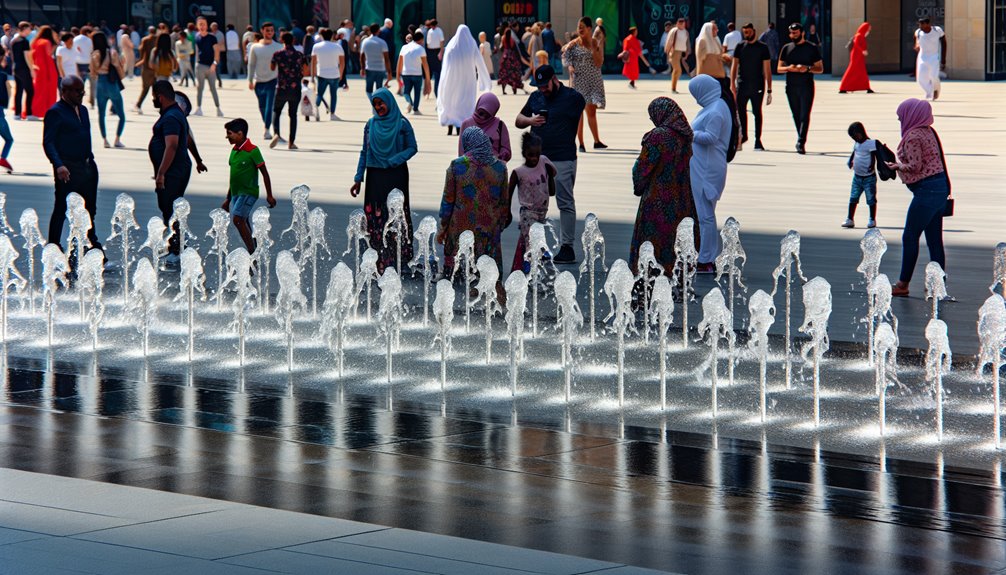
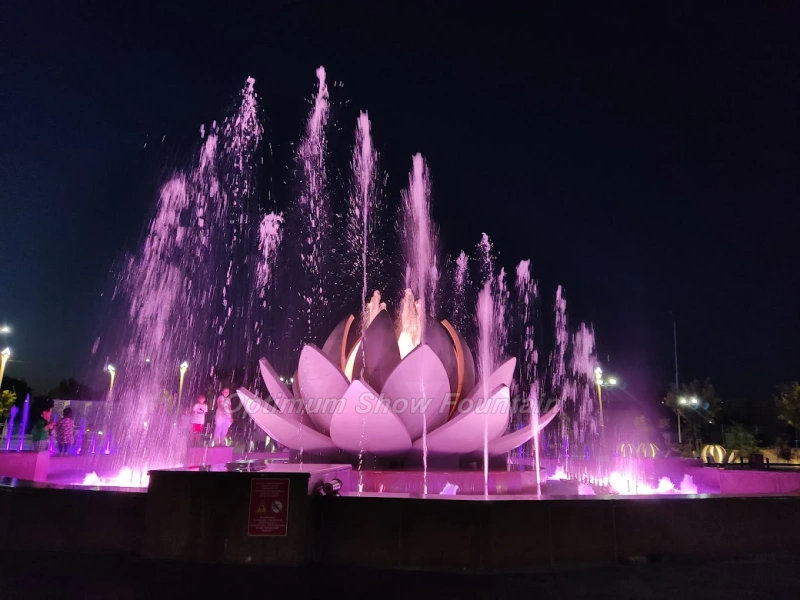
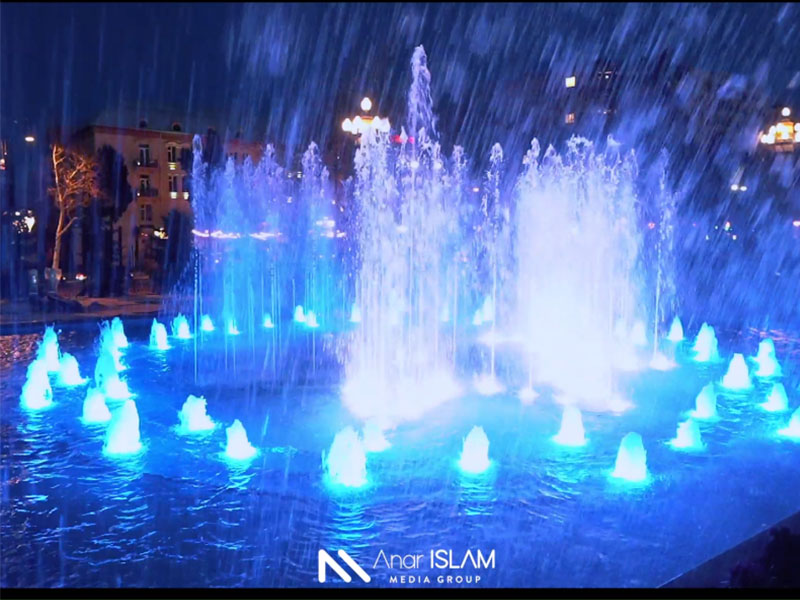
Dry deck fountains are installed at ground level, allowing visitors to walk through the water jets. These systems are commonly used in public plazas, commercial spaces, and urban parks.
Key characteristics:
They are especially effective in high-traffic areas where engagement and accessibility are priorities.
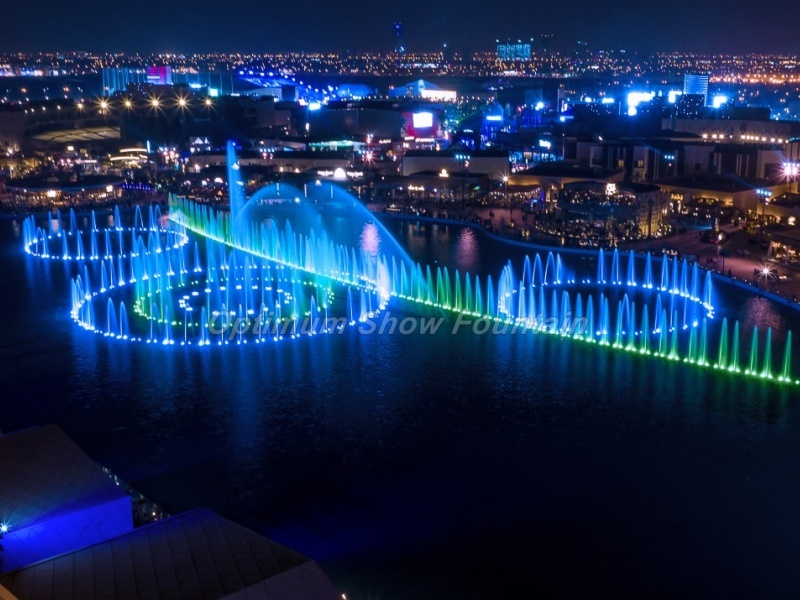
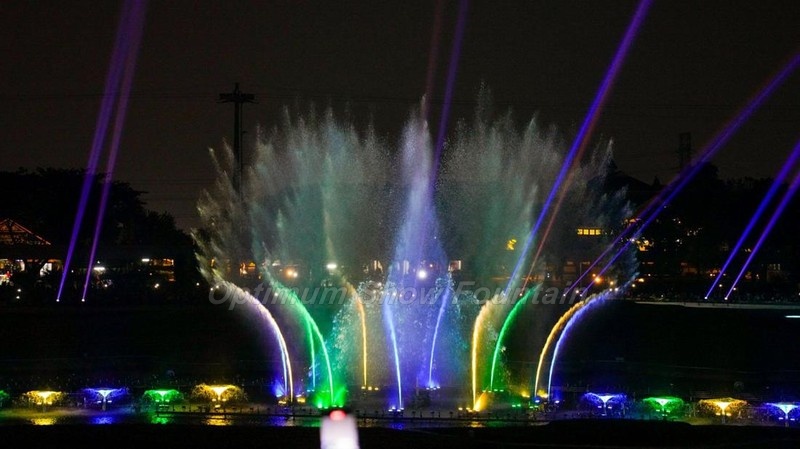
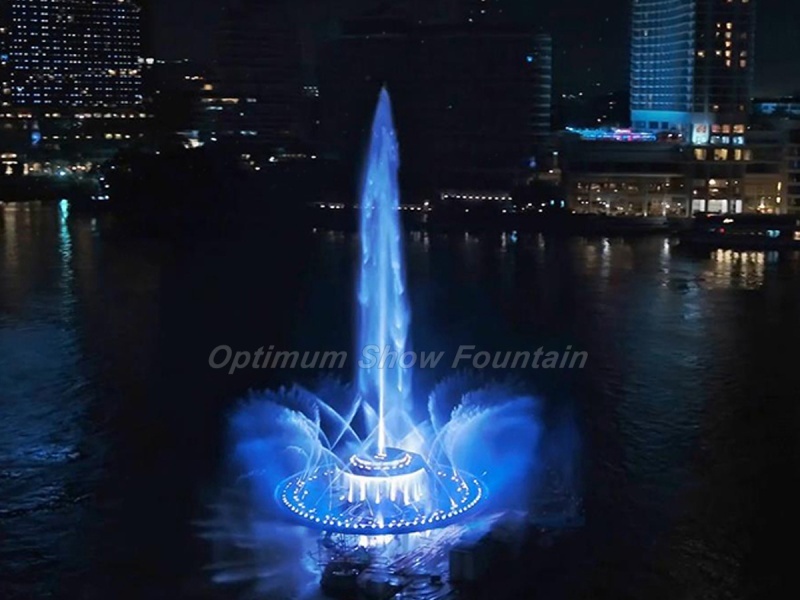
These fountains are installed on large bodies of water such as lakes or rivers. They are typically designed at a larger scale to ensure visibility from long distances.
Key characteristics:
This type is often used for tourism attractions and city landmarks, where visual impact is critical.
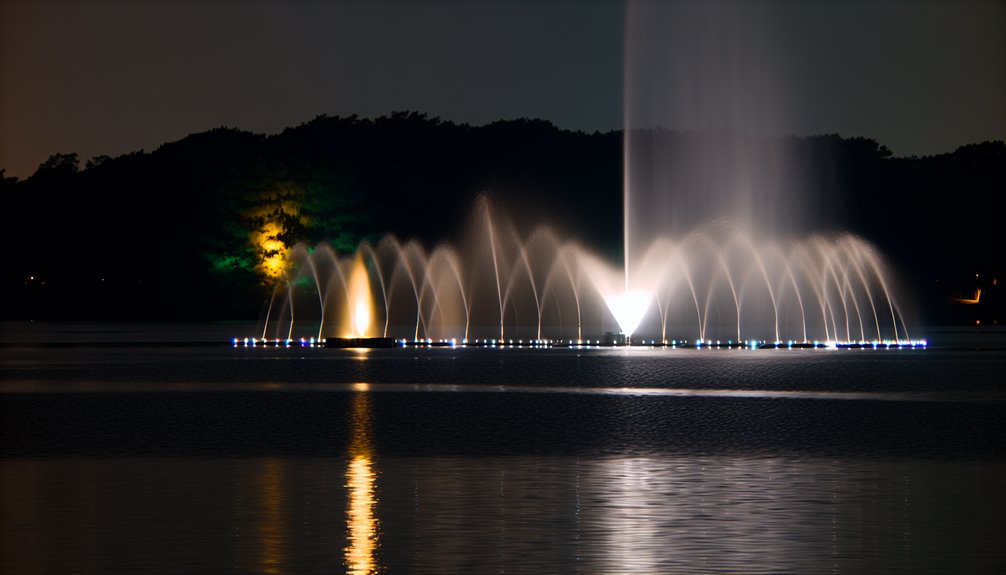
Stage fountains are designed to support live events and performances. They are often integrated into entertainment venues or temporary installations.
Key characteristics:
They are commonly used in concerts, festivals, and large public events.

Modern musical fountains increasingly incorporate additional technologies to enhance the experience. These systems combine water with digital and visual elements.
Key characteristics:
Multimedia fountains create immersive environments and are often used in theme parks and large-scale entertainment developments.
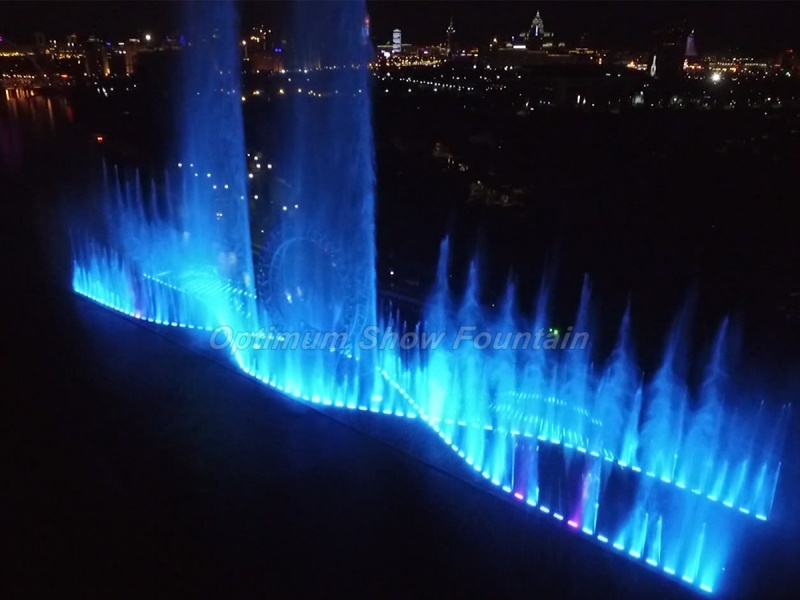
Optimum Show is a musical fountain engineering company focused on delivering large-scale projects for governments and commercial developments worldwide. These installations are built for real operating conditions, including extreme climates, high visitor traffic, and daily performance requirements.
Optimum Show manages the full lifecycle of musical fountain projects, including design, manufacturing, installation, and programming. In-house production ensures consistent quality across key components such as pumps, nozzles, lighting, and control systems.
Planning a musical fountain project?
Optimum Show can provide concept design and technical guidance to support early-stage development decisions. Discuss Your Project with Our Team →
Like liquid choreography, you’ll find daily water use varies widely: most musical fountains recirculate, so they mainly lose water through evaporation, wind drift, and maintenance—typically hundreds to thousands of gallons daily, depending on size.
Yes, you’re generally safe near musical fountain shows because designers use barriers, controlled jets, and automated systems. You’ll enjoy dazzling water, light, and sound while operators manage risks, though you should still follow posted safety guidance.
You’ll find musical fountains need routine maintenance weekly or monthly, with major repairs yearly. With over 1,200 jets in some systems, you’re watching precision engineering dance—filters clog, lights fade, pumps strain, and software needs tuning.
Yes, you can operate musical fountains during strong winds, but you'll need adaptive controls. Wind distorts jets, scatters mist, and weakens choreography, so smart systems often reduce height, reprogram patterns, or pause shows for safety.
You'll need building, electrical, plumbing, and zoning permits, plus water-use, drainage, environmental, and public safety approvals. If you add music, lasers, or projections, you'll often need noise, fire, and special-event permits too.
Share your site size, water depth, location or CAD drawing with our engineering team. We can evaluate the project requirements and recommend a suitable fountain system.