The Dubai Fountain is widely recognized as one of the most successful choreographed water shows ever built. But beyond the spectacle, it's a case study in how large-scale water entertainment can reshape tourism, retail performance, and urban identity.
This guide examines the engineering, costs, and commercial planning principles behind Dubai's most famous fountain projects — and the key lessons that apply to any future large-scale water show development.

The Dubai Fountain opened in 2009 as the centrepiece of Downtown Dubai, positioned directly between the Burj Khalifa and Dubai Mall on the man-made Burj Khalifa Lake.
Designed by California-based WET Design — the same firm behind the Bellagio fountains in Las Vegas — the project was engineered not as a decorative feature, but as a visual anchor for a complete retail, hospitality, and tourism district.
Unlike ticketed entertainment shows, the Dubai Fountain performs free daily shows accessible from multiple viewing areas around the lake. This continuous free access helped transform it into a core part of Downtown Dubai's visitor experience and nighttime economy.
In 2025, the fountain underwent a major renovation programme upgrading choreography systems, lighting technology, and waterproofing infrastructure. This reflects a broader reality for fountain operators: long-term success depends on ongoing modernisation, maintenance planning, and operational reinvestment — not just initial design.
Shows run every 30 minutes during evening hours, with additional daytime performances built into the daily cycle.
Rather than functioning as a limited-event attraction, the system delivers repeated short-format performances that continuously reactivate the surrounding public space — sustaining pedestrian movement across retail promenades, restaurant terraces, and waterfront viewing areas throughout the night.
Music programming is intentionally varied: Arabic compositions, orchestral scores, film soundtracks, and contemporary international tracks allow the choreography to create different visual moods across multiple show cycles each evening.

| Specification | Detail |
| Total Length | ~275 metres |
| Maximum Water Height | ~152 metres (equiv. 50 storeys) |
| Water Airborne at Once | ~83,000 litres |
| Programmable Jets | 1,500+ |
| Underwater Lights | 6,600+ |
| Colour Projectors | 25 |
| Reported Construction Cost | ~USD $218 million |
| Designer | WET Design (California, USA) |
| Opened | 2009 |
A few of these figures deserve context.
The 152-metre water height — achieved through high-powered shooter nozzles and precisely controlled hydraulic pressure — is roughly equivalent to a 50-storey building launching skyward during a single choreography beat. Maintaining that height requires millisecond-level synchronization across pump systems, nozzle control, and show programming.
The 83,000 litres airborne simultaneously operates through a closed-loop recirculation system: the same water is continuously filtered and reused rather than consumed. In Dubai's high-temperature desert environment, this makes filtration infrastructure — and its ongoing management — as critical as the fountain equipment itself.
Before opening, a public naming competition attracted more than 4,000 submissions from over 100 nationalities, reflecting the global anticipation around the project and its instant recognition as a landmark from day one.
The Dubai Fountain operates as a highly coordinated engineering system that transforms music into synchronized water movement, lighting, and visual effects in real time. Behind the spectacle is a complex network of pumps, control systems, nozzles, lighting infrastructure, and water management technology working together at millisecond-level precision across thousands of individual elements.
More importantly, the project demonstrates how large-scale choreographed fountains are engineered not simply as decorative features, but as programmable entertainment systems designed for continuous public operation.
At the core of the fountain is a centralized digital control architecture synchronizing every movement across the lake. Water jets, pumps, lighting, and projection systems are coordinated through programmable show-control software using DMX (Digital Multiplex) and PLC-based systems — the same technology used in large-scale theatrical productions.
Every performance is pre-programmed, not generated live. Music tracks are analyzed in advance, with water movement, lighting transitions, and special effects mapped to rhythm, tempo, and emotional pacing throughout each show.
This level of synchronization is one of the defining differences between ordinary fountains and large-scale choreographed water entertainment systems.
The fountain's visual range comes from combining multiple nozzle types within the same choreography sequence:
| Nozzle Type | Primary Effect |
| Laminar Jets | Smooth, glass-like water arcs |
| Aerated Jets | Large white plumes, high-volume effects |
| Swing / Robotic Jets | Dynamic sweeping motion |
| High-Shooter Jets | Extreme vertical columns (up to 152m) |
This combination allows the show to shift between delicate low-level atmospheric effects and dramatic monumental jets — the transitions between scale are what give the performances their cinematic quality.
Nozzle selection is also tied directly to viewing distance, audience distribution, wind exposure, and choreography style. Large landmark fountains require a broad range of movement types to sustain visual interest across extended performance durations.
The lighting system operates on two levels simultaneously.
Underwater lighting illuminates individual jets and water shapes, enhances movement visibility, and creates colour transitions within choreography sequences.
Perimeter projection and beam lighting washes the lake environment in synchronized colour, reinforces dramatic musical moments, and maintains long-range nighttime visibility across Downtown Dubai — including from hotels, retail promenades, restaurants, and elevated observation points.
For large commercial fountain projects, lighting design is often just as important as hydraulic performance. A technically powerful fountain will still fail visually if lighting distribution and viewing angles are poorly planned.
The Burj Khalifa Lake operates on a continuous closed-loop recirculation system managed through multiple large-scale filtration stations.
Water cycles through pump vaults, filtration systems, nozzle infrastructure, and return channels back into the lake — significantly reducing overall water consumption while maintaining stable operating conditions for daily performances.
Continuous filtration and chemical treatment maintain water clarity, equipment reliability, nozzle performance, and lighting visibility. In hot climates, water management is both an engineering priority and an operational one — evaporation control, filtration capacity, and long-term maintenance planning all directly affect system efficiency and lifecycle cost.

Dubai's two most prominent water entertainment projects represent two fundamentally different design philosophies.
| Feature | Dubai Fountain | IMAGINE Show |
| Primary Focus | Water choreography | Multimedia integration |
| Setting | Open urban lake | Retail waterfront bay |
| Core Technology | Jets, lighting, music | Projection, lasers, fire, water |
| Audience Experience | Large-scale open spectacle | Immersive storytelling |
| Commercial Use | Landmark placemaking attraction | Entertainment + branded events |
The Dubai Fountain is designed for long-distance visual impact and wide audience distribution. Its performances remain visible and engaging from restaurants, hotels, bridges, and promenades across the entire Downtown district.
The IMAGINE show at Dubai Festival City Mall takes a more immersive approach. Located at Festival Bay, the production combines choreographed fountains with large-scale projection mapping, lasers, fire effects, water-screen projection, and surround sound. At launch it earned a Guinness World Record for the world's largest water-screen projection at 893 square metres — later expanded to approximately 1,800 square metres including projection across the InterContinental Hotel facade.
More importantly, the IMAGINE model transforms the fountain from a static attraction into an active commercial platform — one that can host national celebrations, product launches, and corporate campaigns, generating direct event monetisation alongside ongoing visitor engagement.
Both approaches are increasingly being adopted in mixed-use developments where entertainment infrastructure is expected to contribute to both branding and operational revenue.
The Dubai Fountain reportedly cost approximately USD $218 million — one of the most expensive choreographed fountain projects ever completed. That investment reflects far more than fountain equipment alone.
A major portion of the budget went into civil infrastructure: Burj Khalifa Lake preparation, pump vault construction, underwater electrical systems, cable routing, structural foundations, and support systems for the fountain arrays.
The equipment package was equally extensive: 1,500+ nozzles, large-scale pump systems, DMX-based control architecture, 6,600+ lighting elements, and 25 colour projectors synchronized across the entire lake.
Beyond hardware, substantial investment was required for engineering, choreography programming, and commissioning. In large fountain projects, this programming phase is frequently underestimated during early budgeting — despite being one of the most technically demanding parts of the project.
Three factors define the cost of nearly every choreographed water show:
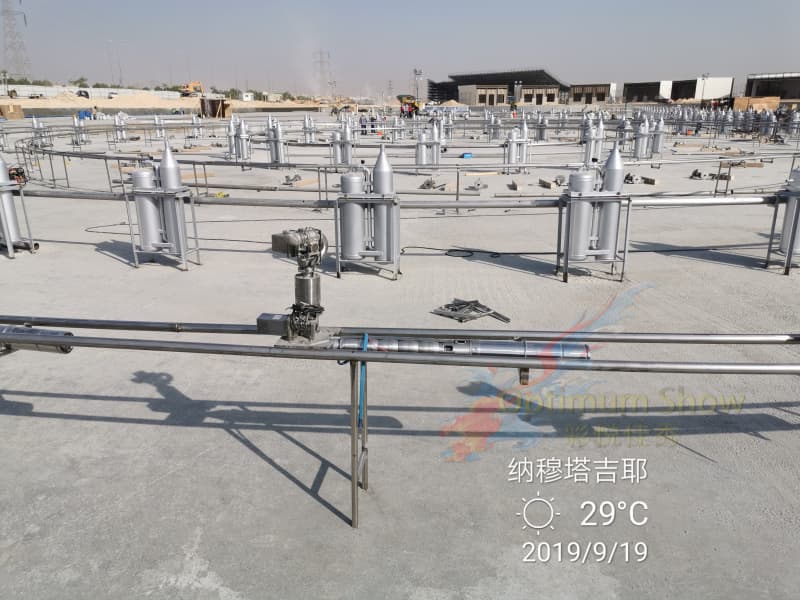
1. Civil Infrastructure — basin or lake preparation, pump room construction, waterproofing systems, electrical infrastructure, underground piping and cable routing. For many large projects, civil works alone represent a significant share of total investment.
2. Equipment and Show Systems — nozzle quantity and type, pump capacity, lighting systems, multimedia integration, and control system architecture. Advanced nozzle technologies, robotic movement systems, high-powered lighting, and projection can rapidly increase overall project cost.
3. Choreography and Programming — costs increase with the number of music tracks, choreography complexity, synchronization requirements, multimedia integration, and any interactive show functions. Productions involving projection mapping, lasers, or fire effects require significantly more programming and testing time than standard musical fountains.
As a general industry benchmark:
| Cost Category | Typical Share |
| Equipment & Lighting | 50–60% |
| Civil Works | 20–25% |
| Control & Programming | 10–15% |
| Other Project Costs | Remaining % |
Long-term operating and maintenance costs — water treatment, pump servicing, lighting maintenance, software updates, nozzle inspections — typically account for approximately 3–8% of original project cost annually.
Not every choreographed fountain requires Dubai-level investment to create strong visual and commercial impact.
Entry-Level Commercial Features: $500K – $2M Smaller musical fountains designed for plazas, hotel courtyards, or commercial atriums. Typically include music synchronization, LED lighting, and programmable laminar or aerated nozzles.
Mid-Scale Landmark Fountains: $3M – $10M Larger commercial and municipal installations with full DMX choreography, multi-nozzle configurations, advanced lighting systems, and larger audience viewing areas.
Large Destination Water Shows: $15M+ Major mixed-use or tourism district installations designed for high visitor volumes, featuring multimedia integration, projection mapping, robotic nozzles, large lake installations, and highly customized choreography systems.
The Dubai Fountain represents the extreme upper end of the industry. Most successful landmark fountain projects are delivered at significantly lower budgets while still achieving strong placemaking, tourism, and commercial results.
Planning a fountain project? Optimum Show works with developers and master planners across the Middle East, Asia, and beyond on fountain systems across every budget tier — from hotel feature fountains to large-scale destination shows. View our completed projects → or get in touch with our team →

Every choreographed fountain project is shaped by site conditions long before design development begins. Basin size, water depth, underground infrastructure, power availability, and wind exposure all directly affect system feasibility and performance.
A fountain basin must provide adequate space for nozzle layouts, pump systems, filtration equipment, cabling, and maintenance access. For mid-scale musical fountains, basin depths of approximately 1.2–1.5 metres are common, while pump vaults and service chambers often require additional depth below the basin floor.
Power infrastructure is equally critical. Large fountain systems require substantial continuous electrical capacity for pumps, lighting, control systems, and multimedia equipment — and utility coordination should be addressed during early planning, not after design completion.
Wind conditions play an important role too. High-wind environments can affect water trajectory, reduce show quality, and create safety concerns in adjacent pedestrian areas. Nozzle selection, jet height, and choreography must be adapted to local environmental conditions.
Project timelines for choreographed fountains are frequently underestimated. A realistic schedule depends on project scale, site readiness, engineering complexity, and civil coordination.
For a mid-scale fountain installation:
In most cases, a well-coordinated mid-scale project requires approximately 10–16 months from contract confirmation to opening performance. Large-scale or multimedia-integrated projects take considerably longer.
One of the most common causes of delay: late-stage modifications to basin dimensions or site layout. Changes to civil infrastructure cascade through engineering drawings, piping systems, equipment positioning, and installation sequencing — making early-stage site lock-in one of the most valuable decisions a client can make.
Supplier capability varies significantly across the choreographed fountain industry. Some fountain companies provide fully integrated engineering, manufacturing, installation, programming, and maintenance services. Others supply only fountain equipment.
A credible proposal should go well beyond renderings or nozzle specifications. It should clearly define:
Project experience is equally important — and comparable completed installations are a far more reliable indicator of capability than concept visuals alone. Ask to see projects of similar scale, complexity, and climate conditions to your own.
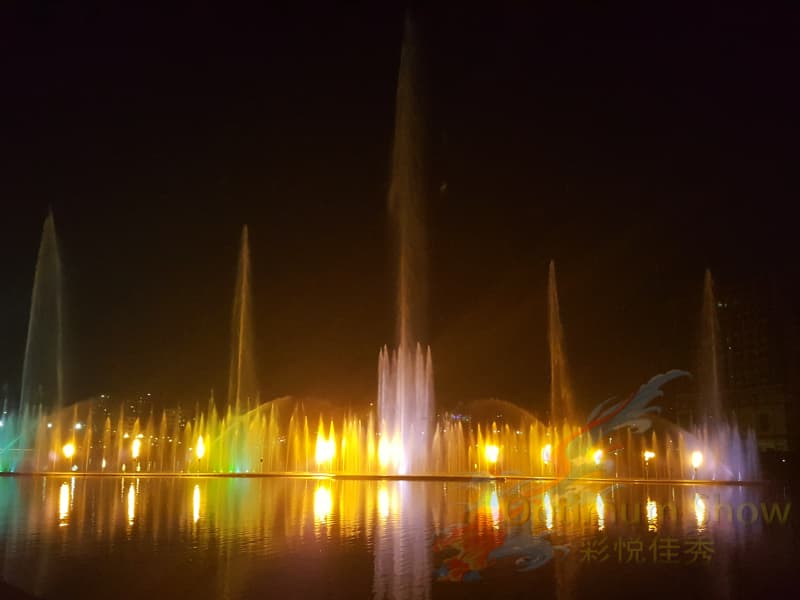
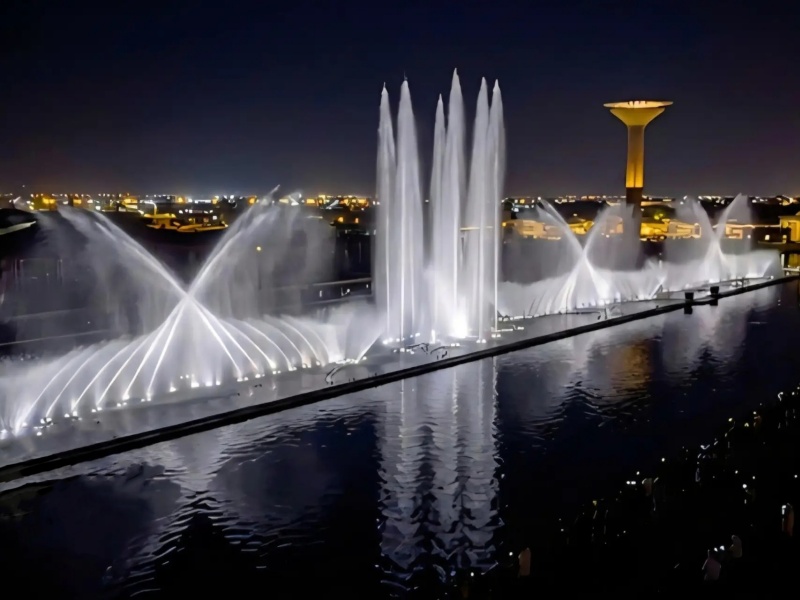
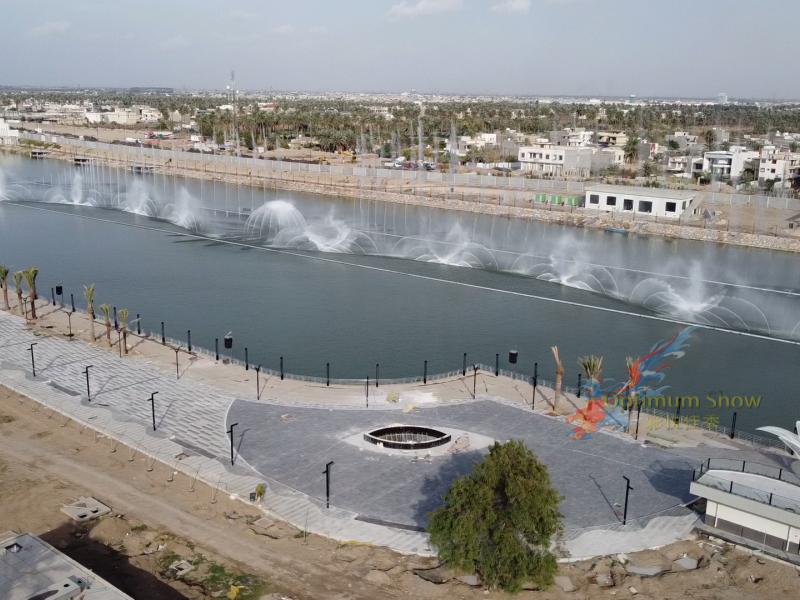
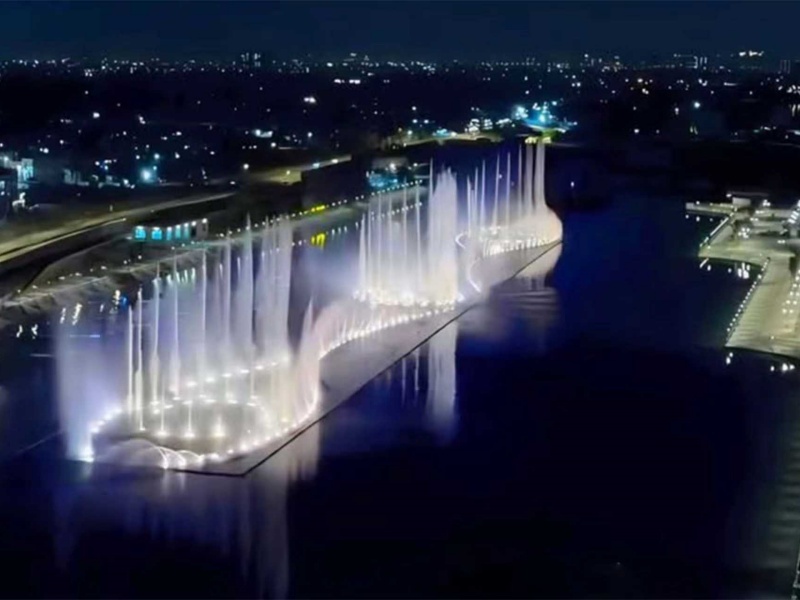
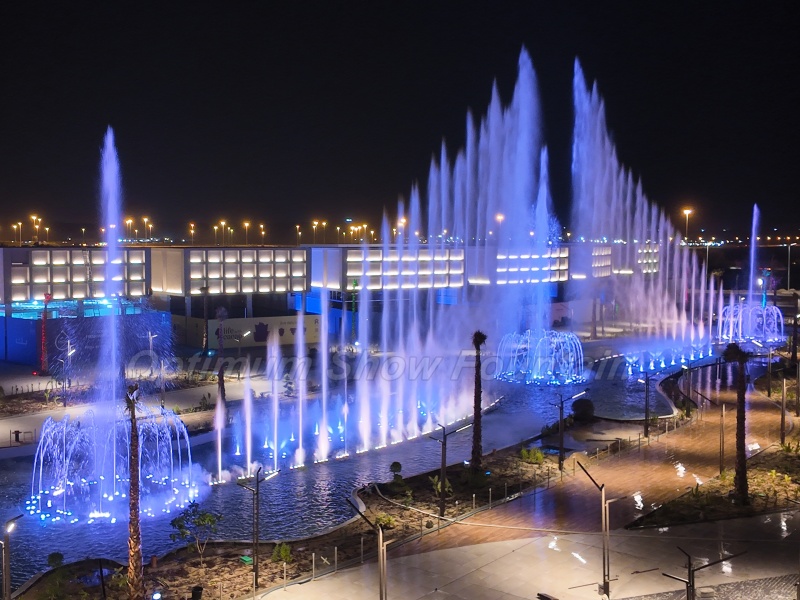
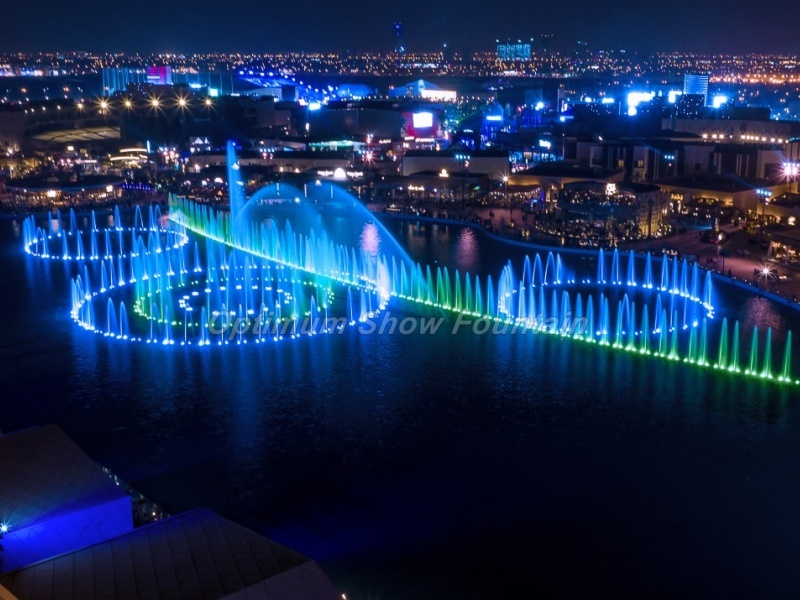
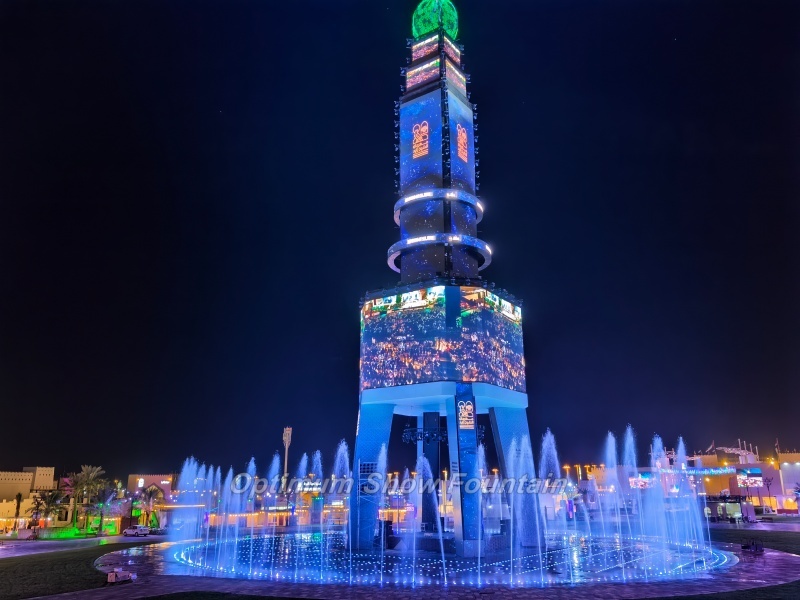
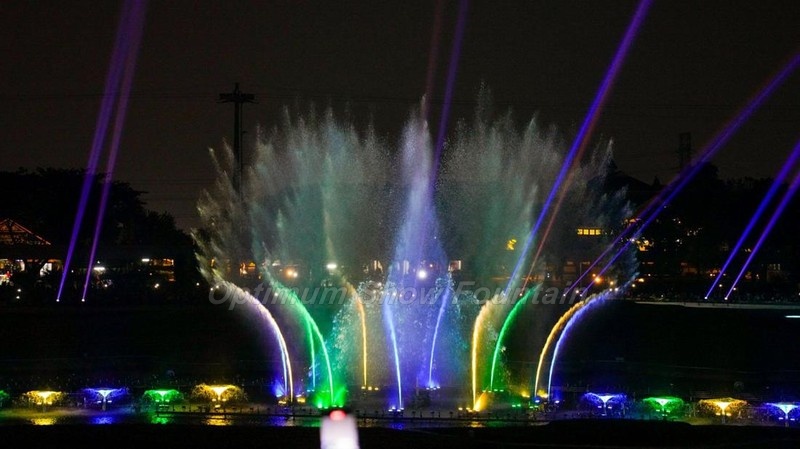
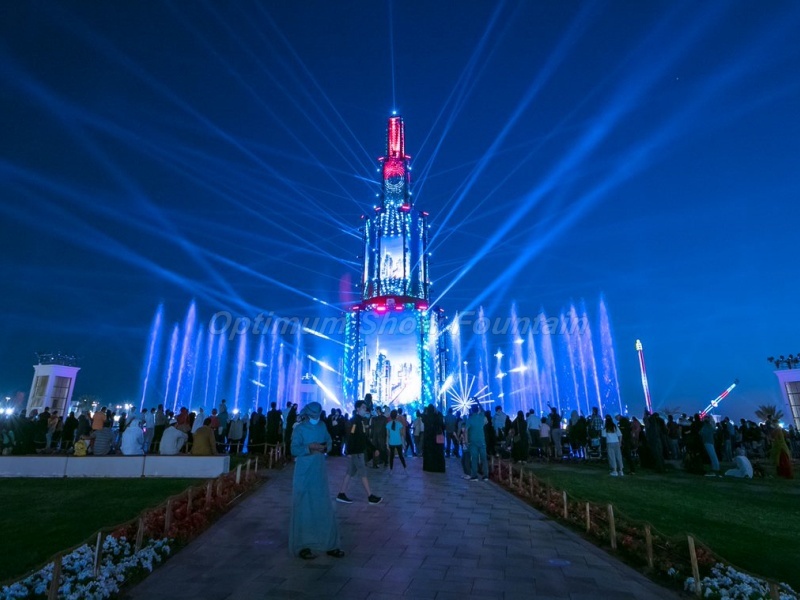
At Optimum Show, our completed projects include landmark water show installations across the Middle East — including Baghdad Island (Iraq) and Saudi Boulevard (Saudi Arabia) — giving our team direct experience with the engineering, logistics, and operational demands of large-scale fountain development in the region.
Questions around long-term servicing, spare parts availability, commissioning procedures, and programming expertise are often more important than initial equipment pricing. Well-executed fountain projects depend on engineering coordination, installation accuracy, and dependable operational support — not just hardware quality.
The Dubai Fountain reportedly cost approximately USD $218 million, covering hydraulic systems, civil infrastructure, lighting, control technology, and large-scale choreography programming.
At peak performance, the fountain launches water approximately 152 metres — equivalent to a 45–50 storey building — using high-pressure pump systems and specialized shooter nozzles.
Large musical fountain systems typically use a combination of PLC and DMX control systems to synchronize water movement, lighting, music, and multimedia effects. These systems coordinate thousands of individual commands in real time to maintain accurate choreography across the entire installation.
IMAGINE combines water screens, projection mapping, lasers, fire effects, and synchronized fountains into a fully integrated multimedia performance environment — capable of supporting both regular public shows and branded commercial activations.
Mid-scale fountain systems typically require 10–16 months from concept design to final commissioning. Large landmark projects requiring multimedia integration may take considerably longer depending on site complexity.
Large destination water shows typically start at $15 million and scale up significantly with multimedia integration and site complexity. Mid-scale landmark fountains generally fall between $3–10 million. Entry-level commercial fountains can be delivered from $500K–$2M. The right budget depends on your site, audience scale, commercial goals, and the role the fountain will play within your overall development.
You May Also Like: Dancing Fountain for Shopping Mall
The Dubai Fountain and the IMAGINE show proved that choreographed water shows can function as long-term commercial infrastructure — supporting tourism, retail activation, branding, and land value growth at a scale that no other entertainment feature can match.
The same principles apply at every budget level. Strong engineering, effective choreography, operational reliability, and integration with the surrounding environment are what separate landmark fountain projects from ordinary ones.
Optimum Show specialises in large-scale choreographed fountain and water show systems across the Middle East and internationally. Whether you're planning a feature fountain for a hotel development or a destination show for a major mixed-use district, our team can help you define what's achievable within your site and budget.
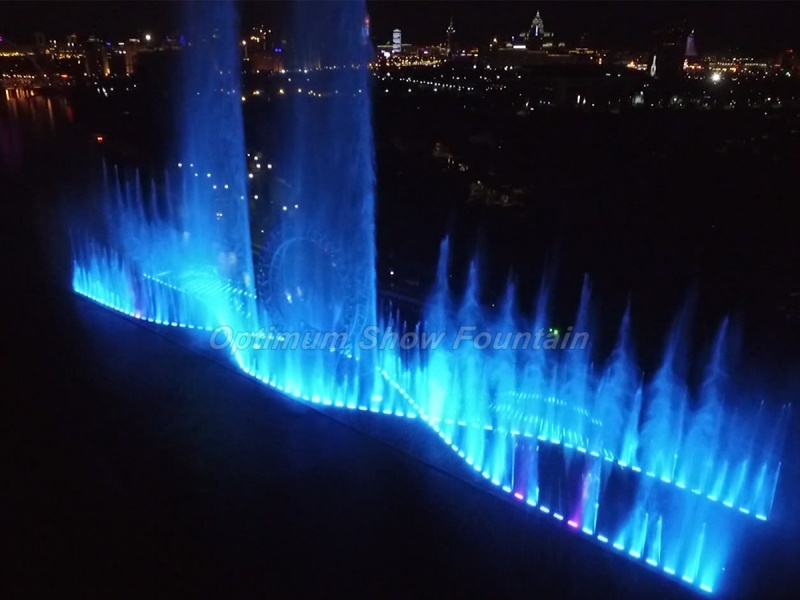
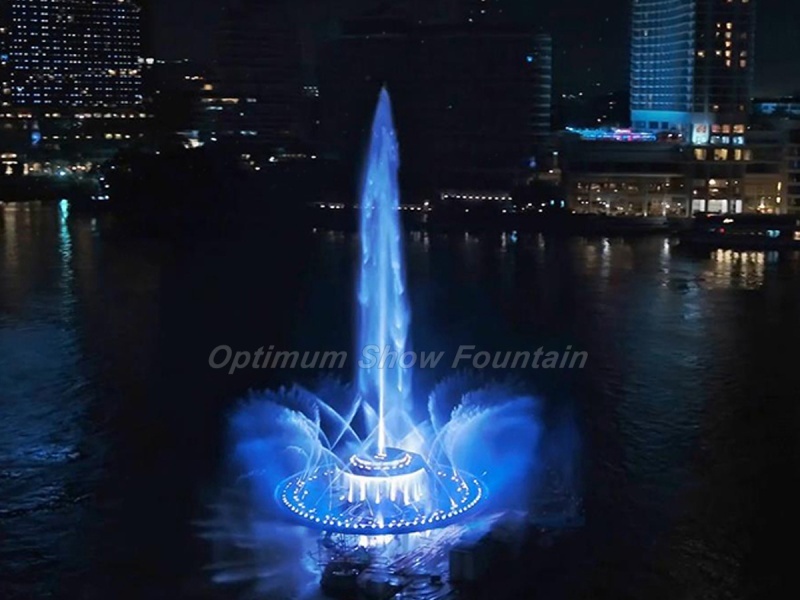
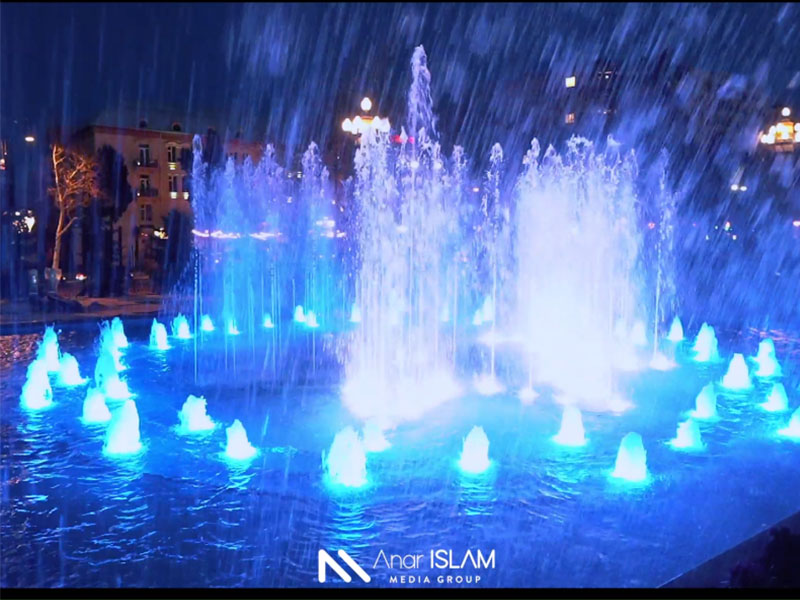
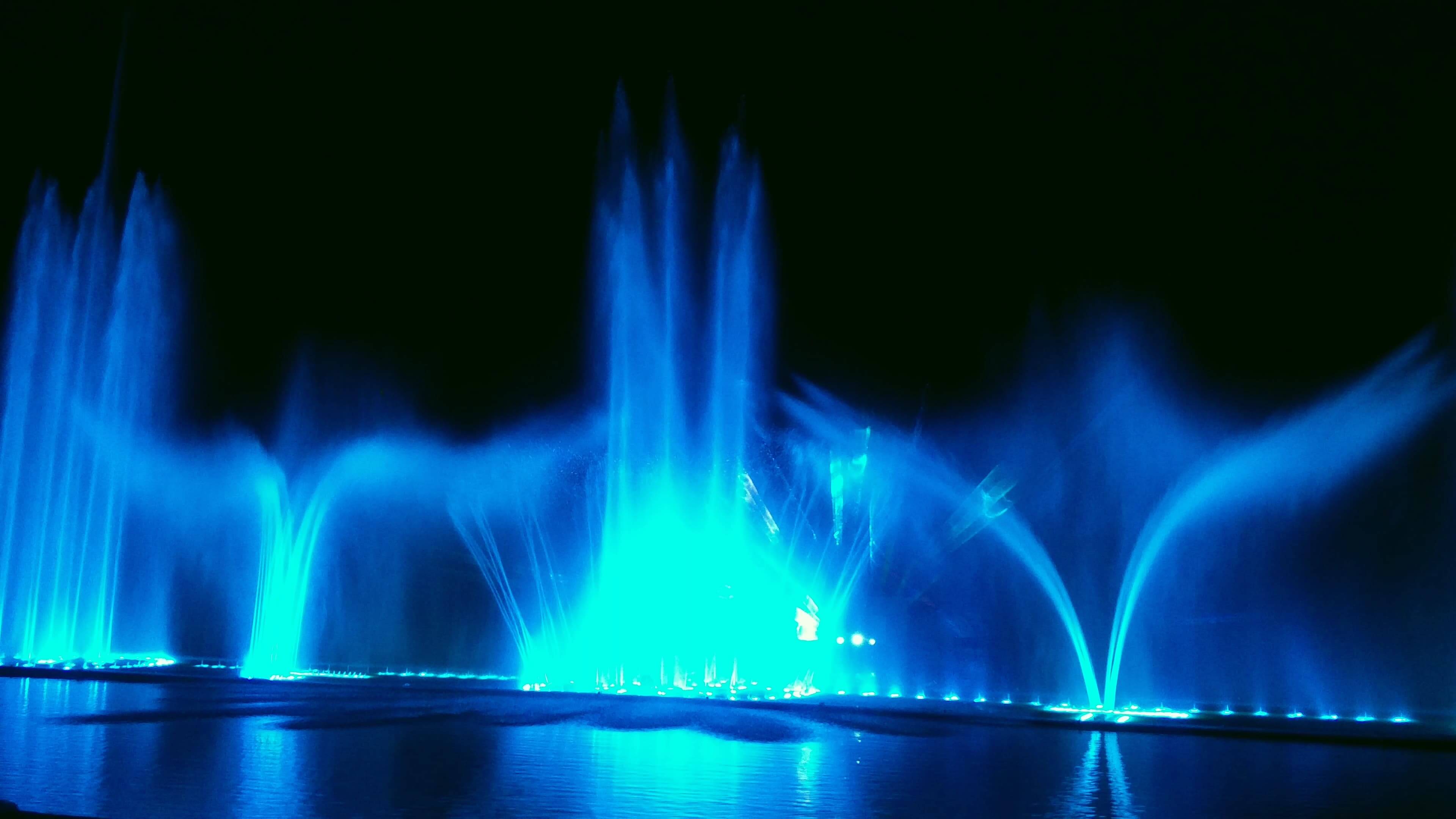
Share your site size, water depth, location or CAD drawing with our engineering team. We can evaluate the project requirements and recommend a suitable fountain system.