Commissioning a musical fountain is a significant investment — and the manufacturer you choose determines whether that investment delivers a landmark attraction or a recurring maintenance problem. This guide gives developers, government planners, and resort operators a practical framework for evaluating any musical fountain manufacturer before signing a contract.
We cover the seven criteria that separate capable manufacturers from risky ones, the questions every buyer should ask, a side-by-side comparison table, and real project benchmarks you can use to calibrate your expectations.
A musical fountain is not a product you buy off a shelf — it is a bespoke engineered system combining hydraulics, submersible electrical equipment, programmable lighting, show control software, and structural civil works. Every component needs to be specified for your site, your water conditions, your climate, and your show programme.
When a manufacturer gets this right, the result is a fountain that runs reliably every night for a decade with minimal downtime. When they get it wrong, the failure modes are expensive: pumps sized incorrectly for water depth, nozzles that clog in the local water chemistry, control systems that cannot be maintained because the software is proprietary with no local support, or lighting that fails within 18 months of installation.
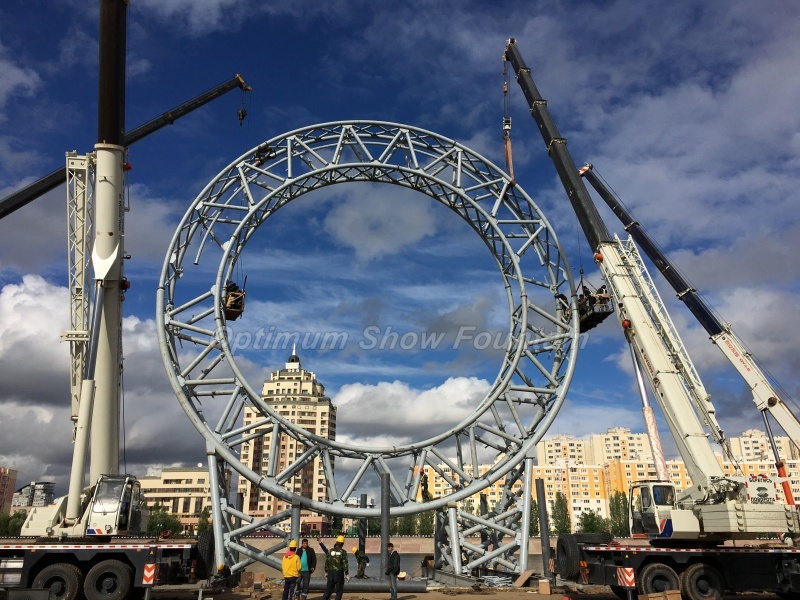
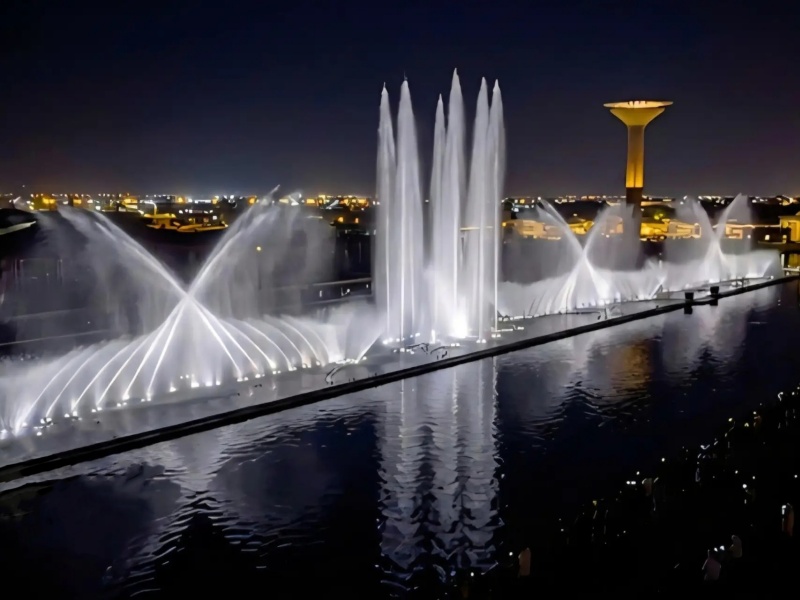
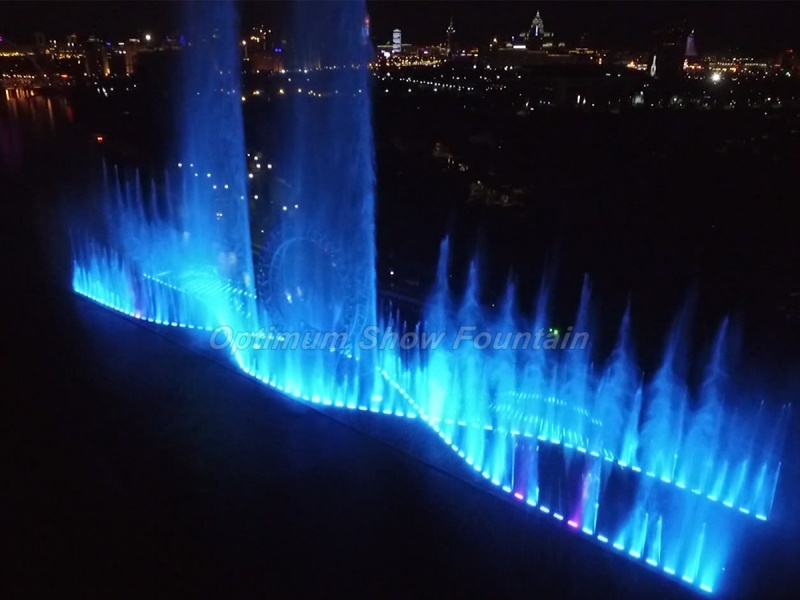
The scale of consequence is illustrated by a project like the Kazakhstan National Day fountain on the Ishim River — 180 metres of floating fountain, 500 engineers, delivered in 30 days for the capital city's anniversary celebrations. A manufacturer who could not meet that deadline or that specification did not just produce a mediocre fountain; they failed a government contract at a national event.
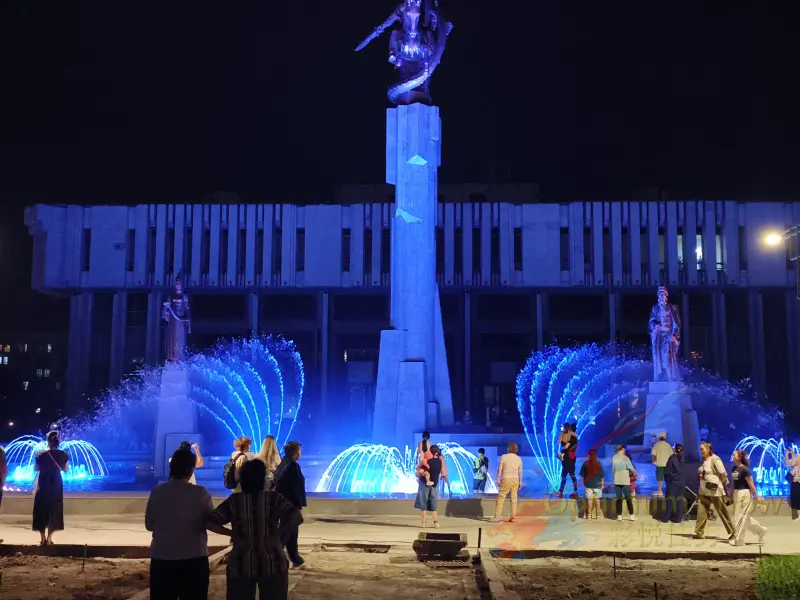
The most reliable indicator of a capable musical fountain manufacturer is a portfolio of completed, verifiable projects — not renders, not concepts, not domestic-only installations. Ask for project names, locations, and years of completion. A strong manufacturer should be able to point to projects across multiple countries and multiple project types.
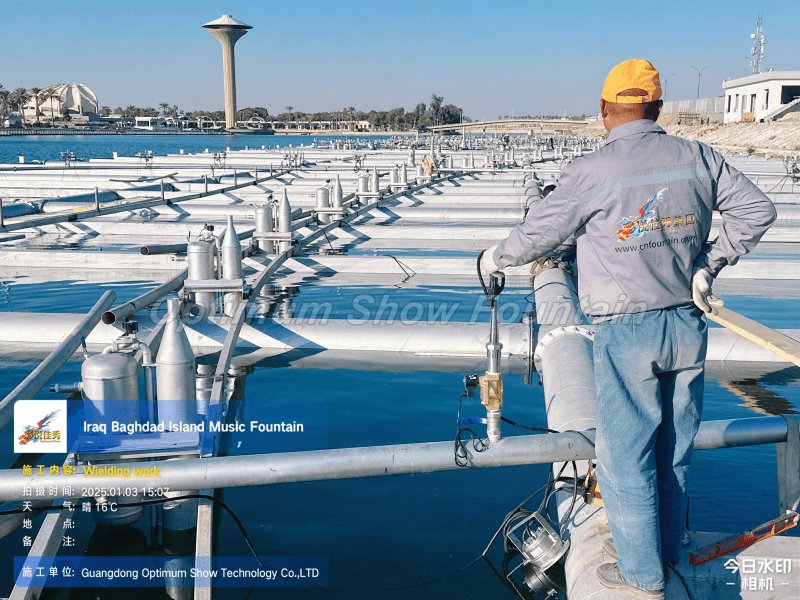
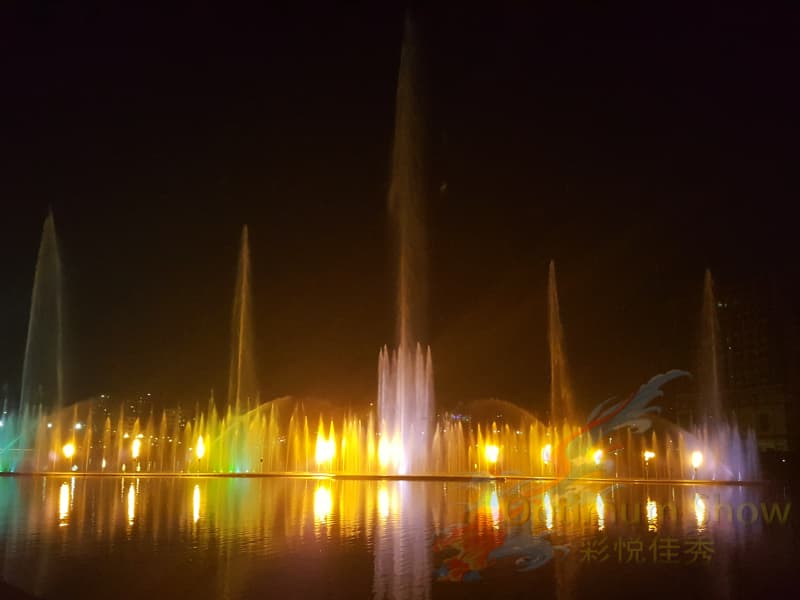
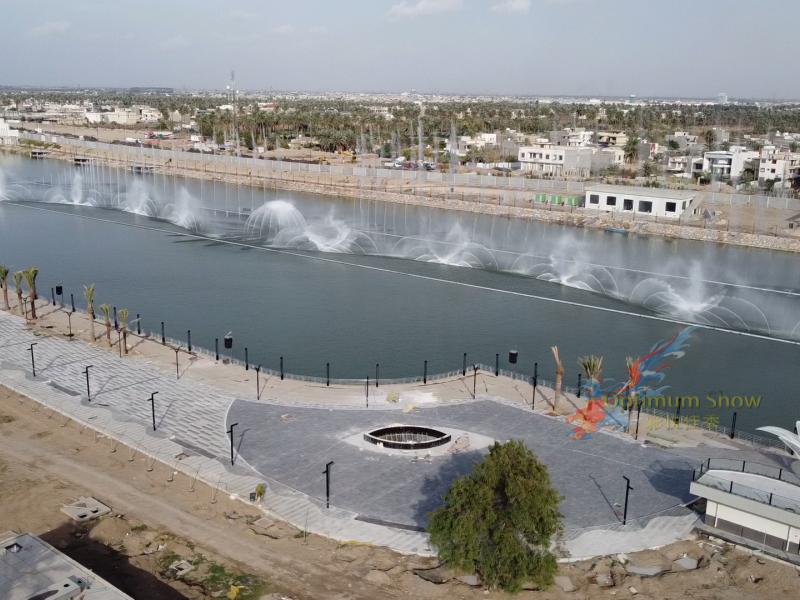
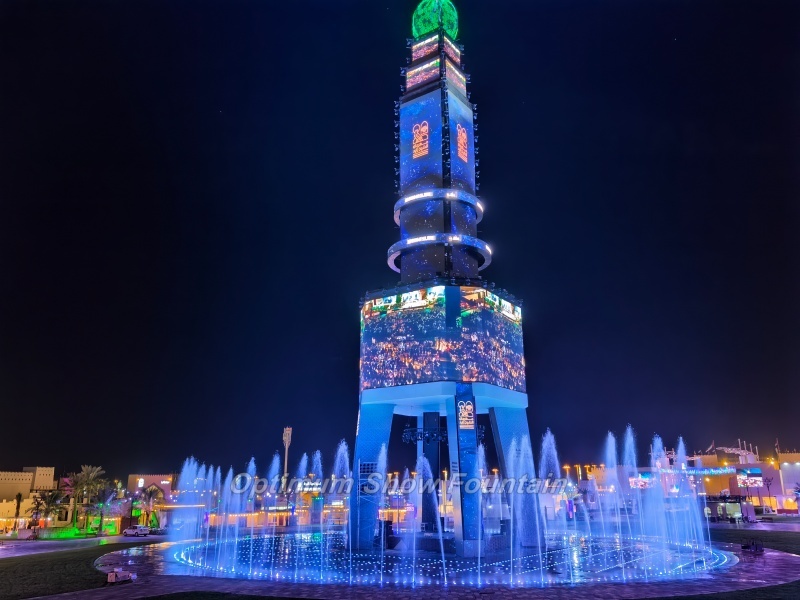
What a strong portfolio looks like in practice: government-commissioned national day fountains, permanent resort and hotel installations, cultural festival floor fountains, waterfront public space projects. Optimum Show's completed projects include the Sheikh Zayed Festival fountain in Abu Dhabi (UAE, 50m diameter, operational across five consecutive festival seasons), the Riyadh Boulevard City fountain in Saudi Arabia, the Taman Mini Indonesia Indah water show in Jakarta, and the Baghdad Island Boulevard water show in Iraq — among more than 5,000 completed projects globally.
There is a significant difference between a manufacturer that designs and builds its own equipment and a trading company that resells assembled components from third-party suppliers. In-house manufacturing gives the manufacturer direct control over component quality, the ability to customise specifications for unusual site conditions, and the ability to supply spare parts for the life of the installation.
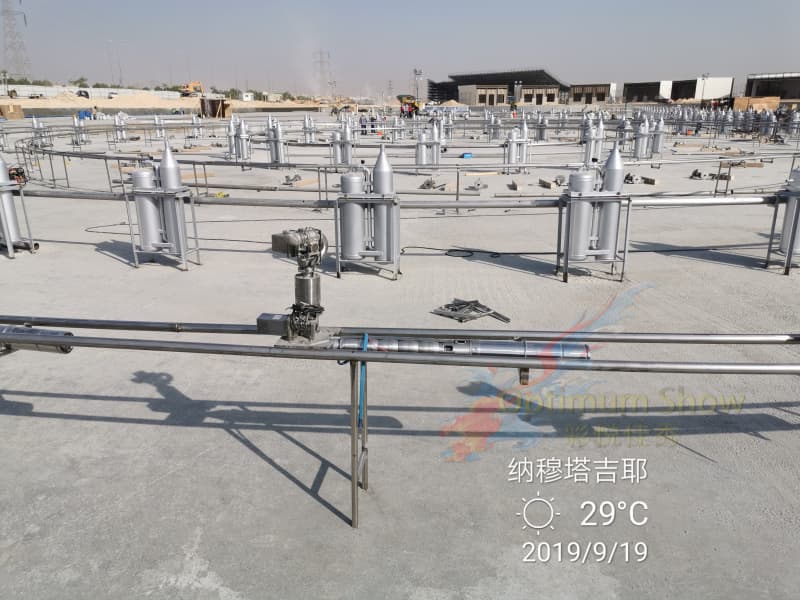
When evaluating this, ask to see the factory — not just photos, but a visit or at minimum a video tour. Key things to look for: nozzle fabrication and testing facilities, pump assembly and quality control, control cabinet manufacturing, and an R&D or engineering workshop. A manufacturer who cannot show you a real production facility is almost certainly a trading company, not a manufacturer.
Musical fountains require expertise across at least four engineering disciplines simultaneously: hydraulic engineering (pump sizing, pipe networks, flow rates), electrical engineering (underwater power systems, waterproof specifications, grid connection), software and control engineering (show programming, DMX/Artnet integration, remote monitoring), and structural or civil engineering (anchoring systems, pool structure loads, pontoon design for floating fountains).
A manufacturer who is strong in one area but weak in another will produce a fountain that performs well on some dimensions and poorly on others. Ask specifically about the size and structure of their engineering team, and what disciplines are in-house versus outsourced.
The safest procurement model for a musical fountain is a single turnkey contract covering: concept and detailed design, 3D animation and shop drawings, equipment manufacturing, international logistics and customs, on-site installation, system commissioning and testing, show choreography and programming, operator training, and ongoing maintenance and warranty support.
Splitting these responsibilities across multiple contractors introduces coordination risk, ambiguity over accountability when problems arise, and gaps in technical knowledge transfer between phases. Verify that your shortlisted manufacturer has delivered genuinely end-to-end projects — not just equipment supply with installation 'guidance'.
If your project is outside the manufacturer's home country — which is the case for most large government and resort fountain projects sourced from specialist manufacturers — logistics and international installation experience matter enormously. Equipment needs to be exported correctly, customs documentation needs to be accurate, and installation engineers need visas, site access, and the ability to work effectively in your local environment.
Ask how many countries the manufacturer has delivered completed installations in, and ask for references from projects in your region. Manufacturers with genuine international track records will have established logistics processes, relationships with local agents, and engineers who have worked across different regulatory environments.
The warranty terms offered by a musical fountain manufacturer are a direct signal of how confident they are in their own components. Minimum acceptable terms for a professionally manufactured fountain are: two years on pumps and LED lighting, with longer coverage on structural components. Annual on-site maintenance visits from the manufacturer's own engineers — not just local subcontractors — are a strong indicator of a manufacturer who expects their equipment to keep running.
The warranty terms a manufacturer offers are a direct signal of their confidence in their own components and build quality. Treat short or heavily caveated warranties as a risk indicator, not just a commercial negotiation point.
Verifiable credentials — government-issued certificates from project countries, industry awards, formal recognition from public sector clients — provide independent confirmation of quality and reliability. These are particularly important for government procurement processes that require documented proof of capability.
Optimum Show holds certificates from project countries including Uzbekistan, Azerbaijan, Russia, and the Philippines, Saudi Arabic, as well as achievement recognition from international clients.

Use this table when comparing shortlisted suppliers:
| Criteria | What to Look For | Warning Signs |
| Project portfolio | 50+ completed projects, multiple countries, government references | Only renders/concepts shown, few or no real installations |
| Manufacturing | Own factory, in-house nozzle & control system, production | Reseller assembling third-party components |
| Engineering team | Hydraulic, electrical, and software engineers on staff | Design outsourced; no in-house technical team |
| International delivery | Active projects across Middle East, Asia, Africa, Americas | Domestic-only track record |
| Turnkey capability | Design → manufacture → install → program → maintain | Supplies equipment only; installation is your problem |
| Warranty & support | Minimum 2 years on key components, annual on-site service | No stated warranty; support by email only |
| Certifications | Country-specific certificates, industry recognition | No verifiable credentials or awards |
A capable manufacturer will answer this with specific project names, locations, and client contacts. An inexperienced or evasive supplier will offer renders, vague references to 'hundreds of projects', or domestic-only examples. For government or large public venue projects, ask specifically for projects commissioned by government clients in international markets.
The correct answer — for a manufacturer you want to trust with a long-term installation — is that core components (nozzles, pipes systems, control cabinets system, software system ) are produced in their own factory. The pump and cables . led lights , system we buy from outside top level public company, since the professional people to do the professional thing.
Many suppliers subcontract installation and programming to local contractors with limited experience of the specific equipment being installed. This creates accountability gaps that are almost impossible to resolve after problems emerge. Verify that the engineers who will be on your site are employed by the manufacturer, have delivered projects of comparable complexity, and will remain available for the warranty period.
Production of a typical musical fountain system takes 20–50 days after signing the contract and paying the deposit. On-site installation varies from 10-15 days for a small fountain system to 8 weeks for a large civil-works project. For time-sensitive events — national days, grand openings — ask for a written timeline with milestones and penalty terms for delay.
The answer should include: redundant components in the design (backup pumps, spare nozzle modules), on-site engineer availability during events or commissioning, spare parts held in-country or available for rapid dispatch, and a clear warranty claims process. Vague answers here are a significant warning sign.
Fountains that run nightly for years require systematic maintenance — pump inspections, nozzle cleaning, LED replacement cycles, software updates. Ask whether the manufacturer offers a post-warranty maintenance contract, whether they have local service partners in your country, and what the typical annual maintenance cost is for a fountain of your scale.

Optimum Show is a musical fountain manufacturer and turnkey fountain project provider based in Guangzhou, China. With more than 30 years of experience in the fountain industry, the company supports large-scale fountain installations for cities, tourism destinations, resorts, and entertainment developments worldwide.
The company operates a 10,000㎡ manufacturing facility in Guangzhou’s Nansha district and employs a multidisciplinary engineering team specializing in hydraulic systems, electrical engineering, control software, and structural design. Over the past three decades, Optimum Show has delivered more than 5,000 fountain projects across over 30 countries, ranging from interactive plaza fountains to large-scale musical water shows.
These resources allow Optimum Show to manage complex musical fountain projects from concept design through long-term operation support.
Optimum Show has delivered large-scale installations for governments, tourism destinations, and public landmarks worldwide. Notable projects include:
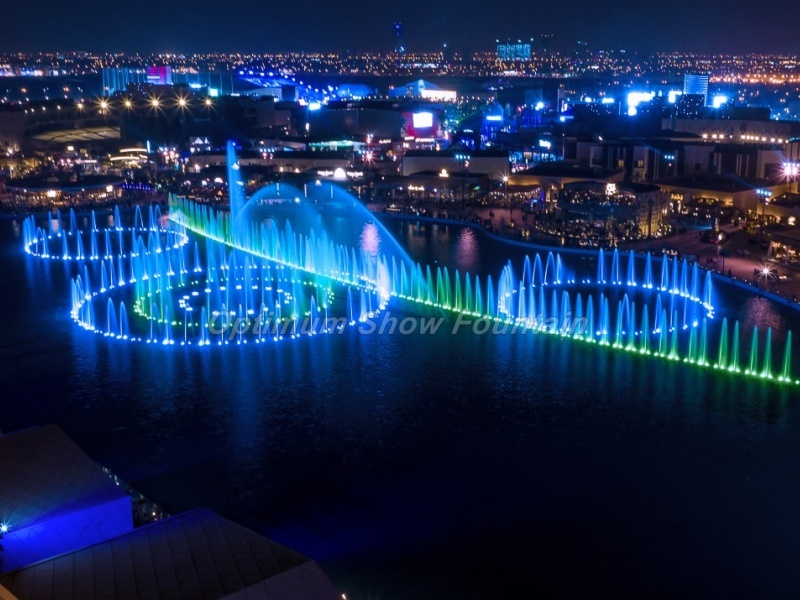
1. Sheikh Zayed Festival Fountain — Abu Dhabi, UAE
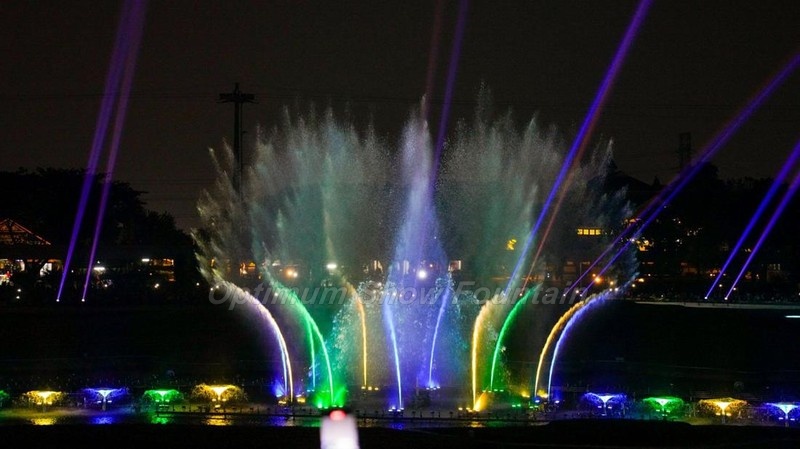
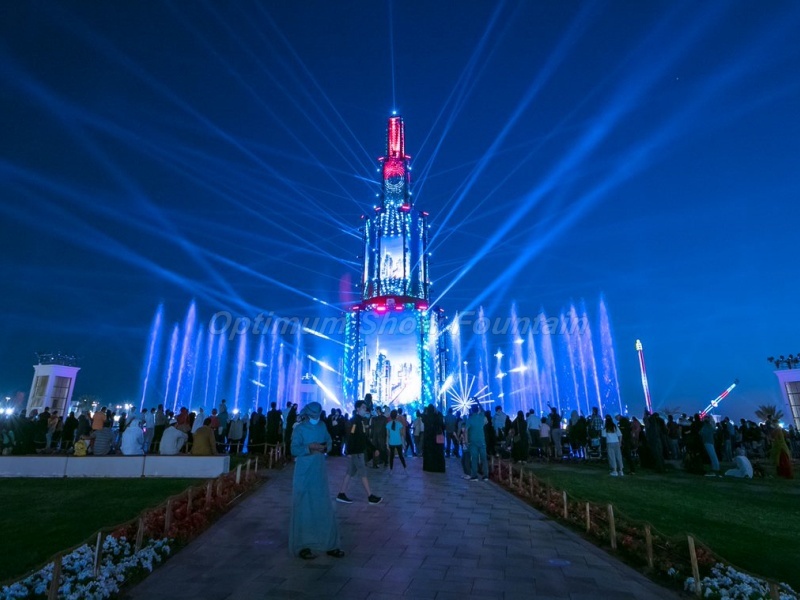
A 50-meter interactive floor fountain featuring vario jets, crown jets, fog systems, and synchronized LED lighting. The installation has been delivered and operated across five consecutive festival seasons from 2020 to 2025.
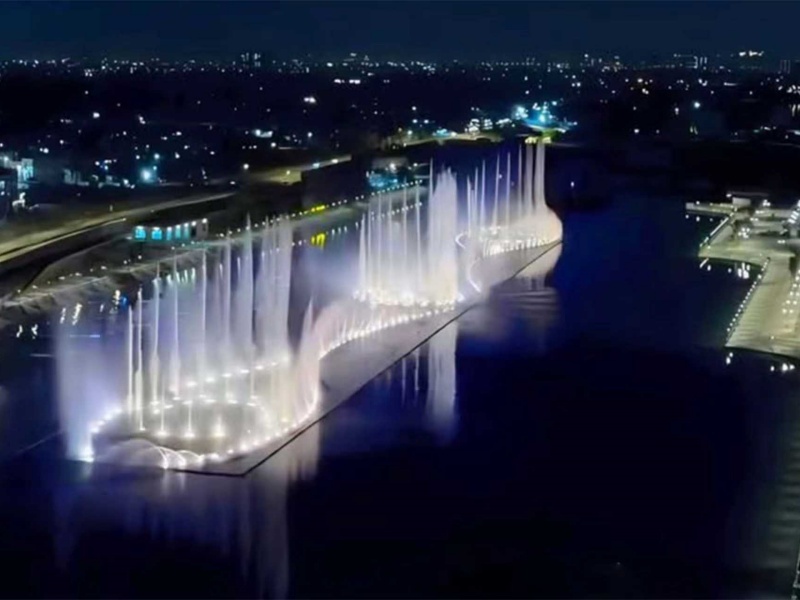
2. Kazakhstan National Day Fountain — Ishim River, Astana
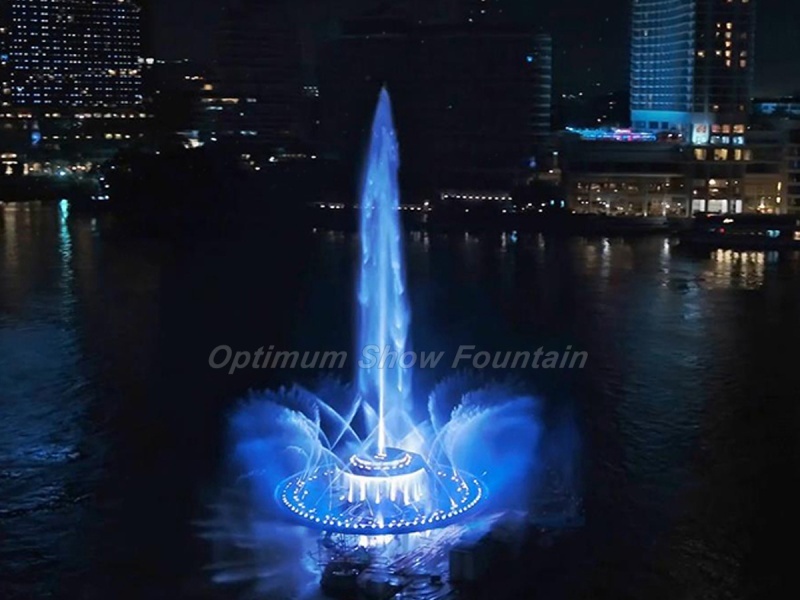
A 180-meter floating musical fountain commissioned as the centerpiece of the capital’s 18th anniversary celebration and presidential birthday events. The project involved 500 engineers and a 30-day deployment schedule.
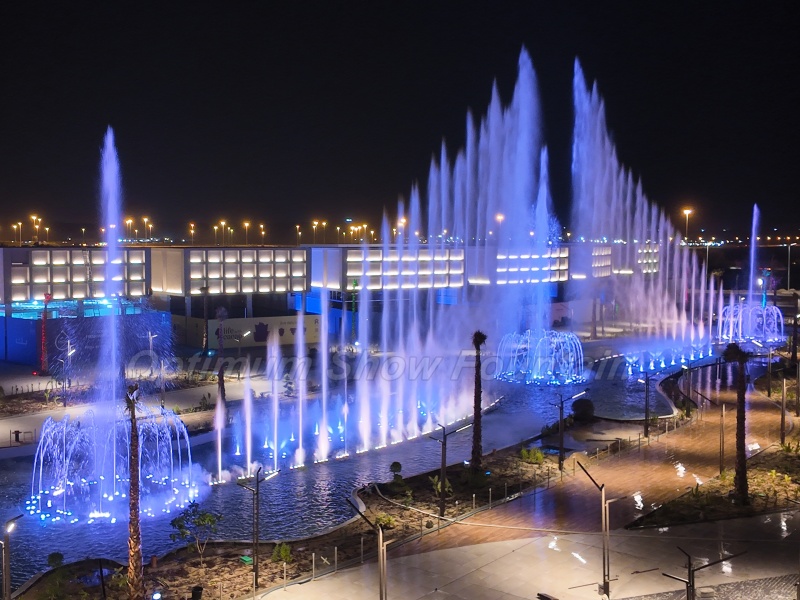
3. Riyadh Boulevard City Fountain — Saudi Arabia
A permanent musical fountain installation within one of Riyadh’s largest entertainment and retail destinations, delivering nightly water shows as part of the venue’s visitor experience.
4. Taman Mini Indonesia Indah Water Show — Jakarta
A musical dancing water show located in Indonesia’s national cultural park, designed as a major visitor attraction.
5. Baghdad Island Boulevard Fountain — Iraq
A waterfront fountain installation forming part of a large urban leisure development in the Iraqi capital.
6. Dal Lake Musical Fountain — Srinagar, India
A water screen fountain system installed on one of India’s most iconic lake environments.
Optimum Show provides end-to-end musical fountain solutions, covering every stage of a fountain project:
Typical development timelines include:
This integrated approach allows clients to work with a single music fountain manufacturer capable of managing the entire project lifecycle—from concept development to long-term operation.
| Request a project proposal To receive a detailed proposal for your musical fountain project, including design concepts, technical specification, and project cost, contact Optimum Show with your venue details, fountain type, site size, and event brief. Email: yuki@cnfountain.com / optimumshowfountain@gmail.com mobile/whatsapp : +86 137 2980 2519 |
Standard production lead time is 20–50 days after design approval and deposit confirmation. Complex systems with custom nozzle configurations or large-scale floating structures may require additional time. 3D design and animation is completed within 7 days of the initial brief.
Yes. Modular, rapidly deployable fountain systems can be configured for single events or short-term installations, then removed. This is a different product specification from a permanent installation — discuss your event timeline and site conditions with the manufacturer to ensure the right system is proposed.
To generate an accurate project proposal, a musical fountain manufacturer will typically need: fountain type (musical, interactive, floating, floor), site dimensions and photos or CAD drawings, water type (fresh water or sea water), any specific effects required, and your budget range if confirmed.
Established manufacturers with international project experience handle export documentation, shipping, and customs clearance as part of their turnkey service. Confirm this is included in your contract scope — it should not be an afterthought.
A minimum of 2 years on pumps and LED lighting, with structural components covered Life span warranty Annual on-site maintenance visits from the manufacturer's engineers are standard practice among professional suppliers. Be cautious of warranties limited to parts-only with no labour or travel coverage.
Share your site size, water depth, location or CAD drawing with our engineering team. We can evaluate the project requirements and recommend a suitable fountain system.