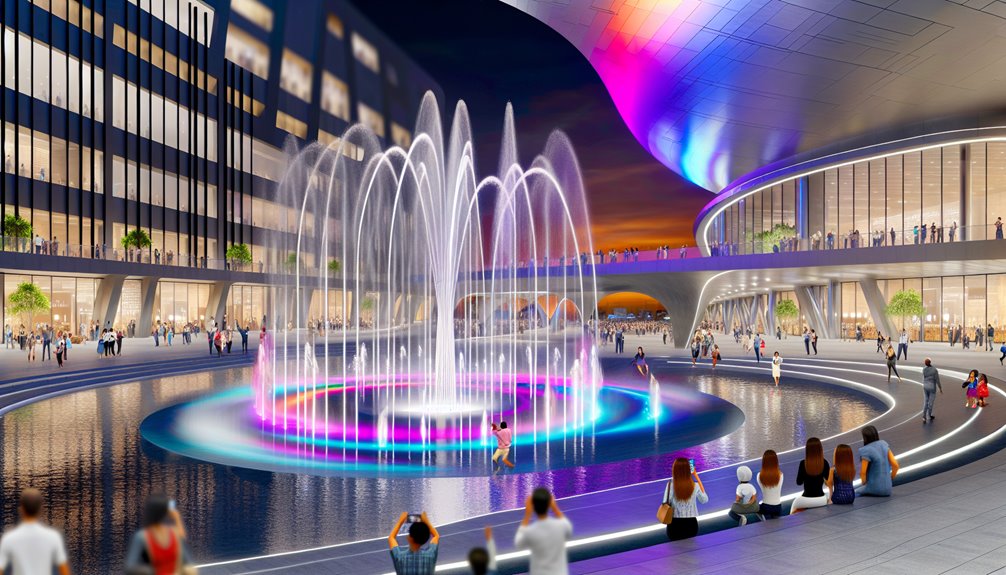
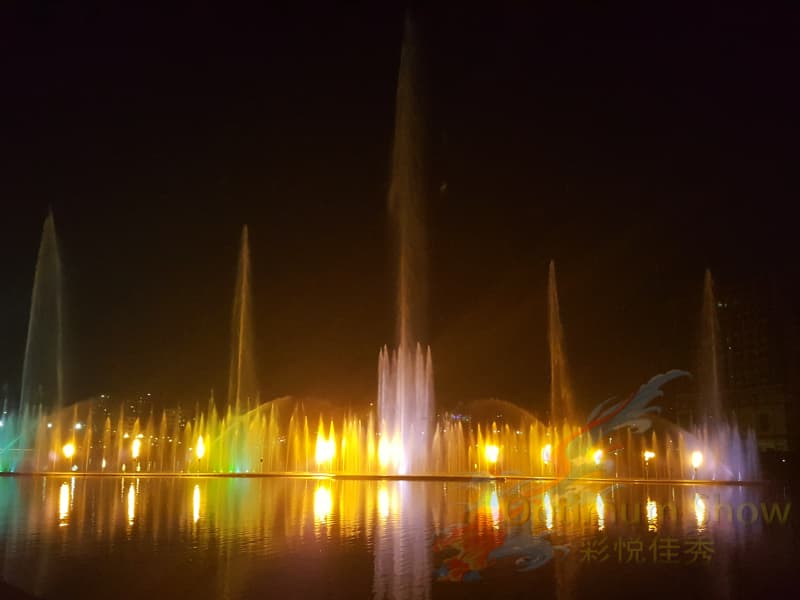
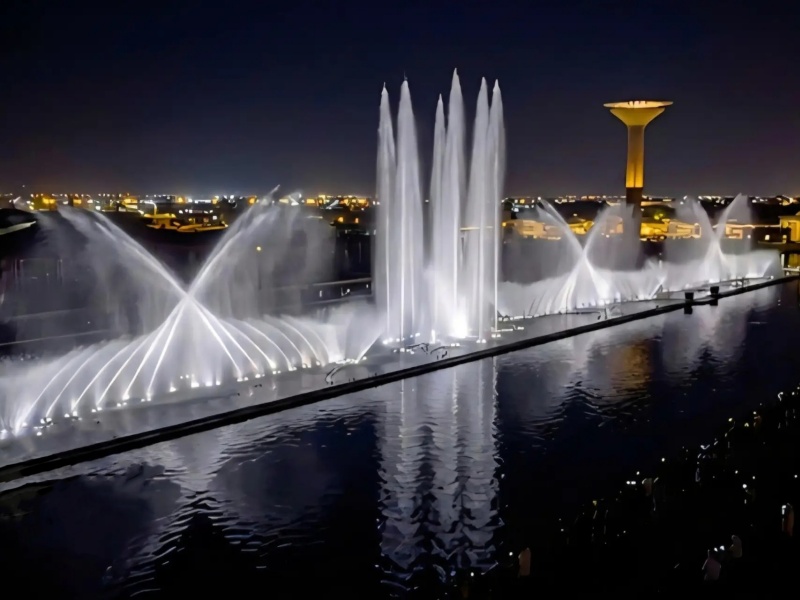
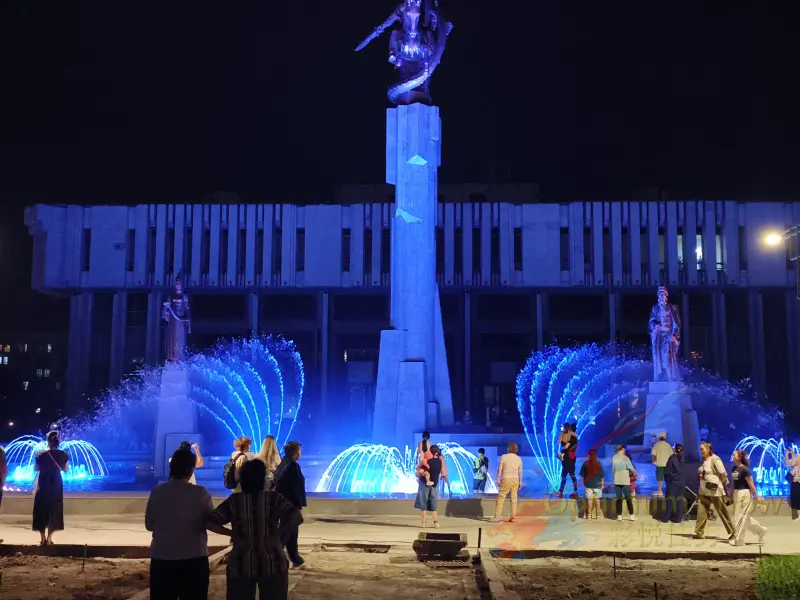
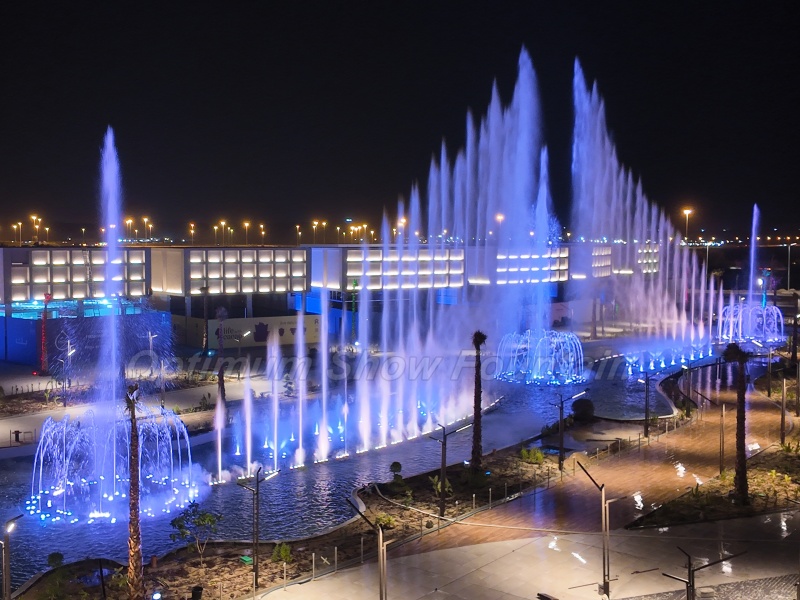
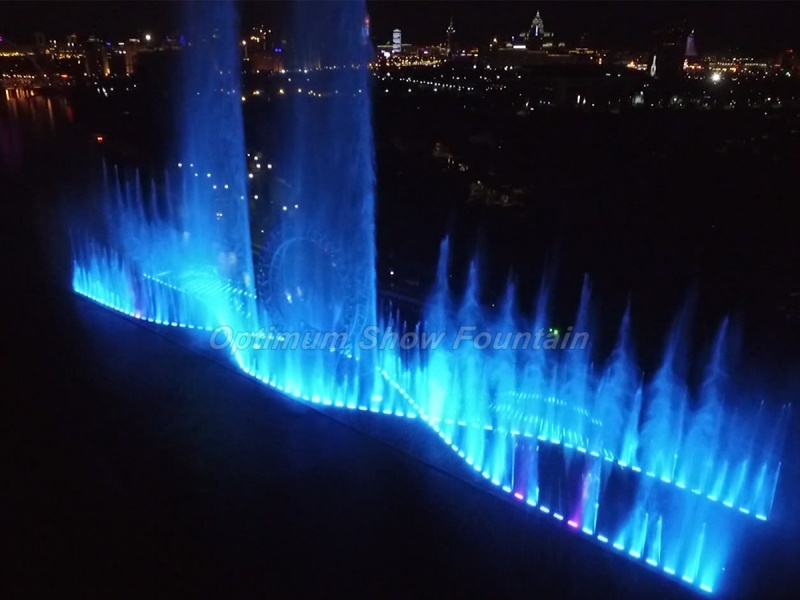
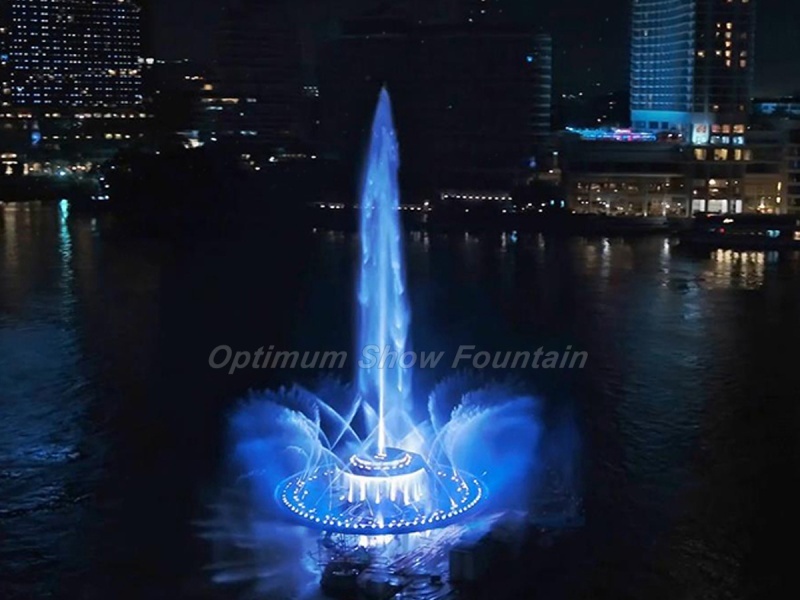
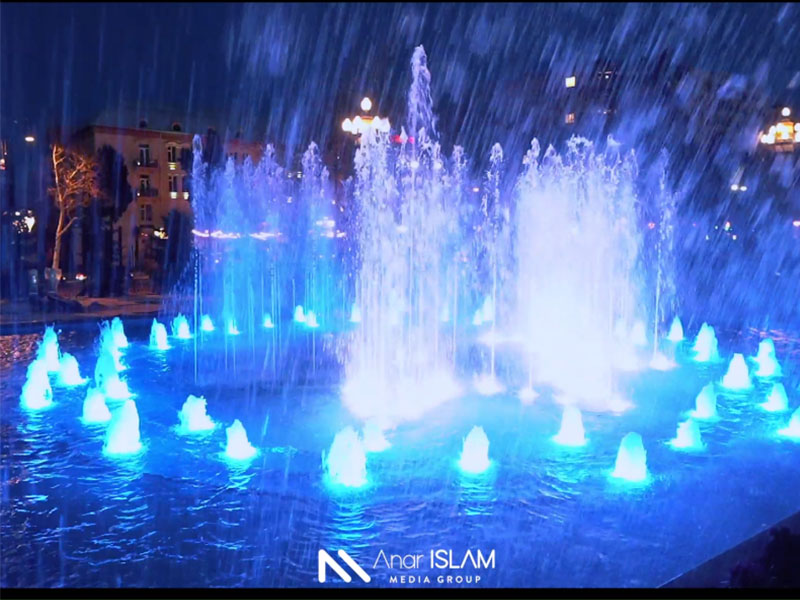
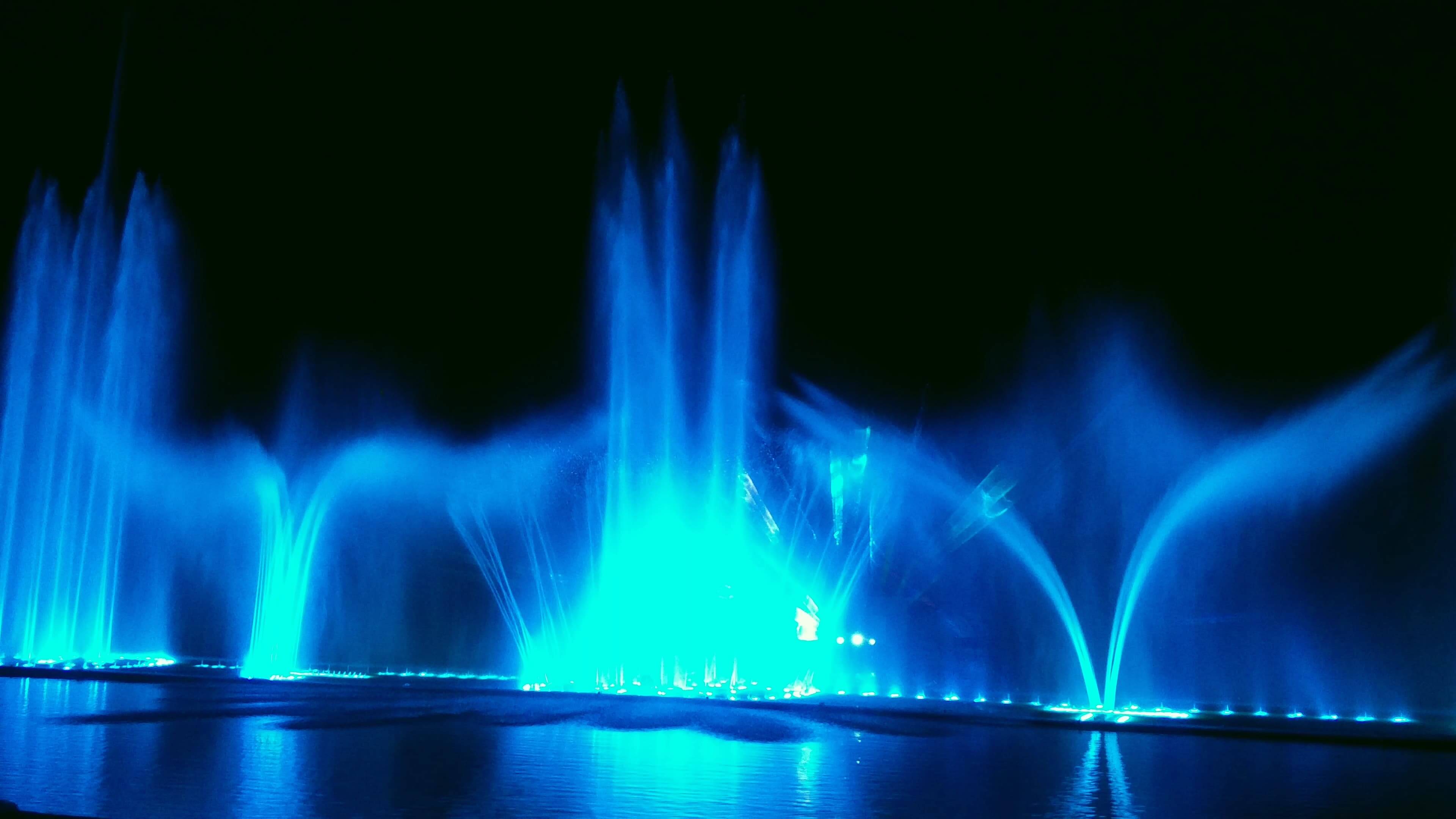
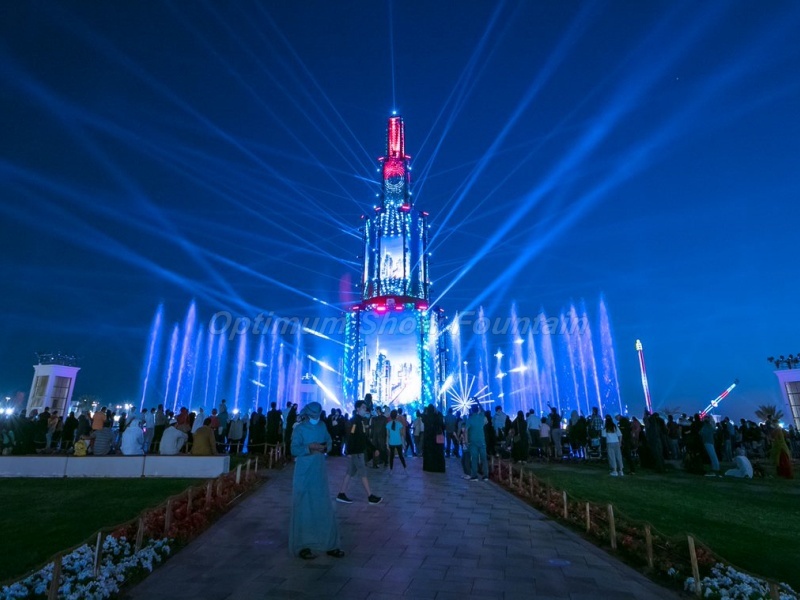
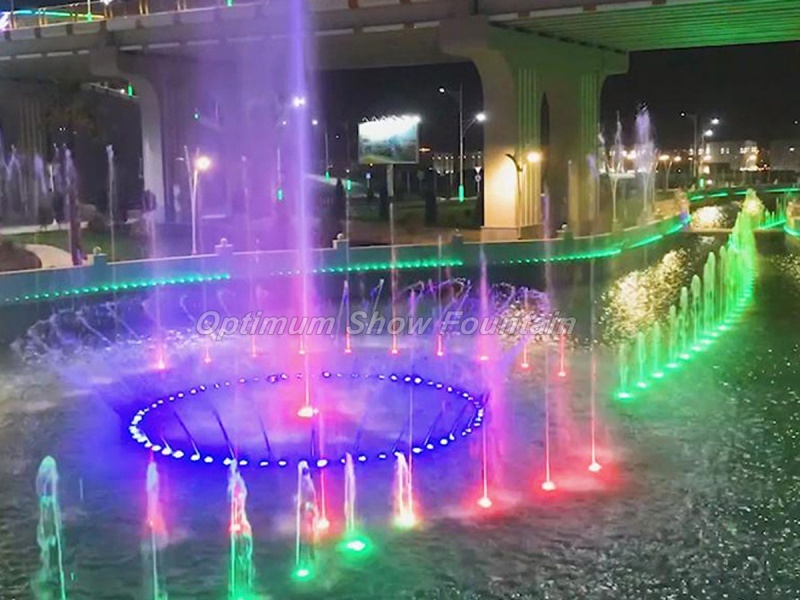
Musical fountain design combines water movement, lighting, music, and engineering to create immersive public attractions. Today, these fountains are widely used in commercial developments, tourism projects, public plazas, and entertainment venues because they can transform ordinary spaces into memorable destinations.
However, successful musical fountain design involves far more than visual effects alone. Factors such as fountain layout, choreography, control systems, audience visibility, and long-term maintenance all play a critical role in the performance of a fountain project.
In this guide, we will explore the key principles behind effective musical fountain design, including layout planning, nozzle selection, control systems, choreography, and common design mistakes that can impact performance and reliability.

Musical fountain design is the intricate art and science of crafting dynamic water features where water, light, and music converge to produce a choreographed spectacle. This involves a meticulous musical fountain layout, integrating fluid hydraulic engineering with artistic water effect design.
Every nozzle, light, and pump is precisely positioned and programmed to create a seamless visual narrative. The fountain control system plays a pivotal role, utilizing advanced hardware and software to synchronize elements in real-time, responding to pre-programmed sequences or live audio inputs.
This system guarantees that each performance is not just a visual delight but an emotionally resonant experience, capable of enchanting audiences with its innovative integration of technology and artistry.
In crafting a successful musical fountain, one must consider five core principles that guarantee both technical excellence and audience engagement.
Visibility and audience experience are paramount, requiring careful attention to sightlines and the seamless integration of choreography to evoke emotional flow.
Additionally, engineering reliability, harmonization with architectural landscapes, and guaranteeing long-term maintenance accessibility are critical to sustaining the fountain's functionality and aesthetic appeal.
Visibility is a critical component of successful musical fountain design, guaranteeing that the spectacle captivates its audience from every intended vantage point. The relationship between the fountain and its audience dictates visibility, transcending mere scale.
Three key factors are essential:
Day and night conditions demand distinct design strategies to facilitate transformative water choreography experiences.
While musical fountain design may appear to be a technical endeavor, it is fundamentally an art form that captures the imagination through the interplay of water, light, and sound.
In dancing fountain design, water choreography shapes emotional flow, transforming water into a narrative medium. A programmable fountain must harness dynamic range, ensuring a spectrum from subtle jets to towering displays, enabling true storytelling.
Response speed is critical; fast changes align water movements with musical beats, crafting a seamless experience. Climax capacity provides the grand crescendo, a pivotal moment of emotional release.
Each engineering decision, from solenoid valves to hydraulic design, constrains or liberates the choreographer's vision, reinforcing the need for synergy between technology and creativity in delivering enchanting performances.
Engineering reliability in musical fountain design is essential, guaranteeing that the visual and auditory spectacle consistently captivates audiences without interruption. Achieving this reliability requires meticulous attention to several engineering practices:
These practices embed engineering reliability into every aspect, transforming potential failures into mesmerizing success.
Ensuring a musical fountain's seamless integration with its architectural and landscape context requires an understanding of spatial dynamics and user interaction.
Fountain show design must harmonize with its environment at three scales: plaza integration, waterfront alignment, and urban acoustic and light considerations.
Water feature engineering involves crafting basin edges and paving materials that complement surrounding architecture, guiding pedestrian flow and ensuring the fountain serves as a focal point.
In waterfront settings, precision placement relative to shorelines and landscape features maximizes visual impact.
Urban environments demand acoustic strategies that account for ambient noise and reflective surfaces, while lighting must synchronize with existing urban illumination, ensuring the fountain's vibrant presence both day and night.
Designing for long-term maintenance accessibility in musical fountains is a critical yet often underestimated aspect of fountain planning.
In floating fountain design and complex DMX fountain systems, overlooking maintenance access can lead to costly retrofits. Thoughtful design prevents these issues:
The foresight in these areas transforms a potential operational burden into a smoothly functioning masterpiece.
The musical fountain design process begins with a meticulous site analysis to define project goals, ensuring harmony with the surrounding environment.
As plans progress, careful consideration of fountain layout and nozzle selection optimizes water effects and visual impact.
The process culminates in the intricate design of hydraulic systems and lighting, crafting a cohesive symphony of movement and illumination.

Before starting on the creation of a musical fountain, a thorough site analysis is vital to avoid costly mistakes later in the project. This phase, often overlooked, is essential for aligning design with environmental and infrastructural realities.
Site analysis typically spans two to three weeks and generates a detailed document guiding all subsequent decisions. Key considerations include:
Typical duration: 1–3 weeks depending on project scale, site conditions, and technical requirements.
Building on the insights gained during site analysis, Phase 2 focuses on transforming project goals into a precise fountain layout. This phase requires a detailed assessment of basin shape, viewing zones, and water coverage.
Circular basins, ideal for omnidirectional effects, contrast with rectangular ones that favor a single audience perspective. Irregular basins offer creative integration with landscapes but demand meticulous hydraulic planning.
Viewing zone mapping aligns audience patterns with water effects, ensuring primary zones receive dynamic displays, while secondary zones enhance depth. Water coverage calculations balance visual impact with hydraulic efficiency, determining whether effects cluster centrally or span widely across the basin.
Each decision intertwines creative vision with technical constraints, setting the stage for a successful musical water show.
Typical duration: 2–4 weeks including concept development and 3D visualisation.
In the intricate world of musical fountain design, selecting the right nozzles is paramount to crafting a mesmerizing visual narrative. Nozzle selection defines the visual vocabulary of the fountain, determining the range of water shapes, movements, and textures. Each nozzle has unique hydraulic requirements and a distinct visual character, playing a specific role in the choreographic palette.
This meticulous selection enables innovative and compelling water shows.
Typical duration: 1–2 weeks depending on choreography complexity and nozzle variety.
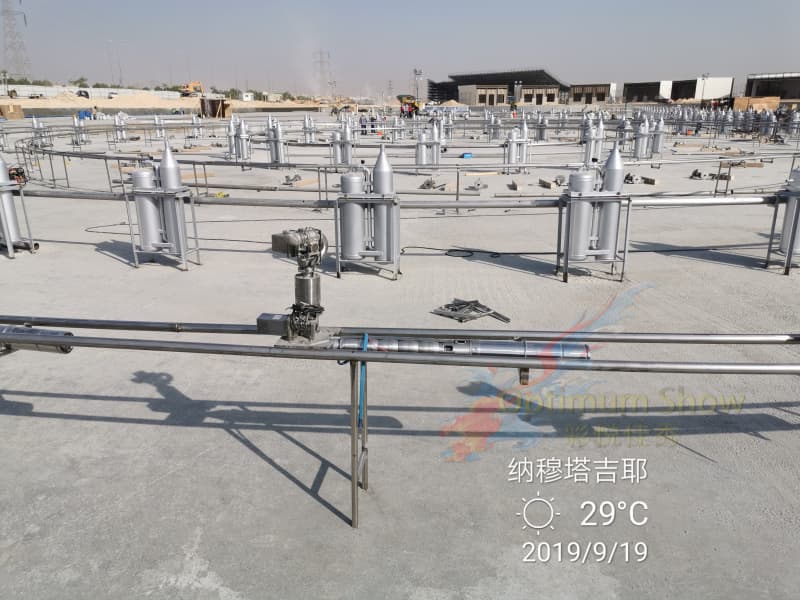
A successful musical fountain design depends on a well-engineered hydraulic system that can deliver stable pressure, precise water movement, and reliable long-term operation. Even the most advanced nozzles and choreography will perform poorly if the pump and piping system are not properly balanced.
Pump selection is one of the first key decisions. Submersible pumps simplify installation and reduce visible infrastructure, while dry-mounted pumps provide easier maintenance access and are often preferred for large commercial fountain projects. Hydraulic calculations must ensure the system can supply the total flow demand of all nozzles during peak show performance, while also accounting for pressure losses across the pipe network.
To achieve smooth water choreography, many modern fountains use variable-frequency drives (VFDs) to control pump speed and adjust jet height dynamically in sync with music. Pipe layouts must also be hydraulically balanced to prevent uneven nozzle performance, while zone isolation allows specific sections of the fountain to be serviced without shutting down the entire system. Durable materials such as 316-grade stainless steel are commonly used to improve corrosion resistance and support long-term reliability.
| Component | Key Consideration |
| Pump Type | Submersible vs dry-mounted |
| Flow Rate Calculation | Total flow demand + system losses |
| Variable-Frequency Drives (VFDs) | Smooth jet height modulation |
| Pipe Network Design | Hydraulic balancing and zone isolation |
| Material Selection | 316-grade stainless steel for durability |
Typical duration: 2–6 weeks for engineering calculations, hydraulic balancing, and technical coordination.
Lighting design in musical fountain installations stands as a critical component, shaping the visual narrative that enthralls audiences. It requires meticulous planning to guarantee both nighttime and daytime visual impact.
Underwater LED fixtures are strategically placed at nozzle bases and basin walls to create vibrant color zones. These zones, controlled by unique DMX addresses, allow for dynamic color choreography, enhancing the performance's emotional depth.
Typical duration: 1–3 weeks depending on multimedia integration requirements.
As the choreography of lights and water crafts an enchanting visual narrative, the core of musical fountain operations lies in the control system architecture. This system translates creative intentions into precise electrical signals, orchestrating pumps, valves, and LEDs in harmony with audio playback.
PLCs, designed for robust hydraulic control, excel in large-group management but lack granularity for intricate lighting. Conversely, the DMX512 protocol offers fine control over individual fixtures, ideal for dynamic effects. A hybrid system, merging PLC for hydraulic tasks and DMX for lighting, guarantees peak performance.
Synchronization can be achieved through timeline-based programming for precision or audio-reactive detection for live adaptability. Environmental protection and remote management further enhance system reliability and efficiency.
Typical duration: 1–4 weeks including synchronization planning and control logic development.
Crafting an enchanting musical fountain show involves meticulous choreography and precise programming. The design phase delivers a choreography brief detailing the number of shows, music selection, and structural arcs, ensuring alignment with nozzle and control system designs.
Programming translates this vision into reality, mapping musical elements to water and lighting effects.
Typical duration: 1–4 weeks depending on the number of shows, music selection, and multimedia complexity.
| Project Type | Typical Timeline |
|---|---|
| Small plaza fountain | 1–3 months |
| Commercial musical fountain | 3–6 months |
| Large multimedia fountain | 6–12+ months |
Actual timelines depend on project scale, site readiness, multimedia integration, manufacturing requirements, and installation conditions.
In the domain of musical fountain design, the choice between fixed structure and floating systems plays a vital role in achieving project objectives.
Fixed musical fountains, anchored to the ground, offer stability and are ideal for permanent installations where intricate designs and precise water choreography are paramount.
Conversely, floating fountain systems provide flexibility, making them suitable for varying water levels and temporary setups, thereby allowing for dynamic displays that can adapt to different environments.
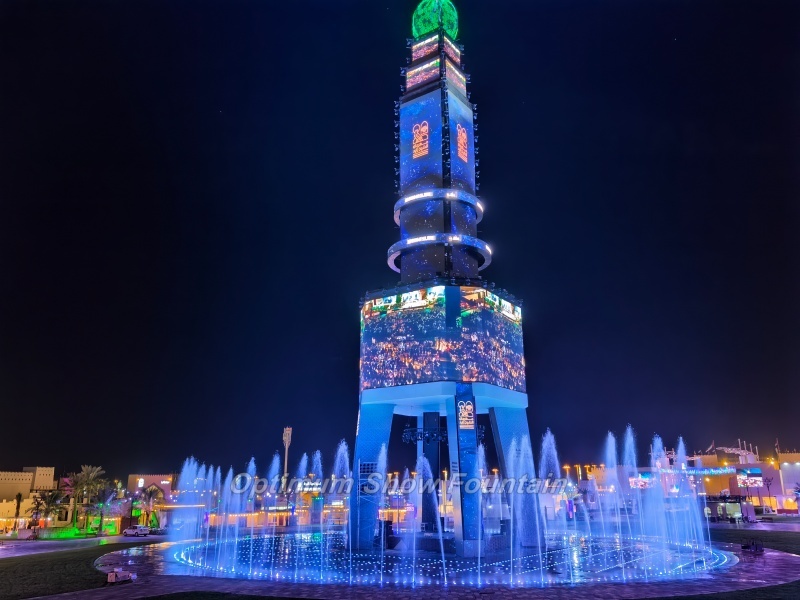
Fixed structure musical fountains, a masterpiece of engineering and artistry, are anchored in permanent basin structures crafted from reinforced concrete with waterproof liners. These installations offer unparalleled design flexibility, making them ideal for urban plazas, public parks, and hotel courtyards.
The precise basin geometry and fixed nozzle positions allow for intricate water choreography, such as delicate laminar jet arcs hitting their targets with millimetric accuracy.
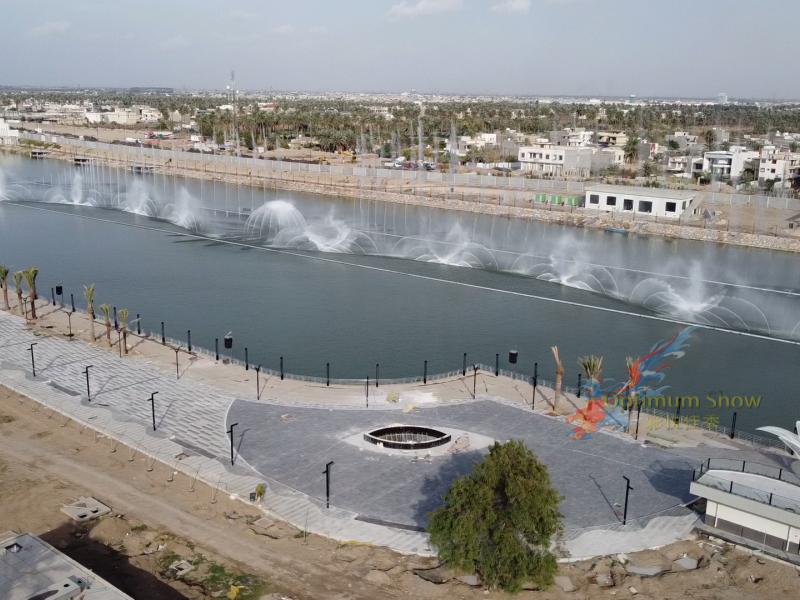
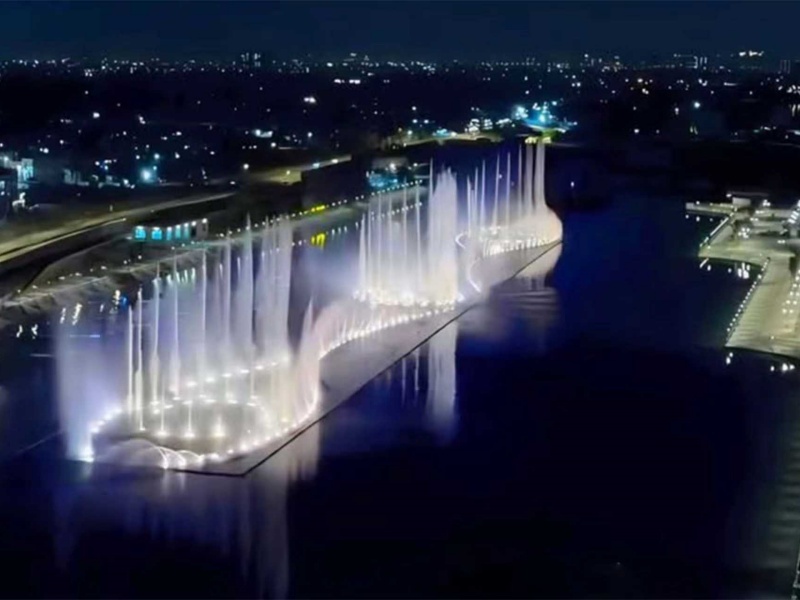
Floating fountain systems, with their buoyant platforms and expansive settings, redefine the boundaries of fountain design. Constructed on pontoons of steel or high-density polyethylene, these systems are engineered for lakes and harbors where new basin construction is impractical.
They must withstand asymmetric forces from high-pressure jets, wind, and self-generated waves, necessitating marine-grade components and underwater-rated cables. The logistical demands include maintenance access via boat, contributing to operational costs.
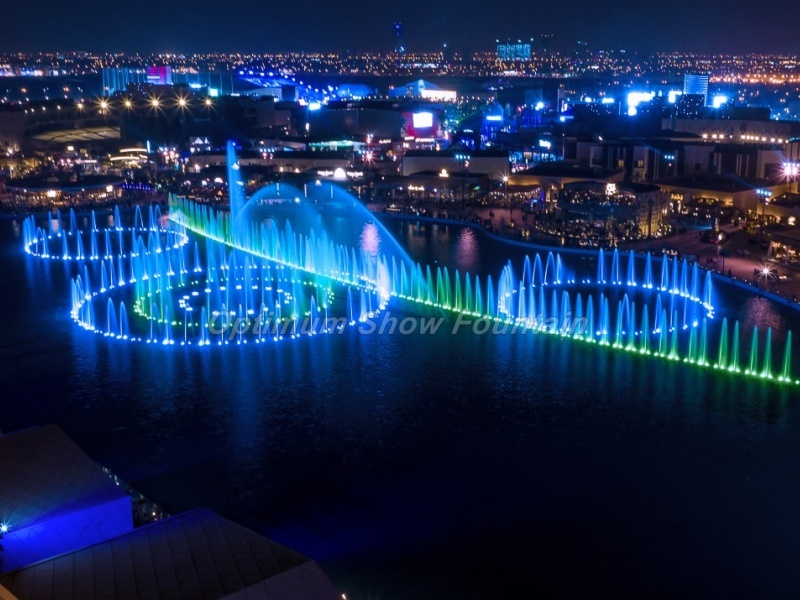
Yet, the visual impact is unparalleled; floating fountains can extend across vast water bodies, emerging naturally from their environments. Iconic installations like Riyadh Boulevard City's and Baghdad Island's fountains illustrate how these dynamic systems transform open water into monumental spectacles, achieving spatial and aesthetic dimensions unattainable by fixed structures.
How does one determine the ideal water fountain type for a project? The choice between fixed and floating musical fountain designs hinges on site conditions and project goals.
A fixed structure suits defined spaces with hard landscaping and precise nozzle geometry. It integrates seamlessly with architectural elements, prioritizing easy maintenance.
Conversely, a floating structure excels in open water bodies like lakes or rivers, embracing the vastness of natural surroundings and offering a 360-degree viewing experience.
Consider the following:
Choosing wisely guarantees that the fountain not only meets aesthetic desires but also aligns with technical and environmental needs.
Most musical fountain design failures are not caused by equipment defects — they begin as planning mistakes that later become operational and engineering problems. The issues below are among the most common causes of performance limitations, maintenance challenges, and post-installation redesign costs. In most cases, they can be avoided during the early design stage, but become expensive and disruptive to correct after construction is complete.

One of the most common problems in musical fountain design is focusing entirely on renderings and visual spectacle without applying the same level of attention to long-term operation. A fountain may look impressive in a 3D animation, but if the design ignores hydraulic stability, maintenance access, or control system scalability, performance problems usually appear within the first few years of operation.
Highly dynamic effects are often the first systems disabled when maintenance becomes difficult or reliability declines. As a result, many fountains gradually operate with simplified show sequences that no longer reflect the original concept approved by the client.
Common Result: The fountain continues operating, but only at a reduced performance level because the most complex effects become difficult or costly to maintain reliably.
Wind is one of the most underestimated factors in fountain planning. Water jets that perform well in controlled design simulations may behave very differently in exposed outdoor environments. Strong crosswinds can reduce jet height, distort water patterns, and even push water outside the basin.
Sites with regular wind exposure require specific design strategies, including:
Without these measures, fountains may need to reduce show intensity or shut down frequently during windy conditions.
Common Result: The fountain spends significant time operating below its intended performance level because wind safety settings must remain conservative to prevent overspray and water loss.
Many fountain concepts are designed with ambitious choreography before the control system capabilities are fully defined. Large numbers of individually controlled nozzles, lighting zones, and moving effects require advanced control architecture and significant programming capacity.
When the show concept and control system are developed separately, incompatibilities are often discovered late in the project — usually during programming or commissioning.
Common Result: The project either requires expensive control system upgrades or the choreography must be simplified to match the installed hardware capabilities.
Maintenance access is frequently overlooked during the design phase, especially in projects where aesthetics dominate decision-making. Insufficient access to pumps, valves, lighting fixtures, or underwater equipment can dramatically increase maintenance complexity over the operational life of the fountain.
Proper maintenance planning should include:
Without these provisions, even routine inspections may require partial shutdowns or basin drainage.
Common Result: Maintenance costs increase significantly over time, while system downtime becomes longer and more disruptive during repairs.
The required fountain control system depends directly on the final show design. The number of nozzles, lighting channels, moving devices, and synchronized effects determines the scale and speed of the control architecture needed.
Choosing the control system too early — based only on preliminary budgets or previous projects — often creates limitations once choreography development becomes more detailed.
Common Result: The installed system lacks sufficient control channels or response speed to execute the intended show, resulting in redesign costs and commissioning delays.
Music is not simply an optional finishing detail added during programming. The rhythm, tempo changes, and emotional pacing of the soundtrack directly influence:
When music is selected too late, the installed hydraulic and control systems may not be capable of delivering the required show dynamics.
Common Result: Either the music must be changed to fit the installed system, or hardware modifications become necessary after installation — both of which are avoidable with earlier coordination.
The most successful musical fountain projects are designed with equal attention to visual impact, engineering practicality, operational reliability, and long-term maintenance. In fountain design, decisions made during planning often determine whether the installation remains impressive for decades or gradually loses performance after opening.
Technological advancements are revolutionizing musical fountain design through the integration of interactive systems and sophisticated multimedia elements.
AI-driven smart show controls enable precise synchronization of water jets, lights, and sounds, while projection mapping and lasers transform fountains into dynamic visual spectacles.
This convergence of technology not only enhances the aesthetic appeal but also creates immersive, engaging experiences for audiences.
Interactive fountain systems are revolutionizing the landscape of musical fountain design by creating dynamic, user-engaged experiences. These systems, often featuring dry-deck floor fountains, are equipped with advanced technologies like touch sensors and gesture recognition. Such innovations allow real-time interaction with water displays, offering a fascinating blend of technology and art.
Key design considerations include:
These elements together create memorable, interactive experiences that invite audiences to engage directly with the magic of water and light.
As interactive fountain systems redefine public engagement with water displays, the integration of multimedia elements is revolutionizing musical fountain design. Performance fountains now seamlessly incorporate laser projectors, fog machines, fire effects, and theatrical lighting to craft immersive multi-sensory experiences.
Each medium introduces complexities in synchronization and operational demands. A striking innovation is water screen projection, utilizing a fine mist curtain as a translucent canvas for video content, seemingly floating above the water. This requires precise hydraulic pressure control to maintain screen stability, especially under varying wind conditions.
Such advancements not only enhance visual appeal but also push the boundaries of engineering, offering audiences a fascinating blend of technology and artistry in public spaces.
AI-driven systems are revolutionizing musical fountain design by introducing a new level of interactivity and adaptability. These systems analyze incoming audio in real-time, detecting beats and identifying tempo changes to create dynamic shows. The practical application of AI show control is particularly evident in live events, such as concerts and festivals, where fountains must respond to varying music.
This synergy allows for enthralling, responsive performances.
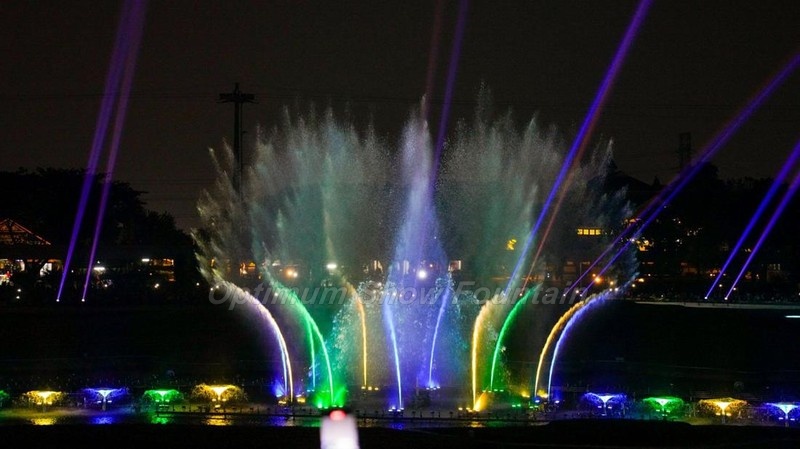
Projection mapping and lasers are revolutionizing musical fountain design by transforming water displays into dynamic canvases of light and motion. Large-scale installations now use high-lumen projection mapping on water surfaces, fountain basins, or nearby structures. This approach leverages the water's dynamic nature, creating visuals that static screens simply cannot achieve.
Lasers extend the vertical visual range, producing geometric beam effects and fan arrays up to 50 meters above the water. These elements draw attention upward, enhancing the fountain’s scale. Integration requires precise timing between laser controllers and show systems, ensuring seamless visual harmony.
Additionally, compliance with aviation safety regulations is essential, particularly for outdoor laser operations, to maintain safety while innovatively expanding the sensory experience.
Designing musical fountains for diverse applications requires a nuanced approach that addresses specific environmental and aesthetic needs.
In commercial developments, these fountains serve as dynamic centerpieces that attract and engage consumers, enhancing the overall shopping experience.
For tourism landmarks and hotels, they provide iconic visual spectacles that enrich visitor interactions.
In public plazas and parks, the focus is on creating accessible and interactive spaces that harmonize with the natural and urban surroundings.

In commercial developments, where the goal is to create enchanting environments that draw and retain visitors, musical fountains play a strategic role. These installations serve multiple commercial objectives, such as extending visitor dwell time and enhancing social media visibility through mesmerizing displays.
Key considerations include:
Musical fountains at tourism landmarks serve as mesmerizing focal points that captivate and draw visitors from afar. These installations are designed to become primary attractions, driving visitor numbers and enhancing dwell time.
Key design elements include landmark scale and visibility, where impressive scale, jet height, and nighttime lighting guarantee recognition from several hundred meters away.
Show variety is vital, with a library of 10 to 20 diverse programs catering to different musical styles and visual moods, encouraging repeat visits and generating social media buzz.
Additionally, robust visitor infrastructure is fundamental, with dedicated viewpoints, seating, and pedestrian flow management to enhance the viewing experience and prevent overcrowding during peak times, making certain the fountain remains a celebrated highlight.
While musical fountains in hotels and resorts focus more on atmosphere than spectacle, their design demands a meticulous approach to material quality and aesthetic integration. These features are crafted to enhance ambiance, offering a continuous, gentle show that complements luxury settings.
The following elements are essential:
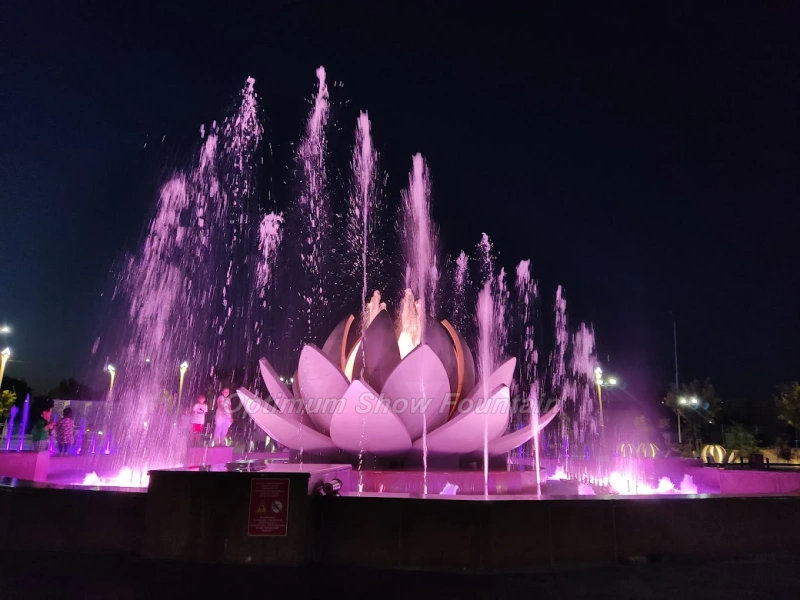
Hotels and resorts artfully incorporate musical fountains to enhance ambient luxury, but in public plazas and parks, these installations take on a broader role. Serving as social infrastructure, these fountains engage diverse audiences, from children to commuters, by offering interactive, child-safe dry-deck zones with carefully managed nozzle pressure and water temperature.
Guaranteeing accessibility, seating is strategically placed for ideal viewing, avoiding unwanted splashes. To maximize functionality, year-round programming is essential in varied climates, utilizing antifreeze materials and seasonal lighting to maintain operation.
Furthermore, these fountains often reflect civic identity by integrating local cultural elements, music, and events, thereby becoming an integral part of the community's fabric. This innovative approach guarantees vibrant, inclusive public spaces.
In the domain of musical fountain design, cost is influenced by factors such as material quality, technology integration, and site-specific requirements.
The complexity of the design, from intricate water choreography to advanced lighting systems, can greatly affect both initial investment and long-term operational expenses.
Balancing these elements is essential to guarantee that the artistic vision aligns with budgetary constraints while maintaining performance efficiency.
Designing a musical fountain involves a complex interplay of various elements, each contributing to the overall cost. Key factors that affect costs include nozzle selection, control system complexity, and multimedia integration.
Understanding these factors guarantees a well-planned, innovative project without unexpected expenses.
Balancing creativity with long-term practicality is a critical part of musical fountain design. More complex fountain systems often require additional pumps, motorized nozzles, DMX channels, and multimedia equipment, which can increase both operational and maintenance costs over time.
However, complexity only adds real value when it improves the audience experience. In many projects, strategic system design can achieve impressive visual effects without unnecessary technical overload. For example, a fountain with grouped nozzle control may deliver a similar visual impact to individually controlled nozzles while significantly reducing control system complexity and maintenance requirements.
Experienced fountain designers focus not only on spectacle, but also on operational efficiency, reliability, and long-term maintenance planning. The goal is to use technology where it creates meaningful visual impact while avoiding unnecessary costs that provide limited performance benefits.
| Design Element | Operational Impact |
| Motorized Components | Higher maintenance requirements |
| Individual DMX Control | Increased system complexity and cost |
| Grouped Nozzle Programming | Lower operating and maintenance costs |
| Multimedia Integration | Higher equipment and spare-part expenses |
| Optimized System Design | Better balance between impact and efficiency |
At Optimum Show, we approach musical fountain design by combining creative artistry with advanced engineering to create immersive water show experiences. With over 30 years of industry expertise, we provide comprehensive turnkey solutions, ensuring every project is carefully managed from concept development to final execution.
By integrating water choreography, lighting technology, and intelligent control systems, we transform public spaces into engaging visual landmarks designed to attract and inspire audiences.
Our approach is built around three core principles:
Our focus on innovation, reliability, and customer collaboration allows us to deliver musical fountain projects that balance visual impact with long-term operational performance.

Blog Series:
Musical fountains enhance cultural and social environments by transforming public spaces into dynamic art installations. They symbolize innovation and creativity, evoke emotions, and foster community engagement through synchronized displays of water, light, and sound.
Musical fountains, like maestros of liquid symphonies, orchestrate harmony between nature and architecture. They transform landscapes into vibrant canvases, infusing dynamic choreography and luminous artistry, creating enchanting environments that captivate and inspire innovation in public spaces.
Musical fountains captivate tourists by transforming urban spaces into vibrant attractions. Their synchronized displays of water, light, and music create unforgettable experiences, fostering cultural appreciation and economic growth through increased visitor engagement and prolonged city exploration.
Musical fountain installations impact the environment through water usage, energy consumption, and potential habitat disruption. However, innovative designs incorporating water recycling, energy-efficient pumps, and sustainable materials can mitigate these effects, aligning the installations with eco-friendly goals.
Musical fountains, like a symphony harmonizing with nature, integrate by blending water choreography with the landscape. Advanced lighting highlights natural features, while synchronized movements echo environmental rhythms, creating a seamless fusion of technology and organic beauty.
Successful musical fountain design is about more than combining water, light, and music—it is about creating an experience that transforms a space and leaves a lasting impression on visitors. The most effective fountain projects balance creative choreography with practical engineering, ensuring that visual impact, system reliability, and audience engagement work together seamlessly.
From layout planning and nozzle selection to control systems and show programming, every design decision influences long-term performance and visitor experience. Whether developing a small commercial fountain or a large public landmark, the design phase is where the difference between a good fountain and a truly memorable one is created.
Contact Optimum Show to discuss your project. We provide site assessment, concept design, and technical feasibility review at the early stage of any project — before any commitment is made — so that your design decisions are informed by engineering reality from the start.