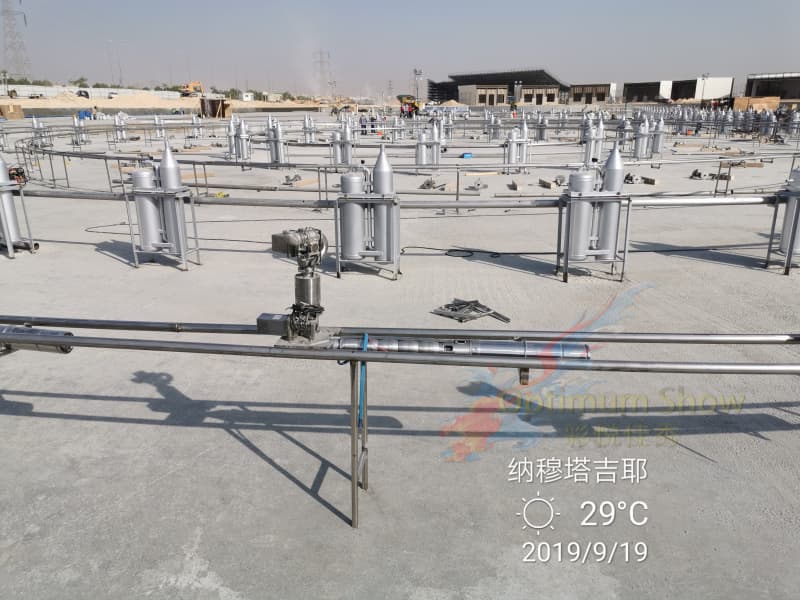
Make comparisons between pumps, nozzles, controls, filtration. Specify the right water fountain equipment and save yourself 10 years of hassle.
Most buying guides have this backwards. They start with the pretty jets and end with the pump, and in all the failures I have investigated, they began with the piece of equipment nobody looked at. Water fountain equipment is in fact a chain, and the toughness of a single component determines that of each one following.
Water fountain equipment can be divided into six groups: pumps, nozzles, lighting, controls, pipework and filtration. All other material is considered structure or multimedia. The first critical point is to specify your hydraulic core, as nozzle selection, jet height and running cost all follow from the pump.
There are five systems involved: move the water by means of a pump, distribute it by using pipework, form it into the desired shape with nozzles, light it so it is visible after dark, and control it, that is, time all of these things together. The four other systems are maintained by filtration.
Well, there are the water fountain parts diagram, except for the concrete. All the other things that people refer to as fountain supplies are either the structure that houses these five systems, or multimedia that is retro fitted after the fountain.
That is the crucial part that catches the buyer out. Water fountain supplies appear as individual line items in catalogs, and consequently people tend to shop each item. Watershapes are not like that. You have altered the pump curve with the change of nozzle. When you change the pump, you have changed the pipe diameter, cabinet size and electrical load.
Thus, before you compare water features accessories on price, ask yourself one thing: what is this fountain supposed to do after dark, in wind, five years from now?
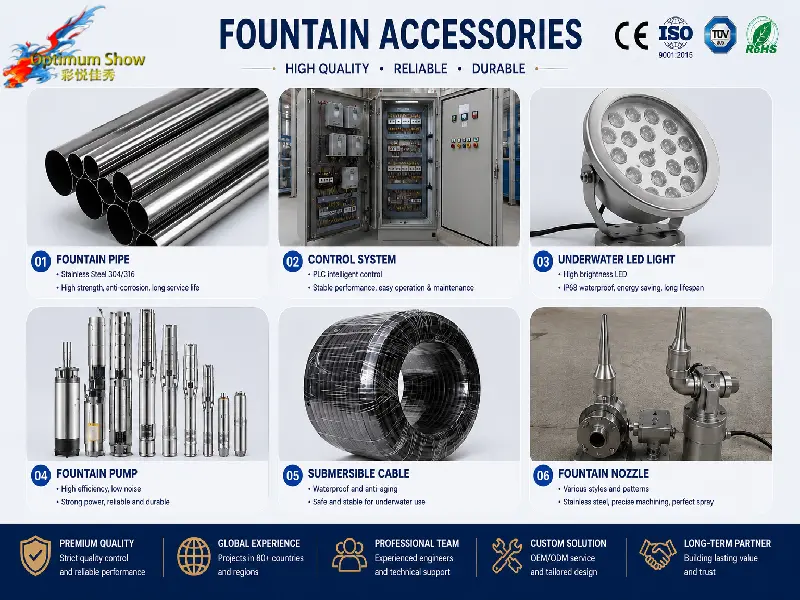
The ceiling is determined by pumps. Too small a unit will squat the display, and too large will waste energy and overload pipework. Unlike a switch on the wall, a dancing fountain system utilizes variable frequency drives to allow a single pump to vary the height of the jets dynamically in real time.
It is at the nozzle where the money comes in. There are fountain nozzles and fountain spray heads which convert pump pressure into a specific shape, and each of these has its own flow and pressure requirements. Laminar jets read as glass, and foam heads retain their shape in wind. Changing types is contrast in choreography.
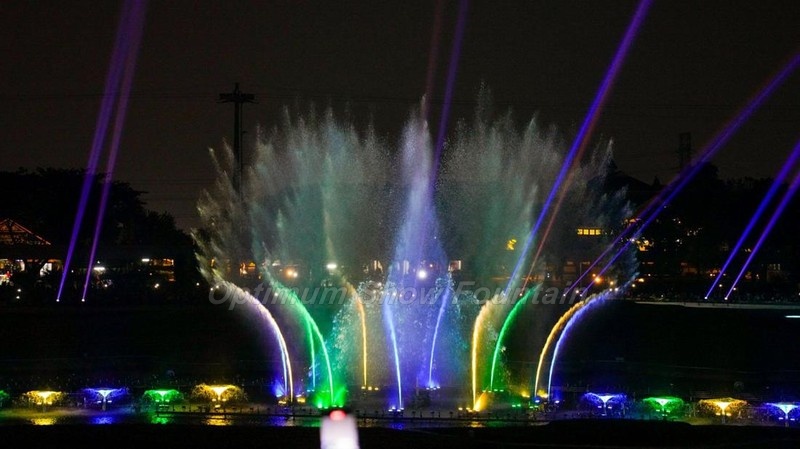
Half of the show is lighting after dark. RGB LED fixtures are purpose-built to reside under the waterline and within nozzle housings, and a nozzle fountain light can color the jet from the inside out. A water light fountain with dark fixtures seems sad.
The control components transform the components into a show. DMX 512 for lighting and rapid effects, a PLC for pumps, safety interlocks and wind response. In an inexpensive musical fountain kit, this security is completely bypassed, and it is the first question inspectors ask about, every time.
Pipework determines whether or not the design on paper will make contact with reality. Head loss, branch balance and drainage falls must be considered in designing water fountain piping design. A water spray bar with a lack of pipe size produces a limp sheet, whatever the pump promises.
Filtration is the least sexy item on the bill and the one that guards all the other items. Leaves will get trapped by coarse media, suspended solids will get trapped by fine media, and UV or ozone will trap bacteria. Skip it and nozzles clog, lights fog, and the water is green by week three.
All else is subordinate to structure. precast concrete fountains and stone trough water features are ideal for quick retrofits. Anti-slip grating for pedestrian, and in some cases vehicle, loads must be provided for dry deck installs.
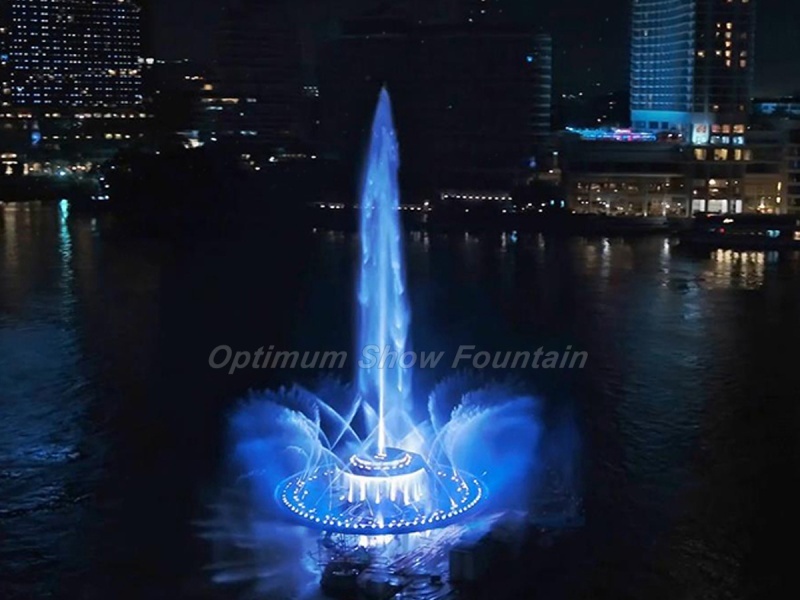
Self-contained wall fountains include a basin, pump and reservoir in one package, and a Floating Fountain carries the same idea onto open water.
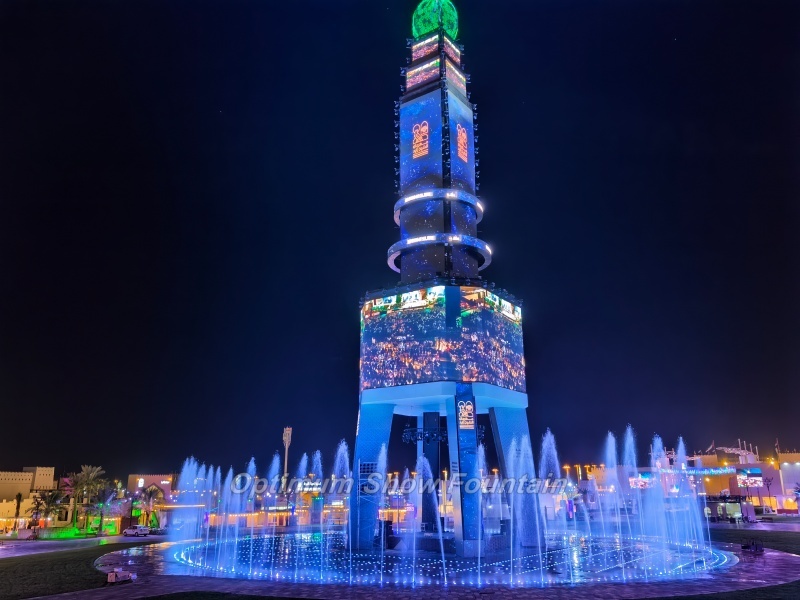
A hydraulic base supports the multimedia hardware. A Water Screen Movie Nozzle projects water into a fan shaped surface, and a Digital Water Curtain switches the solenoid valves so quickly that logos are written in falling water. The control layer must be created prior to both.
⚠ Pro Tip: Hedging your bet, purchase the control cabinet with a 20 to 30% overage on channels. Channels can be added after commissioning, but they require a multiple of the day one cost of that headroom.
The selection of material is not a beauty mark. That is the contrast between outdoor fountain parts you are checking every year, and concrete fountain replacement parts you are ordering every season.
| Material | Use | Service Life |
| Stainless steel 304 | Commercial nozzles, grating and manifolds | Standard for public projects, resists corrosion for 15 to 20 years |
| Brass and brass plated | Heritage and decorative | Corrosion resistant, patinas over time, higher unit cost |
| Plastic and PVC | Small residential features | Good for a DIY project, but not good for show use |
| Stainless steel 316, marine grade | Floating pontoons or platforms | Requires anti-corrosion paint and annual checking in open water |
Generally, we choose 304 stainless steel. Saltwater is where things are different. In saltwater environments, we replaced all materials with 316 stainless steel.From the initial sketch, the choice is whether a site near the coast will require corrosion resistant materials for cable, glands, fixings and everything else.
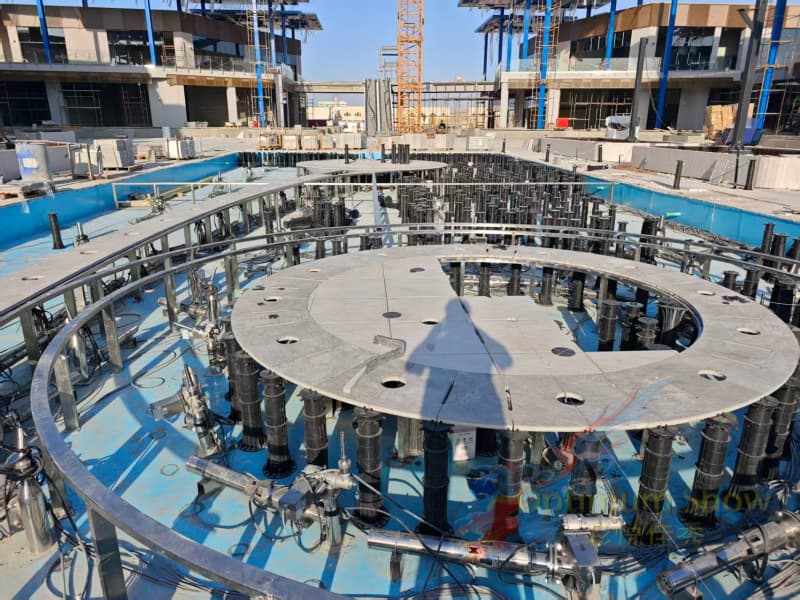
Pump size is dependent on the jet height, nozzle quantity and overall head loss throughout the pipe run, and not on the volume of the basin. Add the total nozzle flow, add the pipe friction, then size for that total with headroom. Guessing here is the costliest thing in the business.
| Installation | Jet Height | Equipment |
| Courtyard basin, small water fountain equipment | 2 to 4 m | Single pump and timer device, very limited filtration |
| Indoor fountains, mall atriums | 3 to 8 m | VFD pump, DMX lighting, UV treatment required |
| Plaza dry deck or floor water fountain equipment | 5 to 15 m | Multi-pump array with PLC plus DMX, underground chamber |
| Lake floating equipment, large water fountain equipment | 20 to 100 m | High-head pumps, marine cables, wind sensors |
They ask how much is a pump for a water fountain, and they want only one number. The water pump for DIY fountain use costs less than 200 bucks. High-head show pumps run into five figures each, and several of these will be required for a 100 m jet.
Where are the pumps of a water fountain at that grade available? Not from a garden center. When using show specification fountain pumps and accessories, the pump curve is provided by the supplier along with the bill.
⚠ Warning: If your pump is sized on the jet height only, without head loss calculated over the actual length of pipe, it will underperform on site every time. Do not just ask for the model number, ask for the hydraulic calculation.
In most instances, a search for water fountain equipment near me will bring up pond and irrigation suppliers. Suitable for a garden or similar project.
Does not work well with a plaza system having 200 nozzles on one time line. Fountain supplies near me and a water fountain equipment shop fulfill different markets, and mixing them up takes months.
When I was working for someone else, he would say that the best filter he had was this: the quote you least understand is the one you should have questions about. Over the 20 years I have read proposals, I have found that to be quite true.
Is this something decorative that runs on a timer, or a planned thing that people gear up their evening for? Those require different suppliers, not different budgets.
Though water fountain code requirements differ from jurisdiction to jurisdiction, the common items remain the same. Electrical enclosures should be properly rated and grounded.
Dry decks are required to be anti-slip and to have child safe jet pressures for public use. Any integrated laser is subject to IEC 60825-1, with safety zoning and, in some regions, aviation notification.
For commercial water fountain equipment used in a business environment, check whether the manufacturer is ISO 9001 certified and whether components are bench-tested prior to delivery. Pre-wired and pre-tested control assemblies dramatically reduce the risk of commissioning errors in the field.
One limitation you cannot completely remove from the design of outdoor water fountain equipment is its location. Wind moves water. Sensors can automatically decrease jet height, and foam nozzles retain their form more effectively than laminar nozzles, however there is some performance variability which is permanent on an exposed waterfront site. Anyone saying otherwise probably has not commissioned a lakefront system in February.
Whether you move the fountain 30 meters inland is a decision each user must make. Well, I would say it depends on the frequency of wind blowing in that particular area. Find out the statistics before you make a decision.
Before attending to any size, type or make of nozzles, equipment selection at Optimum Show begins with site specific hydraulic analysis: pumping capacity, available pressure, basin geometry and wind exposure. After 30 years in the trade, and with over 5000 projects completed, this has not changed.
Manufacturing in-house enables alterations to the component to suit local water chemistry, exposure to salt water or extreme temperatures, followed by testing prior to shipping. DMX512 control handles display synchronization of separate nozzle zones.
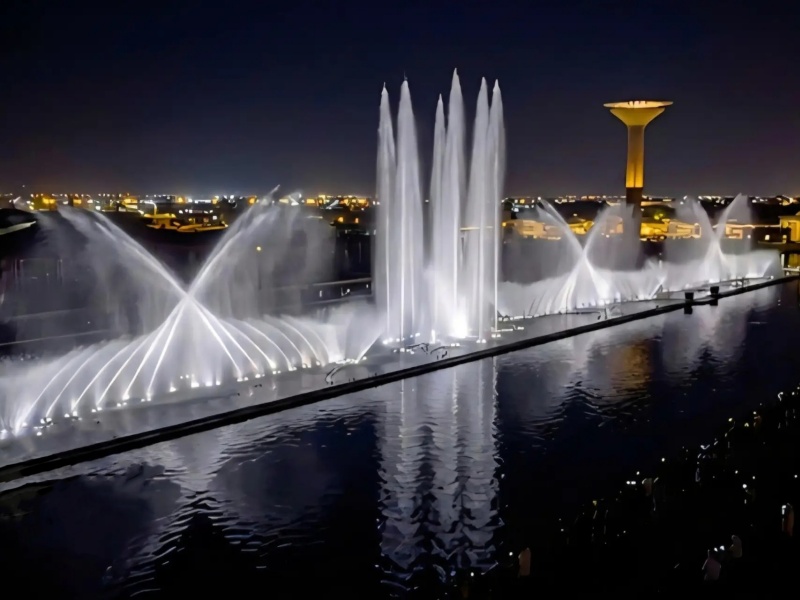
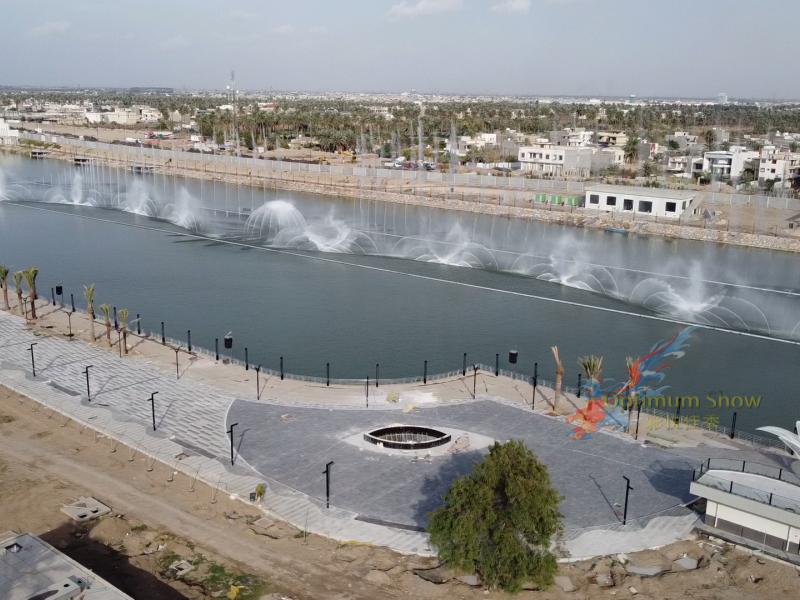
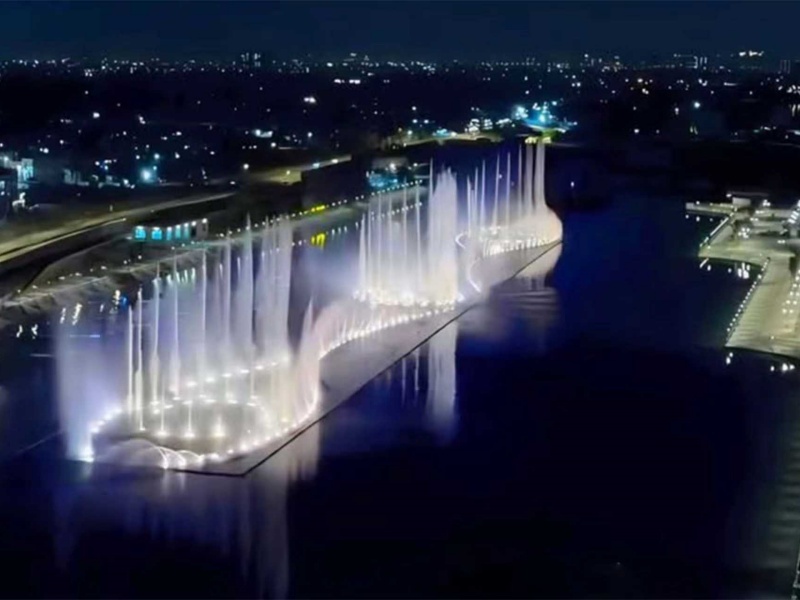
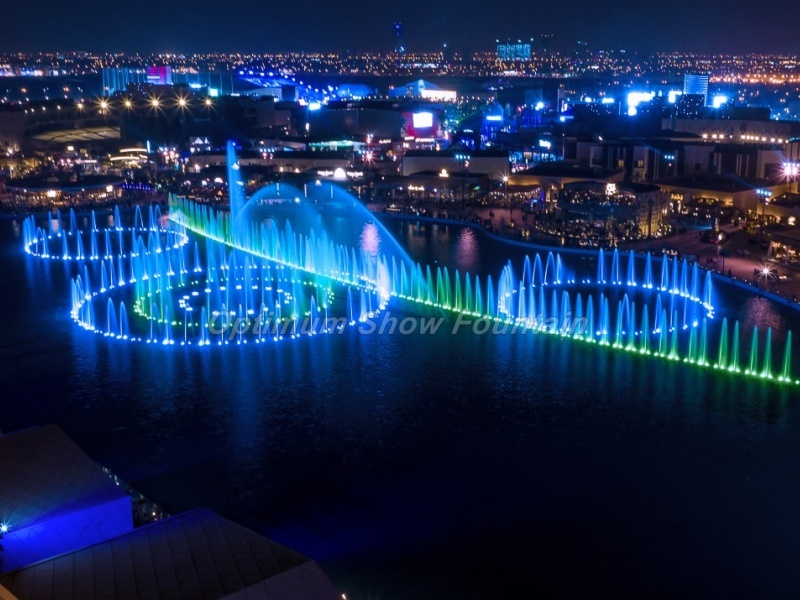
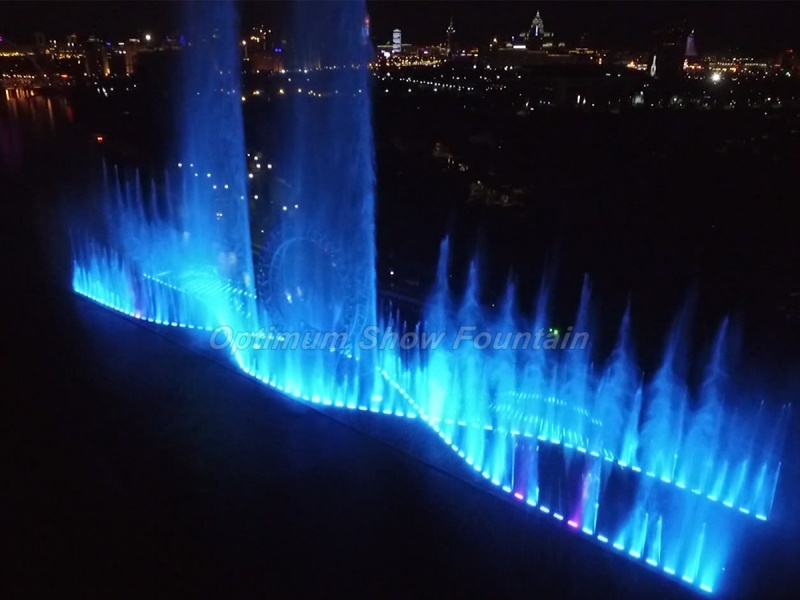
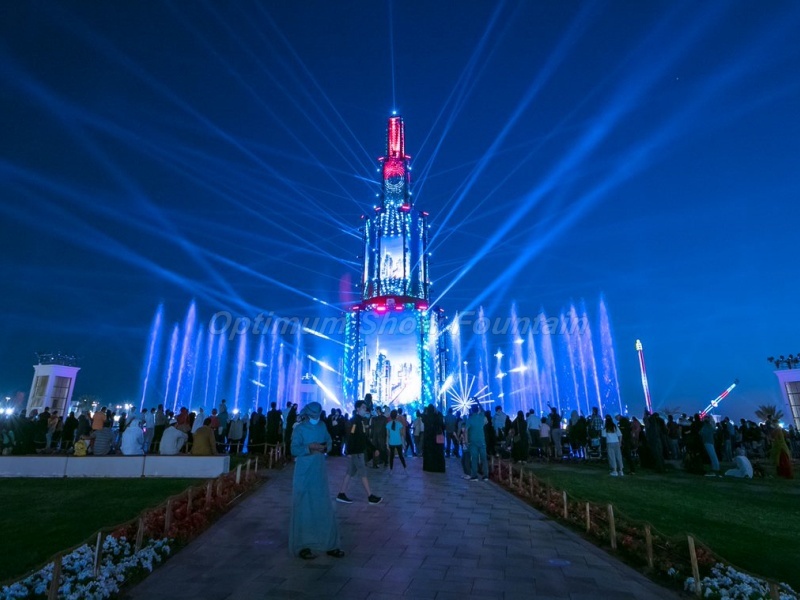
Landmark projects using this technique are the Sheikh Zayed Festival Fountain in Abu Dhabi, the Riyadh Boulevard City fountain in Saudi Arabia, and the 300 m floating fountain at Baghdad Island in Iraq. The same engineering discipline, on a different level.
Some essential components: pump, pipes, nozzles, lighting, controls and filtration. Above that base are structure and multimedia, but nothing functions without the hydraulic heart beating beneath it.
Under $200 for a small recirculating unit, and 5 figures for high-head show pumps. Head, flow and duty cycle are more important in determining price than brand.
Yes, modular systems are designed with that in mind. Temporary floating platforms and control racks are shipped in standard containers, and will require some time on site for programming and alignment.
From fountain manufacturers, for show grade pumps. The pond and fountain supplies near me will most likely have smaller residential units, and usually will not have VFD compatible pumps for commercial situations.
5 to 20 years, depending on materials and maintenance. Most pumps and LED fixtures have 2-year warranties, while stainless nozzles and pipe are often longer-lived.
Specify supplies in order from the pump outward, match materials to the site instead of the catalog, and consider filtration as protection for all the other items.
Wind and water chemistry will still get you occasionally, and that is okay. Select water fountain equipment as one system, and the Optimum Show engineering team will test your theory before anything ships.
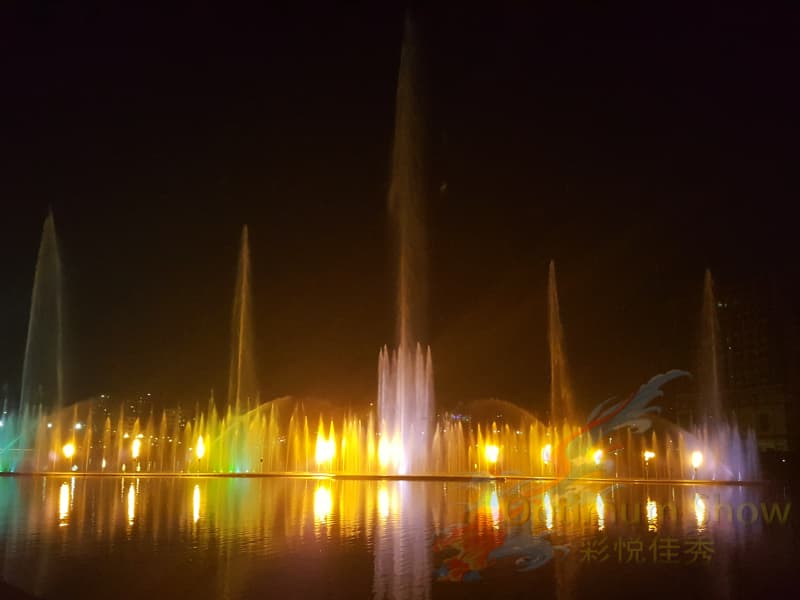

Share your site size, water depth, location or CAD drawing with our engineering team. We can evaluate the project requirements and recommend a suitable fountain system.