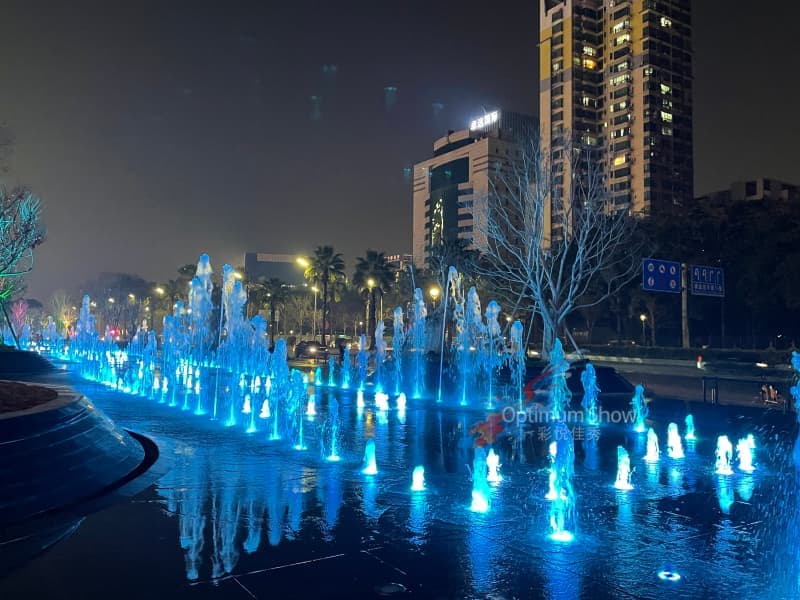
When planning a fountain project, choosing between an ordinary fountain and a musical fountain is a key decision. While both enhance a space with water features, they serve different purposes.
An ordinary fountain focuses on simple visual decoration, while a musical fountain combines water, lighting, and music synchronization to create a dynamic experience. The right choice depends on your project goals—whether you need a cost-effective landscape feature or a high-impact attraction.
This guide compares musical fountain vs ordinary fountain to help you select the best option for your project.

An ordinary fountain — sometimes called a traditional or static fountain — is a recirculating water feature designed primarily for continuous visual ambience. Water flows through fixed nozzles at a set pressure, creating a consistent pattern that runs on a simple timer or float-switch controller. There is no synchronisation with music or lighting; the display is the same at 9am as it is at 9pm.
Ordinary fountains are well-established, widely installed, and entirely fit for purpose in the right context. Their simplicity is part of their value: fewer components mean lower maintenance requirements and more predictable operating costs over time.
Ordinary fountains operate using basic components:
Most systems run on manual control or simple timers, producing consistent and predictable water patterns.
Ordinary fountains are widely used in:
They are suitable for environments where the goal is to create a calm and aesthetic atmosphere rather than an interactive experience.
A musical fountain is an advanced water feature that combines water movement, lighting, and music synchronization to create dynamic visual performances. Unlike ordinary fountains, it is designed as an interactive water show system rather than a purely decorative element.
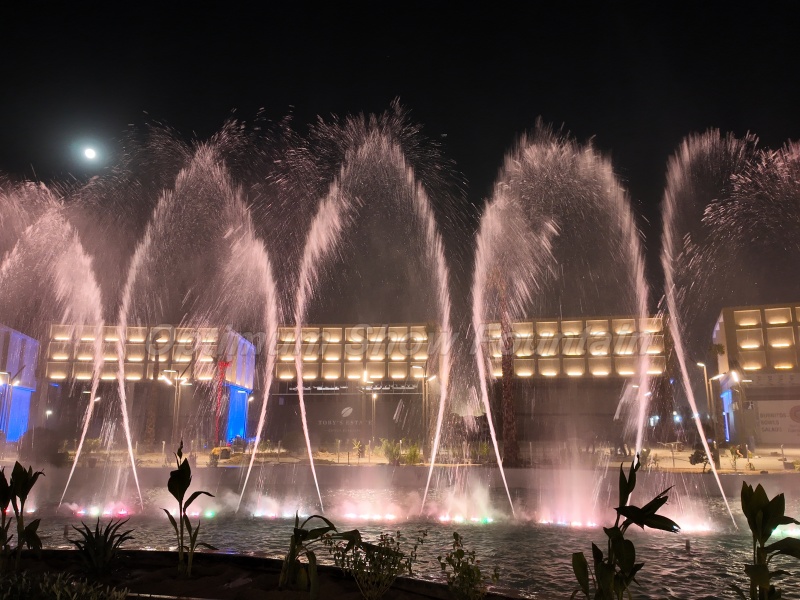
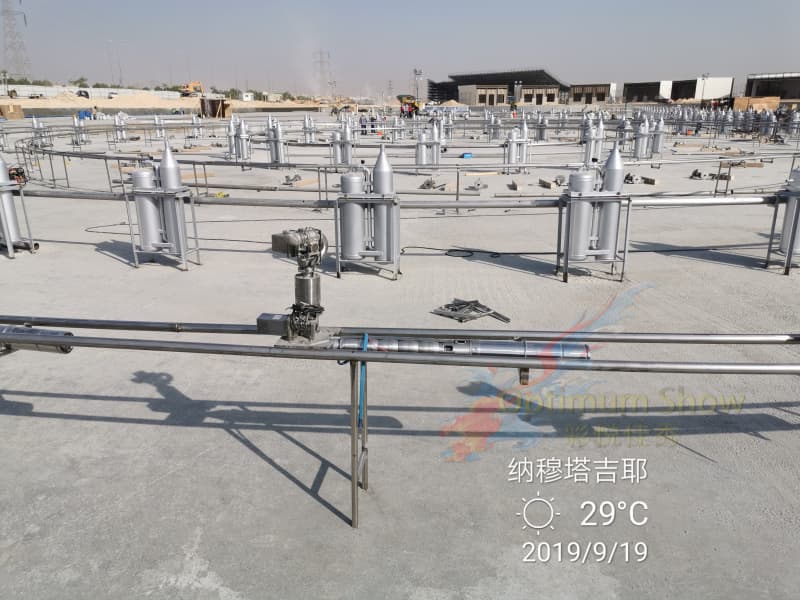
Musical fountains operate through programmable control systems that synchronize water effects with music. Each movement—such as jet height, direction, and lighting—is precisely timed to match the rhythm and mood of the soundtrack.
At the core of the system are:
This integration allows water to “dance” with music, creating a coordinated and immersive experience.
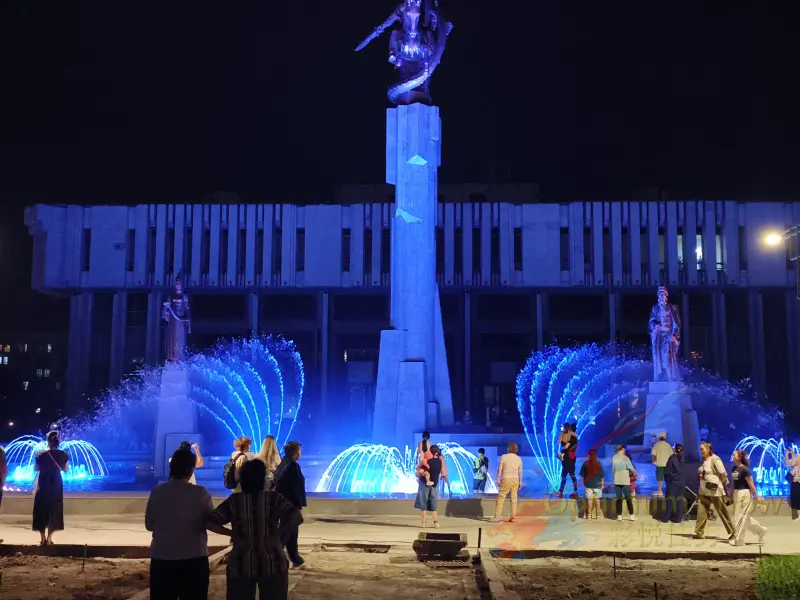
Musical fountains are commonly used in:
They are often designed to become central attractions that draw visitors and enhance the overall experience of a space.
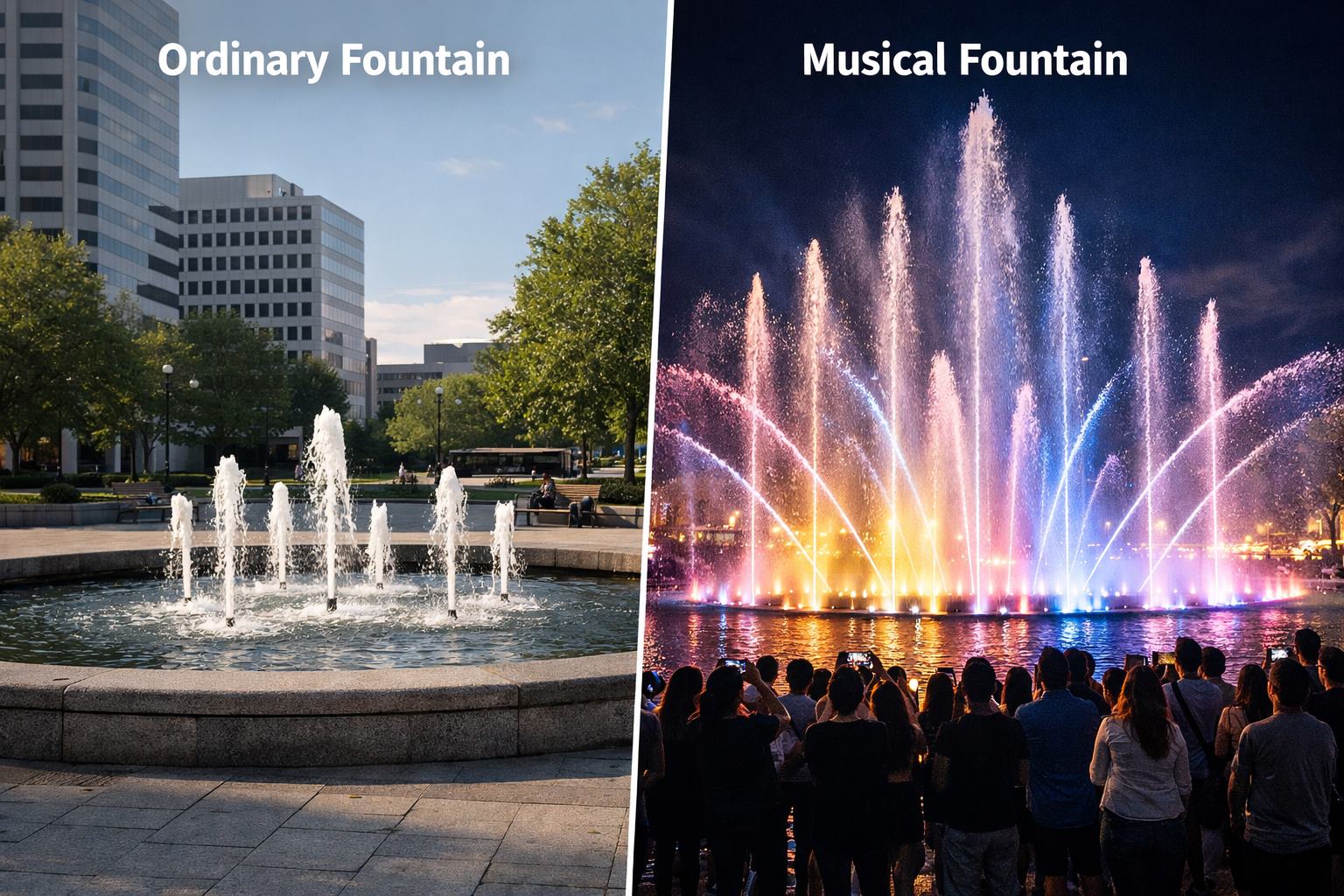
Understanding the differences between an ordinary fountain and a musical fountain is easier when viewed side by side. The two systems differ not only in appearance, but also in technology, performance, and project value.
| Factor | Ordinary Fountain | Musical Fountain |
| Control System | Manual or timer-based | Programmable control system (PLC/software) |
| Water Movement | Fixed or repetitive patterns | Dynamic, synchronized with music |
| Lighting | Minimal or decorative | Fully integrated and synchronized |
| Experience | Calm, decorative | Interactive and immersive |
| Complexity | Low | High |
| Installation | Simple | Requires engineering and system integration |
| Maintenance | Basic | Requires technical support |
| Cost | Lower initial cost | Higher investment |
| Application | Small-scale, decorative | Large-scale, commercial or public |
An ordinary fountain is suitable for projects focused on simple aesthetics and low maintenance, while a musical fountain is designed to deliver high-impact visual performances and audience engagement.
While the comparison table provides a quick overview, understanding the core differences between a musical fountain and an ordinary fountain requires a closer look at how each system performs in real projects.
The most fundamental difference lies in the control system.
This level of automation enables complex performances and flexible show programming.
Water behavior is another key differentiator.
These dynamic effects are what allow water to “dance” in response to music.
The user experience is significantly different.
This makes musical fountains more suitable for public engagement and entertainment.
From a project perspective, the complexity varies greatly.
This added complexity requires experienced engineering teams and detailed planning.
Cost is often a deciding factor.
For commercial and public projects, musical fountains are often viewed as a long-term investment rather than a simple cost.
These differences highlight that the choice between the two is not just technical—it directly affects the function, impact, and value of the entire project.
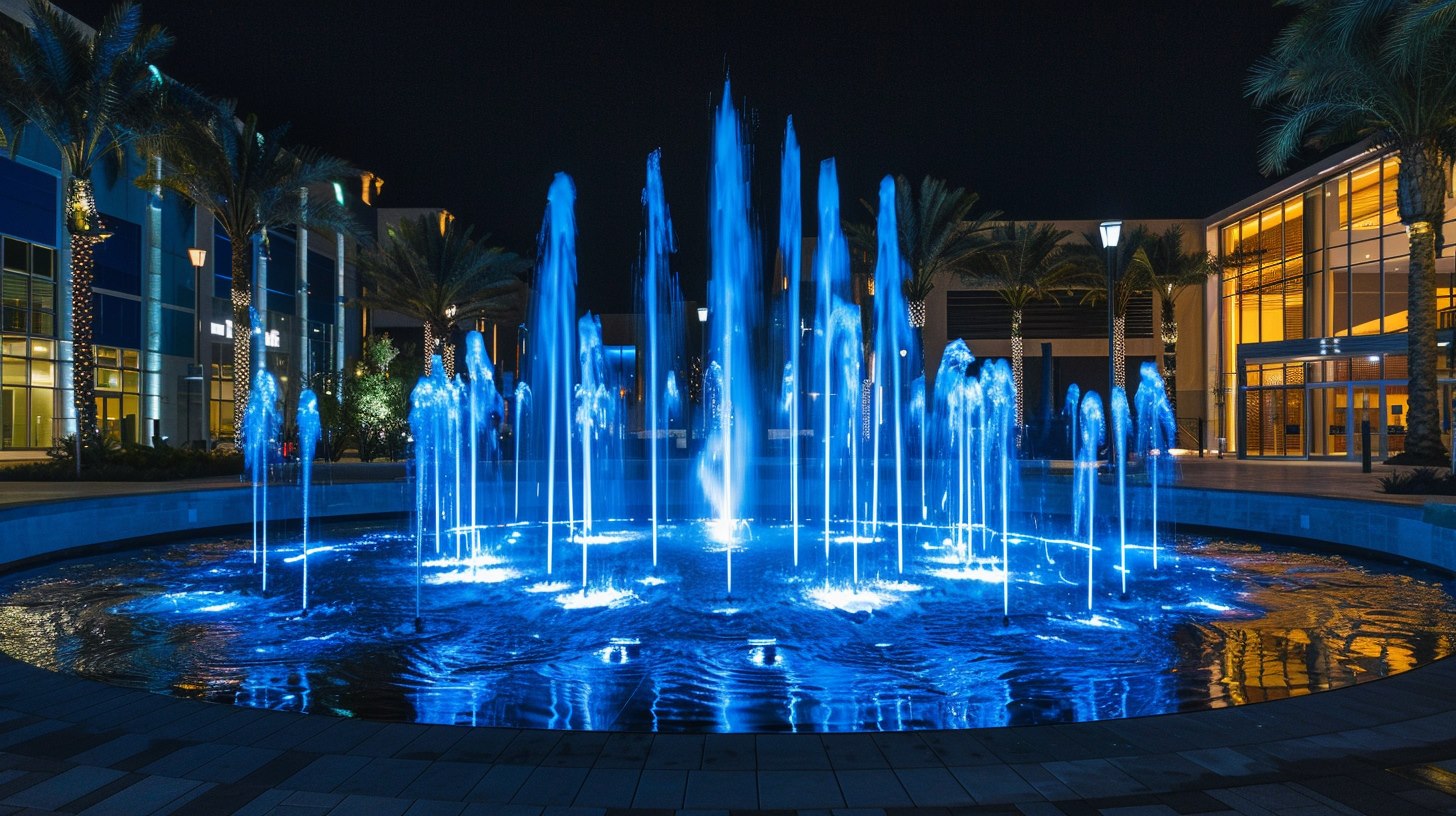
The higher upfront investment in a musical fountain is justified when the fountain is expected to do more than decorate — when it needs to attract visitors, extend their stay, anchor an event programme, or serve as a landmark in its own right. The following scenarios represent the clearest cases for choosing a musical fountain over an ordinary one.
In public spaces where visitor numbers and dwell time are commercial metrics, a musical fountain functions as a content asset rather than a fixture. People plan visits around scheduled shows, share footage on social media, and return for repeat performances in a way they simply do not for a static water feature.
For city waterfronts, cultural parks, and public plazas with high footfall, this active engagement translates directly into economic impact for surrounding businesses.
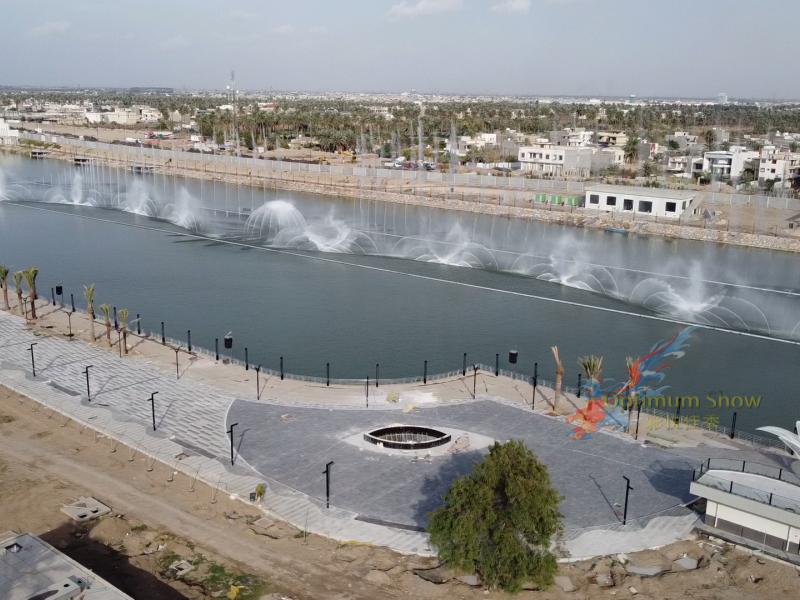
Ceremonial and civic events — national days, city anniversaries, presidential inaugurations, cultural festivals — require a fountain that can perform, not just run. The scale and spectacle expected at government-commissioned projects is achievable only with a fully programmable musical fountain system.
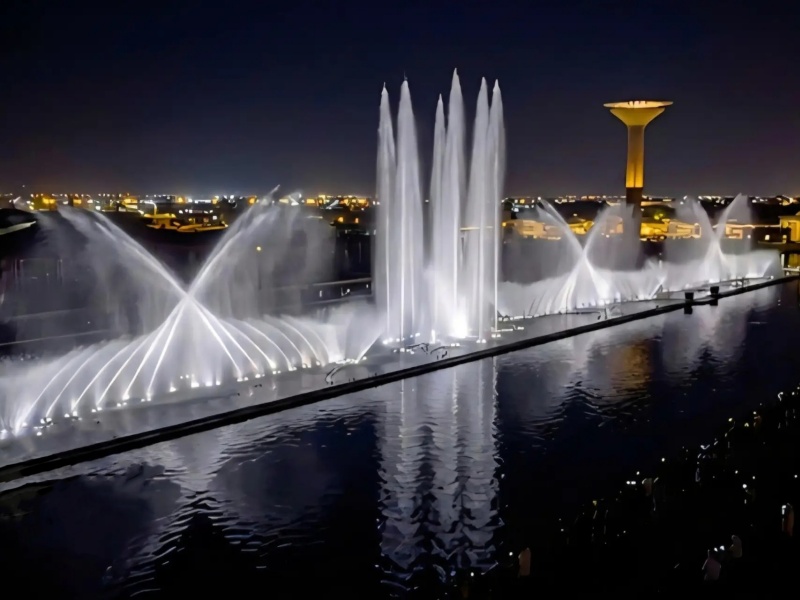
A 180-metre floating musical fountain on the Ishim River in Astana, Kazakhstan, delivered as the centrepiece of the capital's national day celebration, is a benchmark for what this category of project demands. An ordinary fountain at that scale would be invisible — visually and symbolically.
For luxury hospitality properties, a musical fountain is a differentiator that appears in marketing materials, social media, and guest reviews in a way that a conventional water feature cannot. It creates a nightly event that gives guests a reason to gather in a specific space, extending time spent in revenue-generating areas.
High-end resort developers in the Middle East and Southeast Asia increasingly treat a musical fountain as a standard component of the guest experience rather than an optional extra.
Retail destinations and mixed-use developments use musical fountains to create a reason for visitors to linger. Longer dwell time correlates with higher spend across food, beverage, and retail.
The Riyadh Boulevard City development in Saudi Arabia integrates a permanent musical fountain as a core entertainment feature of the destination — it is part of what brings visitors back on successive evenings, not just on a single trip.
A musical fountain is not automatically the right answer. There are genuine scenarios where an ordinary fountain delivers better value — and where the added complexity of a musical system would create costs and operational demands that the project cannot justify.
Being clear about this distinction is useful because it prevents over-specification — installing a complex system in a context where a simpler one would perform just as well and cost significantly less to run.

The cost gap between an ordinary and a musical fountain is real, but it is often misunderstood. The additional cost does not come primarily from the water or the nozzles — it comes from the systems that make synchronisation possible, and the expertise required to design and program them.
The cost of a musical fountain is influenced by both the overall project scale and the advanced technologies required to create synchronized water shows. Compared to ordinary fountains, musical fountains involve more complex systems, engineering, and programming.
Key cost factors include:
While musical fountains have a higher upfront cost than ordinary fountains, the investment reflects their advanced technology, performance capability, and long-term value as a visual attraction.
In contexts where the fountain is expected to generate commercial value — through increased visitor numbers, longer dwell time, higher event attendance, or enhanced property prestige — the question is not whether a musical fountain costs more, but whether the incremental return justifies the incremental investment. For a government landmark or a major resort, the answer is usually straightforward. For a low-footfall community space, it may not be.
| Getting an accurate cost estimate The cost of a musical fountain varies significantly based on scale, installation type, site conditions, and show complexity. The most reliable way to budget is to request a detailed project proposal after a site assessment. Contact Optimum Show with your venue details and project brief to receive a design concept and cost outline. |
This is a question that comes up frequently for clients who already have an existing water feature and are considering adding synchronised music and lighting. The short answer is: technically possible, but not always straightforward.
A successful upgrade requires evaluating whether the existing infrastructure can support the added demands of a musical fountain system:
In some cases, the cost of a well-executed upgrade is comparable to a new installation designed from the start as a musical fountain. A professional feasibility assessment is the right first step before committing to either approach.
Musical fountains synchronize with music through advanced programming, using software to control water jets and lighting. Sensors and timers guarantee precise alignment, creating a harmonious blend of sound, movement, and color for an immersive viewer experience.
Maintaining musical fountains involves regular checks of the flux capacitor-like control systems, cleaning nozzles, and guaranteeing synchronization between water, light, and sound. Technical precision guarantees these vibrant spectacles continue to captivate audiences with innovative, dynamic displays.
Yes, ordinary fountains can include lighting features. By integrating ambient lighting, they enhance visual appeal, creating a serene or dramatic atmosphere. This addition combines classic elegance with innovative design, appealing to those seeking aesthetic sophistication.
Are musical fountains suitable for residential areas? Imagine the dance of water and light transforming a backyard into a symphony of innovation. While technically complex, their aesthetic allure can elevate residential spaces, offering a dynamic, enchanting ambiance.
Proper insulation of electrical components, non-slip surfaces, regular maintenance checks, and secure pump installations are essential. Safety barriers and emergency shut-off systems enhance protection, ensuring innovative fountain designs remain both visually striking and secure for public interaction.
Choosing between a musical fountain and an ordinary fountain is ultimately a question of purpose.
If the goal is cost control and simple visual enhancement, an ordinary fountain is often sufficient. But if the objective is to create a destination, attract visitors, and deliver ongoing engagement, a musical fountain becomes a strategic investment.
In practical terms, the decision comes down to this:
Aligning the fountain type with the project’s long-term role ensures it delivers not just visual value, but lasting impact.