Selecting the right fountain nozzles is essential for crafting the perfect visual and sensory impact in any water feature project. With various nozzle types like jet, foam, and mushroom, each serves a unique purpose tailored to specific environments. Factors such as purpose, site size, and viewing distance play a significant role in this decision-making process. By understanding how different fountain nozzle types work, you can create a more attractive, reliable, and memorable fountain design. So, what makes each nozzle type distinct?
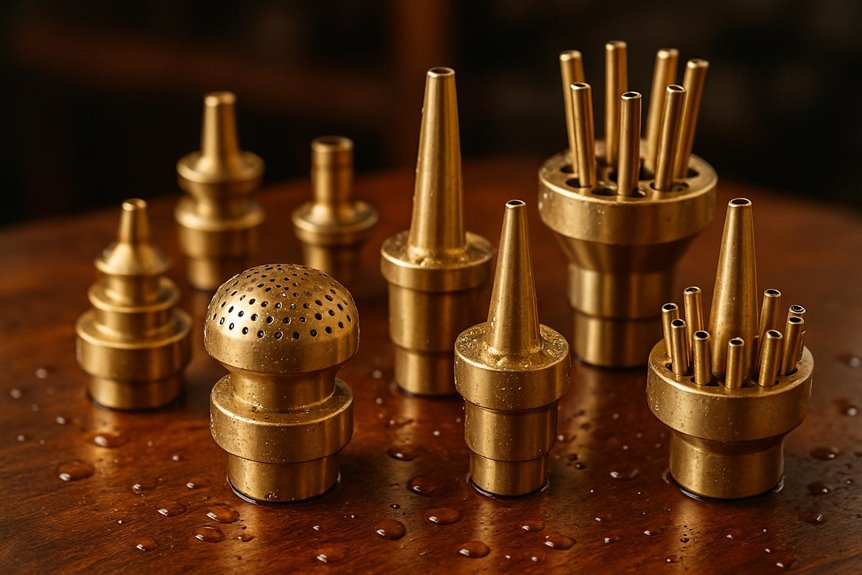
Fountain nozzles shape and direct water flow, transforming a simple pump-fed pool into a dynamic visual display. In modern programmable fountains, nozzles work alongside RGBW lighting and control systems to produce fully coordinated scenes where water, color, and movement operate as one unified effect.
Choosing the right nozzle directly impacts spray pattern, jet height, and how the display reads from key audience viewpoints — making it one of the most consequential decisions in any fountain design process. In musical fountain projects, nozzle selection must also support synchronized water and music displays where fast-response valves and carefully grouped nozzle zones work together to produce cohesive show choreography.
At its core, a fountain nozzle converts pump pressure into a controlled output: a defined shape, direction, and spray pattern. Every nozzle type imposes a specific hydraulic demand on the system — which is why nozzle selection and pump sizing are always planned together, using hydraulic calculations that account for flow rate, pressure, and jet behavior.
Outdoor installations add another layer of complexity. Wind exposure can reduce jet height, cause spray drift, and compromise display consistency, so open-air sites typically require nozzles with lower wind sensitivity or adjustable spray angles.
Whether it's a gentle mushroom shape or a dramatic high-throw geyser jet, the nozzle profile defines the visual character of the installation — and shapes decisions around pump sizing, energy consumption, and long-term lifecycle cost.
The right nozzle affects nearly every dimension of a fountain project: visual performance, system sizing, maintenance schedule, and show quality.
For musical fountain and landmark installations, nozzle choice also determines choreography range. Laminar jets suit precise, melodic sequences; geyser jets deliver high-energy climactic moments. DMX control systems allow different nozzle zones to fire in sync with audio cues, enabling the layered visual rhythm that defines professional show fountain performance. In advanced environments, stable mist or hydraulic jet surfaces can even support water screen projection for immersive visual storytelling.
Practical considerations matter just as much. Nozzles in hard-water environments are prone to mineral scale buildup — regular cleaning and alignment checks are essential for preserving consistent spray patterns over time. For large public venues and event fountain installations, jet height and spray spread must be scaled to viewing distance and audience size to ensure the effect reads clearly across the full venue. In swimming pool fountain environments, nozzle selection should also account for filtration compatibility so decorative effects don't disrupt water quality.
| Aspect | Impact | Key Consideration |
| Visual Effect | Defines display character | Nozzle type and spray pattern |
| Pump Sizing | Drives system design | Flow rate and pressure requirements |
| Maintenance | Affects long-term upkeep | Material durability and scale resistance |
| Show Performance | Enables synchronized choreography | Musical fountain nozzle compatibility |
| Longevity | Determines lifecycle cost | Build quality and material selection |
The right nozzle selection doesn't just shape how a fountain looks — it determines how reliably it performs, how cost-efficiently it runs, and how effectively it connects with its audience.
Fountain nozzles fall into distinct categories based on the water effect they produce, their hydraulic demands, and the environments they suit best. Understanding the differences helps narrow selection early — before pump sizing, basin design, or show choreography are locked in. For musical fountain and large-scale installations, nozzle choice should also be coordinated with hydraulic engineering to ensure pressure, flow, and timing all align.
Jet nozzles produce crisp, vertical or angled water streams — the defining visual element of large-scale public fountains. Their ability to reach significant heights with clarity and precision makes them the standard choice where dramatic impact is the primary goal.
In musical fountain applications, jet nozzles are particularly effective because their clean output responds well to fast valve switching, allowing height and direction to change in sync with music and lighting cues. Iconic installations like the Dubai Fountain rely heavily on high-throw jet nozzles to deliver their signature skyline-scale displays.
Foam nozzles inject air into the water stream, producing a white, aerated column with a frothy texture. The aeration makes the jet highly visible — even at distance — and gives it natural wind resistance, since the dispersed droplets hold their form better than a clear laminar stream.
These properties make foam nozzles a practical choice for dry deck fountain and interactive water feature applications where visibility and robustness in outdoor conditions matter more than visual refinement.
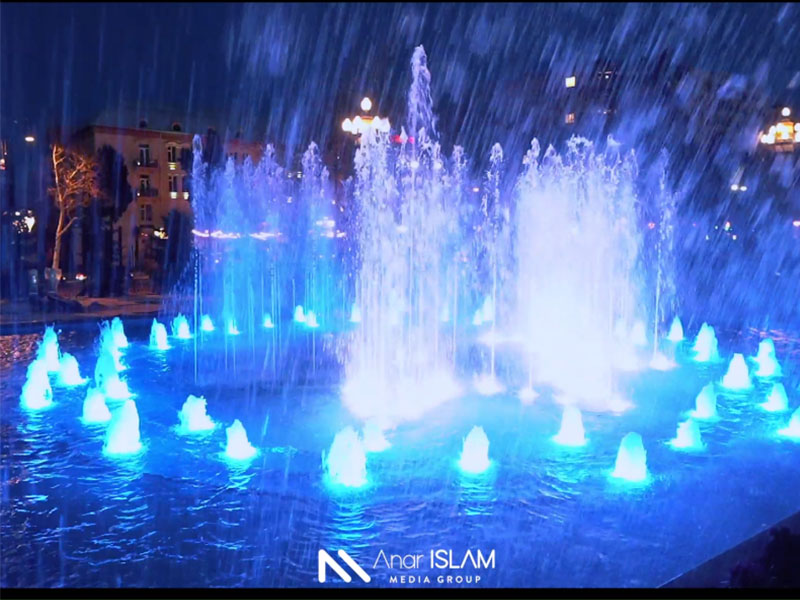
Mushroom nozzles distribute water outward into a dome-shaped, umbrella-like film. The effect is soft and relatively quiet, which suits decorative settings — hotel courtyards, garden features, and smaller plaza installations — where the goal is atmosphere rather than spectacle.
Flow rate and pressure adjustments change the dome diameter and height, giving designers useful flexibility within a compact footprint.
Cascade nozzles combine air and water to produce a wide, conical column with a voluminous, frothy output. The effect reads as dramatic from a distance, making cascade nozzles well suited to centerpiece positions in public parks and open plazas.
In choreographed show fountains, their high visual mass makes them effective for climactic moments — where a single activated zone needs to dominate the display. They feature prominently in large-scale landmark fountain projects where sustained visual impact across wide viewing distances is essential.
Fan nozzles produce flat, triangular sheets of water. Arranged in rings or linear runs, they create uniform curtain-like planes that work well for perimeter installations, water wall effects, and as backdrops to higher-throw central jets.
Their flat output profile also makes them compatible with digital water curtain setups, where a controlled hydraulic surface is needed to display text, logos, or animated patterns.
Laminar jet nozzles produce smooth, glass-like arcs of water with minimal turbulence. The stream remains optically clear from launch to landing, which is what makes laminar jets the preferred choice for upscale architectural fountains and interactive installations where colored LED lighting is threaded through the jet.
Because laminar output is highly sensitive to pressure variation, these nozzles require careful hydraulic calibration — but the visual result is difficult to replicate with any other nozzle type.
Rotary nozzles use mechanical rotation to sweep water across a continuously changing arc, producing dynamic, ever-shifting patterns. The movement itself becomes the visual effect, rather than the shape of a single jet.
This makes rotary nozzles particularly effective in public squares and urban parks — the kind of environments covered in depth in this overview of types of water fountains — where sustained audience engagement over time matters more than a single composed display.
Crown nozzles project water outward at multiple fixed angles simultaneously, creating an interlaced, crown-like pattern. Adjusting inlet pressure changes the spread and height without requiring programmable valve control.
Their symmetrical output makes them natural focal points, typically positioned at the center of a basin. They are a common feature in famous musical fountains worldwide, where visual geometry and audience legibility from a distance are both priorities.
Mist nozzles atomize water into fine droplets, producing a low-lying fog layer rather than a defined jet or spray. The primary functional application is evaporative cooling in outdoor spaces during warm months; the secondary effect is an atmospheric haze that interacts well with angled lighting.
In theatrical and show fountain environments, mist is often layered beneath higher jets to add visual depth — a technique frequently seen in China's top music fountain installations where multi-layer atmospheric effects are part of the show design.
Dandelion nozzles distribute water simultaneously through multiple thin spokes radiating from a central hub, forming a full spherical burst. The effect is immediately recognizable and highly decorative, making dandelion nozzles a natural choice for landmark fountains and public plazas designed to function as visual signatures.
Their multi-directional output provides reasonable wind resistance relative to their spread, since no single jet carries the full flow volume. For musical fountain manufacturers specifying nozzle packages for complex installations, dandelion nozzles are typically reserved for featured positions rather than used in large repeated arrays.
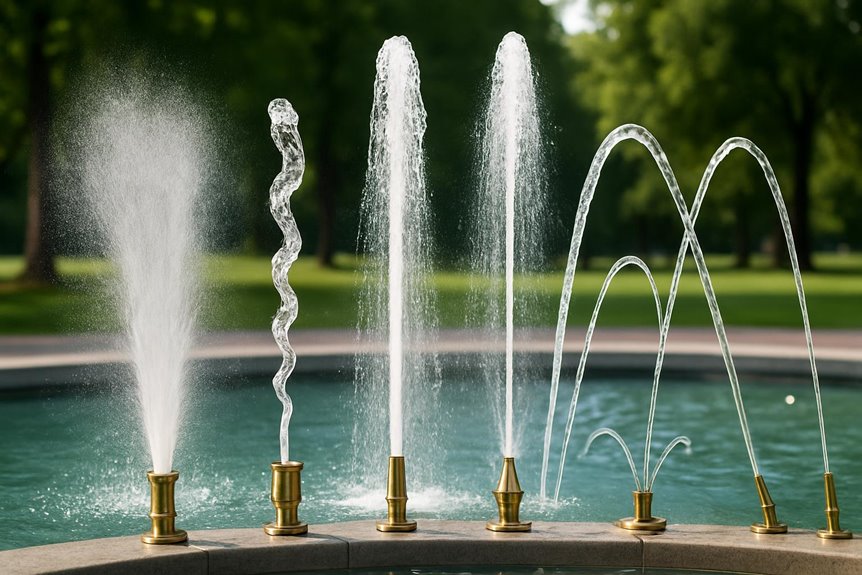
Different fountain nozzle types create different water shapes, movement styles, and visual effects. For commercial projects, the best choice depends on the fountain’s purpose, site conditions, viewing distance, pump capacity, and maintenance requirements. The table below compares common fountain nozzle types and their typical applications.
| Nozzle Type | Water Effect | Best Applications | Key Advantages | Main Considerations |
| Jet Nozzle | Straight vertical or angled water stream | Musical fountains, city plazas, landmark fountains | Strong height, clear rhythm, easy synchronization | Requires suitable pump pressure and stable water supply |
| Foam Nozzle | White, aerated water column | Public fountains, outdoor plazas, windy environments | High visibility, good wind resistance, strong visual volume | Needs proper water flow to maintain a full foam effect |
| Mushroom Nozzle | Dome-shaped water curtain | Hotels, gardens, entrance fountains, decorative pools | Soft and elegant appearance, low splash, calming effect | Less suitable for dynamic musical fountain choreography |
| Cascade Nozzle | Layered falling water effect | Landscape fountains, architectural water features | Natural movement, suitable for relaxing spaces | Usually more decorative than performance-focused |
| Fan Nozzle | Flat fan-shaped water sheet | Water screens, multimedia fountains, stage fountains | Wide visual coverage, useful for layering effects | Sensitive to wind and requires accurate positioning |
| Laminar Jet Nozzle | Smooth, glass-like water arc | Luxury hotels, interactive fountains, high-end public spaces | Elegant, precise, and visually clean water movement | Requires excellent filtration and careful maintenance |
| Rotary Nozzle | Rotating or spinning spray pattern | Interactive fountains, public plazas, entertainment spaces | Adds movement and energy to the fountain design | Moving parts may require more maintenance |
| Crown Nozzle | Circular crown-like spray pattern | Central fountain features, plazas, landmark displays | Strong decorative impact and balanced visual symmetry | Best used as a focal point rather than a full system alone |
| Mist Nozzle | Fine fog or mist effect | Cooling systems, stage shows, resorts, atmospheric fountains | Creates soft atmosphere and cooling effect | Wind-sensitive and requires clean water to avoid clogging |
| Dandelion Nozzle | Spherical spray pattern | Public squares, decorative landmarks, garden fountains | Eye-catching shape with strong decorative value | Can require higher water volume and regular cleaning |
For simple decorative fountains, mushroom, cascade, and dandelion nozzles are often enough to create an attractive water feature. For musical fountains and commercial water shows, jet nozzles, foam nozzles, laminar jets, fan nozzles, and programmable nozzles are more suitable because they can respond better to music, lighting, and choreography.
In large-scale projects, fountain nozzle selection should not be based on appearance alone. Each nozzle must be matched with the correct pump pressure, pipe layout, control system, and maintenance plan. A well-designed nozzle combination can create stronger water effects, better synchronization, and more reliable long-term performance.
Selecting the appropriate fountain nozzles involves understanding the specific purpose of the fountain and matching the nozzles to the site size.
Consideration of spray height and viewing distance is essential to confirm the desired visual impact, while checking pump flow and pressure requirements assures peak performance.
Additionally, evaluating wind and outdoor conditions helps in choosing nozzles that maintain stability and aesthetic appeal.
Determining the purpose of a fountain is essential when selecting the appropriate nozzles. The intended function of the fountain greatly influences the type of nozzle needed to achieve the desired effect.
For instance, a decorative landscape fountain may prioritize aesthetic appeal, requiring nozzles that create elegant patterns. Conversely, an interactive dry deck fountain focuses on engagement, needing versatile nozzles that produce playful water effects.
Musical fountain shows demand nozzles capable of synchronizing with music and lights for dramatic performances.
Each fountain type necessitates specific nozzle characteristics to fulfill its unique purpose effectively.
Site size plays an essential role in selecting appropriate fountain nozzles, as the scale of the environment dictates the visual impact needed. For small fountains, compact, controlled effects are vital to avoid overwhelming the space. Mushroom or foam nozzles might be suitable, offering gentle, aesthetic sprays.
In contrast, large plazas require more prominent features, where high jets created by jet nozzles guarantee visibility and grandeur. These nozzles inject dynamism and can be seen from afar, enhancing public attractions.
Lake fountains demand strong, long-distance visibility, making high-throw nozzles ideal for projecting water to impressive heights. This guarantees the fountain remains a focal point across vast areas, contributing considerably to the landscape's overall aesthetic and appeal.
How does one effectively choose the right fountain nozzles for varying environments? Selecting the best nozzle involves considering both spray height and viewing distance.
High jets are ideal for landmark projects, creating a dramatic impact visible from afar. Conversely, low and medium jets are better suited for close pedestrian areas, offering an intimate and engaging experience.
The choice of height not only affects visual appeal but also the viewer's connection to the fountain.
Incorporating these considerations guarantees the fountain enhances its environment effectively.
Every nozzle type has a defined flow rate and pressure range for optimal output. Specifying nozzles without matching them to pump capacity is one of the most common causes of poor spray performance — jets that fall short of design height, patterns that collapse under load, or pressure mismatches that strain the system over time.
Pipe layout and head loss must be factored into both pump sizing and nozzle selection. This is why nozzle specification and hydraulic engineering need to happen together, not sequentially.
Wind is the most underestimated variable in outdoor fountain design:
For exposed sites, practical mitigation options include selecting inherently wind-resistant nozzle types, reducing jet heights from initial targets, adding wind sensors tied to the control system, or using directional nozzles angled away from prevailing wind.
For musical fountains, selecting the right nozzle is essential to achieve enchanting rhythm and beat effects.
Nozzles designed for dramatic climaxes and elegant water choreography enhance the visual impact, while those tailored for multimedia water shows synchronize seamlessly with lights and music.
These specialized nozzles transform water displays into dynamic, engaging spectacles.
Musical fountains captivate audiences with their synchronization of water, light, and sound, and the choice of nozzle plays a critical role in achieving this harmony.
Selecting the right nozzles for rhythm and beat effects involves precision and adaptability. Jet nozzles create tall, narrow streams that can be synchronized to pulse with music, enhancing visual impact.
Straight nozzles offer precise control, allowing for crisp and clean water arcs that align with musical beats. Adjustable nozzles provide flexibility, enabling designers to modify spray patterns and heights to match evolving musical compositions.
Achieving dramatic climaxes in musical fountains requires selecting nozzles that amplify the spectacle. High jet nozzles, air explosion nozzles, and crown nozzles are pivotal in creating breathtaking scenes. High jet nozzles propel water to impressive heights, making them ideal for grand finales.
Air explosion nozzles add bursts of excitement with their explosive spray patterns, enhancing the auditory and visual impact.
Crown nozzles create intertwined water streams, adding depth and complexity to the display. These nozzles work harmoniously with music and lighting to elevate the overall experience, turning water shows into mesmerizing performances. Selecting the right nozzle enhances the theatricality and grandeur of musical fountains.
| Nozzle Type | Key Feature |
|---|---|
| High Jet Nozzles | Propel water to great heights |
| Air Explosion Nozzles | Create explosive, dynamic sprays |
| Crown Nozzles | Produce intertwined, complex streams |
In the domain of musical fountains, selecting the right nozzles is essential for crafting elegant water choreography. Key nozzles like laminar jets, fan nozzles, and crystal nozzles transform water displays into mesmerizing spectacles.
These nozzles synchronize water movement with music, creating harmonious and visually striking performances.
As water choreography captivates audiences with its visual and auditory harmony, the role of nozzles in multimedia water shows becomes paramount. These nozzles synchronize with music and lighting to create mesmerizing displays.
Jet nozzles, known for their precise, high-reaching streams, offer dramatic focal points. Foam nozzles add texture and dimension with bubbly effects, enhancing the sensory experience. Laminar nozzles provide smooth, glass-like streams, perfect for elegant arcs. Adjustable nozzles guarantee flexibility in design, adapting to various musical rhythms.
The interplay of these nozzles with advanced control systems allows for seamless shifts and dynamic patterns. Selecting the right combination of nozzles guarantees that musical fountains transform into breathtaking spectacles, engaging viewers with their intricate water dance.
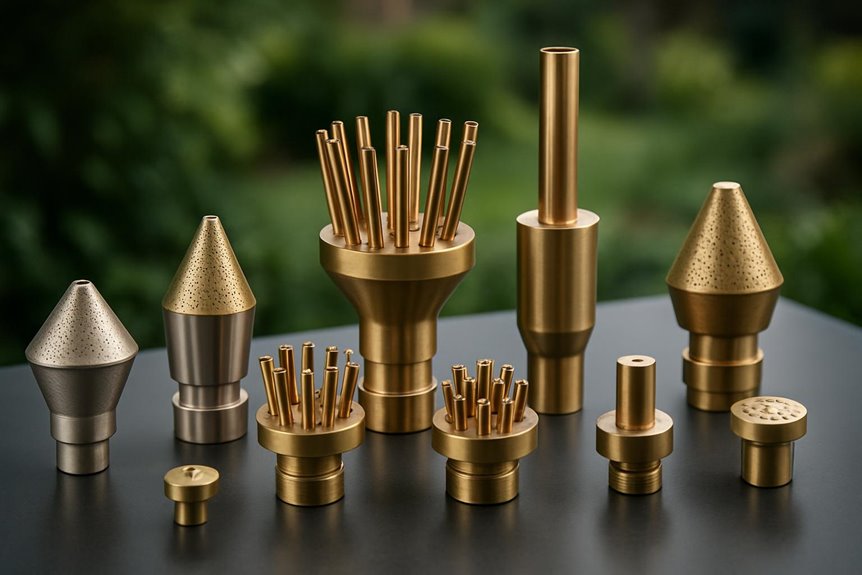
Different installation environments place fundamentally different demands on nozzle selection — what works in a hotel courtyard is wrong for a city plaza, and what suits a lake setting won't work on a shopping mall floor. Here's how nozzle choice maps to the most common project types.
EIndoor mall fountains operate in a controlled environment with close pedestrian interaction, which shapes the nozzle brief toward safety, elegance, and interactivity over dramatic height:
For dancing fountain installations in shopping malls, laminar jets are particularly effective because their precise, splash-free output works well under low ceilings and near retail frontages.
Open plaza installations need nozzles that read clearly at pedestrian distance and hold their form in variable outdoor conditions:
City plaza fountains are also strong candidates for commercial musical fountain configurations, where the installation serves as both a permanent public amenity and a programmable show venue.
In the domain of hotel and resort design, water features are essential in crafting a serene and luxurious atmosphere. The choice of fountain nozzles greatly influences the aesthetic and experience offered to guests.
Mushroom nozzles, with their gentle, umbrella-shaped sprays, are ideal for creating tranquil settings that invite relaxation. Laminar jets provide smooth, glass-like streams that add elegance and sophistication to upscale environments.
Cascade nozzles introduce dynamic movement with voluminous, frothy outputs, enhancing visual interest in larger spaces. Mist nozzles softly envelop areas, creating a revitalizing and ethereal ambiance.
While hotels and resorts use water features to enhance serenity and luxury, lake and floating fountains offer an expansive canvas for striking water displays. These installations often require specialized nozzles to achieve their full potential.
High jet nozzles create dramatic vertical streams, ideal for showcasing grandeur in open spaces. Fan nozzles produce wide, elegant sheets of water, perfect for creating visual impact from a distance. Large foam nozzles add texture and playfulness, generating frothy, dynamic effects that captivate viewers.
Selecting the right nozzle type is essential for optimizing performance and aesthetics in these vast aquatic environments.
| Nozzle Type | Effect | Ideal Use |
|---|---|---|
| High Jet | Vertical streams | Grand displays |
| Fan | Wide sheets | Visual impact |
| Large Foam | Frothy textures | Dynamic effects |
Stage and event fountains captivate audiences with their dynamic water displays, making the choice of nozzles vital for creating memorable experiences. Selecting the right nozzles enhances visual impact, synchronizes with music, and complements lighting.
Mist nozzles provide a soft, ethereal effect, adding a dreamy quality to performances. Fan nozzles create broad, curtain-like displays that are ideal for framing stages or creating dramatic backdrops.
Programmable jet nozzles offer versatility, allowing precise control over height and timing, essential for choreographed shows. DMX-controlled nozzles enable seamless integration with lighting systems, enhancing the overall spectacle.
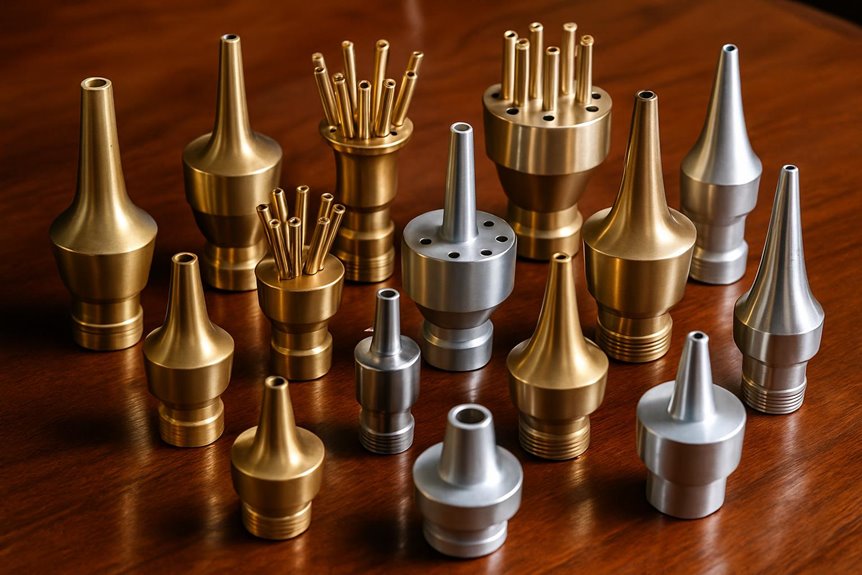
Nozzle material affects corrosion resistance, visual finish, maintenance requirements, and long-term cost — and the right choice depends on installation scale, water chemistry, and budget.
Stainless steel is the standard material for commercial and public fountain installations. Its combination of corrosion resistance, structural strength, and low maintenance requirement makes it the practical default for any project expected to run reliably over a long service life.
For musical fountain and large public installations, stainless steel is almost universally specified — the lifecycle cost advantage over brass or plastic becomes significant at scale.
Brass and bronze offer a warmer visual character than stainless steel, which makes them a natural fit for heritage settings, classical garden fountains, and decorative installations where the nozzle itself is part of the aesthetic composition.
Both materials are genuinely corrosion-resistant and durable in outdoor conditions, though they develop a patina over time — which some designers treat as a feature and others manage through periodic treatment. Their main limitation is cost relative to stainless steel, and they are less commonly specified for large-scale commercial projects where hundreds of nozzles need to be sourced and maintained consistently.
Plastic and PVC nozzles serve a specific and limited role: small-scale decorative features where budget is the primary constraint and long-term durability is a secondary concern.
| Factor | Plastic / PVC | Stainless Steel |
| Cost | Low | Higher upfront, lower lifecycle |
| Weight | Lightweight, easy to install | Heavier, requires proper fixing |
| Durability | Adequate for light residential use | Commercial-grade longevity |
| Best For | Residential gardens, small features | Public, commercial, show fountains |
For any installation involving synchronized lighting, music, or programmable control systems, plastic and PVC nozzles are generally not appropriate — the precision and consistency requirements of show fountain environments demand materials that maintain calibrated output over time.
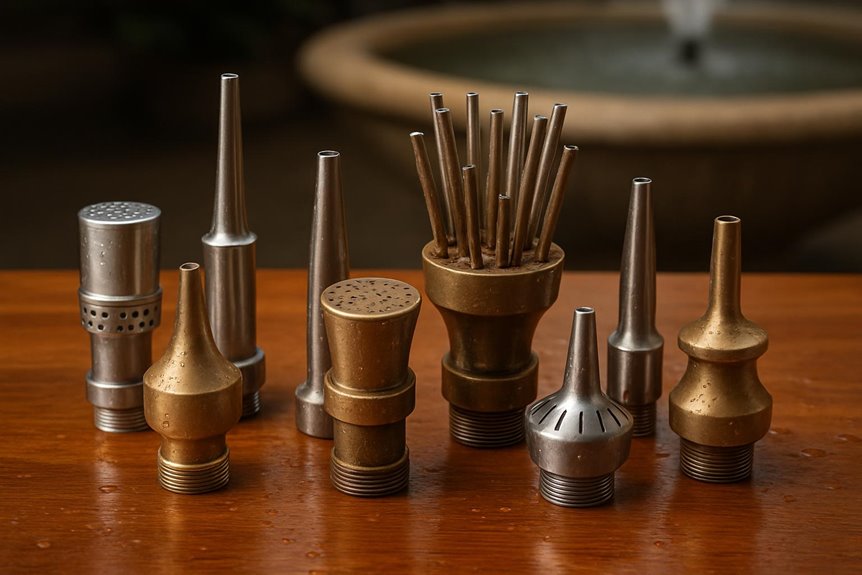
Regular maintenance of fountain nozzles is vital for ideal performance and longevity.
Ensuring nozzles are free from clogs, checking spray pattern quality, and replacing worn or damaged parts are essential steps.
These practices help maintain the visual appeal and functionality of fountain displays.
Preventing nozzle clogging is essential for maintaining the efficiency and beauty of fountain displays. Clogged nozzles can disrupt water flow, impacting the visual and auditory appeal of the fountain.
Effective maintenance strategies are critical to guarantee the longevity and performance of these features.
To minimize clogging:
These steps help maintain smooth and continuous fountain operation.
Evaluating the quality of spray patterns is essential for maintaining ideal fountain performance. Observing the uniformity of the spray can reveal potential issues such as clogging or pressure imbalance.
Uneven spray patterns often indicate that nozzles may be obstructed or that the water pressure is improperly calibrated. Regular inspection should focus on ensuring that each nozzle delivers a consistent stream, matching the intended design.
Any deviations may compromise the aesthetic appeal and functionality of the fountain display. Routine checks allow for prompt identification and correction of irregularities, preserving the intended water effects.
When cleaning doesn't restore performance, replacement is the correct call. Delaying replacement on a degraded nozzle affects the zones around it and compromises the overall display consistency.
Three factors matter when selecting replacements:
For complex installations, maintaining a small inventory of the most commonly specified nozzle types on-site reduces the lead time between identifying a failure and restoring full display performance.
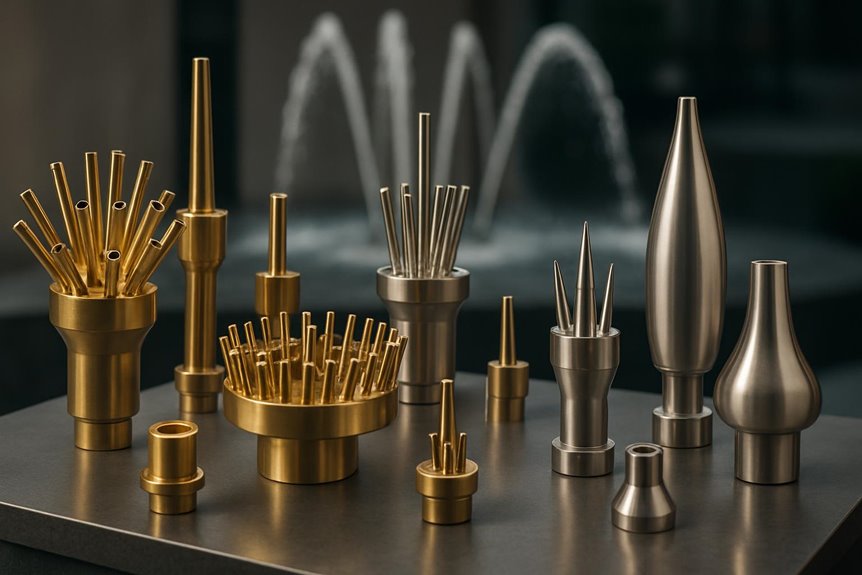
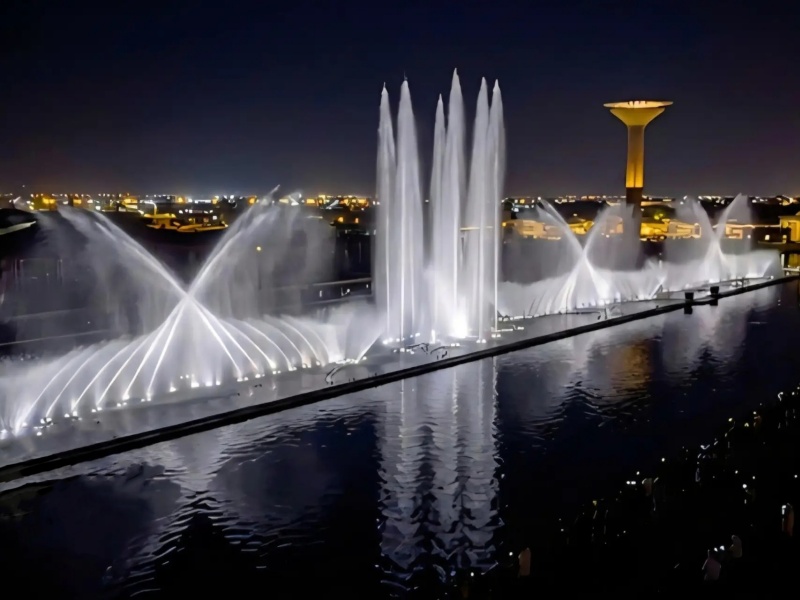
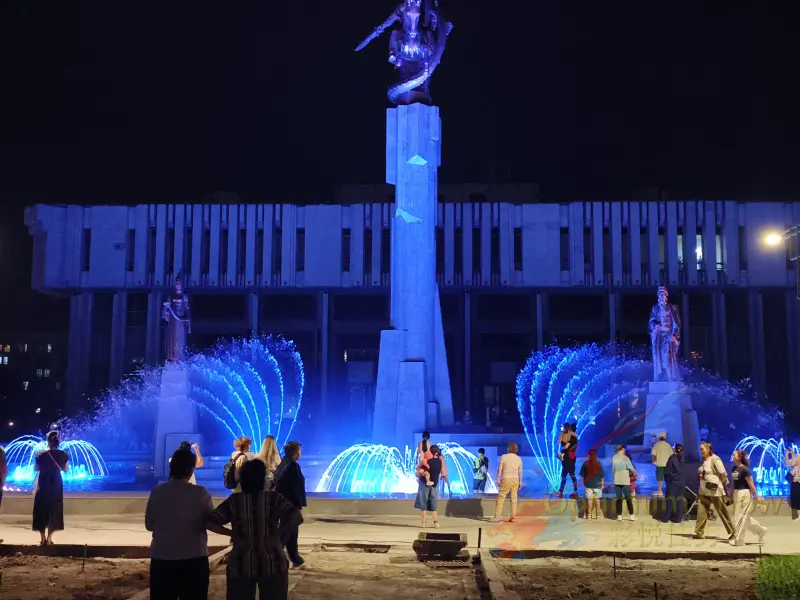
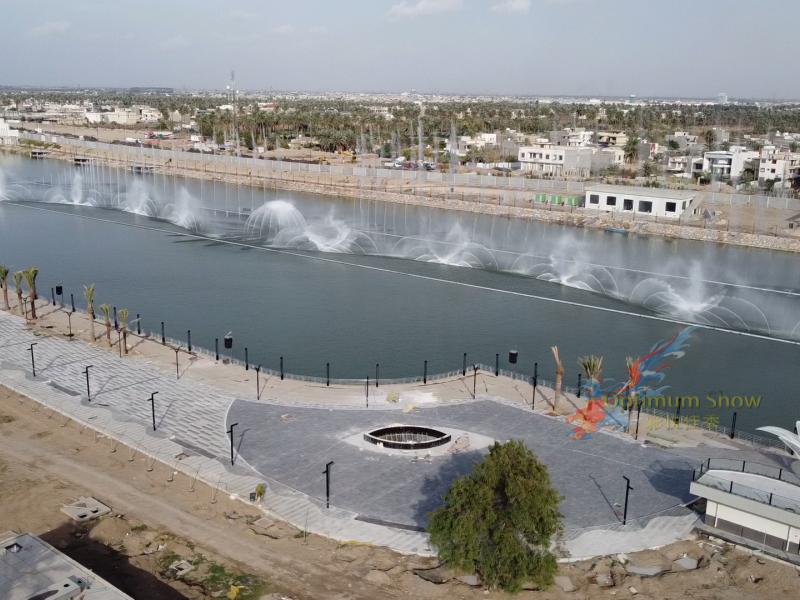
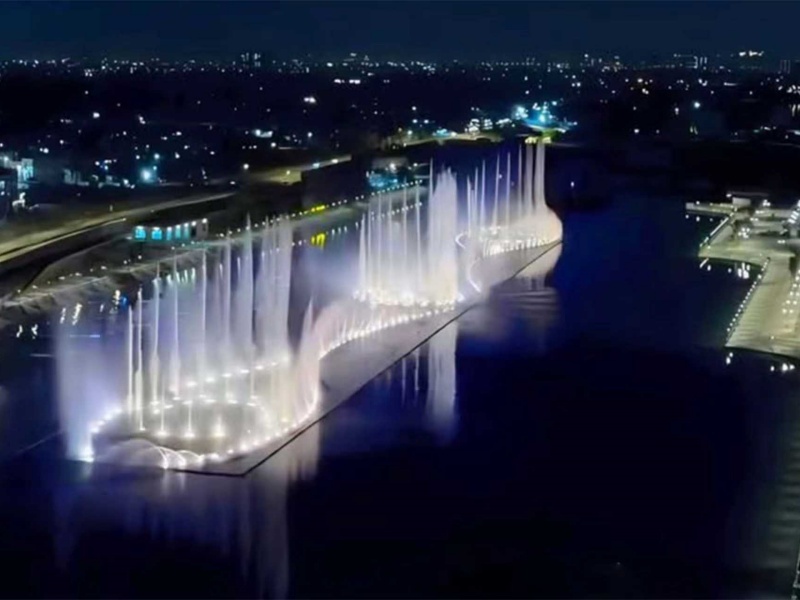
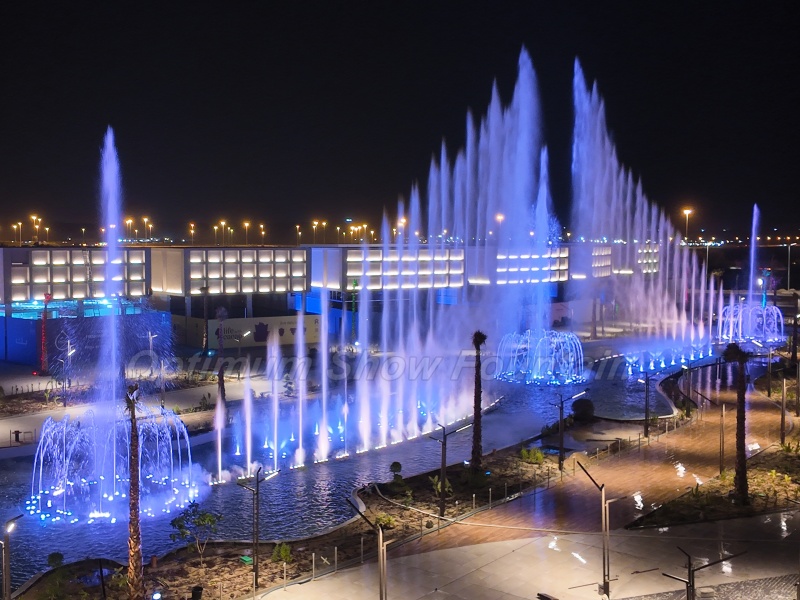
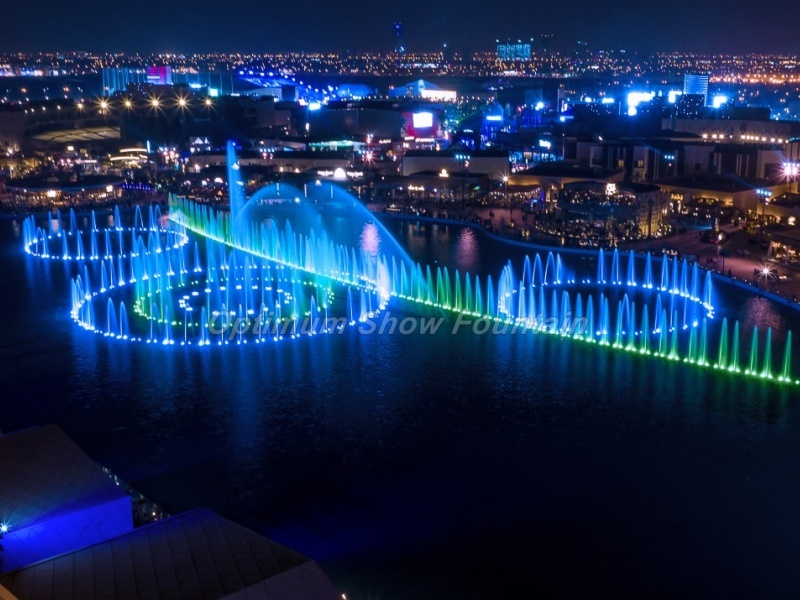
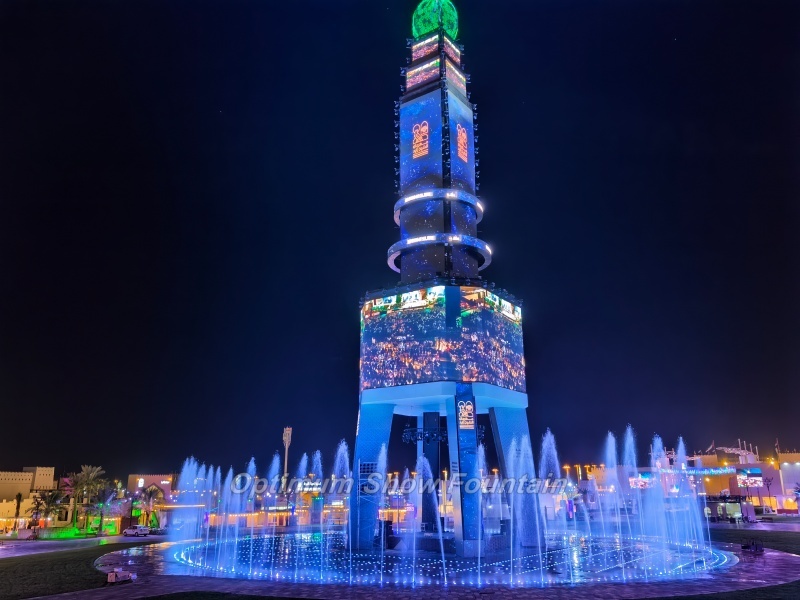
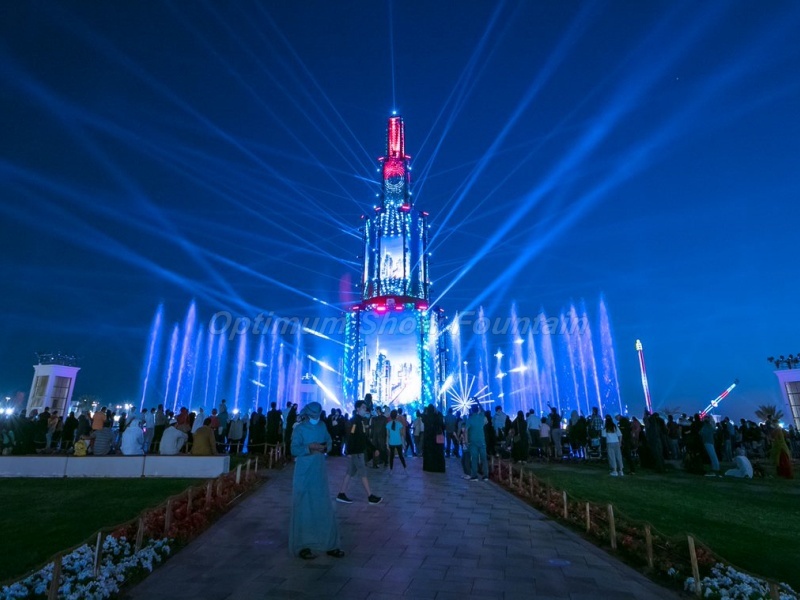
Nozzle selection at Optimum Show begins with site-specific hydraulic analysis — pump capacity, water pressure, basin geometry, and wind conditions — before any nozzle type is specified. With over 5,000 completed projects globally, that engineering-first process is consistent whether the installation is a hotel courtyard feature or a landmark commission like the Sheikh Zayed Festival fountain in Abu Dhabi or the Riyadh Boulevard City fountain in Saudi Arabia.
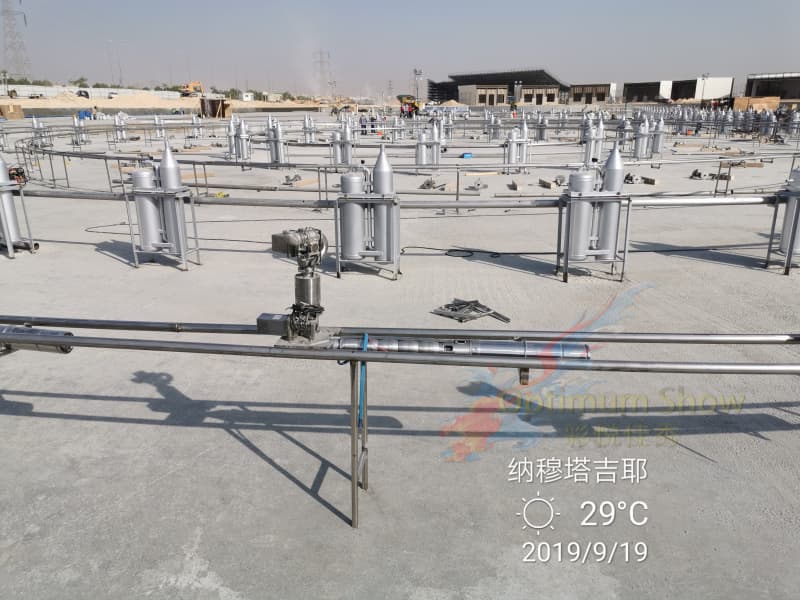
In-house manufacturing means specifications can be adapted for site-specific conditions — local water chemistry, saltwater exposure, or temperature extremes — with every component fabricated and tested before shipment. DMX512 control systems then handle show synchronization, allowing nozzle zones to fire independently with the timing precision that choreographed musical water shows require.
For project teams evaluating suppliers, that integration between nozzle engineering, control systems, and long-term maintenance support is what determines whether a fountain performs consistently for a decade or starts degrading in its first season. If you're at the early planning stage, speaking with the engineering team directly is the fastest way to understand what a given site actually requires.
Weather conditions can dramatically impact fountain nozzle performance, as wind may transform delicate sprays into wild torrents. Temperature fluctuations can also affect water flow and evaporation rates, altering the intended display and requiring adjustments for ideal aesthetics.
Nozzles can indeed be customized to fit specific design themes, allowing for tailored water displays that complement aesthetic goals. This customization guarantees that the visual and functional aspects align perfectly with the intended creative vision.
Water pressure greatly influences nozzle selection, as it determines spray height, pattern, and overall effect. Selecting appropriate nozzles guarantees ideal performance and aesthetic appeal, matching the desired display intensity and environmental conditions effectively.
Nozzles contribute to water conservation by optimizing flow and minimizing waste. Designed to create precise patterns, they allow fountains to maintain aesthetic appeal while using less water, overcoming concerns about excessive resource use in decorative displays.
Yes, eco-friendly fountain nozzles exist. They are designed to reduce water usage and energy consumption. Made from sustainable materials, these nozzles enhance efficiency by optimizing water flow, contributing to environmental conservation in fountain installations.
Fountain nozzle selection sits at the intersection of engineering and visual design — and the decisions made at that stage ripple through every other aspect of a project, from pump sizing and energy consumption to show choreography and long-term maintenance.
The right nozzle depends on scale, site conditions, audience distance, and whether the fountain needs to function as a decorative feature or a fully synchronized musical water show. For complex installations, nozzle selection should always be coordinated with hydraulic engineering and control system design from the earliest stage.
Ready to start your project? Contact Optimum Show to discuss your requirements with our engineering team.
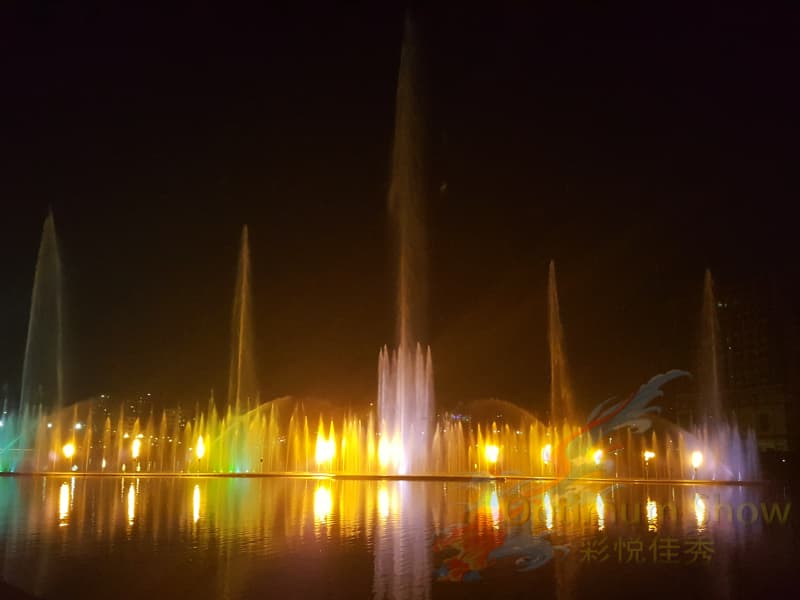
Share your site size, water depth, location or CAD drawing with our engineering team. We can evaluate the project requirements and recommend a suitable fountain system.