China is home to some of the world's most famous music fountains, from record-breaking floating installations to iconic urban water shows. While visitors see spectacular displays of water, light, and music, each fountain is powered by sophisticated engineering, control systems, and choreography.
Over the past three decades, China has become a global leader in musical fountain development, delivering projects at a scale few countries can match. From cultural landmarks and waterfront districts to commercial destinations and luxury resorts, Chinese fountain engineers have continuously pushed the boundaries of what choreographed water shows can achieve.
In this guide, we go beyond the surface. As a professional musical fountain engineering company with completed projects across the Middle East, Central Asia, and Southeast Asia, we break down not just what these fountains look like — but how they were built, what technologies drive them, and what project developers can learn from each one.
Whether you are planning a new fountain project or simply want to understand what separates a world-class water show from an ordinary one, this is the analysis you will not find anywhere else.

Before exploring each project in detail, the table below provides a quick overview of China's most famous music fountains, including their purpose, scale, and key engineering achievements. Together, they illustrate how different fountain designs can support tourism, urban renewal, cultural landmarks, and commercial developments.
| Project | Location | Built / Opened | Key Distinction | Core Engineering Highlight | Developer Takeaway |
| Big Wild Goose Pagoda Musical Fountain | Xi’an, Shaanxi | Opened in 2003 as part of the North Square redevelopment | One of Asia’s largest square musical fountains | Approx. 20,000 sqm water area with multi-level variable-frequency design | Integrate fountain design with cultural landmarks and public-space planning |
| Liuzhou Music Fountain(Liujiang Fountain) | Liuzhou, Guangxi | Opened October 2009 to mark the 60th anniversary of the PRC | Widely described as the world’s largest floating river fountain | 315m × 40m floating river system with 832 nozzle sets | Floating systems can create landmark attractions without permanently blocking waterways |
| Jieyang Rongjiang Music Fountain | Jieyang, Guangdong | Built for Rongjiang River landscape and tourism development | Reported 188m main jet | High-pressure jet system with large floating platform design | Tall jets require wind, pressure, and environmental control planning |
| Qingdao Baiguoshan Forest Park Music Fountain | Qingdao, Shandong | Built for the 2014 Qingdao International Horticultural Exposition | Major expo-scale lake fountain | Approx. 11,000 sqm floating steel platform with lifting capability | Event-driven fountains need scalable infrastructure and strong visual impact |
| West Lake Music Fountain | Hangzhou, Zhejiang | Originally built in 2003; major renovation reopened in 2016 | Iconic heritage-site fountain | 126m waterfront system with rotating nozzles and LED lighting | Heritage settings require restrained scale and sensitive visual integration |
| Jinji Lake Music Fountain | Suzhou, Jiangsu | Originally opened in 2003; closed June 2014; rebuilt and reopened Feb. 1, 2018 | Urban lakefront fountain for multi-angle viewing | Rebuilt fountain reported at 200m × 140m | Design for surrounding audiences, not only one front-facing viewpoint |
| Kaiyuan Lake Musical Fountain / Luoyang Musical Fountain | Luoyang, Henan | Construction began Dec. 5, 2005; trial operation Jan. 25, 2006 | One of Asia’s largest comprehensive fountain systems | Peony-inspired choreography with sound, light, and hydraulic integration | Cultural storytelling improves memorability and city branding |
| Sea World Music Fountain | Shekou, Shenzhen | Officially opened Dec. 20, 2013 | Shenzhen’s major 360-degree panoramic waterfront show | 168m S-shaped layout with 188 laser transmitters and 50m water jets | Commercial fountains must balance spectacle with daily operating reliability |
| Wynn Palace Performance Lake Fountain | Cotai, Macau | Opened with Wynn Palace on Aug. 22, 2016 | Leading luxury hospitality fountain in Greater China | 1,195 water jets across an 8-acre Performance Lake | High-frequency shows require redundancy, maintenance access, and durable components |
| Heyuan Xinfeng River Musical Fountain | Heyuan, Guangdong | Started Oct. 1, 1998; completed Feb. 6, 1999 | Asia’s tallest fountain at completion | 169m main jet in the centre of Xinfeng River | A single iconic engineering feature can define a city landmark |
China did not become the world leader in music fountain engineering by accident. Over the past three decades, the country has developed an entire ecosystem of fountain manufacturing — from precision nozzle production and hydraulic pump systems to DMX control technology and underwater LED lighting — that no other country has matched at scale.
Several factors drive this leadership:
1. Manufacturing Depth.
China produces the majority of the world's fountain nozzles, submersible pumps, and control hardware. This gives Chinese engineers direct access to components, faster iteration, and significantly lower project costs compared to Western counterparts.
2. Project volume.
Chinese fountain companies have completed thousands of large-scale installations across the country over the past 20 years. This volume of real-world experience accelerates technical development in ways that laboratory research cannot replicate.
3. Scale ambition.
China consistently builds fountains at a scale that pushes engineering limits — the world's largest floating platform, the world's highest water jet, the world's largest square fountain. These projects force engineers to solve problems that simply do not exist at smaller scales.
4. Control system sophistication.
Modern Chinese music fountains use fully synchronised DMX512 and PLC-based control systems that coordinate hundreds of nozzles, thousands of LED lights, laser arrays, and audio systems in real time — with millisecond precision.
The result is a domestic fountain industry that is not just competitive globally, but is actively setting the standards that the rest of the world follows.
Located in the North Square of the Giant Wild Goose Pagoda in Xi'an, this fountain is the largest square music fountain in Asia and one of the most technically sophisticated water show installations ever built in China.
The water surface covers 20,000 square metres, making it larger than many international stadiums. The fountain features an eight-level variable frequency square array built across eight stacking pools, each pool containing seven levels of cascading water — a deliberate design choice that visually echoes the seven floors of the historic Big Wild Goose Pagoda standing behind it.
| Technical Specifications | |
| Total water surface area | 20,000 sqm |
| Independent water types | 22 |
| Lighting | Full-colour underwater LED arrays |
| Control system | Computer-controlled variable frequency drive |
| Special effects | Laser, fog, and fire effects integrated into the show |
Engineering perspective:
What makes this fountain genuinely remarkable from an engineering standpoint is the variable frequency control applied across eight independent pool zones simultaneously. Each zone operates at a different frequency and water pressure, allowing the show choreography to create layered, three-dimensional water effects across an enormous surface area without visual repetition. The integration of the fountain's eight-level structure with the pagoda's seven-floor silhouette is also a masterclass in site-responsive design — the fountain does not just sit in front of the pagoda, it converses with it architecturally.
For project developers, this installation demonstrates how large-scale fountain design must account for sightlines, surrounding architecture, and cultural context — not just hydraulic performance.

The Liuzhou Music Fountain holds a distinction that few water installations anywhere in the world can claim: it is the largest floating river fountain on earth, surpassing both the Dubai Fountain and the Bellagio Fountains in Las Vegas in terms of scale and hydraulic complexity.
Stretching 315 metres in length and 40 metres in width along the Liujiang River, the fountain features 832 sets of nozzles mounted on a floating steel platform. When not performing, the entire nozzle system submerges to a depth of two metres below the water surface, leaving the river completely unobstructed.
| Technical Specifications | |
| Total length | 315 metres |
| Total width | 40 metres |
| Number of nozzle sets | 832 |
| Maximum water jet height | 100 metres |
| Platform design | Full submersible floating system, depth 2 metres |
| Control system | Computer-synchronised with music and lighting |
Engineering perspective:
The submersible platform mechanism is the defining engineering challenge of this project. Unlike land-based or lake fountains where equipment sits on fixed structures, every component here — pumps, nozzles, electrical systems, LED lighting — must function reliably through repeated submersion and surfacing cycles, exposed to river water, sediment, and seasonal flow variation. The 100-metre water jet height also demands extraordinary pump pressure and nozzle precision; at that height, even minor variations in water pressure or nozzle alignment produce visible inconsistencies in the show.

The Jieyang Rongjiang Music Fountain holds multiple Chinese records simultaneously, making it one of the most ambitious fountain engineering projects ever undertaken in the country.
Its main high jet reaches 188 metres — the highest fountain water jet in China. The floating platform system spans 290 metres in length and 45 metres in width across two layers, covering a total area of 14,400 square metres. The show theme, 'Lotus on Water', combines more than 20 distinct water patterns with laser effects, lighting, and original music.
| Technical Specifications | |
| Maximum water jet height | 188 metres (China's highest) |
| Floating platform dimensions | 290m x 45m, two-layer system |
| Total platform area | 14,400 sqm (China's largest floating system) |
| Water patterns | 20+ |
| Special effects | Laser, full-colour LED, custom sound design |
| Total investment | Over RMB 30 million |
Engineering perspective:
Achieving a stable 188-metre water jet is not simply a matter of increasing pump pressure. At that height, the water column is exposed to wind shear, atmospheric pressure variation, and gravitational deceleration that progressively destabilise the jet as it rises. Maintaining a coherent, visually consistent column to that height requires precise nozzle geometry, carefully calibrated pressure regulation, and real-time adjustment systems that compensate for environmental conditions.

Built for the Qingdao World Horticultural Exhibition, the Baiguoshan Forest Park Fountain featured the world's largest floating platform at the time of its completion — an 11,000-square-metre structure that rises and falls with each performance, leaving an uninterrupted body of still water when not in use.
| Technical Specifications | |
| Floating platform area | 11,000 sqm (world's largest at time of construction) |
| Number of nozzles | 1,100+ |
| Number of LED lights | 3,000+ high-power colour units |
| Platform behaviour | Full submersion when not performing |
| Structural system | Steel platform with hydraulic lifting mechanism |
Engineering perspective:
An 11,000-square-metre floating platform introduces structural engineering challenges that go far beyond typical fountain design. The platform must distribute the weight of over 1,100 nozzle assemblies, thousands of lighting units, pump systems, and control hardware evenly across its surface while remaining stable on open water. The hydraulic lifting mechanism that raises and lowers the entire structure must operate reliably and silently — any mechanical noise or vibration would undermine the show experience.

The West Lake Music Fountain is one of China's most recognisable water installations, set against the backdrop of Hangzhou's UNESCO World Heritage landscape. Stretching 126 metres along the lakefront, the fountain combines underwater LED lighting with 360-degree rotating nozzles capable of producing water columns, fine mist, and spherical water forms simultaneously.
| Technical Specifications | |
| Total length | 126 metres |
| Nozzle capability | 360-degree rotation |
| Water forms | Column, mist, water ball, and layered spray |
| Lighting | Underwater LED, multi-colour programmable |
| Setting | UNESCO World Heritage landscape |
Engineering perspective:
Designing a fountain for a UNESCO heritage site introduces constraints that purely commercial fountain projects do not face. The visual scale of the show must remain subordinate to the natural landscape. The 360-degree rotating nozzle system allows a relatively contained fountain footprint to generate a wide visual vocabulary of water forms — achieving variety and spectacle without requiring the sheer scale that other installations depend on. This makes the West Lake fountain a useful reference for projects where site constraints limit physical scale but design ambition remains high.

The Jinji Lake Music Fountain in Suzhou is widely regarded as one of the most technically balanced large-scale fountain installations in China — a system designed from the outset to perform equally well from multiple viewing distances and directions simultaneously. Set in the heart of Suzhou's industrial park, the fountain was engineered to account for viewing angles from the surrounding lakefront promenade, nearby commercial towers, and waterfront dining areas.
| Technical Specifications | |
| Design principle | Multi-directional viewing optimisation |
| Water type integrity | Distinct spray layers with rich variation |
| Lighting | Full-colour underwater LED |
| Control | Computer-synchronised choreography |
| Setting | Urban lakefront, surrounded by commercial and residential development |
Engineering perspective:
Most fountain installations are designed with a primary viewing axis. Jinji Lake breaks from this convention by engineering the show for 360-degree audience distribution. This requires a fundamentally different approach to nozzle layout, water type sequencing, and lighting placement. For developers planning fountains in urban lakefront locations surrounded by mixed-use development, the Jinji Lake model offers a directly applicable design framework.

The Luoyang Nanhu Music Fountain is one of the largest comprehensive music fountain systems in Asia, located on the central axis of Luoyang city. The fountain takes the peony flower — Luoyang's most iconic cultural symbol — as its primary design motif, translating organic curves and layered petals into water formation sequences. The total fountain area covers 465 acres.
| Technical Specifications | |
| Total area | 465 acres |
| Design motif | Peony flower formations |
| System integration | Sound, light, electrical, and hydraulic |
| Classification | Comprehensive music fountain system |
| Location | Central axis of Luoyang city |
Engineering perspective:
Translating a cultural motif — in this case, a peony in bloom — into programmable water formations is one of the most demanding aspects of fountain choreography and nozzle layout design. The organic, asymmetric shape of a flower cannot be approximated with simple grid-based nozzle arrangements. The Luoyang project demonstrates how cultural programming and hydraulic engineering must work together from the earliest design stage.
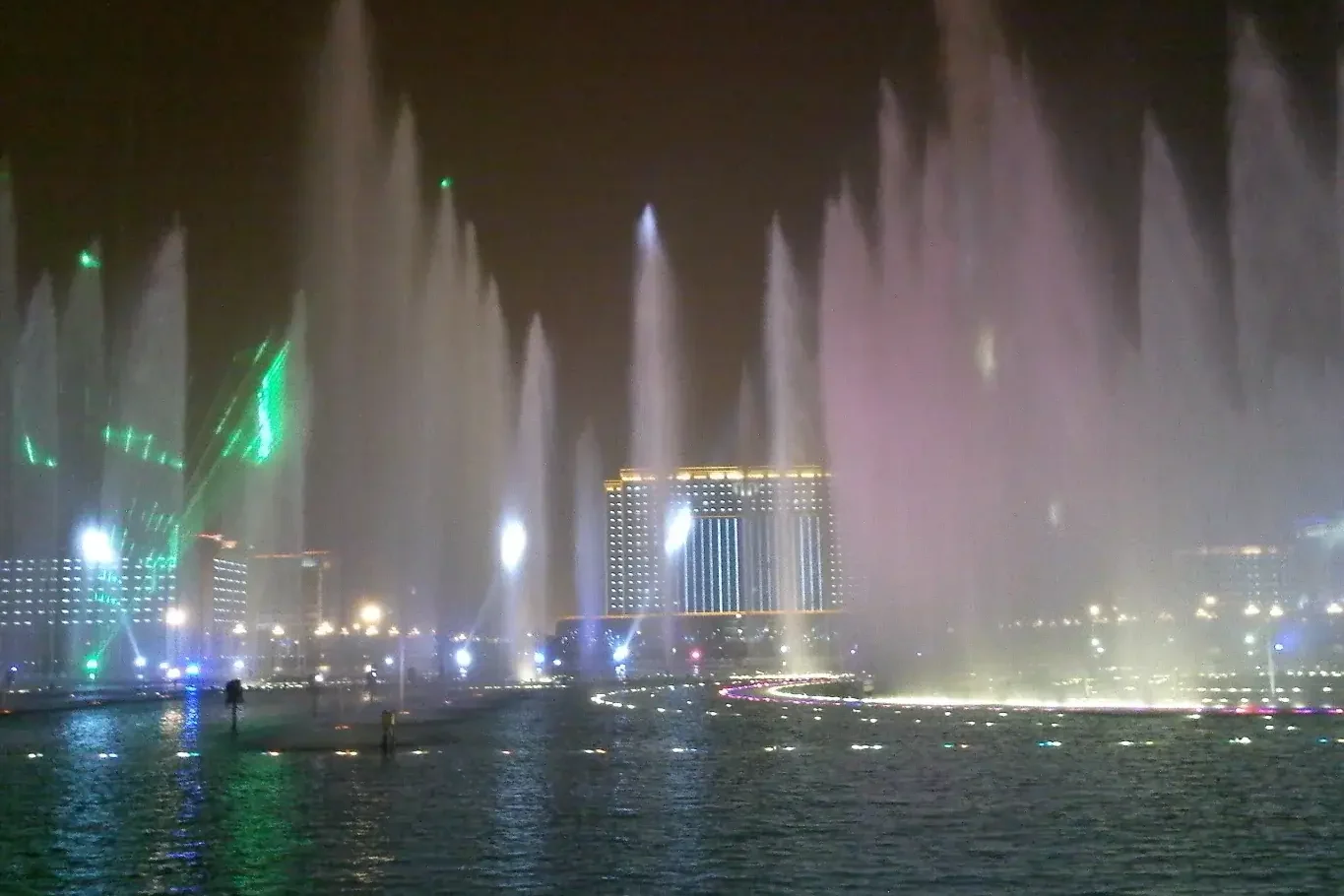
The Sea World Music Fountain in Shenzhen is the largest open panoramic water show in the city, adjacent to the historic Minghua steamship. With a maximum water jet height of 50 metres and a total investment exceeding RMB 30 million, it represents one of the most significant commercial fountain installations in southern China.
| Technical Specifications | |
| Maximum water jet height | 50 metres |
| Total investment | RMB 30 million+ |
| Show type | Open panoramic water show |
| Control | Full computer automation |
| Special effects | Laser integrated with water and music |
| Setting | Active commercial waterfront, adjacent to heritage vessel |
Engineering perspective:
Commercial waterfront fountains run multiple shows per day, every day, across extended operating seasons — placing significantly higher demands on equipment durability, maintenance accessibility, and system redundancy than occasional-use installations. The Sea World fountain's position adjacent to the Minghua steamship also introduces a heritage context that shapes the visual design: the show must enhance rather than overshadow the ship as a landmark.

The Wynn Palace Fountain occupies a distinct position among China's famous music fountains — it is the country's leading example of a world-class commercial hospitality fountain. Located at the entrance of Wynn Palace, the system comprises 200 lake nozzles, 1,000 independent programmable light units, and an integrated flame effect system. Shows run every 15 minutes from morning until midnight, 365 days a year.
| Technical Specifications | |
| Number of lake nozzles | 200 |
| Number of independent light units | 1,000 |
| Special effects | Integrated flame system firing in sync with water |
| Show frequency | Every 15 minutes, morning to midnight |
| Setting | Luxury resort entrance pool, Cotai Strip |
| First in Macau | First music fountain to use moving nozzle technology |
Engineering perspective:
A fountain running every 15 minutes, 365 days a year, accumulates over 35,000 performance cycles annually. At this operational intensity, equipment reliability and maintenance efficiency are the primary engineering constraints. Components must be selected for longevity under continuous use, maintenance access must be engineered into the structure from the beginning, and redundant systems must be in place to ensure that a single component failure does not halt the show.

The Heyuan Xinfeng River Musical Fountain is located in the centre of the Xinfeng River, between Heyuan Bridge and Zhuhe Bridge in Yuancheng District, Heyuan City, Guangdong Province. Funded and built by the Heyuan Municipal Government, construction began on October 1, 1998 and was completed on February 6, 1999.
While less internationally prominent than some fountains on this list, it is technically notable for its height, river-based setting, and dense nozzle and lighting array. The fountain features 1,068 nozzles and 618 underwater lights, with its main jet reaching 169 metres. At the time of completion in 1999, it set the record as Asia’s tallest fountain.
| Technical Specifications | |
| Number of nozzles | 1,068 |
| Number of underwater lights | 618 |
| Main Jet Height | 169 metres |
| Location | Xinfengjiang River, central Heyuan |
| Show type | River-based music fountain |
Engineering perspective:
A system with 1,068 nozzles and 618 underwater lights requires precise control architecture to coordinate water movement, lighting, and choreography across the full array. The 169-metre main jet adds further complexity, requiring stable pump pressure, accurate nozzle alignment, and wind-resistance planning.
For developers, the Heyuan Xinfeng River Musical Fountain shows that a city landmark does not always depend on overall size. A single iconic engineering feature, supported by reliable control and hydraulic design, can create strong visual identity.

Although these ten music fountains differ in scale, location, and purpose, they share several important engineering principles. These principles are what separate world-class musical fountains from ordinary water features.
Large music fountains depend on advanced control systems to synchronise water, lighting, music, lasers, flame effects, and audio. Most modern systems use DMX512, PLC-based control, or a combination of both. Without a reliable control architecture, even the best nozzles and lighting equipment cannot deliver smooth, precise, and repeatable shows.
Multiple installations on this list — Liuzhou, Qingdao, Jieyang — use floating or submersible platform systems that allow the fountain to disappear entirely when not performing. This technology solves one of the fundamental tensions in fountain design: how to create a dramatic, large-scale performance without permanently altering the visual character of the surrounding landscape.
None of these fountains were designed in isolation. Each one was shaped by its specific site conditions — the heritage landscape of West Lake, the multi-directional audience of Jinji Lake, the river current of Liuzhou, the UNESCO context of Xi'an. World-class fountain engineering begins with a deep understanding of the site, not with the selection of equipment.
The most memorable music fountains do not rely on one dramatic effect. They combine different water forms, such as high jets, running jets, mist, rotating nozzles, spherical sprays, and air-explosion effects. When these effects are layered with music and lighting, the show feels more dynamic and less repetitive.
The Wynn Palace fountain runs 35,000 performance cycles per year. At this scale of use, durability, maintenance access, and system redundancy are not optional features — they are core engineering requirements that must be designed in from the start. The more frequently a fountain performs, the more important long-term engineering becomes.
These principles apply to both small commercial fountains and large landmark water shows. Scale changes the complexity, but the core design logic remains the same: a successful music fountain must combine visual impact, technical reliability, site integration, and practical operation.
The fountains in this guide represent some of the highest levels of music fountain engineering in China. However, their value is not limited to projects of the same size or budget. Each installation offers practical lessons for developers, municipalities, hospitality groups, and commercial property owners planning future fountain projects.

A successful music fountain begins with a clear purpose. Is the goal to create a city landmark, attract tourists, activate a commercial waterfront, or enhance a hotel entrance? This design intent should guide the fountain layout, water effects, lighting, choreography, and control system.
Developers who begin by asking only for equipment lists often miss the bigger picture. The right question is not simply “What nozzles do we need?” but “What experience should this fountain create?”
The long-term performance of a music fountain depends heavily on its control architecture. A strong control system allows water, lighting, music, lasers, and special effects to work together smoothly. It also makes future show updates easier.
Reducing the control system budget may lower initial costs, but it often limits choreography quality, system stability, and future upgrade options. For long-term visual impact, the control system should be treated as a core investment, not an optional add-on.
Music fountains are not static structures. They are working systems that may operate daily, weekly, or seasonally for many years. Developers should consider show frequency, maintenance access, spare parts, water quality, energy use, and system recovery during the design stage.
Questions such as “How many shows will run per day?” and “Who will maintain the system?” should be answered before installation begins, not after the fountain is completed.
A larger fountain is not always a better fountain. Some of the most effective projects succeed because they match the site, audience, and purpose of the development. A well-designed fountain with clear choreography, reliable control, and strong visual identity can deliver more value than a larger system with poor planning.
For project owners, the key lesson is simple: a successful music fountain is not defined by size alone. It is defined by the balance between design intent, engineering execution, audience experience, and long-term operation.
If you are planning a music fountain for a commercial development, public square, resort, waterfront, or civic landmark, the first step is not to finalise an equipment list. It is to work with an engineering team that understands your site, your audience, and the result you want the fountain to achieve.
You May Also Like: How to Choose a Musical Fountain Manufacturer
For developers, municipalities, resorts, and commercial property owners, the biggest challenge is not simply choosing fountain equipment. It is turning a design idea into a reliable, buildable, and maintainable water show.
Optimum Show supports fountain projects from concept to operation, including artistic design, 3D animation, shop drawings, equipment manufacturing, overseas installation guidance, show choreography, operator training, and long-term technical support.
This end-to-end approach helps project owners reduce coordination problems between designers, contractors, engineers, and operators. It also ensures that key decisions — such as nozzle selection, pump capacity, control systems, lighting, maintenance access, and show choreography — are planned together from the beginning.
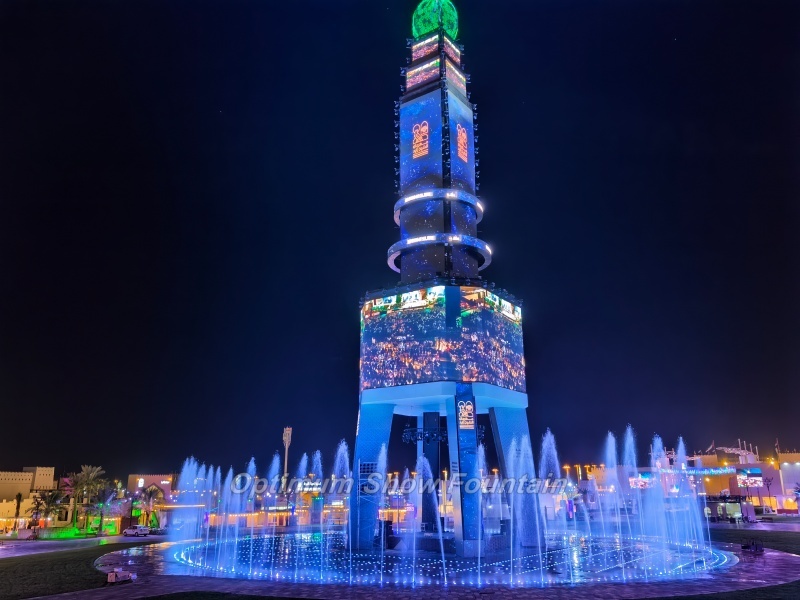
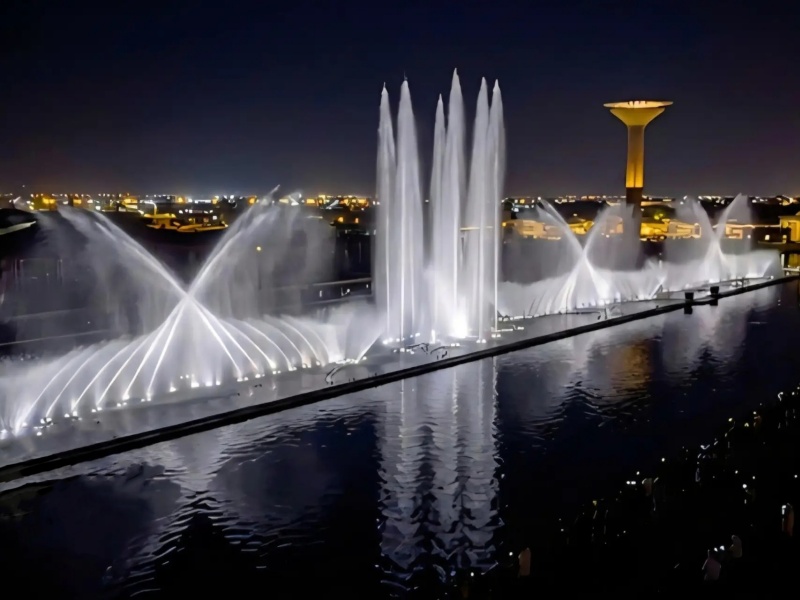
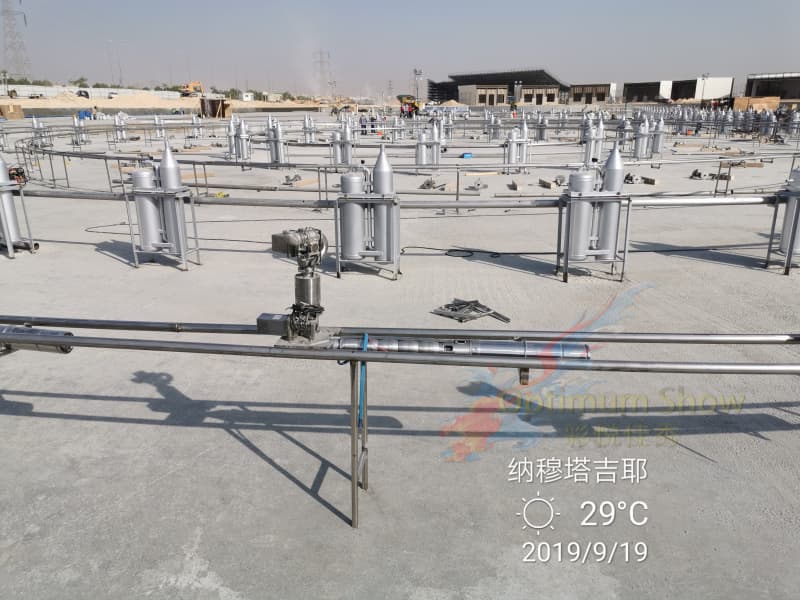
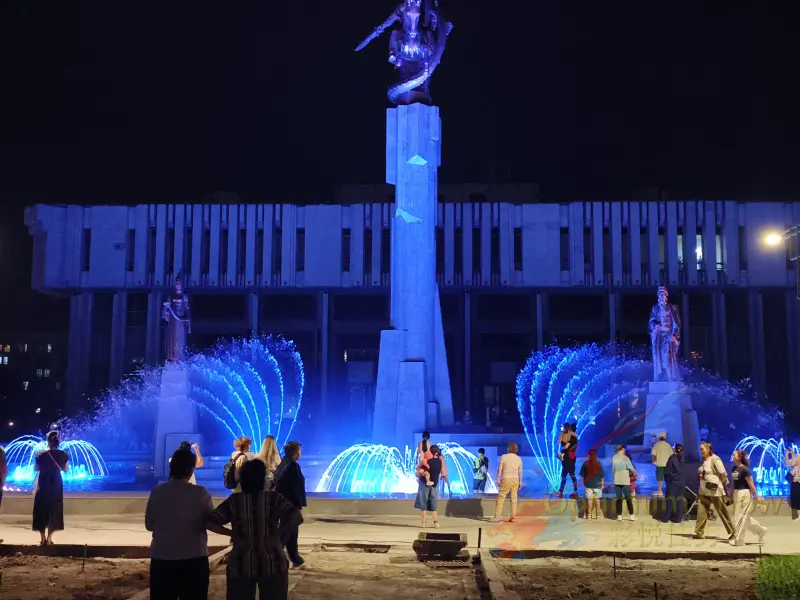
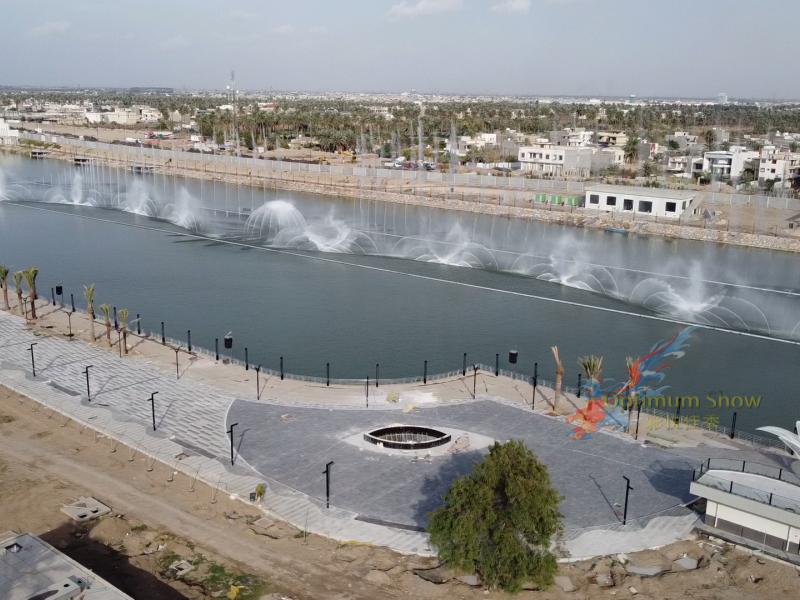
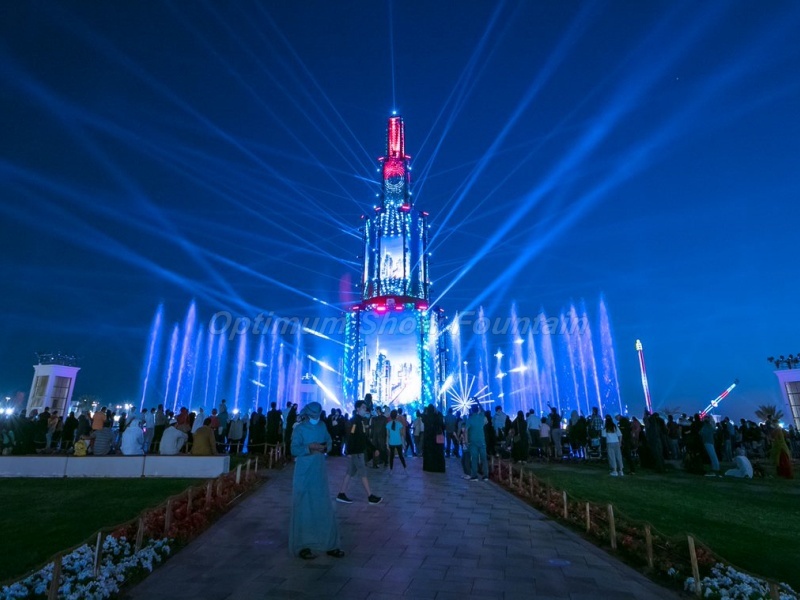
Optimum Show has completed fountain projects across different markets and site conditions, including the Sheikh Zayed Festival Fountain in the UAE, Riyadh Boulevard City Fountain in Saudi Arabia, Baghdad Island Boulevard Water Show in Iraq, and Taman Mini Indonesia Indah Music Dancing Water Show in Indonesia. These projects demonstrate experience across festival venues, commercial entertainment districts, waterfront developments, and cultural tourism destinations.
Whether the project is a city landmark, shopping mall attraction, waterfront show, resort feature, floating fountain, dry deck fountain, or multimedia water show, Optimum Show focuses on three priorities: strong visual impact, stable engineering performance, and long-term operational value.
Learn More: How Musical Fountains Work
China's music fountain industry did not reach this level by following the rest of the world. It got here by solving harder problems at greater scale, faster than anyone else — and the installations documented in this guide are the evidence.
For project developers, architects, and civic planners, these fountains are not just impressive landmarks. They are engineering references. Each one answers a specific design question: how to build at scale, how to perform on a river, how to serve a heritage landscape, how to run continuously without failure, how to make water tell a story.
If your project has a question that needs answering, we would be glad to help you find the right engineering response.
Share your site size, water depth, location or CAD drawing with our engineering team. We can evaluate the project requirements and recommend a suitable fountain system.