Water creates movement, light creates color, and music creates rhythm. But fire effects in fountain shows change the emotional temperature of the entire performance. When flames appear above or beside moving water, the show immediately feels more intense, dramatic, and memorable.
A well-timed fire effect can turn a normal musical fountain sequence into a powerful nighttime spectacle, especially during climactic moments, festival scenes, or large public performances. But fire does not belong in every fountain project. Unlike water jets or LED lighting, fire effects require stricter planning, safer site conditions, professional control systems, and careful choreography.
For developers, resorts, theme parks, shopping malls, municipalities, and tourism destinations, the real question is not “Can we add fire?” The better question is: Does fire serve the purpose of the show? This article explains when a fire fountain or fire-and-water show makes sense, what fire adds to the audience experience, and what project owners should consider before using flame effects in a fountain show.
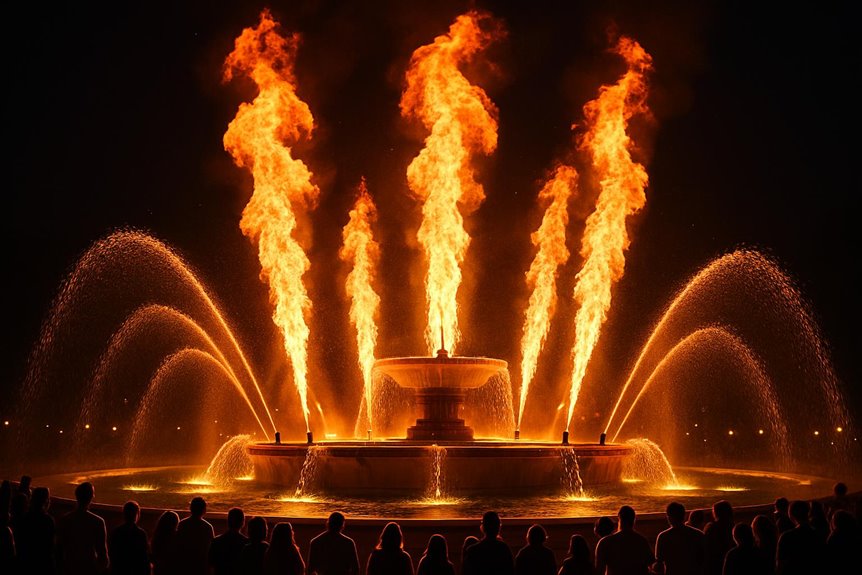
Fire should not run continuously in a fountain show. Its power comes from contrast, timing, and restraint. Water creates movement, lighting creates colour, and music creates rhythm — but fire changes the emotional intensity of the entire performance.
In a fire fountain show, flame works best as a climax effect. It should appear at key moments: the opening reveal, a dramatic transition, a strong musical beat, or the final peak of the show. Used this way, fire feels like a dramatic punctuation mark rather than a background effect.
This is especially important for large outdoor water shows. If flame effects appear too often, the show can quickly feel aggressive or repetitive. But when fire is used selectively, it gives the performance a stronger nighttime identity, helping the audience remember the moment long after the show ends.
From a technical perspective, fire must also be controlled with precision. Flame height, ignition timing, wind response, safety logic, and emergency shutoff systems all need to work together with the fountain’s main show control system. In a professional musical water show, fire cues should be synchronized with water jets, lighting, music, fog, and projection as part of one complete performance timeline — not added as isolated bursts after the design is finished.
Adding fire to a fountain show changes the entire emotional impact of the performance. Water creates movement, rhythm, and scale, while fire adds heat, contrast, and intensity. When the two are choreographed together, the result feels more powerful than either element on its own.
In a well-designed fire and water show, flames are usually used as short dramatic accents rather than continuous background effects. A sudden fire column, flame burst, or fire-on-water moment can mark a musical climax, highlight a transition, or turn the finale into a memorable visual peak.
Lighting plays an important role in connecting the two elements. Underwater LEDs, color washes, and beam effects help fire and water feel like part of the same visual language. Fog or mist can also enhance the scene by making the fire appear more theatrical, especially in nighttime shows where atmosphere matters.
Music controls the emotional direction of the show. The same flame effect can feel ceremonial, exciting, romantic, or dramatic depending on the soundtrack and timing. This is why fire should be programmed as part of the full choreography, not added as a separate effect.
For public attractions, resorts, theme parks, and commercial plazas, this level of synchronization requires a reliable fountain control system. Optimum Show integrates water jets, lighting, music, fog, laser, projection, and fire effects into one programmed performance system for large-scale fountain shows. Learn more about our outdoor musical water fountain solutions.
Key ways fire changes a water show:
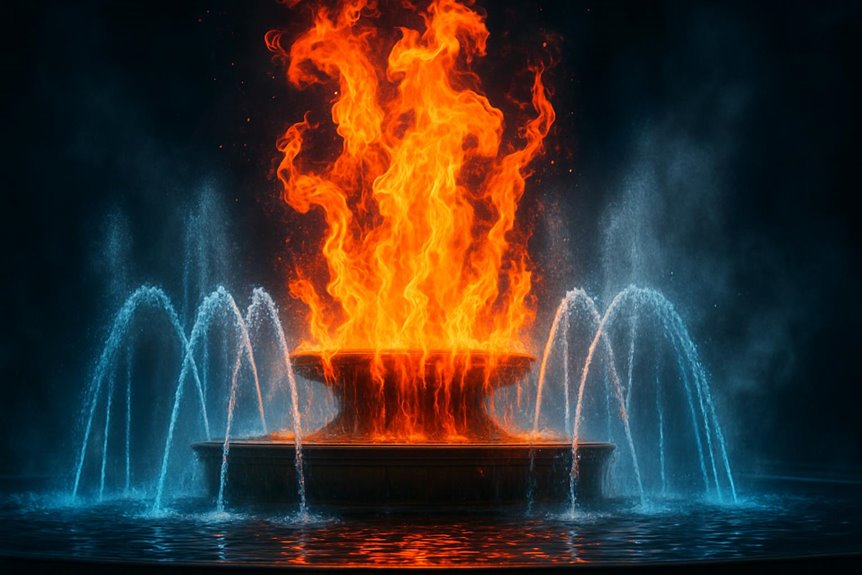
In a professional fountain show, fire effects should not be used as constant background decoration. They work best as short, controlled moments that add contrast, tension, and visual impact to the water performance. When combined with synchronized water jets, lighting, music, fog, and laser effects, fire can turn a standard fountain show into a more dramatic multimedia water show.
One of the most common options is the fire column, which creates a strong vertical flame effect. It is often used during finales, theme park shows, city celebrations, and large outdoor performances where the audience is watching from a safe distance.
Another popular option is the fireball effect. This creates a sudden burst of flame and is best used for climactic moments in festivals, entertainment resorts, and high-impact nighttime shows. Because the effect is intense, it should be carefully timed with the music rather than repeated too often.
Fire lines create a lower, wider flame effect. They are useful for lake shows, stage-water shows, and waterfront performances where the goal is to add atmosphere around the edge of the fountain area. Compared with fireballs, fire lines feel more controlled and cinematic.
The fire-on-water effect is often used in luxury resorts, waterfront attractions, and large-scale musical fountains. The visual contrast between moving water and flame creates a memorable scene, especially when supported by lighting and fog.
For more complex productions, fire can also be combined with mist, laser, projection, and synchronized fountain choreography. These effects are especially suitable for projects that need a stronger nighttime identity, such as resort water shows, theme parks, commercial plazas, and tourism destinations.
In the domain of enchanting entertainment, fire effects find their ideal settings in places where visual impact and audience engagement are paramount. The integration of flame fountains in various venues enhances the allure and grandeur of events.
Fire effects create mesmerizing spectacles, transforming venues into captivating arenas of enchantment and grandeur.
Each setting maximizes the artistic and technical potential of fire effects. Successful installations also depend on utility coordination to ensure safe operation, reliable scheduling, and compatibility with surrounding infrastructure.
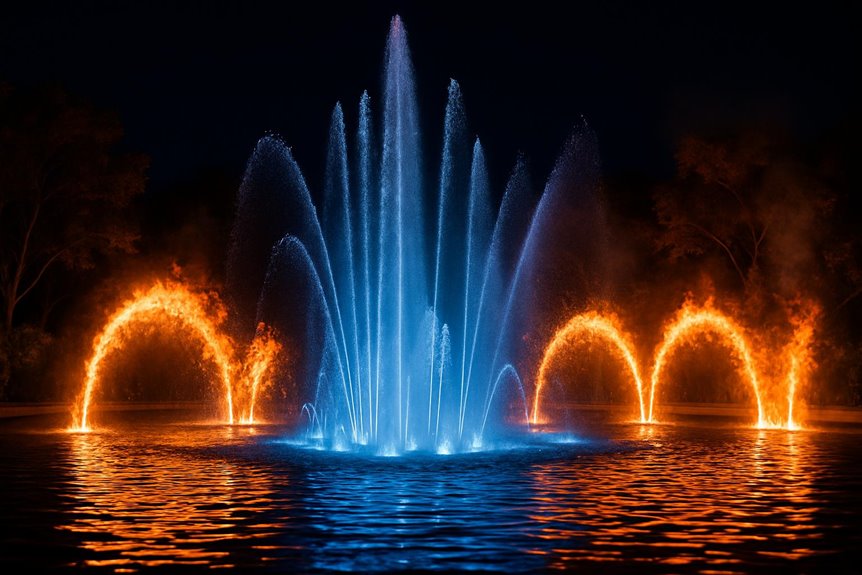
Fire effects can make a fountain show more dramatic, but they are not suitable for every project environment. Before adding a fire fountain or water fire fountain system, project owners need to evaluate the site conditions, safety requirements, operating team, and intended atmosphere of the space.
Tight indoor spaces are usually not ideal unless ventilation, ceiling height, and fire safety approvals are carefully addressed. Fire effects produce heat and combustion gases, so enclosed environments require much stricter planning than outdoor plazas or waterfront venues.
Sites with limited safety separation can also be challenging. Fire effects need enough distance from audiences, buildings, landscaping, seating areas, and decorative structures. If the available space is too narrow, a flame fountain may create unnecessary safety and approval risks.
High-wind locations require extra caution. Wind can affect flame stability, push heat toward nearby areas, or reduce the precision of the fire effect. For outdoor fire and water shows, wind monitoring, automatic shutoff logic, and proper control-system integration should be considered from the start.
Fire effects are also a poor fit for projects without trained operators or clear maintenance responsibility. Unlike standard water jets or lighting effects, fire systems require disciplined operation, regular inspection, and emergency procedures. Fire-integrated fountain projects should also be included in a proper musical fountain maintenance plan because clogged nozzles, pump issues, control faults, or neglected components can affect show synchronization and increase operational risk.
Finally, fire may not match every brand atmosphere. Quiet luxury resorts, spa environments, wellness gardens, and intimate hospitality spaces may benefit more from soft lighting, mist, laminar jets, or gentle water movement than from intense flame effects.
| Scenario | Main Risk Factor | Potential Impact |
|---|---|---|
| Tight indoor spaces | Poor ventilation and limited clearance | Higher safety and approval requirements |
| Weak safety separation | Audience or building proximity | Restricted design options or installation challenges |
| High-wind outdoor sites | Unstable flame direction | Reduced reliability and safety concerns |
| No trained operators | Poor operation and emergency response | Increased risk of faults or misuse |
| Quiet wellness environments | Fire feels too intense | Poor fit with the intended guest experience |
Before incorporating fire into a fountain show, careful planning is essential to secure both safety and impact. The integration of a musical fountain fire effect demands meticulous attention to various technical and safety aspects. A well-designed fountain fire system not only captivates but also guarantees the safety of its audience and operators.
In addition, on-site commissioning helps confirm that fire cues, water movement, and lighting remain synchronized under real-world conditions.
Proper planning transforms a fountain show into a mesmerizing spectacle.
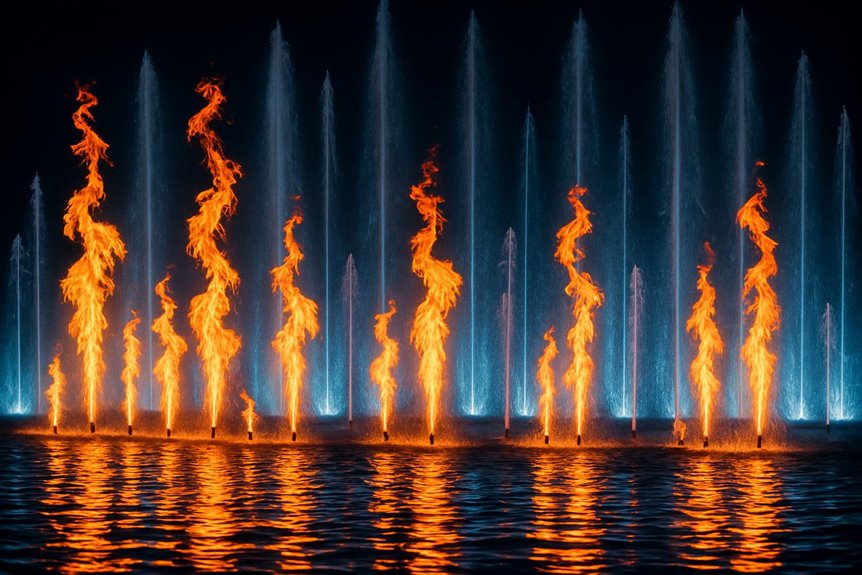
Fire should be used as a dramatic accent, not a constant background effect. In a well-designed fountain show, flame moments are usually reserved for transitions, music peaks, emotional highlights, and finales. This keeps the effect powerful and prevents the audience from becoming used to it too quickly.
The strongest fire choreography happens when flame is synchronized with water movement, lighting, music, fog, and laser effects. For example, low water jets can build tension before a sudden flame burst, while fog or mist can make the fire scene feel more theatrical. Laser beams and colored lighting can also help connect the fire effect visually with the rest of the show. For more complex productions, fire should be planned as part of the overall multimedia water show system, rather than added as a separate effect at the end.
Timing is critical. Flame bursts should match the rhythm, mood, and structure of the music. A short fire column can emphasize a beat, while a larger fireball or fire line may be better suited for a finale. Overusing flame effects can make the show feel aggressive or visually crowded, so each fire cue should have a clear purpose.
The choreography also needs to be tested from real audience viewing positions, not only from the control room or design software. This helps confirm whether the flame height, water movement, lighting, and viewing distance work together as intended. In public spaces, resorts, theme parks, and commercial plazas, the show must also balance visual impact with safety, wind conditions, audience distance, and control system reliability.
A professional fountain control system allows fire, water, lighting, music, fog, and projection effects to be programmed on the same timeline. This helps create a show that feels coordinated, safe, and emotionally powerful — turning fire from a simple special effect into a memorable part of the fountain performance.
At Optimum Show, fire effects are not treated as standalone visual tricks. They are designed as part of a complete fountain show system, where water, lighting, music, fog, projection, and flame effects work together on one synchronized timeline.
For each project, the fire effect design starts with practical site planning. The team considers audience viewing angles, wind direction, safe separation zones, fuel supply, and the overall rhythm of the show before deciding where and when fire should appear. This helps make the flame effect dramatic without compromising safety, comfort, or long-term operation.
Fire effects are usually strongest when used at key moments — such as a show opening, transition, or final climax. Through integrated DMX and PLC control systems, Optimum Show can synchronize flame bursts with water jets, LED lighting, music cues, fog effects, and projection scenes. This creates a more cohesive performance than simply adding fire on top of an existing fountain design.
As a turnkey fountain show provider, Optimum Show supports the full process from concept design and 3D animation to equipment manufacturing, installation, programming, testing, operator training, and long-term technical support. For projects that combine fire with water, laser, and projection, this single-point delivery model helps reduce coordination risks and ensures every effect is designed to perform as one complete show.
Planning a fountain show with fire effects? Optimum Show can help you evaluate the site conditions, safety requirements, show concept, and technical system before the project moves into manufacturing. Contact us to discuss a custom fire-and-water fountain show for your resort, theme park, commercial plaza, or city landmark project.
Fire fountain systems employ advanced safety technologies, including multi-layered monitoring, sophisticated fuel control for stable combustion, and continuous flame stability checks. Integrated safety measures guarantee accident prevention, reflecting a blend of technical expertise and creative vision.
Flame colors can be customized by altering fuel additives, much like an artist mixing a vibrant palette. This technical artistry, fused with precise control systems, guarantees stunning thematic displays while maintaining safety and enchanting visual harmony.
Maintenance for a fire fountain involves regular inspections of fuel systems, ensuring nozzle cleanliness, checking high-pressure pumps, and monitoring control systems. Routine safety checks and timely repairs are essential to maintaining stable performance and preventing operational hazards.
Control systems guarantee stable flame production by employing precise fuel regulation, real-time monitoring, and automated adjustments. These systems integrate safety protocols, allowing creative flame choreography while maintaining technical integrity and preventing combustion-related hazards, enhancing both performance and safety.
Fire fountains can be used in both indoor and outdoor settings, provided they incorporate advanced safety systems and customized designs. Indoor installations require stringent ventilation and fire control measures, while outdoor setups offer greater flexibility and visual impact.
Share your site size, water depth, location or CAD drawing with our engineering team. We can evaluate the project requirements and recommend a suitable fountain system.