A multimedia laser show is not a standalone laser display. It's an integrated system where lasers, water, lighting, and a central control layer are engineered to work as one synchronized performance — not four separate effects running side by side.
In real projects, the difference between an average show and a landmark attraction usually isn't the number of effects used. It's how reliably the system performs under real-world conditions: wind, viewing distance, ambient light, and daily operation.
This guide breaks down how these systems actually fit together, what determines show quality in practice, and what project owners need to plan before specifying equipment.
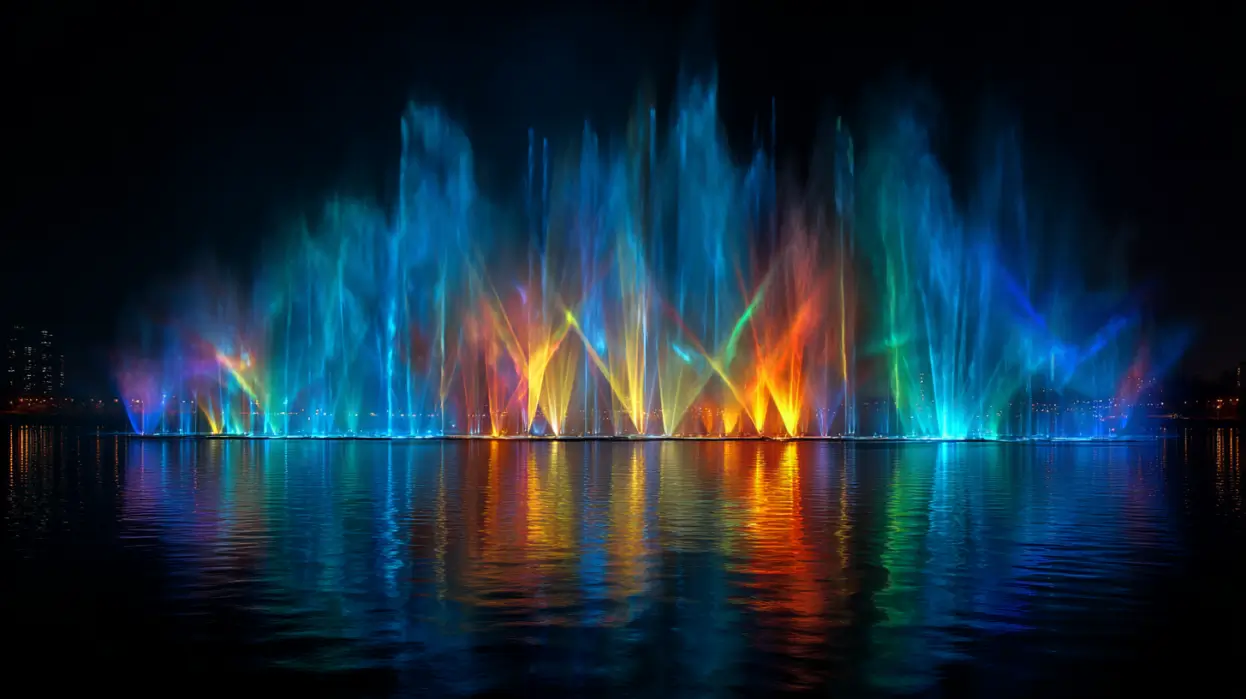
A multimedia laser show works through a central show control system that keeps every visual and audio layer running on the same timeline. Lasers, water screens, mist, lighting, projection, fire effects, and sound are not operated as separate features. They are programmed as one synchronized performance.
The show control system is the foundation of the entire performance. It synchronizes each effect to a timecode-based sequence, ensuring that laser beams, fountain movements, lighting changes, music cues, and projection content happen at the right moment.
If this layer is unstable, the show will not feel synchronized once installed — even if the individual equipment is high quality. This is why control logic is one of the most important parts of any multimedia water and laser show. The same principle also applies to musical fountains, where pumps, nozzles, lights, and music must follow one coordinated timeline.
The laser system creates the main visual content of the show, including beams, graphics, animations, patterns, and brand logos. Its performance depends on laser power, scanner speed, beam quality, projection distance, and ambient light conditions.
For outdoor attractions, waterfront shows, and large public events, the laser system must be specified according to the viewing distance and site scale. A system that looks strong indoors may not deliver enough visibility across a large outdoor venue.
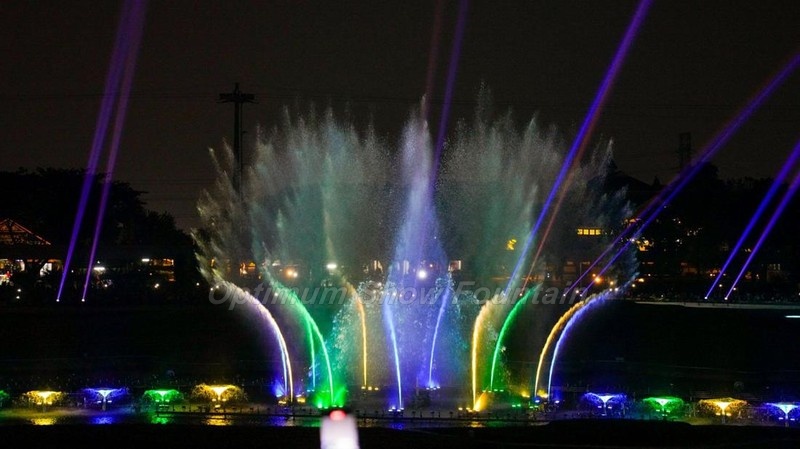
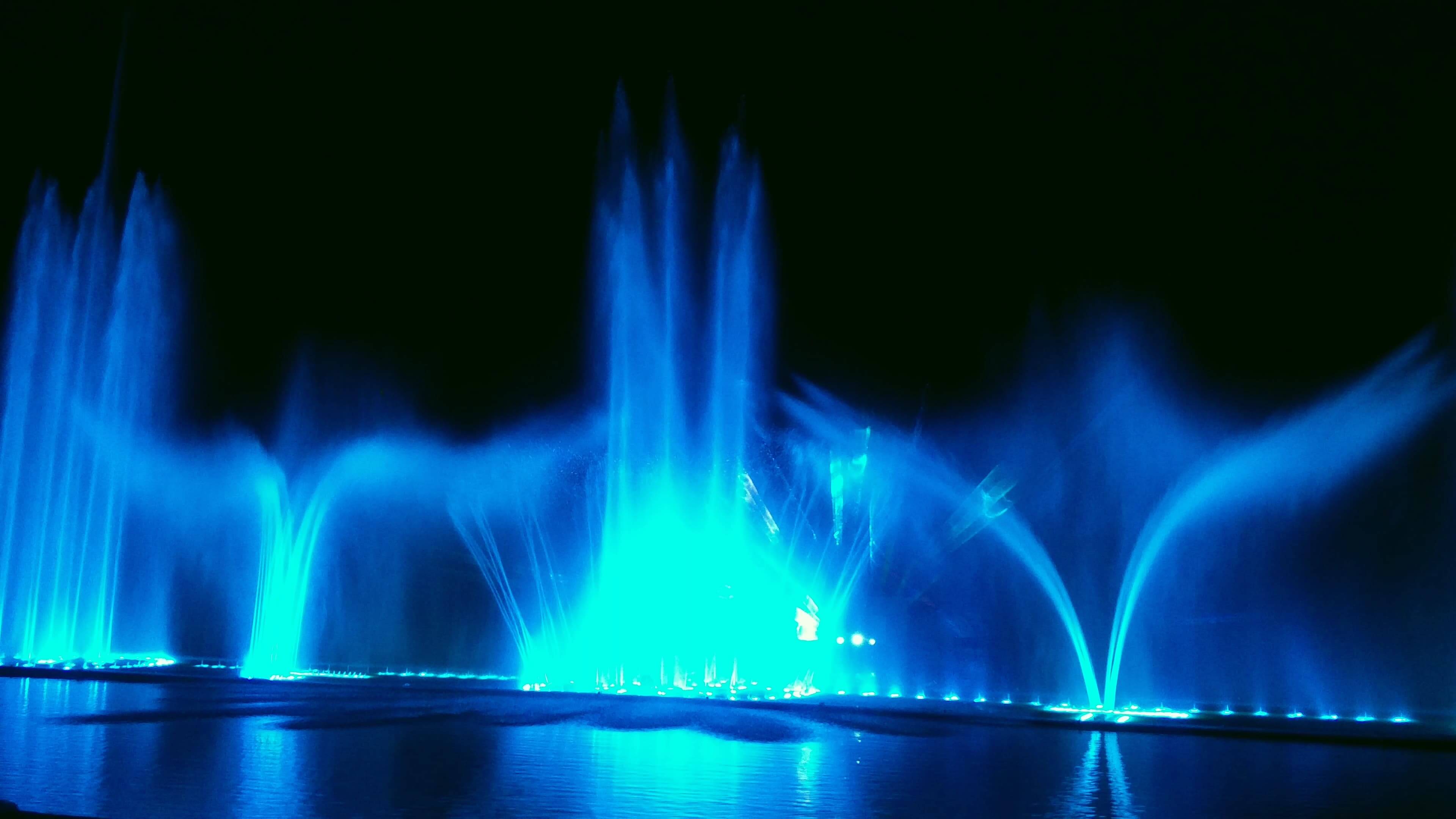
Water screens, mist, fog, and fountain spray act as projection and visibility surfaces. They help laser beams become more visible and give the show a larger, more immersive presence.
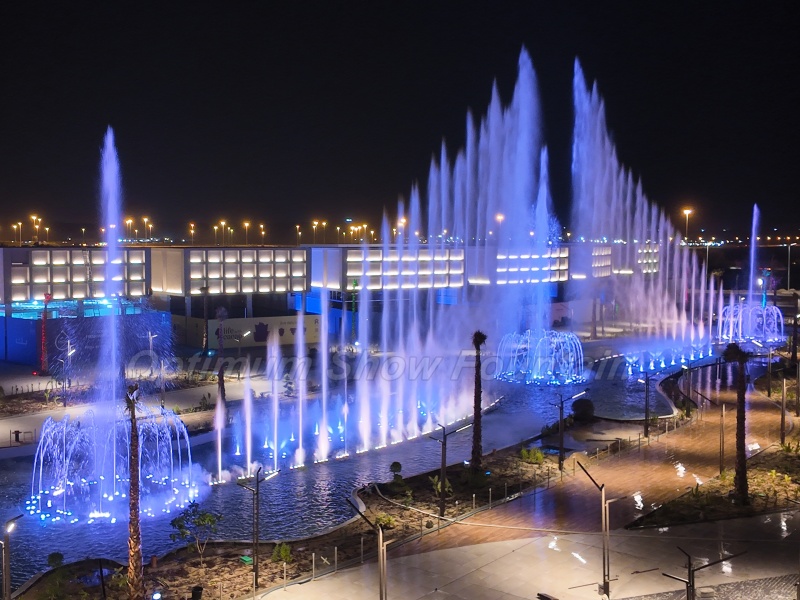
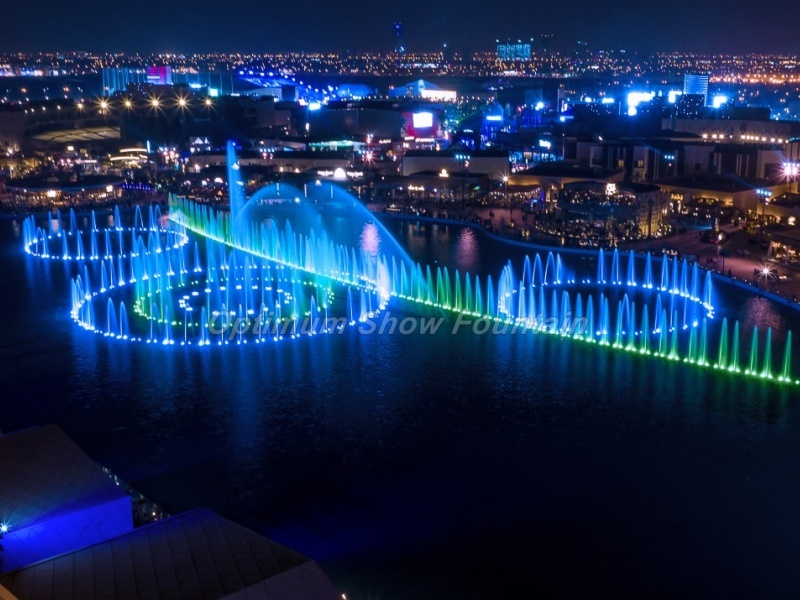
These elements do not simply add decoration. They extend the laser content into physical space, making the show feel larger, deeper, and more dimensional. In water-based multimedia shows, this layer is often what turns a laser effect into a full destination attraction.
Architectural lighting, underwater lighting, and video projection add color, atmosphere, and storytelling depth. Lasers are excellent for sharp beams and high-impact graphics, but lighting and projection help build the wider visual environment.
For large resorts, theme parks, commercial complexes, and waterfront shows, this supporting layer helps connect the performance with the surrounding architecture and landscape.
In simple terms, the control system sets the timing, lasers create the visual content, water and mist give that content scale, and lighting adds depth and atmosphere.
A successful multimedia laser show is not about using more effects. It is about making every layer work together so the audience experiences one complete, synchronized performance.
Most multimedia laser shows use two main types of laser content: graphic effects and beam effects. They serve different purposes, but in large-scale productions, they are usually designed to work together.
| Laser Show Type | What It Does | Best For |
|---|---|---|
| Graphic Laser Show | Projects images, animations, text, or logos onto a surface | Storytelling, branding, sponsor content, and sharp long-distance visuals |
| Beam Laser Show | Sends visible laser beams through fog, haze, mist, or open air | Spatial drama, aerial effects, large-scale atmosphere, and immersive night shows |
In real projects, the choice is rarely “graphic or beam.” The better question is how both effects should be balanced based on the site, audience size, viewing distance, and environmental conditions.
For example, graphic laser effects need a clear projection surface, such as a water screen, mist screen, building facade, or stage backdrop. They work well when the show needs logos, narrative visuals, cultural imagery, or sponsor content.
Beam effects, on the other hand, are strongest when the goal is atmosphere and scale. They create movement through space, especially when supported by fog, haze, mist, or water spray. Outdoors, beam visibility can be harder to maintain because open air disperses haze quickly, so site conditions must be planned carefully.
Two technical points are especially important:
For landmark-scale shows, the strongest result usually comes from combining both: graphic lasers for storytelling and brand messaging, beam lasers for scale, movement, and emotional impact.
The key distinction: in this context, water is a projection medium, not a fountain feature. Jet height, water choreography, and pump design belong to a separate conversation — what matters here is how water behaves as a surface for light.
Four properties make it effective for that job:
The design challenge here isn't creating the water effect — it's keeping that surface stable under wind and pressure variation in outdoor conditions. A water screen that holds steady in a controlled test can break apart in a 15 km/h crosswind, which is exactly why site assessment has to happen before the design is finalized, not after.
These technical specifications determine whether a multimedia laser show looks sharp, bright, and professional — or appears weak once installed in a real outdoor environment. Project owners do not need to become laser engineers, but understanding these basic terms helps when reviewing a supplier’s proposal.
| Factor | What It Controls | Why It Matters |
|---|---|---|
| Laser Power | Brightness and visibility distance | Higher power is needed for large outdoor venues, long viewing distances, or bright ambient conditions. |
| RGB Color Mixing | Color accuracy and white balance | Poor calibration can make white light appear tinted and reduce the visual quality of the show. |
| Scanner Speed (kpps) | Image smoothness and graphic detail | Faster scanners, such as 30–60kpps at 8° ILDA, produce smoother graphics and more precise laser animation. |
| Projection Distance | Image size and sharpness | Determines how large the image can appear and how far the projector must be positioned from the surface. |
| Beam Quality | Sharpness and divergence | Lower-quality beams spread over distance, making graphics look blurred or less defined. |
Among these factors, laser power and scanner speed usually have the greatest impact on perceived show quality. They are also two of the most commonly under-specified items in low-cost proposals. A system that looks acceptable in an indoor showroom test may look weak, blurry, or underpowered once installed at full outdoor scale.
This is the section most laser show guides skim past, and it's the one with the most direct effect on budget and timeline.
Most show lasers fall into Class 3B or Class 4, both of which carry real risk to eyes and skin at close range. That classification isn't just a compliance checkbox — it's a project variable that shapes safety zoning, approval timelines, and staffing needs. Specific requirements include:
None of this is a reason to avoid laser integration. It's a planning input. Projects that account for safety requirements from the start avoid the redesigns and approval delays that come from treating it as an afterthought.
Before specifying equipment, project owners need to make several core decisions. These choices affect laser power, projection quality, system integration, safety planning, and long-term operation — so they should be made in sequence, not separately.
Viewing distance determines the required laser power, projection scale, beam visibility, and audience layout. A show designed for a waterfront crowd needs a different setup from one viewed from a hotel terrace, plaza, or indoor event space.
The projection surface defines how the laser content will appear. Common options include water screens, mist, building facades, and solid screens. Each medium affects image clarity, cost, weather sensitivity, and the type of content that can be displayed.
Wind, humidity, rain, and ambient light all affect show performance. This is especially important for water-based projection surfaces, where wind can distort mist or water screens and reduce image stability.
If the site already has a musical fountain, the key question is whether the laser system can connect to the existing show control layer or whether the control architecture needs to be upgraded. This should be clarified early because it affects programming, synchronization, equipment selection, and installation scope. For a deeper explanation of this control layer, see our guide to fountain control systems.
The main risks in a multimedia laser show usually appear during real installation and commissioning, not on paper. In most cases, the issue is not a single faulty component, but a mismatch between site conditions, water effects, laser visibility, and show control planning.
| Challenge | What Usually Causes It | Why It Matters |
|---|---|---|
| Water screen instability | Inconsistent water pressure, poor nozzle alignment, or nozzle clogging | The projection surface becomes uneven, causing images and laser graphics to lose clarity during the show |
| Weak laser visibility | Open-air wind, low mist density, or insufficient haze retention | Laser beams and graphics appear less defined, especially in large outdoor spaces |
| Poor synchronization | Laser, fountain, lighting, and audio systems running on separate timelines | The show feels disconnected instead of reading as one unified performance |
| Oversized laser selection | Specifying more laser power than the site actually needs | Increases cost, safety-zone requirements, and approval complexity without necessarily improving the audience experience |
Most of these problems trace back to the same root cause: the show was designed around individual effects instead of one integrated system. The best results come when water screens, fountains, lasers, sound, lighting, and control logic are planned together from the beginning.
Multimedia laser shows work best in locations with clear sightlines, strong evening foot traffic, and enough space to justify a layered show experience. They are especially effective when the project needs more than a decorative feature — it needs a scheduled attraction.
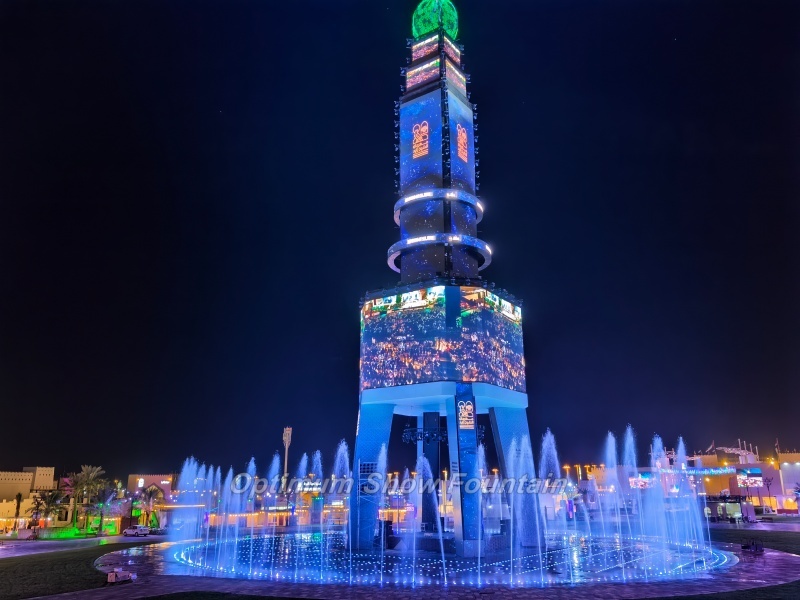
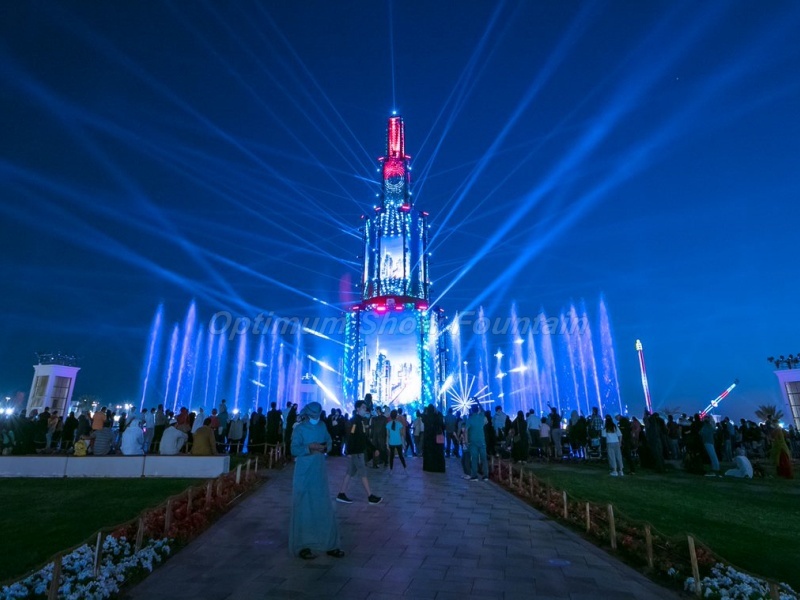
Waterfront developments benefit from long viewing distances, open audience zones, and strong nighttime reflections across the water. Theme parks use multimedia laser shows as storytelling moments that support a larger visitor journey. Hotels and resorts use them as evening entertainment that keeps guests active on the property after dark. Commercial centers can use shorter, repeatable shows to draw visitors toward dining, retail, and outdoor gathering areas.
In each case, the value comes from integration. Lasers alone create visual precision, but when combined with water, music, lighting, projection, and sometimes fire, the show becomes a destination experience rather than a single visual effect.
A standard laser show uses only beams or graphics as the visual output. A multimedia laser show integrates lasers with water screens, fountains, projection, lighting, and show control into one synchronized performance — making it a complete entertainment system rather than a single visual effect.
In many cases, yes. If the fountain already runs on a timecode-based show controller, lasers and projection can often be integrated without replacing the full control system. If the existing system is older or closed, a control architecture upgrade may be needed before multimedia layers can be added.
Waterfront developments, theme parks, resorts, and commercial complexes with open sightlines and audiences of several hundred or more are the most common settings. Smaller indoor venues can support scaled-down versions using lower-power graphic lasers and mist screens instead of large water curtains.
A single three-minute show with multiple synchronized layers typically takes two to four weeks of programming time, covering 3D simulation, initial mapping, on-site calibration, and final fine-tuning against the actual water and projection surfaces.
Laser projectors need periodic lens cleaning, alignment checks, and cooling system inspection every six to twelve months. Water screen nozzles and pumps require regular cleaning to maintain projection surface stability. For permanent installations, an annual maintenance contract covers most scheduled requirements and reduces unplanned downtime.
A multimedia laser show isn't defined by its individual components — it's defined by how reliably those components hold together as one system under real site conditions.
Lasers provide precision and visual content. Water provides the scale and surface that makes that content visible. Lighting and projection add the depth a laser alone can't produce. And the control system keeps all of it on one timeline.
In practice, the question worth asking isn't which effects to add — it's whether the system as a whole can deliver that experience reliably, night after night, under the site's actual conditions.
If you are planning a laser-integrated water show for a resort, commercial complex, waterfront development, theme park, or public event, Optimum Show can help evaluate the concept, site conditions, and technical requirements before equipment is specified.
Share your site size, water depth, location or CAD drawing with our engineering team. We can evaluate the project requirements and recommend a suitable fountain system.