In a large fountain show, fog is not just a decorative mist effect. It is a show design layer that changes how water, light, music, and space are experienced by the audience.
When used correctly, fog adds depth to the stage, softens the movement between scenes, and makes lighting and laser effects more visible. It can turn a simple water sequence into a more immersive atmosphere, especially in nighttime shows where beams, colors, and reflections become part of the performance.
For resorts, theme parks, commercial plazas, and waterfront attractions, fog effects can help a fountain show feel larger, more cinematic, and more emotionally engaging. The key is not to use fog constantly, but to use it with purpose — for openings, transitions, reveals, laser moments, and dramatic climaxes.
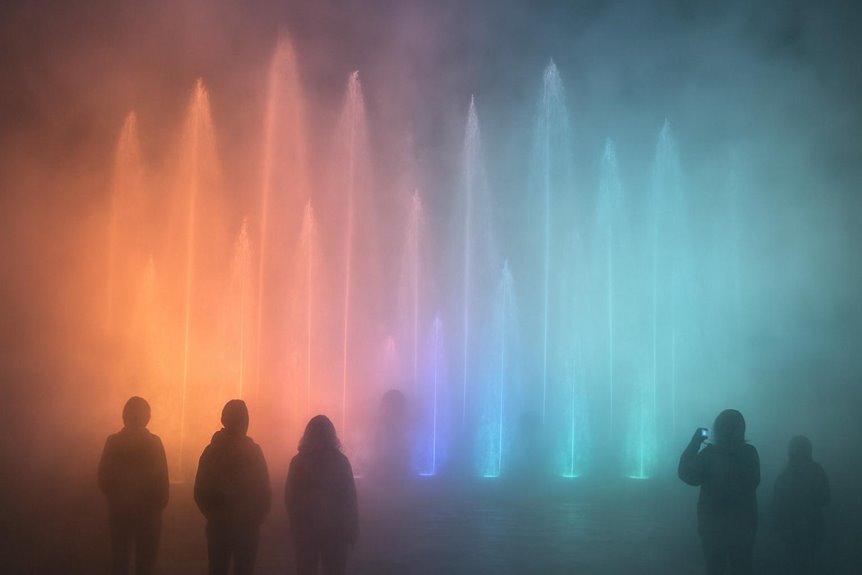
Fog is often treated as a small decorative effect, but in a fountain show it plays a much more important role. It acts as a visual layer that changes how the audience experiences water, light, music, and space.
Instead of drawing attention to itself, fog helps shape the atmosphere of the entire performance. It can make an opening feel more mysterious, soften the transition between two music sections, or add depth and drama before a climactic water effect.
For large-scale water shows, fog is especially useful because it fills the empty space between water movements. A fountain does not always need taller jets or more nozzles to feel impressive. Well-placed fog can make the show feel larger, fuller, and more immersive without overcomplicating the fountain system.
Fog also works well with lighting, lasers, projection, and fire effects. It makes light beams more visible, adds texture around water jets, and helps different show elements blend into one complete scene. Used correctly, fog becomes part of the choreography — not just something added for decoration.
Fog changes how a fountain show feels because it gives water, light, and lasers a visible atmosphere to move through. In a normal fountain show, water jets create height and motion. When fog is added, the space around those jets becomes part of the performance.
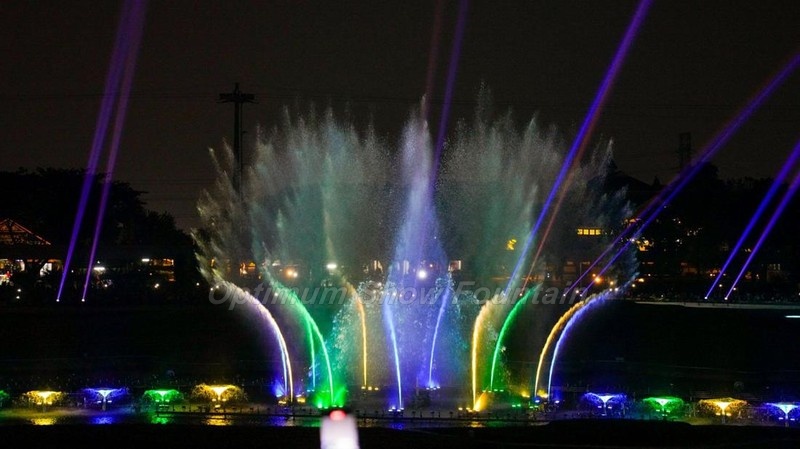
This is especially powerful in multimedia fountain shows, where fog helps laser beams and colored lighting appear brighter, deeper, and more three-dimensional at night. Instead of light disappearing into open air, the fog catches the beam and makes it visible to the audience. This is why fog effects are often used during laser scenes, dramatic openings, and show climaxes.
Fog also softens the movement of water. Around vertical jets, fan nozzles, or water screens, a light mist can create a dreamlike layer that makes the show feel more immersive. It helps blend foreground water effects with background projection, lighting, or architectural scenery, instead of making each element feel separate.
For large outdoor performances, fog should not run randomly. It needs to be programmed with the same timing logic as the water jets, lights, music, and laser effects. A well-designed fountain control system allows fog to appear at the right moment — for example, before a water jet reveal, during a slow musical transition, or just before a fire-and-water climax.
When used correctly, fog becomes more than decoration. It acts as a visual bridge between water, light, music, lasers, and fire, helping the entire fountain show feel like one connected performance. For projects that combine multiple effects, fog can also support a stronger multimedia laser show experience by making beams, colors, and projection moments more visible and atmospheric.
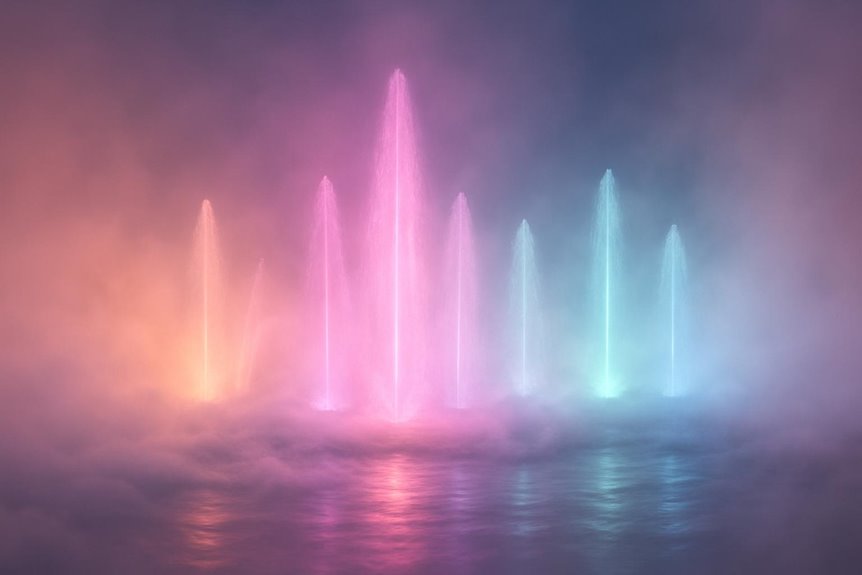
Mist, fog, and water screens are often confused, but they play different roles in a fountain show. Understanding the difference helps project owners choose the right effect instead of adding features that look impressive on paper but do not support the show experience.
Mist is usually lighter and softer. It works well for resorts, gardens, hotel courtyards, and cooling zones, where the goal is to create a calm atmosphere rather than a dramatic performance moment. Mist can make the space feel more comfortable and visually refined, especially when combined with soft lighting.
Fog is denser and more theatrical. In a large fountain show, fog is often used for openings, transitions, reveals, and climactic moments. It helps build anticipation before water jets rise, softens scene changes, and makes lighting or laser effects more visible in the air.
Water screens serve a different purpose. They are designed as projection surfaces for images, video, animation, or branded visual content. Unlike general mist or fog, a water screen needs controlled spray density, stable water flow, and proper viewing angles to support clear projection in a multimedia water show.
Fountain spray, meanwhile, is mainly about physical water movement — jet height, rhythm, shape, and choreography. It creates the body of the performance, while mist, fog, and water screens add atmosphere, depth, or visual storytelling.
In modern fountain systems, these effects can be synchronized with RGB lighting, pumps, valves, music, and show programming through a central control system. This allows fog to appear at the right moment, water screens to support projection scenes, and lighting to shift precisely with the music. For a deeper explanation of how water, light, music, and control systems work together, see our guide on how musical fountains work.
Fog works best when it is used selectively, not continuously. In a large fountain show, fog should support the emotional rhythm of the performance — creating atmosphere, hiding and revealing water effects, and making lighting or laser scenes feel more immersive.
The best moments to use fog include:
For the best result, fog should be programmed as part of the full show sequence, not added as a separate background effect. The timing should be coordinated with water jets, music, lighting, lasers, and control cues so each fog moment supports the overall story of the show.
In professional projects, this requires careful planning through the fountain’s control and show programming system. You can learn more about this process in our guide to musical fountain design, which explains how water movement, lighting, music, and control systems work together in a synchronized performance.
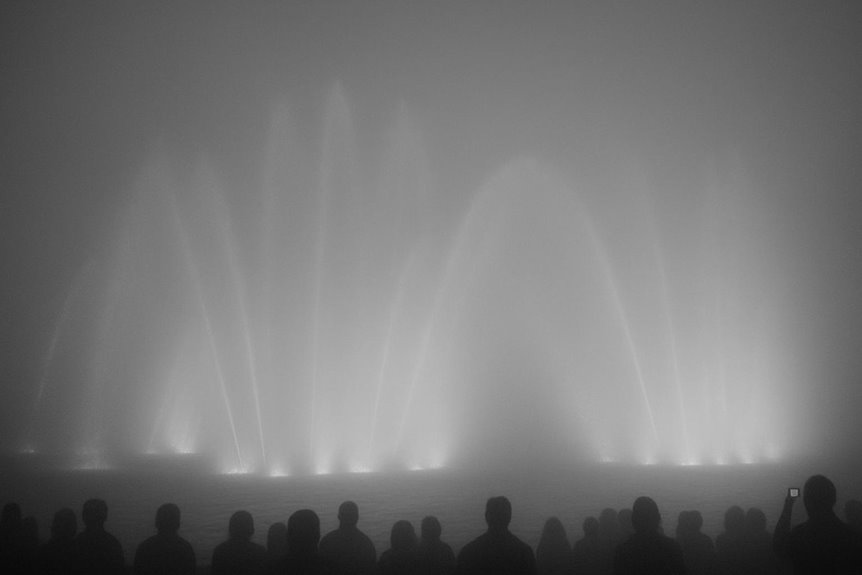
Fog effects work best when the environment supports visibility, control, and guest comfort. In some projects, fog can lose its impact or even create operational problems if site conditions are not planned carefully.
The biggest challenge is wind. In open outdoor spaces, strong wind can disperse fog before it has time to build atmosphere. This makes the effect look weak, especially in large plaza, lake, or waterfront fountain shows. For this reason, fog placement should be planned together with wind direction, viewing angles, and show timing.
Daytime visibility is another limitation. Mist and fog are much more effective at night, especially when combined with lighting, lasers, or projection. Under strong sunlight, the effect may appear too subtle unless it is used for cooling or atmosphere rather than dramatic show impact.
Fog also needs to be controlled around guest areas. Dense fog near walkways, restaurant terraces, hotel entrances, or event seating can affect comfort and visibility. For hotels, resorts, and commercial projects, fog should enhance the guest experience without drifting into spaces where people need clear movement, dining comfort, or safe visibility.
Water quality is equally important. Poorly filtered water can clog mist nozzles, reduce fog consistency, and increase maintenance requirements. A stable fog system needs proper filtration, regular inspection, and a control setup that allows fog to operate only when needed. For larger fountain shows, fog should also be coordinated with the overall fountain control system so it can synchronize with lighting, music, lasers, and water choreography.
In short, fog should not run continuously or be added only for decoration. It works best when it has a clear purpose — such as building atmosphere, supporting laser visibility, softening transitions, or creating a dramatic reveal inside a larger multimedia water show.
In the domain of outdoor water shows, an essential consideration lies in the strategic orchestration of fog effects. Planners must first define fog's purpose, whether it's to create atmosphere, enhance reveals, support laser visibility, cool the environment, or aid projection. Precise placement of fog nozzles is vital, taking into account viewing angles and prevailing wind directions.
Testing on-site is imperative as fog's behavior can vary with real weather conditions. During on-site commissioning, repeated runs help adjust fog timing alongside jets, lighting, and music when wind, latency, or equipment response changes the planned effect. For more insights, explore Fountain Control Systems.
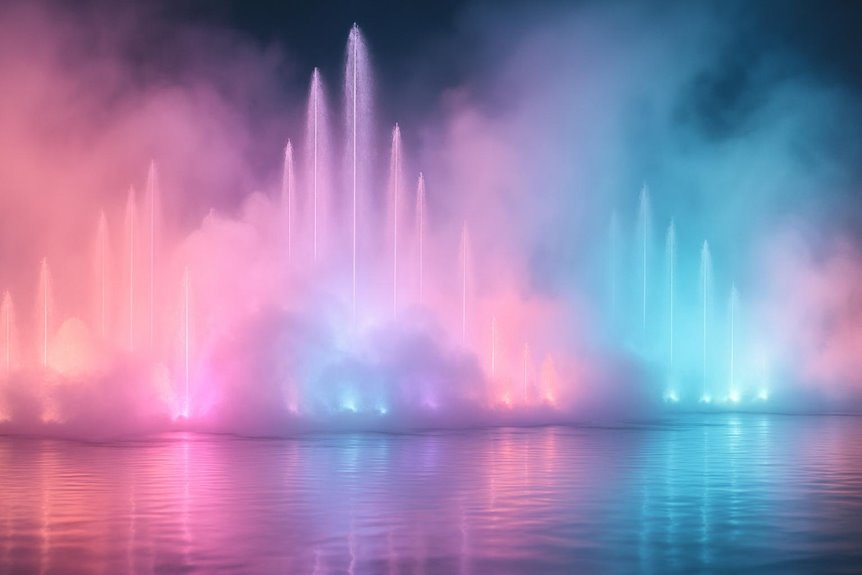
Fog should not be added to a fountain show just because it looks dramatic. It works best when it has a clear role in the performance — building atmosphere, revealing light beams, softening water movements, or creating stronger transitions between show scenes.
Optimum Show uses fog effects as part of integrated musical fountain and multimedia water show design. Instead of treating fog as a separate add-on, it is planned together with water jets, LED lighting, laser effects, projection, fire effects, and music choreography. This allows the fog to support the emotional rhythm of the show rather than simply running in the background.
For outdoor fountain projects, Optimum Show also considers practical site conditions such as wind direction, audience viewing angles, lighting conditions, and water quality. Fog density, nozzle placement, and timing need to be adjusted according to the real environment, especially for resorts, theme parks, waterfronts, shopping malls, and large public plazas.
Through programmable fountain control systems, fog can be triggered at specific moments — during an opening scene, before a dramatic climax, or when laser beams need greater visibility. When synchronized correctly, fog helps turn water, light, sound, and special effects into one complete show experience.
As a turnkey fountain show provider, Optimum Show supports the full process from concept design and 3D animation to equipment manufacturing, installation, programming, testing, and operator training. For projects that require a more immersive nighttime attraction, fog can be combined with a musical fountain, fountain control system, or fire fountain to create a stronger multimedia water show.
If you are planning a musical fountain, multimedia water show, or nighttime attraction that needs stronger atmosphere and visual depth, contact us to discuss your fountain show concept and request a custom design proposal.
Fog whispers secrets of mystery and allure, transforming the fountain show into a domain of dreams. It cloaks the water in ethereal veils, blending light and sound, crafting an enchanting tapestry that captivates and mesmerizes the audience.
Fog effects can indeed synchronize with music in fountain shows, creating an immersive experience. This harmony of sound and mist transforms the visual landscape, crafting a symphony of sight and sound that captivates and enchants audiences.
Coincidentally, as fog dances with light, maintenance calls for regular cleaning of nozzles and fog generators, checking water quality, and guaranteeing electrical components remain weatherproof. This meticulous care ensures the ethereal allure of the fountain remains enchanting.
Weather conditions, like wind and humidity, greatly influence fog performance in fountain shows. Wind disperses fog, diminishing visual impact, while humidity enhances density, creating a more immersive experience. Temperature variations can also affect fog formation and evaporation rates.
Fog effects, those whimsical whispers of mist, claim environmental friendliness by consuming less water and cooling the air. Their gentle dance is a masterstroke of illusion, offering a poetic, sustainable embrace to fountain design, even amidst skeptical gazes.
Share your site size, water depth, location or CAD drawing with our engineering team. We can evaluate the project requirements and recommend a suitable fountain system.