Dancing fountain design is not simply about creating visual effects—it is a system-level design process that combines hydraulics, control systems, lighting, and public safety into a coordinated performance. Behind every successful water show lies careful planning that balances visual impact, reliability, operating cost, and long-term maintenance.
As dancing fountains become permanent features in public spaces, commercial developments, and tourism projects, design expectations have shifted from decoration to engineered performance. This guide explains how professional dancing fountain design is approached in real projects, focusing on the decisions and constraints that shape performance, durability, and value over time.
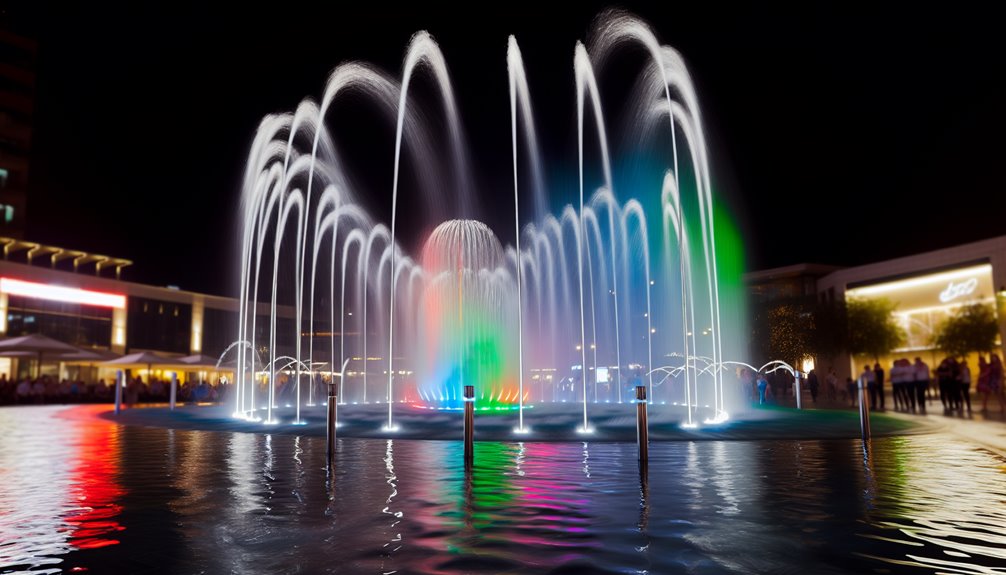
The artistry of dancing fountain design lies in the fusion of water, light, and sound, orchestrated through control technology and careful planning.
At the core is dancing fountain system engineering, which integrates programmable water fountain design to create visual spectacles. Using advanced control systems, water jets are choreographed to move in sync with music or pre-set patterns, forming dynamic arcs and layered effects.
This synchronization is achieved through software that plans every movement in advance, ensuring fluid, repeatable performance. Colorful LED lighting transforms the water display into a vibrant canvas, adding a further layer to the experience.
Building upon the intricate artistry of dancing fountain design, the core objectives focus on achieving a seamless integration of water, light, and sound to craft mesmerically choreographed spectacles.
In large scale dancing fountain design, the intent is to captivate audiences through grandiose displays and fluid motion synchronizations.
Interactive fountain design for public spaces prioritizes engaging experiences, allowing spectators to influence performances, enhancing communal connectivity.
Key objectives include:
These principles guarantee dynamic and inspiring visual artistry.
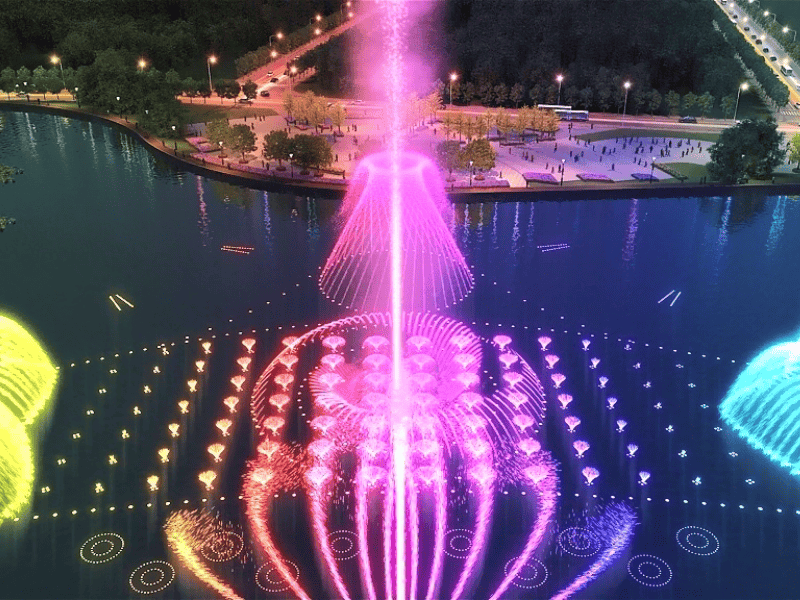
In the domain of dancing fountains, concept design and engineering design serve distinct yet complementary roles.
Concept design focuses on creating an artistic vision, encompassing the choreography of water, light, and sound to produce an engaging spectacle.
Meanwhile, engineering design translates these artistic ideas into practical solutions, ensuring that the mechanical, hydraulic, and electrical systems work seamlessly to bring the envisioned performance to life.
Conceptualization in dancing fountain design embodies a delicate balance between artistic vision and engineering precision. The process involves creating a musical fountain system design that incorporates aesthetic elements while guaranteeing functionality.
Outdoor dancing fountain design aims to captivate audiences with dynamic water choreography synchronized with music. Designers must consider:
This multidisciplinary approach guarantees that the artistic allure of the fountain complements its technical robustness, resulting in public installations that both entertain and inspire.
Crafting a successful dancing fountain design requires a harmonious blend of artistic vision and engineering precision. A distinction exists between concept design, where creativity flourishes, and engineering design, which focuses on the technical intricacies of systems like the DMX-controlled fountain system. In public plaza fountain design, engineers must consider robust systems capable of handling complex choreography and water control. The seamless integration of lighting, sound, and water dynamics demands meticulous planning.
This phase addresses hydraulic calculations, pump and pipe sizing, control architecture, electrical protection, safety compliance, and maintenance access. Engineering design determines whether the concept can perform consistently under real conditions such as wind, climate, daily operating hours, and long-term wear.
Here, design decisions are evaluated against technical constraints and lifecycle cost. Jet heights may be adjusted for wind tolerance, nozzle density balanced for hydraulic stability, and control systems selected to ensure repeatable choreography. Successful engineering design preserves the original concept while ensuring the fountain can operate safely, efficiently, and predictably over time.
The performance of a dancing fountain is determined less by individual components and more by early design decisions that define how the system behaves under real conditions. These decisions involve trade-offs between visual impact, control precision, environmental tolerance, and long-term reliability.
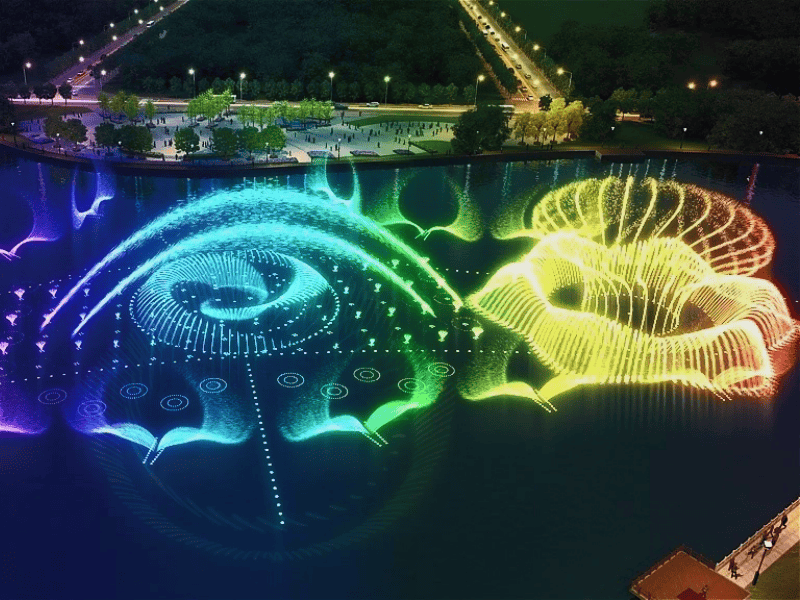
One of the first design choices is whether to prioritise maximum jet height or broader water coverage. Tall vertical jets create landmark visibility but are more sensitive to wind and overspray, often requiring reduced operating hours in exposed sites.
Wider, lower arrays offer better wind tolerance and visual consistency, especially in urban plazas where audience distance is limited. Effective design balances height with coverage based on site exposure and viewing conditions rather than aiming for peak height alone.
The interplay between nozzle density and hydraulic stability is central to dancing fountain performance. A higher nozzle density allows for intricate water displays and complex choreography, but must be balanced with hydraulic stability to guarantee consistent water pressure and flow — too many nozzles can strain the hydraulic system, leading to performance inconsistencies and mechanical wear.
Calculating the maximum nozzle count the hydraulic system can support without compromising pressure stability is a core part of this stage, and proper planning here mitigates most downstream reliability risk.
Achieving the right balance between lighting saturation and visual readability in a dancing fountain requires careful design rather than maximum brightness. High RGB intensity does not always enhance visual impact—over-saturated lighting can flatten depth and obscure water movement, especially at longer viewing distances. Excessive brightness may overwhelm the audience, while insufficient illumination can weaken the clarity of choreographed water effects.
Designers must consider the interplay between lighting intensity and fountain choreography to maintain clarity and engagement.
Balancing these factors maintains a mesmerizing and coherent fountain experience.
Balancing lighting saturation with visual readability is only one element of designing an effective dancing fountain display. A critical consideration is the choice between DMX-only and PLC-assisted control architectures. DMX technology, known for its precision in controlling lighting and sound, offers a robust solution for musical fountains. In contrast, PLC-assisted systems afford enhanced flexibility, handling complex sequences and real-time adjustments.
| Control Type | Advantages | Best Use Cases |
| DMX-Only | Precision, simplicity | Musical fountains, light shows |
| PLC-Assisted | Flexibility, complex control | Interactive, large-scale installations |
| Combined Approach | Versatility, integrated control | High-performance, diverse scenarios |
The decision hinges on project complexity and desired performance, ensuring the fountain’s choreography and technological integration align seamlessly with the envisioned spectacle.
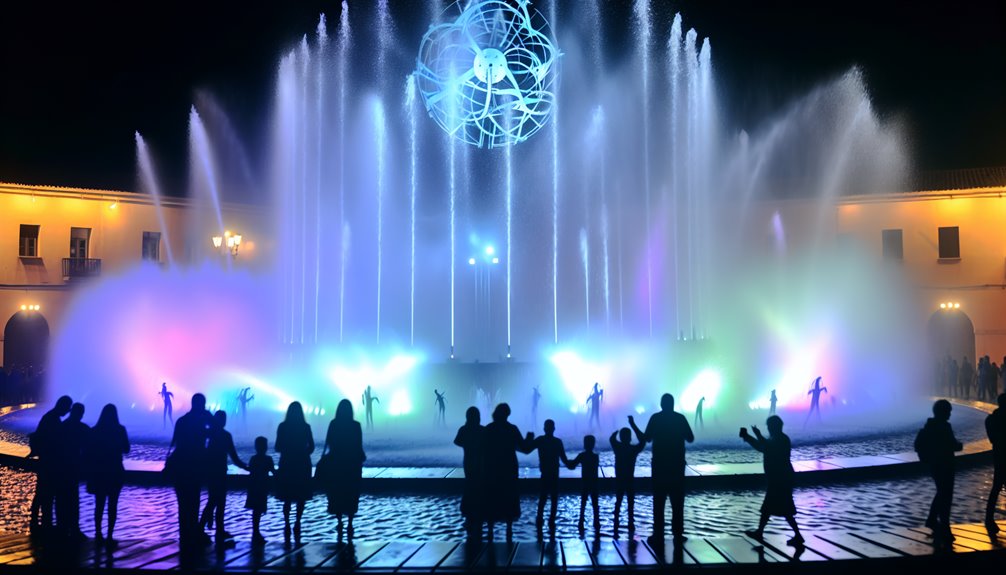
Effective dancing fountain design starts with understanding how and where people experience the show. A fountain that performs well on paper can feel underwhelming—or overwhelming—if audience position, movement, and viewing distance are not considered during design.
In plazas and waterfronts, audiences are rarely static. People approach from multiple directions, pause briefly, or watch while moving through the space. Design must therefore prioritise clear sightlines and layered choreography, ensuring key water movements remain readable from both near and far positions. Foreground jets provide rhythm and engagement, while mid- and background elements establish scale and depth.
Viewing distance influences jet height, spacing, and lighting intensity: shorter distances favour lower, wider compositions with controlled brightness, while long-range viewing allows for taller jets and stronger contrast. By designing around real audience behaviour rather than idealised viewpoints, dancing fountains deliver more consistent visual impact and stronger public engagement.
Environmental and site conditions play a decisive role in dancing fountain design, often setting hard limits on what can be achieved visually and operationally. Ignoring these constraints early can lead to unstable performance, restricted operating hours, or costly retrofits after installation.
Wind exposure is one of the most critical factors. Open plazas, waterfronts, and elevated sites require careful control of jet height and spray patterns to prevent overspray and water loss. Designers often compensate with lower jet profiles, wider compositions, or automatic wind-sensing controls that adjust performance in real time.
Climate conditions also influence material selection and system layout. Hot, arid regions demand evaporation control and robust filtration, while coastal environments require corrosion-resistant materials and sealed electrical components. In colder climates, pipe routing, pump rooms, and seasonal shutdown strategies must be integrated into the design from the outset.
Site-specific factors—such as available power and water supply, basin geometry, underground services, and maintenance access—further shape design decisions. A successful dancing fountain responds to these realities, ensuring that performance ambitions remain achievable, reliable, and sustainable within the physical and environmental limits of the site.
Basin size needs to match the planned jet layout and audience capacity — undersized basins increase splash loss and maintenance costs. Viewing angles are mapped against primary pedestrian flows and key vantage points to confirm sightlines before layout is finalised, and cable routing for pumps, controls, and lighting is planned early using accessible, dry conduits to minimise civil works and future disruption.
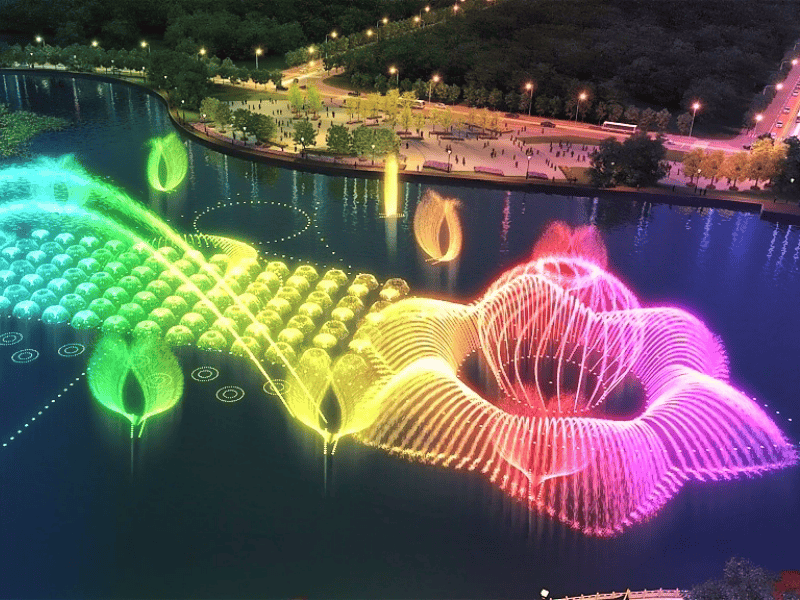
Behind every successful dancing fountain is a set of core engineering systems designed to work together as a single, coordinated platform. Design quality depends not on individual components, but on how these systems are integrated and balanced.
The hydraulic system orchestrates water jet performance with precision. High-speed pumps and variable-frequency drives (VFDs) control fluid dynamics, enabling dynamic water effects. Specialty nozzles such as laminar and fire-and-water torch types add visual texture. Water valve actuators adjust jet movements in real time to maintain synchronization with the show.
Uniform jet performance depends on controlling pressure losses across pipes, fittings, and valves. Designers use Bernoulli-based calculations and hydraulic models to evaluate friction loss, minor losses, and dynamic effects caused by fast-acting solenoid valves — proper hydraulic balancing is what keeps choreography stable and jet behaviour predictable show after show.
| Design Aspect | Engineering Focus | Cost Impact |
|---|---|---|
| Jet spacing | Visibility, overlap, wind tolerance | Affects nozzle count and pipe runs |
| Pipe diameters | Flow velocity, friction loss | Influences pump size and energy use |
| Valve selection | Response time, Cv value | Balances precision vs unit cost |
| Pump head | Required nozzle pressure | Drives capital and operating cost |
Lighting design is a critical component in the orchestration of water choreography. RGB LED lights, valued for their vibrant color range and energy efficiency, are used to synchronize with the fountain's fluid dynamics. Using DMX controllers, lights are precisely timed with the jets to ensure cohesive integration with water movement.
Lighting intensity and color shifts add depth to the performance, and real-time adjustment capability keeps lighting effects aligned with the show as it plays out.
DMX-addressable RGB LED projectors form the base lighting palette, with white channels often added to maintain brightness and clarity at long viewing distances while managing overall power consumption. Rather than treating colours individually, designers program colour states — warm-cool contrasts, axial gradients across the basin, accent tones for high jets — and build visual depth through layered lighting across foreground, midground, and background beams. Timing is programmed at the millisecond level, controlling fades, chases, and strobes to follow water trajectories precisely without overloading drivers or exceeding energy limits.
Control systems and show programming are the core of orchestrating water, light, and — where applicable — sound. These systems use choreography software capable of millisecond-level timing, ensuring the water's movement stays synchronized with its cues.
High-speed VFD pumps and DMX controllers coordinate jets, lights, and valve actuators. Programming logic, including beat- or cue-recognition where relevant, provides dynamic adaptability and allows for real-time adjustments during a performance.
Dancing fountain design varies significantly depending on application, as each environment introduces different spatial, operational, and technical constraints. Understanding these differences allows designers to align visual ambition with performance stability, safety, and long-term operation.
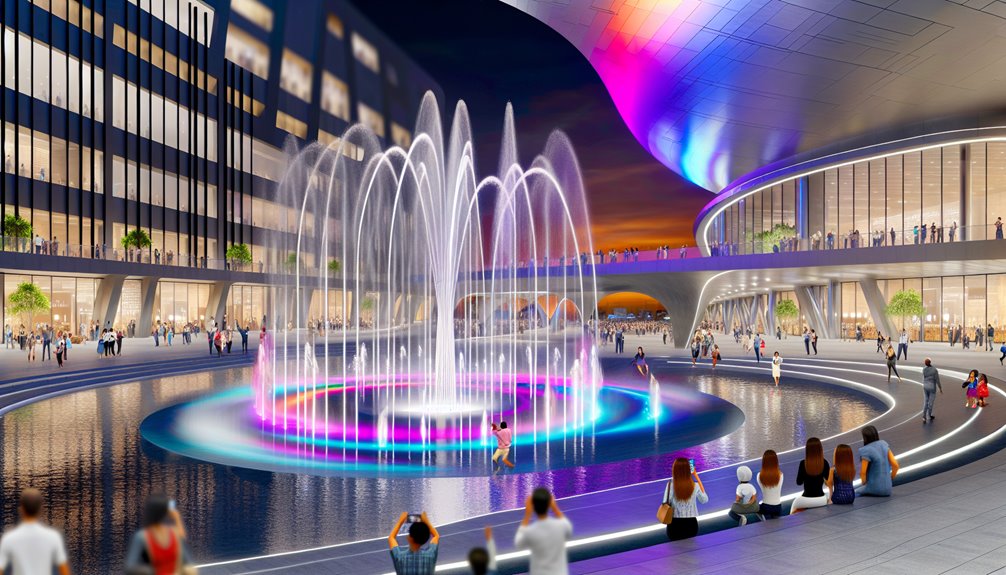
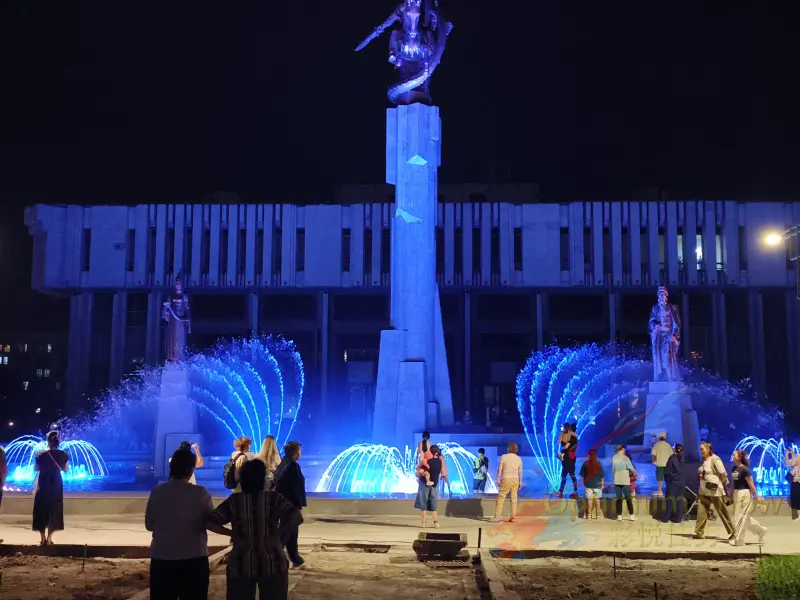
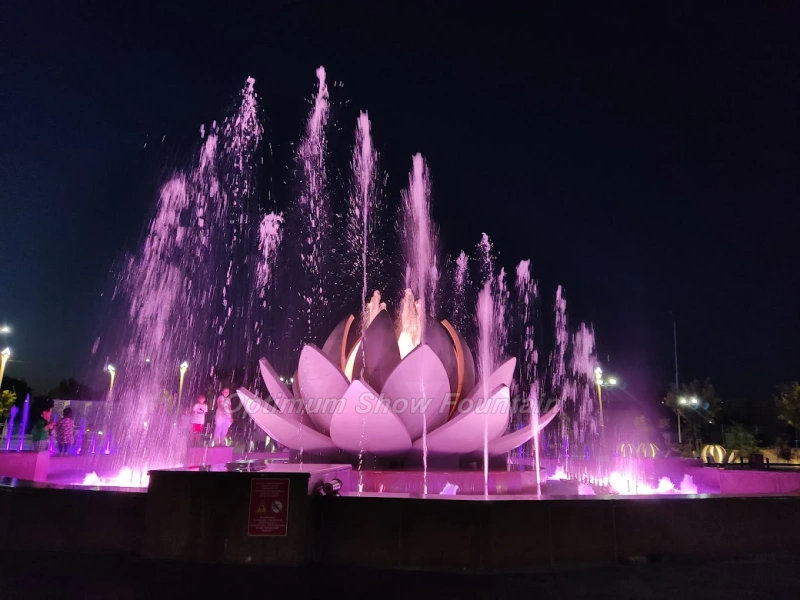
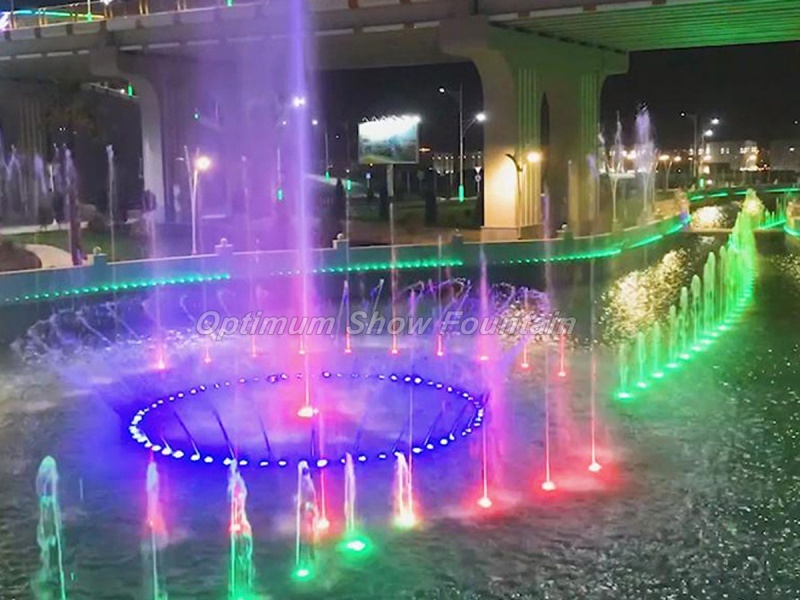
Urban plaza and public square fountains are designed for close public interaction and frequent daily operation. Because audiences experience these fountains from short and varying distances, design prioritises controlled spray patterns, clear sightlines, and legible choreography rather than extreme jet height. Wind sensitivity is a major consideration, often leading to lower vertical profiles and wider compositions to reduce overspray and water loss.
From an engineering perspective, these installations require robust safety measures, including electrical protection, slip-resistant surfaces, and reliable drainage. Systems are typically programmed for multiple show modes — daily operation, festivals, and special events — placing emphasis on durable components and easy maintenance access to support long-term public use.
Flush-mounted nozzles and walkable grates are common, letting the same footprint double as open pedestrian circulation when the show isn't running. Centralised pump rooms with efficient filtration and VFD-driven pumps keep lifecycle costs under control despite the high daily duty cycle.
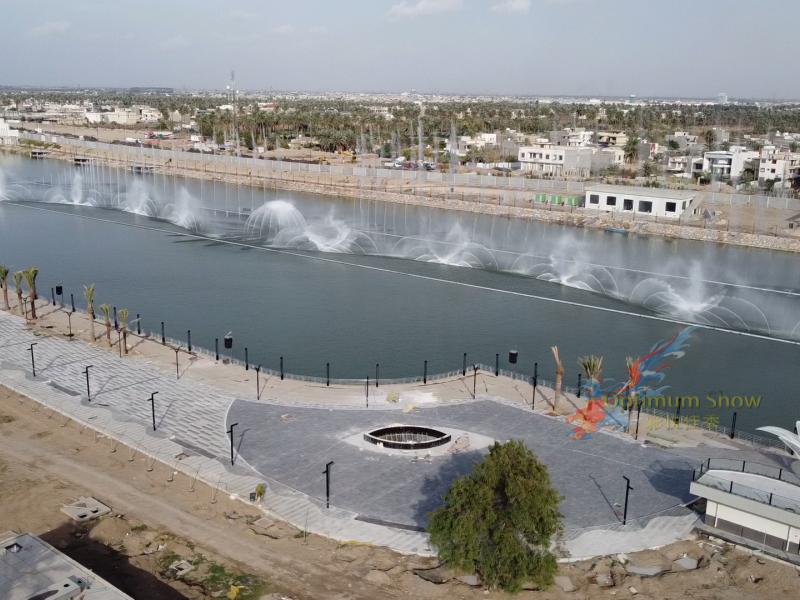
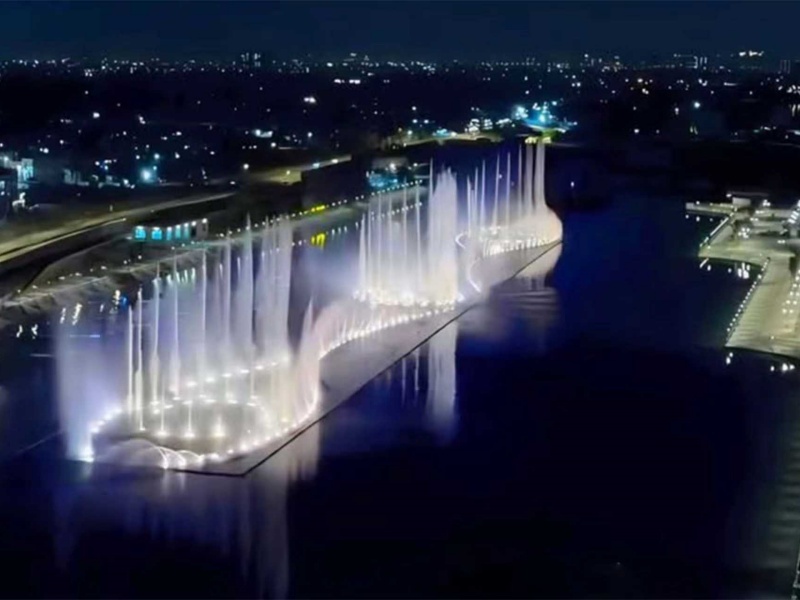
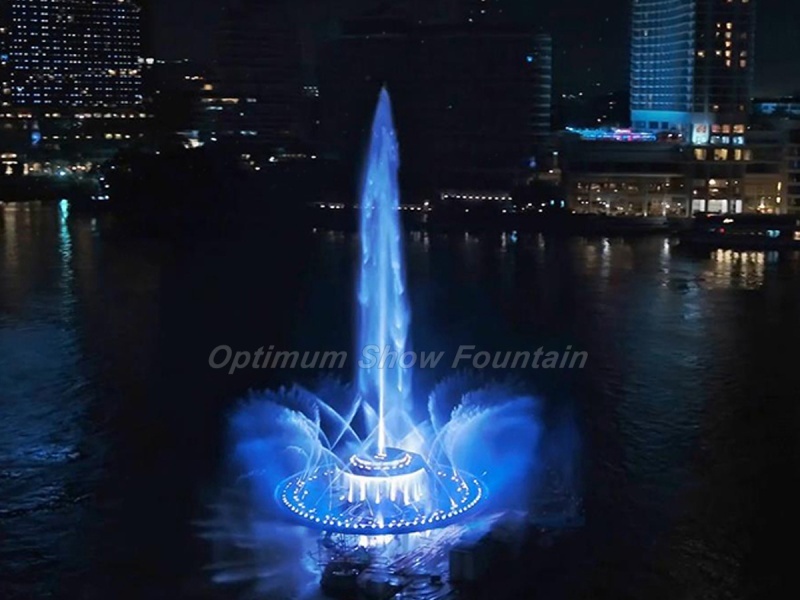
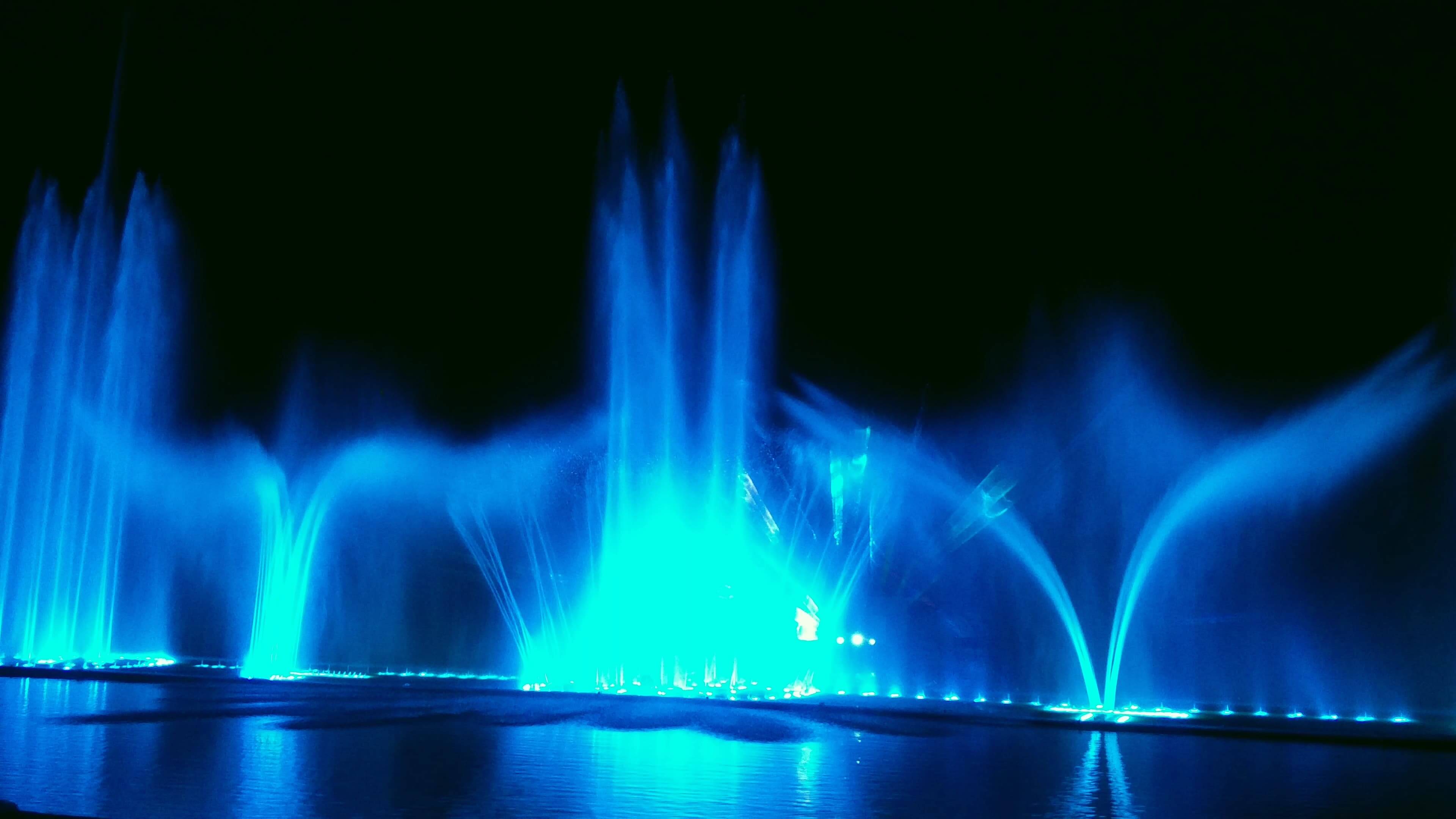
Floating and lake-based fountains present an innovative approach to integrating water displays in natural and expansive environments, offering an enchanting aesthetic that seamlessly blends with the surrounding landscape.
These fountains, anchored to the bed of lakes or ponds, utilize buoyant platforms to support intricate systems of pumps and nozzles. The engineering behind these installations allows for impressive vertical water displays and dynamic choreographies, powered by submersible pumps.
Lighting systems enhance the visual impact, with LED technology offering energy-efficient illumination that complements the water's movement. Control systems, often employing DMX technology, guarantee precise synchronization of water jets and lighting effects.
In commercial and resort environments, dancing fountains function as experiential features that support branding, guest engagement, and nighttime activation. Design balances visual impact with quiet operation, controlled schedules, and energy efficiency, ensuring the fountain enhances the environment rather than overwhelming it.
Because these systems often run for extended daily hours, lifecycle cost becomes a key design factor. Engineers focus on efficient pumps, LED lighting, and reliable control systems that allow show updates without hardware changes. Architectural integration and circulation flow are also essential considerations.
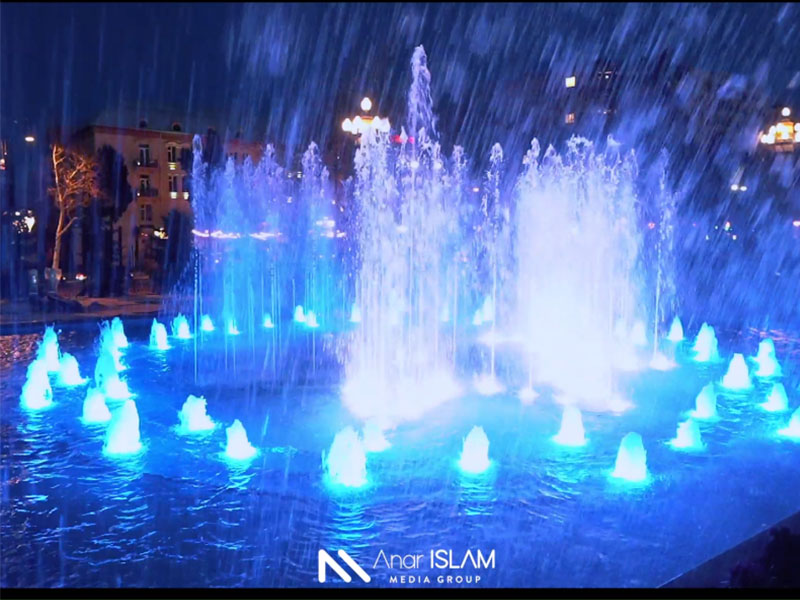
Dry deck fountains are designed for direct public interaction, allowing the area to function as a pedestrian space when inactive. Nozzles, lighting, and drains are recessed flush with the surface, requiring precise civil coordination and robust waterproofing. Because users—often children—interact directly with the water, safety and water quality standards are particularly strict.
Design emphasises fast drainage, slip-resistant finishes, and reliable filtration and disinfection systems. Control logic must manage frequent on–off cycling without excessive wear, while maintaining predictable water behaviour under heavy use.
Without a traditional basin, maintenance access is simplified and residual water is quickly removed, making dry deck fountains well suited to urban plazas, playgrounds, and public squares.
When orchestrating event and temporary water shows, the design of dancing fountains must embrace both adaptability and innovation. Engineers and designers focus on creating systems that can be easily assembled and disassembled, ensuring that the fountains can be relocated or modified with minimal effort.
Temporary installations often leverage lightweight materials and modular components to enhance their flexibility and portability. Creative programming plays a vital role in these events, with choreographies tailored to specific themes and audience expectations.
In cultural tourism parks, dancing fountains act as nighttime economy drivers, extending visitor stay and increasing secondary spending. These installations are typically located in central lakes or plazas, visible from main circulation routes and viewing terraces, and are judged commercially against ticketing, food-and-beverage, and retail revenue rather than foot traffic alone.
A rotating library of 10 to 20 shows is common, keeping the experience fresh for repeat visitors across a season rather than relying on a single fixed program. Networked PLC/DMX control platforms allow multiple daily shows and seasonal reprogramming without hardware changes — an important cost consideration given how much of this category's return depends on the fountain staying visually current year after year.
A professional dancing fountain design process follows a structured workflow that reduces risk, controls cost, and ensures the final installation performs as intended. Skipping or compressing stages often leads to redesign, unstable operation, or higher lifecycle expenses. The six stages below outline how to build a fountain show from initial site visit through to opening night.
| Project Type | Typical Total Timeline |
|---|---|
| Small plaza fountain | 1–3 months |
| Commercial dancing fountain | 3–6 months |
| Large multimedia / landmark fountain | 6–12+ months |
Actual timelines depend on project scale, site readiness, equipment lead times, and installation conditions.
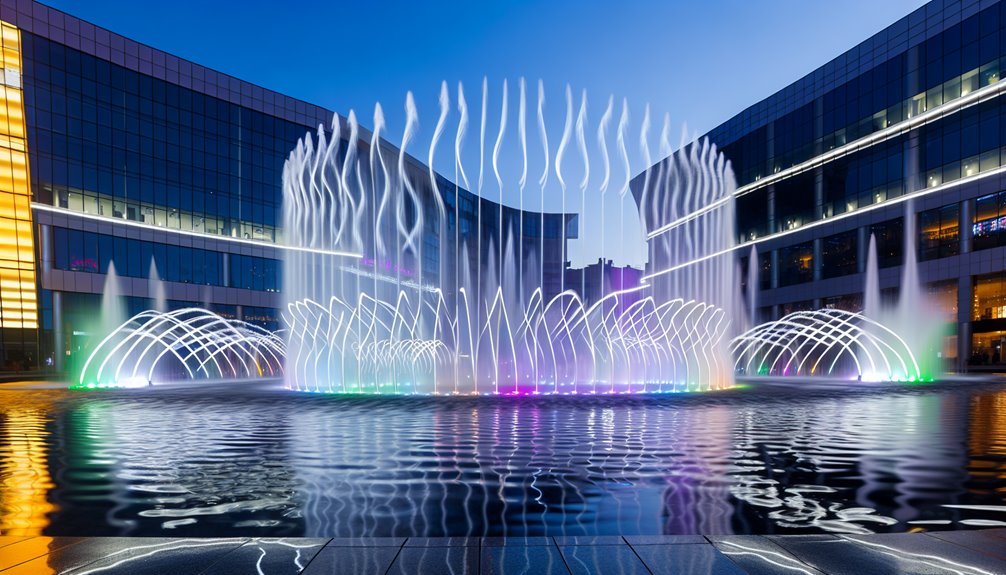
Before design begins, site analysis and feasibility planning establish whether the location can support the intended fountain. Key considerations include location suitability (space, accessibility, environmental impact), resource availability (water and power supply), technical constraints (hydraulics, acoustics, lighting), and regulatory compliance (local codes, permits, safety standards).
Typical duration: 1–3 weeks depending on project scale and site conditions.
Designers use 3D modelling software to visualize water movements, lighting effects, and — where relevant — musical synchronization before any hardware is committed. This virtual rehearsal stage is used to refine choreography, test nozzle configurations, and adjust lighting schemes ahead of detailed engineering.
Typical duration: 2–4 weeks including concept iterations.
Detailed engineering translates the approved concept into buildable documentation covering hydraulics, electrical systems, and control architecture. This includes nozzle combinations, lighting circuit design, control system specification, and energy-saving equipment selection (efficient pumps, LED fixtures).
Typical duration: 2–6 weeks for hydraulic, electrical, and control documentation.
Nozzles, pumps, solenoid valves, and control panels are fabricated or sourced and factory-tested against the engineering data. DMX or PLC panels are assembled, wired, and labelled, and control software is pre-programmed and bench-tested before it ever reaches site — catching integration issues while they're still cheap to fix.
Typical duration: 4–10 weeks depending on equipment complexity and lead times.
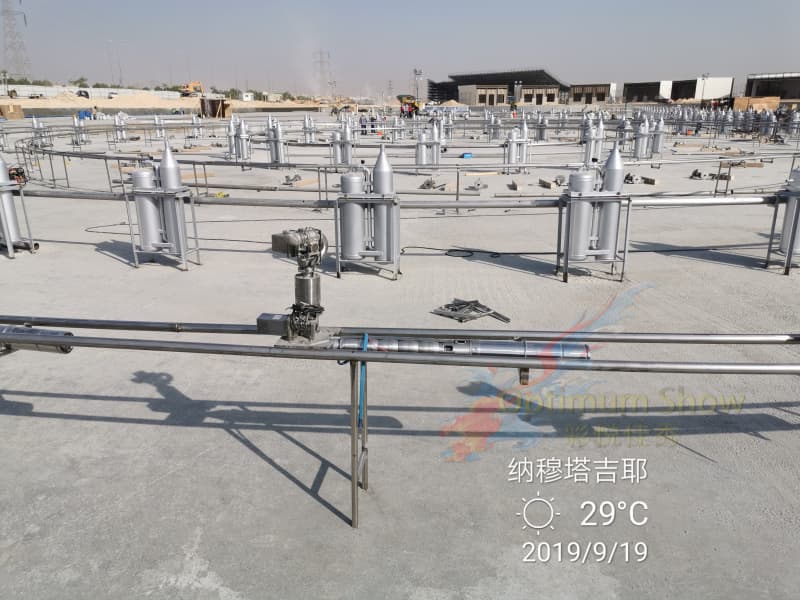
Excavation, basin construction, and cable trenching are carried out to match the approved nozzle grid and pump layout. Manifolds, nozzles, pumps, and valves are installed and aligned to specified heights and angles, and control panels are mounted in dry, accessible technical rooms.
Typical duration: Varies significantly by site — commonly 2–4 months for medium-to-large installations.
Control programming and commissioning transform the installed hardware into a working show. This phase involves synchronising water, light, and sound (where applicable) via DMX or PLC, then rigorous testing and fine-tuning under real operating conditions to confirm the fountain performs as designed before handover.
Typical duration: 2–4 weeks for testing, calibration, and final sign-off.
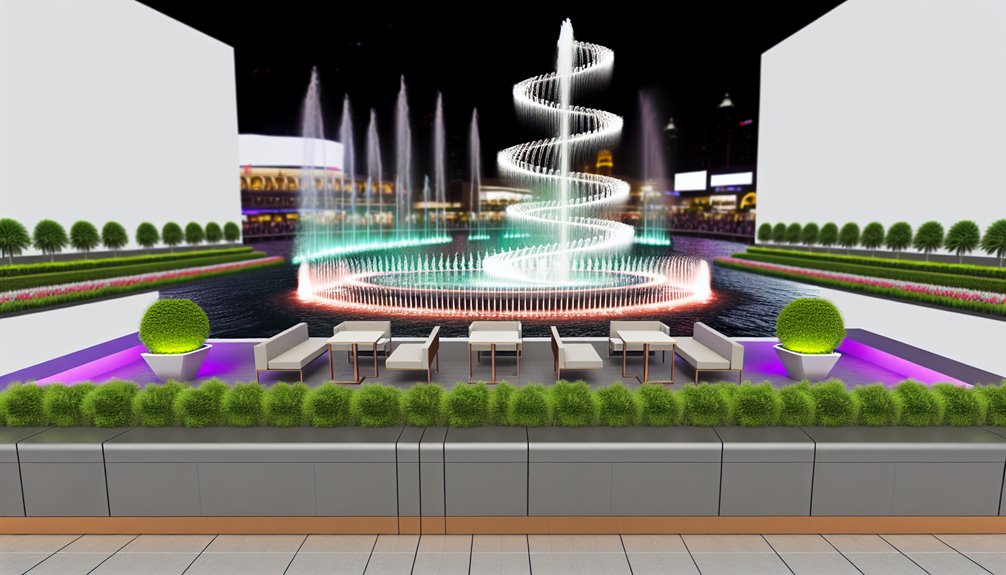
Most dancing fountain design failures begin as planning mistakes that later surface as operational and engineering problems. Each of these is straightforward to avoid at the design stage, and expensive to correct after construction is complete.
A thorough site assessment is often overlooked or compressed to save time early in a project. The result is frequently a mismatched fountain size — either too large for the space, creating overspray and wind problems, or too small, underwhelming the intended audience. Site assessment findings should directly shape basin size, jet height, and layout, not just confirm a design that was already decided.
Incorrect pump selection or unbalanced hydraulic design causes excessive splashing, uneven jet heights, and unwanted noise, undermining the visual composition the choreography was designed to achieve. Flow distribution needs to be calculated and balanced across the full nozzle layout, not sized to a single "worst case" jet.
Overly bright or poorly placed lighting can wash out the water effect it's meant to highlight, while underpowered lighting leaves the show difficult to read at a distance. Well-placed underwater LED lighting, calibrated to viewing distance and ambient light conditions, does more for visual impact than simply adding more fixtures.
Choosing materials on upfront cost alone — rather than for durability under constant water exposure and environmental conditions — is one of the most common causes of early component failure. Inferior nozzles, fittings, and electrical housings shorten service life and increase the total cost of ownership well beyond any savings made at purchase.
Plan selection and size have the greatest impact on initial cost, with larger and more complex designs requiring higher material and labor spend. Material choice — from cost-effective plastics to durable stainless steel — affects both construction expense and ongoing maintenance needs.
Installation costs fluctuate based on design intricacy, custom features, and technology integration. Energy-efficient pumps and LED lighting present long-term cost-saving opportunities that offset a higher upfront spec.
Maintenance strategy — regular upkeep, eco-friendly water treatment options — is essential for sustaining performance over the life of the installation. Design and installation expertise, combined with attention to visual impact and site environment, enhances both cost efficiency and long-term property value.
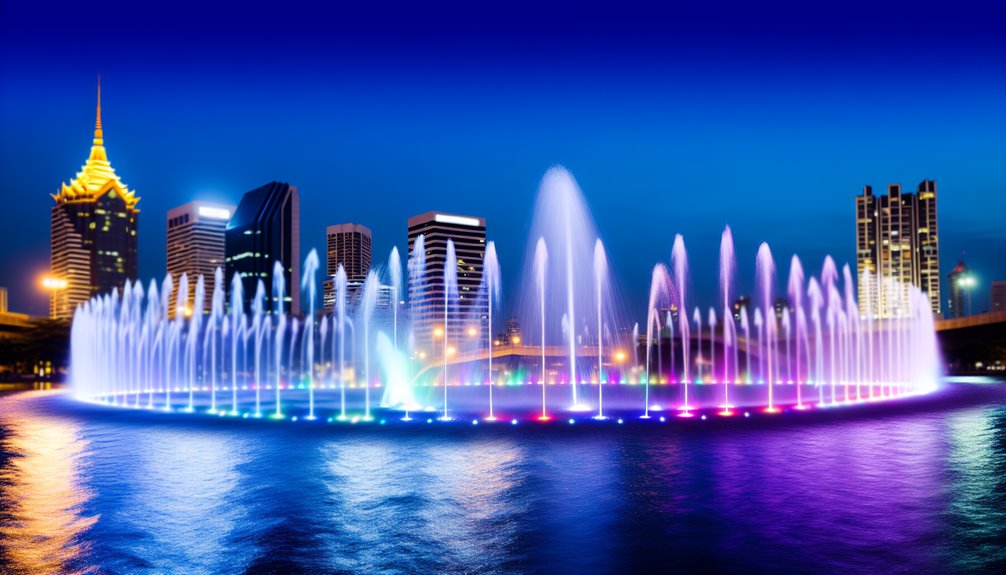
Guaranteeing safety and compliance in dancing fountain design demands meticulous attention to detail and strategic planning.
Key considerations include:
Optimum Show approaches dancing fountain design as a disciplined engineering process supported by creative control, rather than a purely decorative exercise. Our work focuses on translating design intent into systems that perform reliably under real site conditions.
We provide end-to-end services covering concept development, 3D animation, hydraulic and control system engineering, equipment manufacturing, installation, and commissioning. This integrated workflow allows design decisions to be evaluated early against performance, safety, and lifecycle requirements.
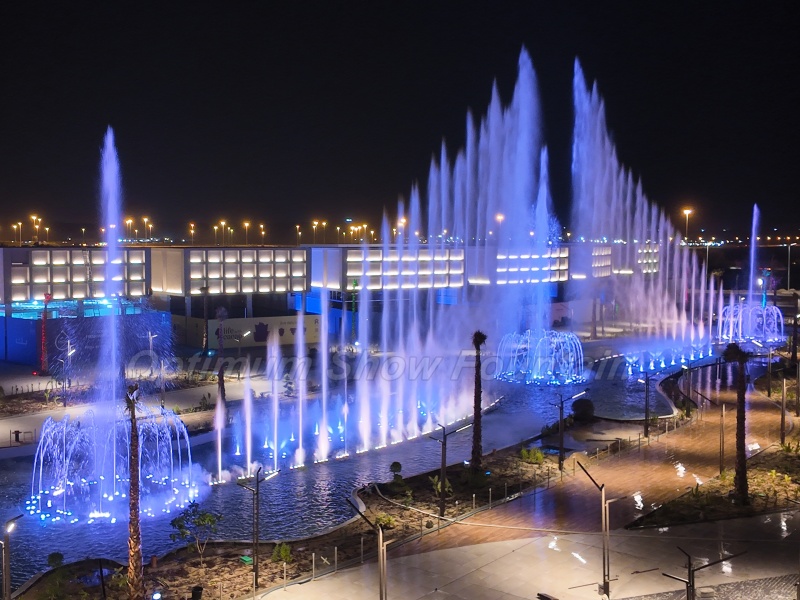
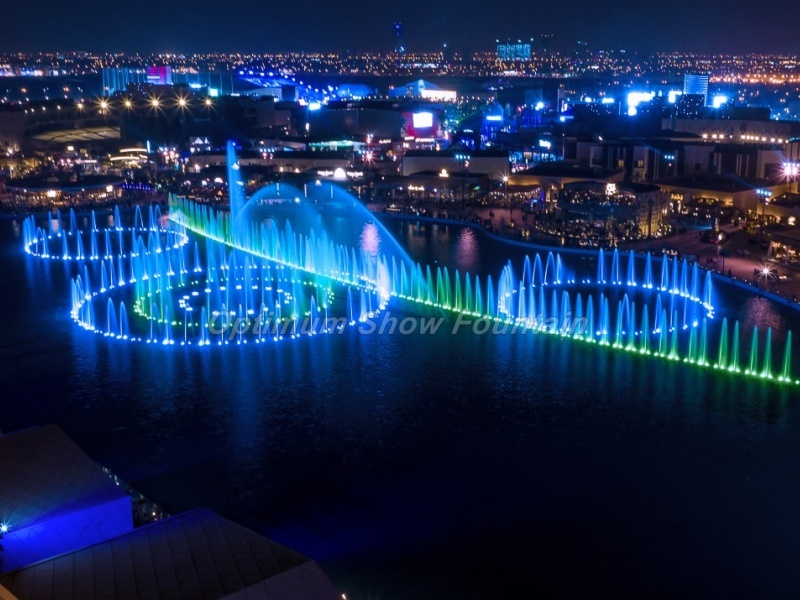
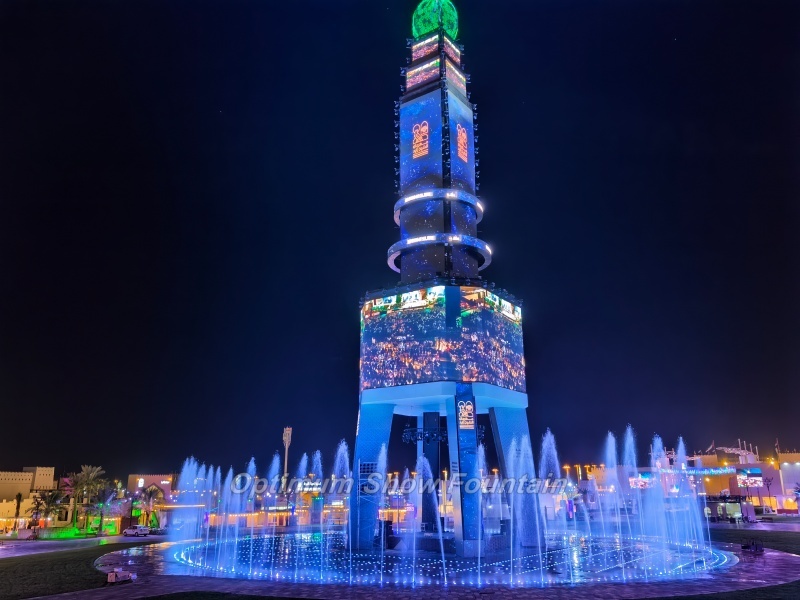
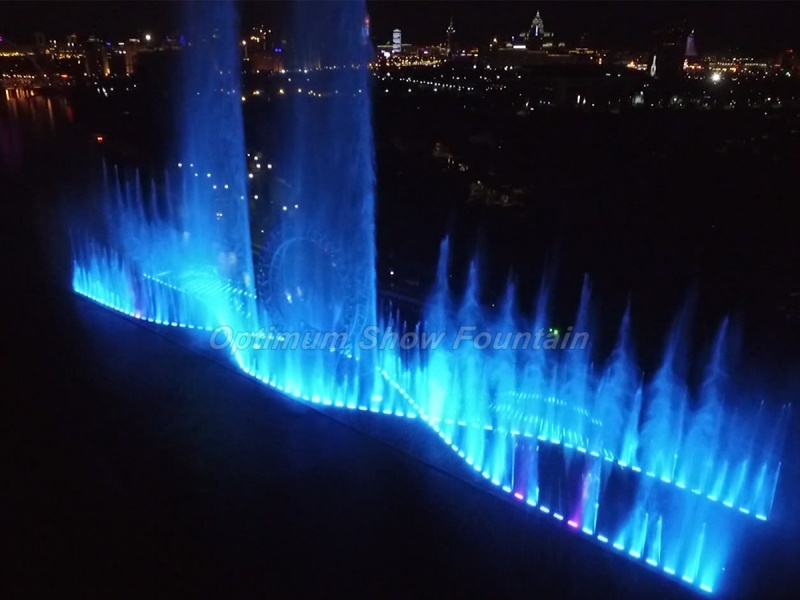
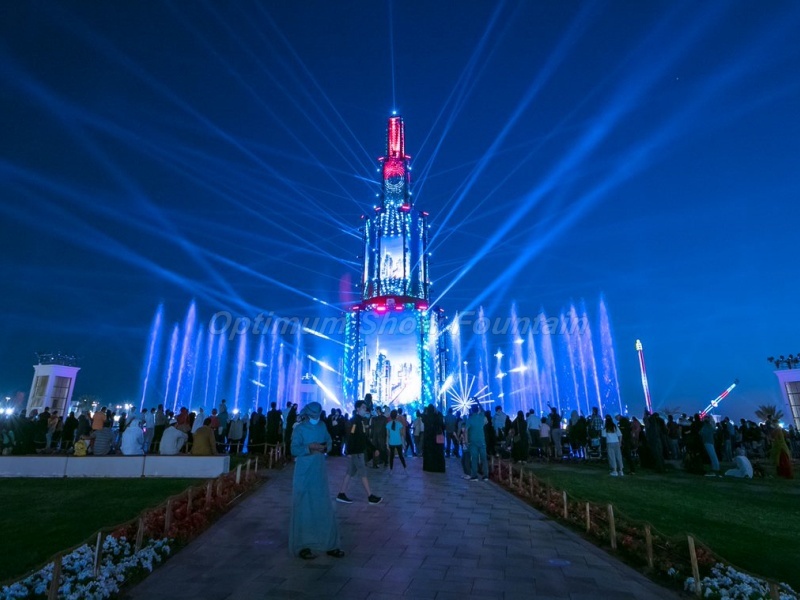
Our experience includes large-scale public and commercial projects such as the Sheikh Zayed Festival fountain and Riyadh Boulevard City fountain, where complex choreography, DMX-based control, and site-specific constraints required close coordination between design and engineering teams.
By combining proven technologies with practical design discipline, Optimum Show helps clients deliver dancing fountain installations that remain stable, maintainable, and visually effective over time.
If you are planning a dancing fountain project and need professional design support, contact Optimum Show to discuss your site conditions, performance goals, and technical requirements.
Musical fountains typically require maintenance every 2-3 months, depending on usage and environmental conditions. Regular checks guarantee peak performance, addressing potential blockages and wear on pumps, solenoids, and nozzles, enhancing the longevity and reliability of the installation.
The typical lifespan of fountain components varies: pumps last 5-10 years; LED lights, 50,000 hours; nozzles depend on material quality, usually 10-15 years. Regular maintenance extends longevity, ensuring ideal operation and minimizing premature wear.
Eco-friendly fountain water usage can be achieved through the use of recirculation systems, reducing waste, and utilizing rainwater harvesting techniques. Advanced filtration minimizes environmental impact, while solar-powered pumps offer sustainable energy solutions, ensuring a harmonious balance between nature and innovation.
Fountains can operate in freezing temperatures through the use of submersible heaters or anti-freeze systems, ensuring water remains liquid. Proper insulation and winterization techniques prevent damage, allowing for continued operation and maintenance of aesthetic appeal during cold months.
Coincidentally, noise levels of operating fountains vary considerably based on design and mechanics. Technical adjustments such as pump selection and water jet calibration can minimize sound. Innovative designs creatively balance acoustics and aesthetics, enhancing public enjoyment and understanding.
Share your site size, water depth, location or CAD drawing with our engineering team. We can evaluate the project requirements and recommend a suitable fountain system.