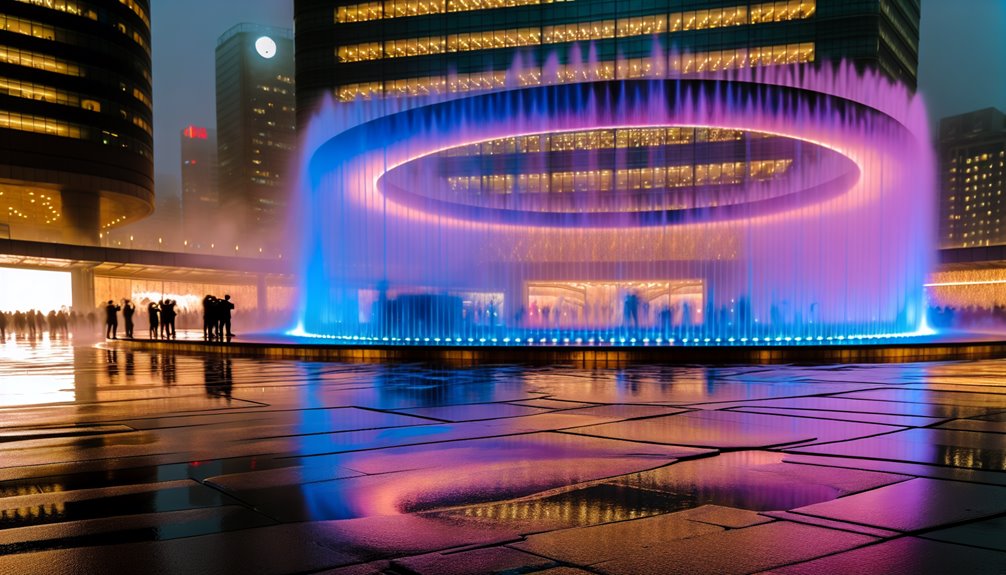
A musical fountain for hotels and resorts is not just a decorative feature. It is a programmed water show system that combines jet movement, underwater lighting, and music synchronisation to create a scheduled performance — one that guests return to watch, photograph, and share.
For hospitality developers and hotel owners evaluating this kind of investment, the key questions are practical: Where does it go? What type is right for the property? What does it actually cost to run? And does it generate measurable value?
This guide covers all of it — fountain placement, system types, design constraints, operational requirements, cost factors, and how to evaluate whether a musical fountain is the right fit for a specific hospitality project.

The Fountains of Bellagio in Las Vegas occupy lakefront space that generates no direct room revenue. Yet that fountain is consistently ranked among the most photographed landmarks in the United States, and the crowds it draws flow directly into the hotel's restaurants, retail spaces, and casino floor.
The commercial logic is straightforward: a well-designed fountain show creates a scheduled reason to gather. Guests plan their evening around it. Non-resident visitors come specifically to see it. The property becomes a destination rather than just a place to stay.
For resort hotels in competitive markets — particularly in the Gulf region, Southeast Asia, and mixed-use entertainment destinations — this kind of anchor attraction carries real commercial weight.
Research by Gensler and Interface published in Human Spaces 2.0: Biophilic Design in Hospitality found that hotel rooms with water views average approximately $332 per night, compared to $297 for rooms with standard city views — a premium of around 12%.
An engineered water feature creates that effect artificially where natural water doesn't exist. A lake fountain or large plaza water show generates the visual condition that supports higher-tier room pricing.
Guests photograph and video fountain shows without being prompted. A well-choreographed nighttime performance generates consistent user-created content — clips that circulate on Instagram, TikTok, and YouTube with the hotel's name and identity in frame.
For luxury and resort properties, organic video content from guests is among the highest-performing marketing material available, and a fountain show produces it reliably at every performance.
Hospitality properties generate significantly more food and beverage revenue when guests have a reason to be in public spaces in the evening. A fountain show with a fixed schedule — say, 8pm, 9pm, and 10pm — creates anchors in the evening timeline that keep guests on the property rather than leaving for nearby venues.
Restaurants and bars positioned with fountain views consistently report higher evening occupancy during show times. The fountain itself becomes a feature that drives secondary spend.
Placement determines almost everything about a fountain's impact. The wrong location produces a feature that guests rarely see. The right location makes the fountain unavoidable — visible from rooms, restaurants, terraces, and arrival routes simultaneously.
An entrance fountain creates a first impression at the moment guests arrive — before they check in, before they see their room. For luxury and upper-upscale properties, this moment matters disproportionately.
Arrival plaza fountains work best when they are:
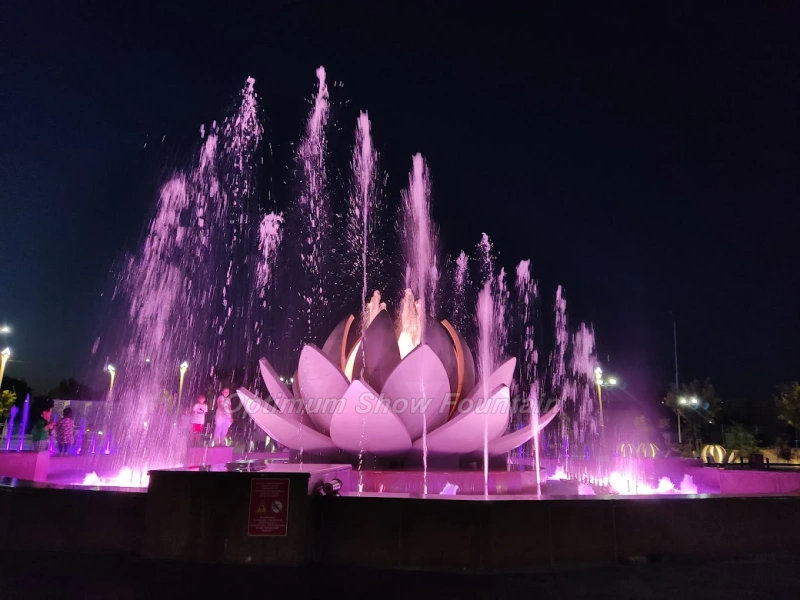
Large-scale dry deck systems and basin fountains with vertical jets are common in arrival plazas. Musical programming can be triggered automatically on arrival schedules.

Enclosed courtyards suit medium-scale fountain systems — typically basin or dry deck formats with moderate jet heights. The enclosure amplifies sound and increases visual intimacy, making smaller fountain shows feel more immersive.
Key considerations for courtyard installations:

Poolside fountain systems add movement and visual energy to leisure zones. They work particularly well for family resorts where daytime activation is as important as evening shows.
For standard-scale hotel pools, integrated dry deck jets around the pool perimeter are more practical than floating systems — they can be activated as an entertainment feature and switched off when guests are swimming.

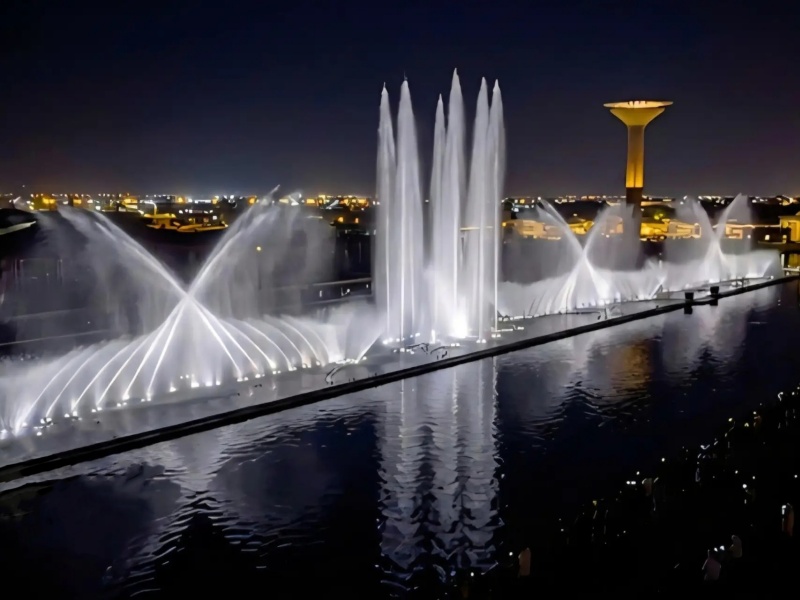
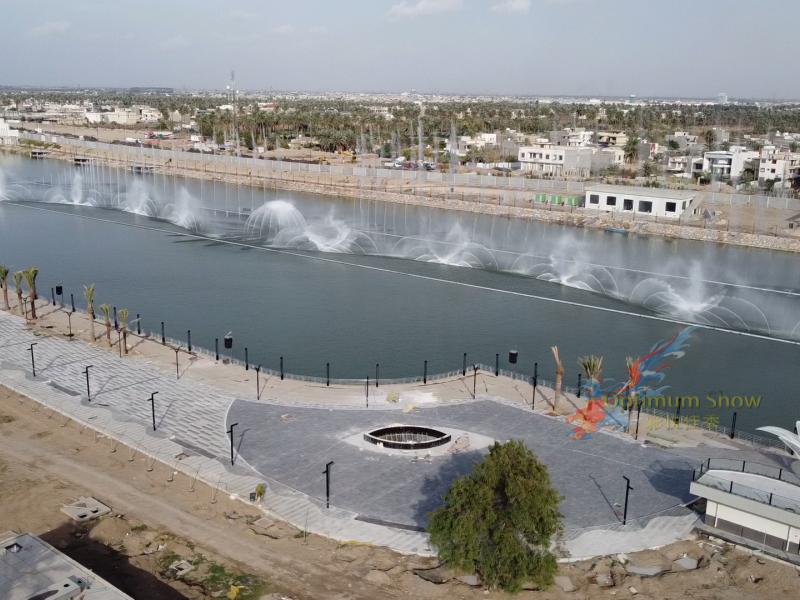
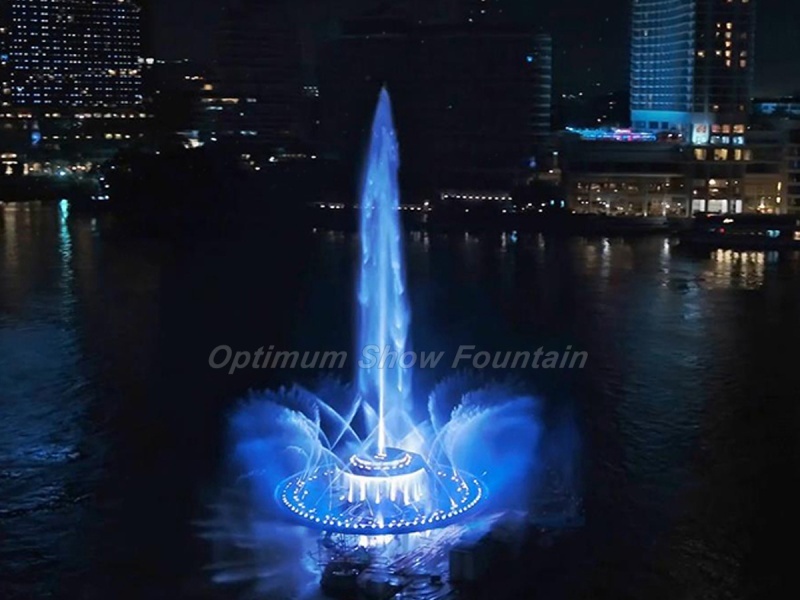
Resort properties with artificial lakes or waterfront access are among the strongest candidates for large-scale musical fountain investment. A floating fountain system installed on a resort lake generates long-range visibility — the show is visible from multiple buildings, room balconies, and dining terraces simultaneously.
This is the configuration used at the Wynn Palace in Macau, where a 200-nozzle lake fountain performs every 30 minutes from noon into the evening, visible from across the entire resort complex.
For large resort lakes, floating fountain systems with jet heights of 40–80 metres are technically viable, and the return on visibility is proportionally higher than any other placement option.

A fountain in or adjacent to an event space creates a premium backdrop for weddings, corporate dinners, and gala events. It allows the property to position these spaces as premium products and charge accordingly.
Dry deck or basin fountain systems are preferred here — they can be deactivated to give a clean floor for event setup, then reactivated for specific performance moments during an event.

The term "musical fountain" covers a wide range of systems. For hospitality projects, the choice of fountain type depends on placement, budget, maintenance capacity, and the experience goal the property is trying to achieve.
| Fountain Type | Best For | Typical Scale | Key Consideration |
| Entrance / basin fountain | Arrival plazas, main entrances | Small to medium | Architectural integration |
| Dry deck (floor) fountain | Courtyards, event spaces, family areas | Small to large | Allows pedestrian use when off |
| Floating fountain | Resort lakes, lagoons | Medium to large | Site access for maintenance |
| Multimedia water show | Destination resorts, entertainment hubs | Large | Full AV and control system scope |
| Indoor atrium fountain | Lobby, enclosed courtyards | Small to medium | Humidity, acoustics, drainage |
Entrance and basin fountains are the most common hotel fountain type. They range from simple single-jet basin systems to complex multi-programme water shows with LED lighting and music synchronisation.
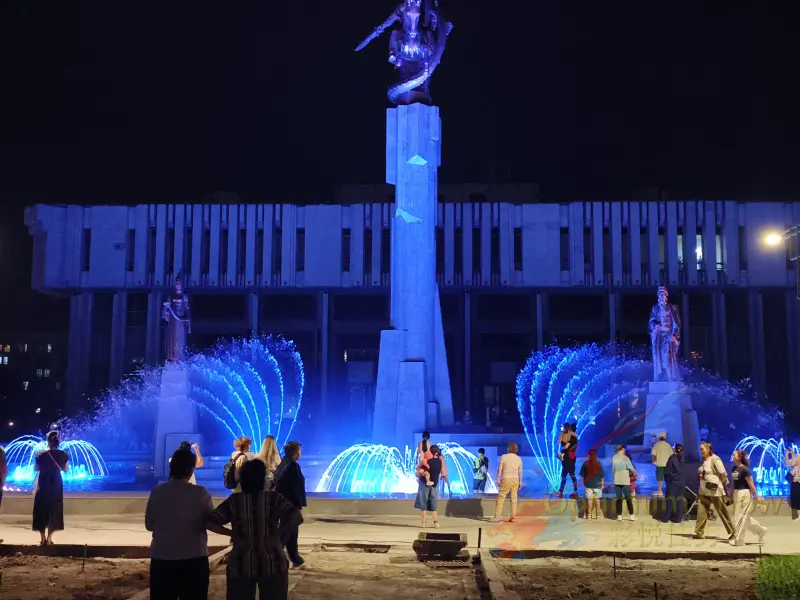
Dry deck fountain systems — also called floor fountains or jumping jet systems — sit flush with the ground surface and allow the area to function as normal pedestrian space when inactive. They are particularly suited to hotel courtyards, event plazas, and family resort environments where the space needs to serve multiple purposes.
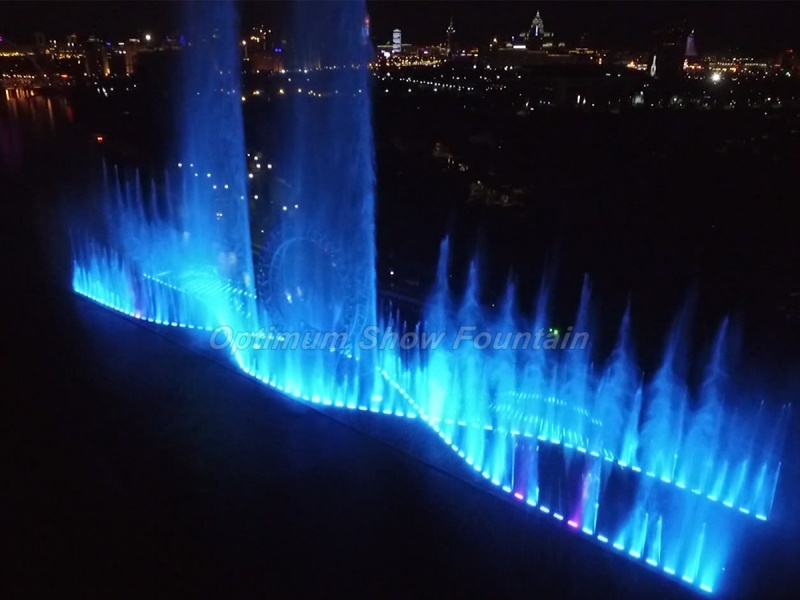
Floating fountain systems are installed on resort lakes and lagoons and are some of the most visually impactful configurations available for large resort properties. Jet heights on large floating systems can reach 60–100 metres, and the show is visible from buildings and terraces far beyond the immediate waterfront.
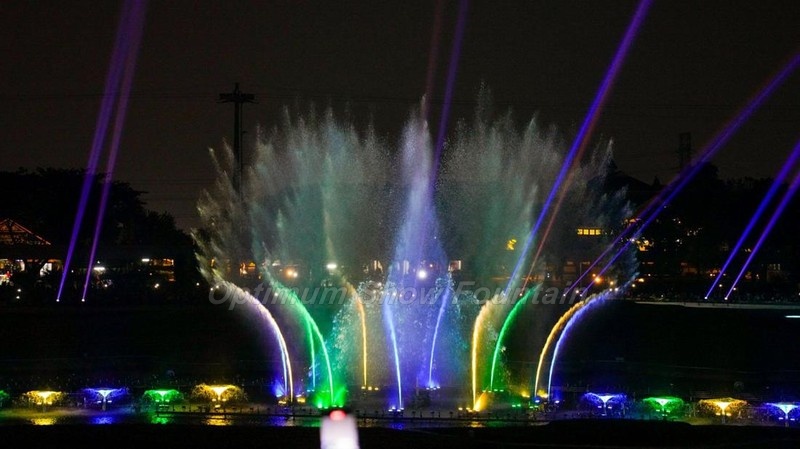
Multimedia water shows combine water effects with synchronised lighting, projection mapping, laser, and sometimes fire-on-water effects. These are destination-level investments, typically suited to entertainment resorts and flagship hospitality developments where the fountain show itself is part of the property's identity. The mechanics behind these systems — from DMX control to pump sequencing — are explained in detail in our guide to how musical fountains work.

Arrival experience has an outsized influence on how guests perceive the rest of their stay. A fountain that is active during check-in — even a mid-scale system with LED lighting and gentle music — immediately signals that the property has invested in the experience.
Hospitality research consistently shows that first impressions set the frame for subsequent perception. A strong arrival moment makes guests more likely to rate overall satisfaction highly, even before they have seen their room.
During the day, fountains running in ambient mode — jets moving without a full music programme — add movement and visual interest to outdoor spaces. The sound of moving water has well-documented effects on perceived comfort in outdoor environments, reducing the perception of heat and urban noise.
For pool and garden areas, daytime fountain activity keeps spaces feeling alive and managed, which matters for the perceived quality of the property.
A scheduled evening show is where the musical fountain delivers its highest impact. Guests gather. Non-resident visitors attend. The property's social media presence gets fed with organic content. Restaurants and bars positioned with fountain views see increased occupancy.
The show schedule needs to be treated as part of the property's programming — promoted in the app, noted at check-in, mentioned in dining reservations. A fountain that guests don't know about delivers a fraction of its potential value.
A fountain show can be integrated directly into event programming — choreographed to specific music for a wedding ceremony, activated at a specific moment during a gala dinner, or used as an opening spectacle for a corporate event. The possibilities in musical fountain choreography go well beyond a simple repeating sequence; every element of the performance can be scripted to a precise timeline.
This capability allows the property to differentiate its event spaces and support premium pricing for event packages.
The fountain should be visible from multiple guest touchpoints simultaneously — room balconies, restaurant terraces, lobby windows, and the arrival area. A fountain that is only visible from one location delivers a fraction of its potential impact.
Early-stage site planning should map the intended viewing corridors before the fountain layout is fixed.
Musical fountain shows require careful acoustic calibration in hospitality environments:
The speaker system for a hospitality fountain is not the same as for a public plaza installation. It needs to be directional, zoned, and calibrated to the specific acoustic environment of the property.
Outdoor hotel environments — particularly in coastal and desert locations — present significant wind management challenges. High-wind conditions can push jets off-axis and create spray drift onto seating areas, walkways, and building facades.
Design responses include:
For properties in the Gulf region — where seasonal wind conditions can be severe — wind management is not optional. It needs to be designed in from the start, not addressed after installation.
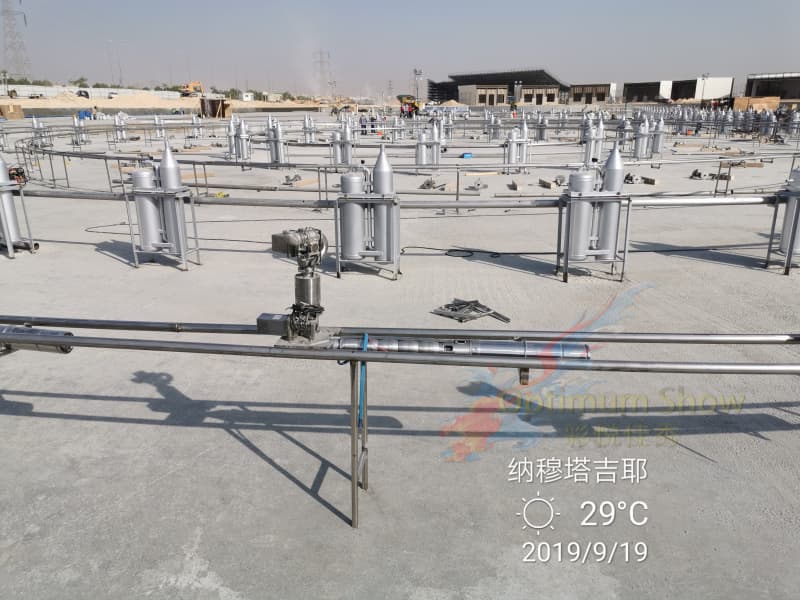
A fountain that is difficult to maintain will gradually decline in performance quality. The civil and mechanical design needs to include:
For hospitality projects specifically, the reliability requirement is higher than for public plaza fountains. A public fountain can be shut down with a sign and a barrier. A hotel fountain that goes dark during the evening show season damages the property's reputation directly. The full scope of what a commercial fountain maintenance programme involves — including inspection schedules, filtration servicing, and seasonal commissioning — is worth reviewing early in the design process.
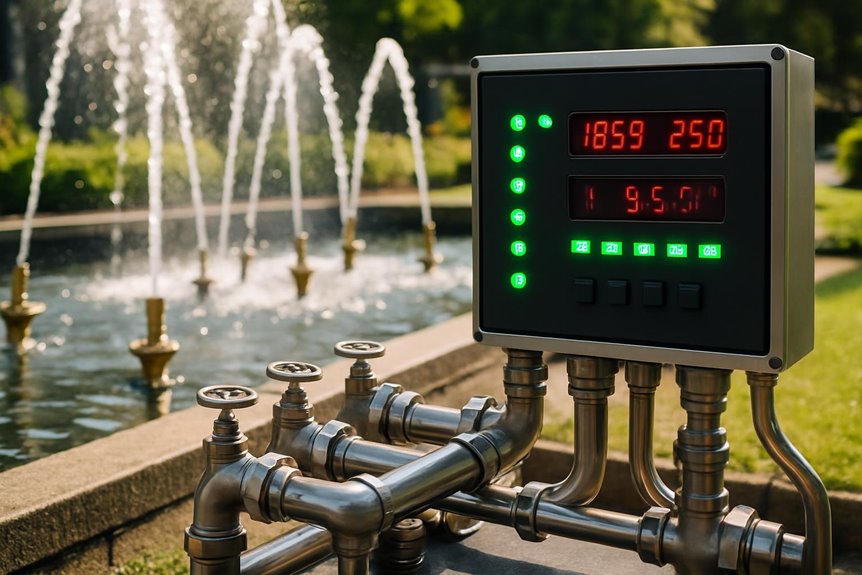
The operational performance of a musical fountain depends on the integration of five core systems. Understanding these helps hospitality developers evaluate manufacturer proposals accurately.
Control system: The central control platform synchronises water jet movements, LED lighting, music output, and any additional multimedia elements. Systems vary significantly in capability — entry-level systems offer pre-programmed show sequences, while advanced DMX 512-based systems allow real-time control and complex multi-programme libraries.
Pump and hydraulic system: Pump sizing determines jet height, consistency, and show variety. Variable-frequency drives (VFDs) allow pumps to modulate output in real time, enabling the fluid jet height changes that characterise high-quality musical fountain shows.
Nozzles: Nozzle selection determines the visual vocabulary of the show. Key types for hospitality installations include vertical jets (height and drama), laminar jets (clear glass-like arcs), fan nozzles (spread effects), 3D digital nozzles (directional movement), and foam nozzles (white water volume).
Lighting: Underwater LED fixtures in RGBW configurations allow full colour control. Lighting synchronisation with music is what gives fountain shows their emotional quality — the colour and intensity changes are as important as the water movement.
Water treatment and filtration: Hotel fountains require higher water quality standards than public plaza fountains because guests come into close visual contact with the water. A properly designed filtration system maintains water clarity and prevents algae and contamination that would affect both aesthetics and guest perception.
Hotel and resort fountain costs vary enormously based on scope. The major cost drivers are:
As a general reference for scale, the Fountains of Bellagio had an original construction cost of approximately $40 million at the time of opening in 1998. The Dubai Fountain cost approximately $218 million. These are landmark-scale systems.
A well-designed hotel entrance fountain with professional musical programming is achievable at a fraction of these figures — but decision-makers should be sceptical of proposals that underspecify civil works or the control system. A detailed breakdown of what drives dancing fountain costs at different project scales gives a useful reference point for early-stage budget planning.
Operating costs for hotel fountains typically include:
As a working rule of thumb across commercial fountain projects, annual operating and maintenance costs typically run at 5–8% of the original capital cost. A hospitality owner planning a $500,000 fountain should budget $25,000–$40,000 per year for ongoing operations.
The return on a hotel fountain investment works across several channels simultaneously:
| Value Driver | Mechanism |
| Room rate premium | Water view / landmark view pricing |
| Occupancy uplift | Destination attraction driving bookings |
| F&B revenue | Fountain-view dining and bar occupancy during shows |
| Event premium | Higher event pricing for fountain-adjacent spaces |
| Social media reach | Organic UGC from guest content |
| Brand differentiation | Competitive positioning in a saturated market |
None of these is a guaranteed return, and the magnitude depends entirely on how well the fountain is integrated into the property's guest experience and marketing. A fountain that is not promoted, not positioned with dining and event space adjacency, and not maintained will not deliver its potential value.
A fountain designed with commercial logic from the start — with viewing corridors, dining adjacency, event integration, and a programmed show schedule — typically pays for itself through the combination of rate premium, event revenue, and long-term brand value.

The most common planning mistake is commissioning a fountain design before defining what role the fountain plays in the property's guest experience strategy.
A fountain designed to be a destination show (like a Wynn-style lake fountain) has completely different technical requirements from a fountain designed to be arrival atmosphere (an entrance basin), which is different again from a fountain designed to be family engagement (a dry deck play feature).
Get clarity on the goal first. Everything downstream — scale, type, placement, budget — follows from it.
Site factors that significantly affect fountain design include:
These should be assessed before any design concept is developed, not after.
A fountain that is expensive or disruptive to maintain will be maintained poorly. The design phase should include explicit decisions about:
Properties in markets where specialist fountain engineers are not readily available — which includes most of the Gulf region — need to design for in-house serviceability or establish a formal maintenance contract with the manufacturer before installation is complete.
Fountain project budgets frequently underestimate civil works costs — the underground infrastructure of pump rooms, drainage channels, waterproof lining, and structural bases that sit beneath the visible fountain.
A realistic budget breakdown for a hotel fountain project should include:
Receiving a proposal that only prices the equipment is not a complete cost picture.
Hotel fountain projects that are split across multiple vendors — one for design, another for equipment, another for installation — consistently encounter coordination failures: specification mismatches, accountability gaps, and commissioning delays.
The most reliable delivery model is a single musical fountain manufacturer who covers concept design, engineering, manufacturing, installation, show programming, and post-commissioning support. This is especially important for international projects where the owner does not have local technical resources to manage multi-vendor coordination.

The world's most successful resort fountain installations share a consistent pattern: the fountain is visible from multiple revenue-generating spaces simultaneously, runs on a published schedule, and is treated as programmable entertainment rather than passive decoration.
The Performance Lake at Wynn Macau — 370 water nozzles, 1,540 LED lights, and seven fire jets — runs shows every 20–30 minutes from noon to 10pm and is visible from hotel suites, restaurant terraces, and the SkyCab cable car. Guests book lake-facing rooms specifically for the view. Non-resident visitors attend shows and flow into the resort's dining and retail spaces. At Wynn Palace on the Cotai Strip, the same logic applies: shows run up to every 20 minutes in the evening, and the public is explicitly welcomed to watch — a deliberate decision that converts the fountain into a footfall driver for the surrounding F&B precinct.
At Atlantis The Royal in Dubai, the Skyblaze water show — with a score composed exclusively by Hans Zimmer — was integrated into the hotel's identity at the concept stage, not added after construction. It is a useful illustration of the principle that the most commercially effective fountain installations are planned as brand assets from the start, not retrofitted as amenities.
The common thread is not scale or budget. It is intent: the fountain is designed around the guest experience and commercial layout of the property, with viewing corridors, dining adjacency, and show scheduling all treated as deliberate decisions rather than afterthoughts.
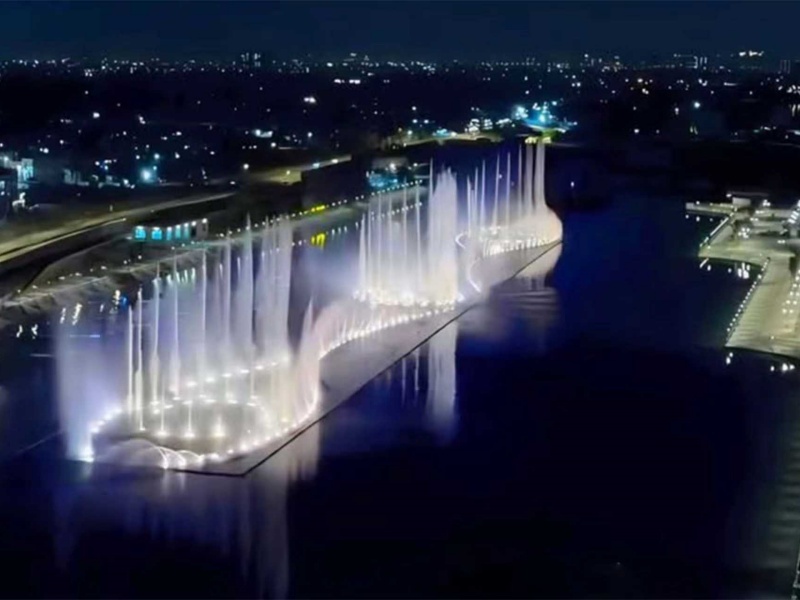
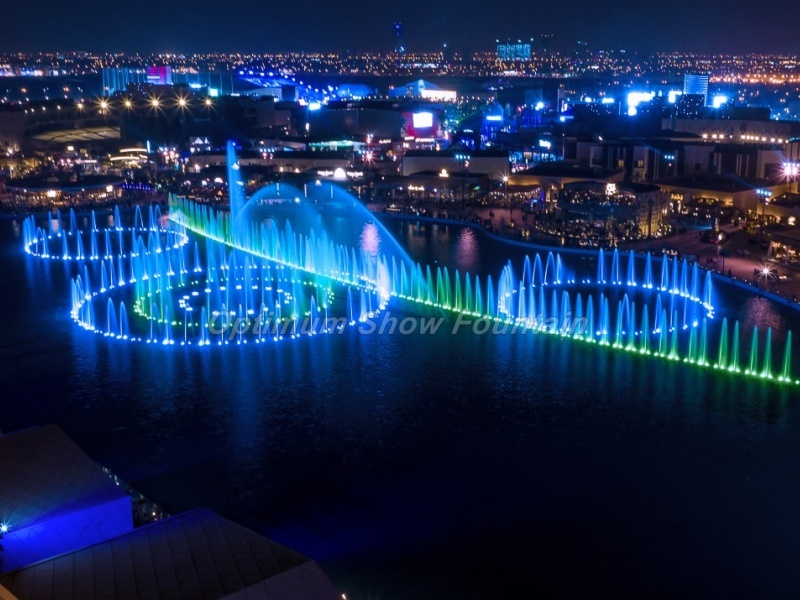
Optimum Show has delivered large-scale fountain systems in similarly high-demand environments across the region — including a 300 × 150-metre system at Riyadh Boulevard City and the 300-metre floating fountain at Baghdad Island, a project selected as one of Iraq's four priority tourism investments in 2026. Both involve the same engineering requirements — DMX-controlled programming, high-wind desert conditions, large-scale floating and fixed systems — that apply to resort lake and entertainment destination installations.
Optimum Show is a musical fountain engineering company specialising in large-scale water show systems for commercial, government, and entertainment projects internationally. The full project scope — concept design and 3D animation, shop drawings, in-house equipment manufacturing, international logistics, site installation, show programming, operator training, and long-term technical support — is handled under one roof.
For hospitality developers and hotel owners, this means a single point of accountability from initial design consultation through to post-installation operation. There is no coordination gap between the designer's specification and what the manufacturer actually produces, and no handover break between installation and programming.
If you are planning a hotel or resort fountain project, contact Optimum Show for a project consultation and indicative design proposal.
It depends on placement. Entrance plazas suit basin or dry deck systems; resort lakes suit floating fountain systems; destination entertainment properties suit full multimedia water show configurations.
Yes. Indoor installations require careful management of humidity, acoustics, and splash containment, with jet heights limited by ceiling clearance. The Gaylord Opryland Resort in Nashville is a well-known example, operating an 85-foot indoor fountain under a glass dome.
A professionally designed entrance fountain with musical programming starts in the hundreds of thousands of dollars; large resort lake or multimedia water show installations are multi-million-dollar projects. Annual operating and maintenance costs typically run at 5–8% of the original capital cost.
Yes, provided wind management is designed in from the start. Coastal systems require wind sensors that automatically reduce jet heights in high-wind conditions, along with nozzle configurations that resist spray drift.
A full inspection and service cycle is typically performed annually, covering pumps, nozzles, LED fixtures, and the control system. Routine water quality checks and filter cleaning are done on a weekly or monthly schedule.
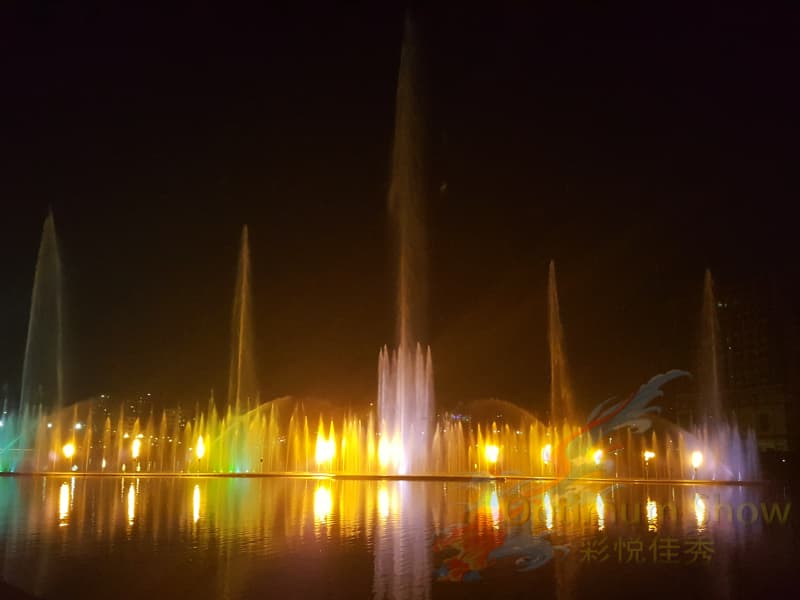
Share your site size, water depth, location or CAD drawing with our engineering team. We can evaluate the project requirements and recommend a suitable fountain system.